

What are Daily Habits For A Calm Home and how do they reduce stress?
Daily Habits For A Calm Home are simple, repeatable routines like morning anchors, mid-day resets, and evening surface clearing that reduce cognitive load, close mental tabs, and create a predictable, peaceful environment for you and your family.
Disclaimer: This post may contain affiliate links. I only share tools that I personally use and love in my kitchen sanctuary.
Hey Beautiful!
Knowing that you want an intentional life is the easy part. We all want a home that feels like a sanctuary. We all want to wake up feeling rested and in control of our surroundings. But living that life in the middle of laundry piles and school runs and digital noise is where the challenge begins.
If you read my recent post on Intentional Living For Busy Moms, you already know the philosophy. You know that you are the Architect of your Home’s Atmosphere. But a blueprint is not a house. To build a truly calm home, you need a daily manual. You need the small and repeatable actions that turn a “Factory of To-Dos” into a “Sanctuary of Being.”
What Are Daily Habits For A Calm Home?
Before we dive into the steps, we need to define what we are actually building. Daily Habits For A Calm Home are not a list of cleaning chores. They are predictable and rhythmic anchors that lower the collective cortisol of your entire family.
These habits are the physical boundaries you set for your time and your energy. They are the tiny decisions you make every hour to protect your peace. When you have a Calm Home Routine, you are no longer reacting to the mess. You are proactively managing the flow of your day. You are choosing to move at the speed of nature rather than the speed of the internet.
What Happens Without These Habits?

Without these daily rhythms, your home becomes a source of stress rather than a source of rest. You likely know this feeling well. It is the sensation of always being behind. You wake up to a messy kitchen and you are already defeated before your first cup of coffee.
When you do not have a Simple Daily Habit Routine, your brain stays in a state of constant scanning. You are looking at the clutter and the unfinished tasks and the open mail. This creates Mental Tab Fatigue. It is like having fifty tabs open on a computer at the same time. Eventually, the system slows down and crashes.
Without these habits, you spend your weekends “catching up” instead of resting. You feel like a manager of tasks rather than a mother. You are physically present in your home, but your mind is always somewhere else. You are searching for peace but you are surrounded by noise. Reclaiming your home starts with recognizing the cost of not having a system.
The Psychology of the One-Degree Shift
Most moms fail at building a new routine because they try to change everything at once. They try to implement a ten step system in a single day. This is a recipe for exhaustion. In the Hetal Method, we use the One-Degree Shift.
If a ship changes its course by just one degree, it ends up at a completely different destination. Your habits work the same way. You do not need a life overhaul today. You need microscopic changes that are too small to fail. These small wins build your self-trust. They prove to your brain that you are capable of maintaining order. When you focus on the one-degree shift, you remove the pressure of perfection. You realize that even a two minute reset is enough to shift the energy of your entire home.
The Morning Anchor of Protecting Your First Ten Minutes
The most important habit in the Hetal Method is the Morning Anchor. This is how you protect the first ten minutes of your day from the intrusion of the outside world. Most moms wake up and immediately reach for their phone. When you do this, you are handing over your peace to an algorithm. You are letting the noise of social media and the demands of your inbox dictate your internal weather.
Daily Habits For A Calm Home begin before you even leave your bed. Instead of scrolling, you must choose a sensory signal. This is a physical action that tells your nervous system it is safe to wake up slowly. Research shows that clutter increases cognitive load and reduces focus. This applies to digital clutter as much as physical clutter. If your brain starts the day processing a hundred digital images, it will stay in a state of high-beta stress for hours.
Three Simple Morning Anchors
You do not need a long meditation or a complicated yoga flow. You need a sixty second choice to be present. This is about reclaiming the first moment of your day for yourself.
- The Warmth Feel the heat of a ceramic mug against your palms. Do not just drink the coffee. Notice the weight of the cup and the steam rising from the surface. This tactile grounding pulls your focus out of the future and into the present.
- The Light Open one curtain and watch the morning light hit your Green Corner. If you have followed my guide on Starting a Small Home Garden for Mindfulness, this is the perfect time to look at your plants. Watching something grow at the speed of nature reminds your brain that not everything has to be fast.
- The Breath Take three deep breaths before you leave your bedroom. This simple act oxygenates your blood and lowers your heart rate. It signals to your brain that you are not in a state of emergency.

Even a two minute reset is enough. This is the first step in moving from reactive survival to proactive peace. By guarding these ten minutes, you set the tone for the entire house. You are signaling that your peace is a priority. You slow down. Your home slows down with you.
The Mid-Day Reset of Managing the Cognitive Load
By noon, the house often begins to feel heavy. The breakfast dishes are still a visual distraction. The mail has started to pile up on the entryway table. In a reactive home, these items are just messes. But in a calm home, we recognize them as a disruption to our Daily Reset Routine.
Every object out of place is a tiny mental tab left open in your brain. Your mind is scanning the environment and noting every chore that is unfinished. You feel like you are always cleaning but never finished. This creates a constant background hum of anxiety. This is why you feel exhausted even when you are just sitting on the couch. Your brain is working overtime to process the visual noise of your surroundings.
Clearing the Anchor Surfaces
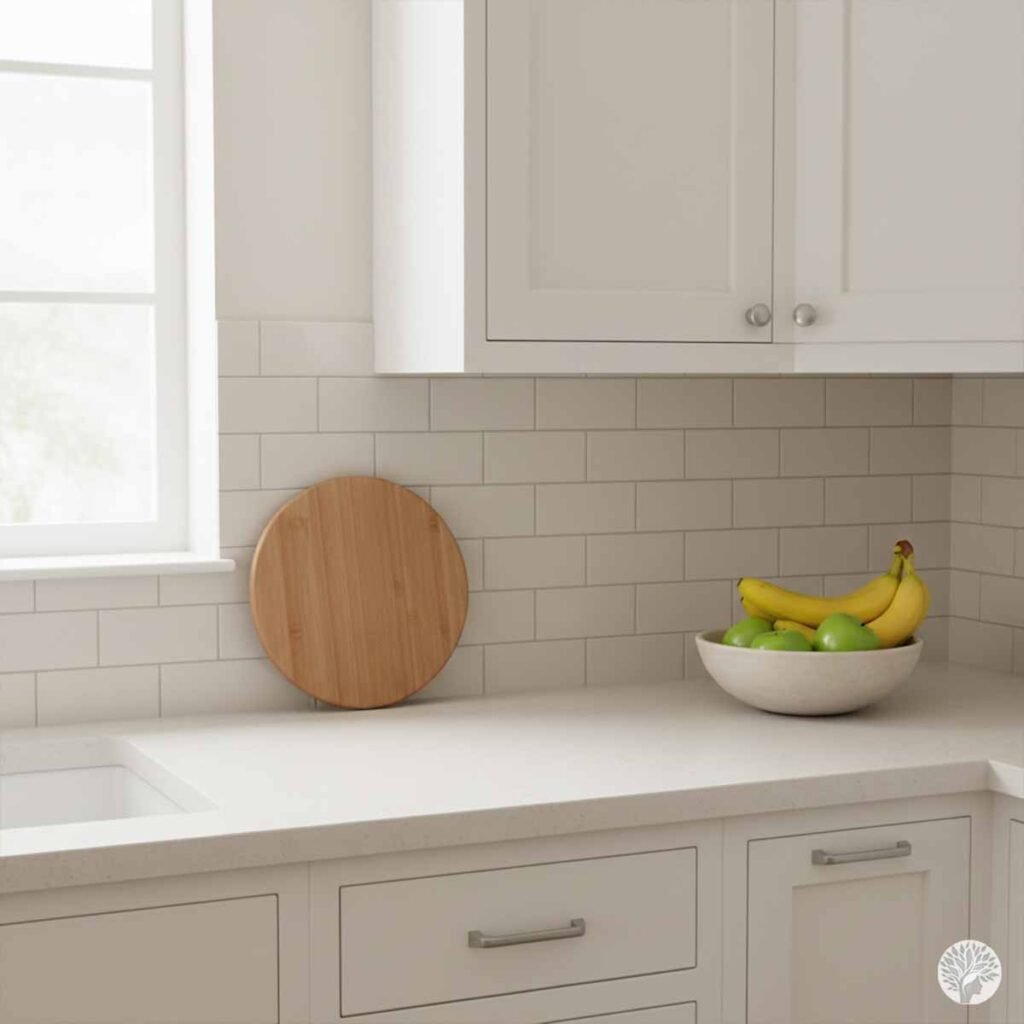
The Mid-Day Reset is a five minute act of closing those mental tabs. We focus exclusively on the anchor surfaces of the home. These are the high impact areas like the kitchen island or the dining table or the entryway bench. These surfaces act as a barometer for the rest of the house. When they are clear, the house feels breathable.
Start Small Today You do not need to clean the whole kitchen. Pick one surface that is bothering you the most. Clear everything off that surface. Put away three items that do not belong there.
When you clear these surfaces, you are giving your brain a visual exhale. You are creating a Breathable Space where you can think clearly for the rest of the afternoon. You are not deep cleaning. You are simply removing the static so you can focus on the people in your home rather than the things in your home. This is the simplest way to Reduce Home Stress in the middle of a busy day.
The Afternoon Pivot of Shifting the Atmosphere
The most difficult part of the day for many moms is the transition from doing mode to being mode. This usually happens in the late afternoon. It is the time when work ends or school lets out and the energy of the house begins to shift. Without a deliberate pivot, the stress of the morning bleeds into the peace of the evening. You find yourself cooking dinner while your mind is still stuck on a work email. You are physically present but mentally absent.
In the Hetal Method, we call this the Afternoon Pivot. It is a series of small and physical cues that tell your nervous system the factory is closing for the day. You are acting as the Architect of your Home’s Atmosphere by deciding that the chaos of the world stays outside the front door. This shift is essential for a Calm Home Routine because it allows you to show up for your family with a regulated nervous system.
Practical Actions for the Pivot
The Afternoon Pivot is about changing the sensory experience of your sanctuary.
- The Lighting Shift – Dim the overhead lights and turn on a soft lamp.
- The Sound Shift – Turn off the television or the podcast and put on a calm instrumental playlist.
- The Scent Shift – Light a candle or start a diffuser with a grounding scent like lavender or cedarwood.
These are not just vibes. They are biological signals. They lower the collective cortisol of everyone in the house. They prepare your children and your partner for a restful evening. You are signaling that the productive part of the day is over and the restorative part has begun.
The Evening Surface Reset of Preparing for Tomorrow
The way you end your day determines how you start the next one. This is the core of a Simple Daily Habit Routine. If you go to bed with a messy kitchen and a cluttered nightstand, you are choosing to wake up to Morning Dread. You are pre-loading your brain with stress before you even open your eyes.
When you clear the physical space before you go to bed, you are closing the mental tabs of the day. You are signaling to your nervous system that the work is done. You are preparing your sanctuary for rest. This is not about perfection. It is about Visual Silence.
The 70/30 Rule for Better Sleep
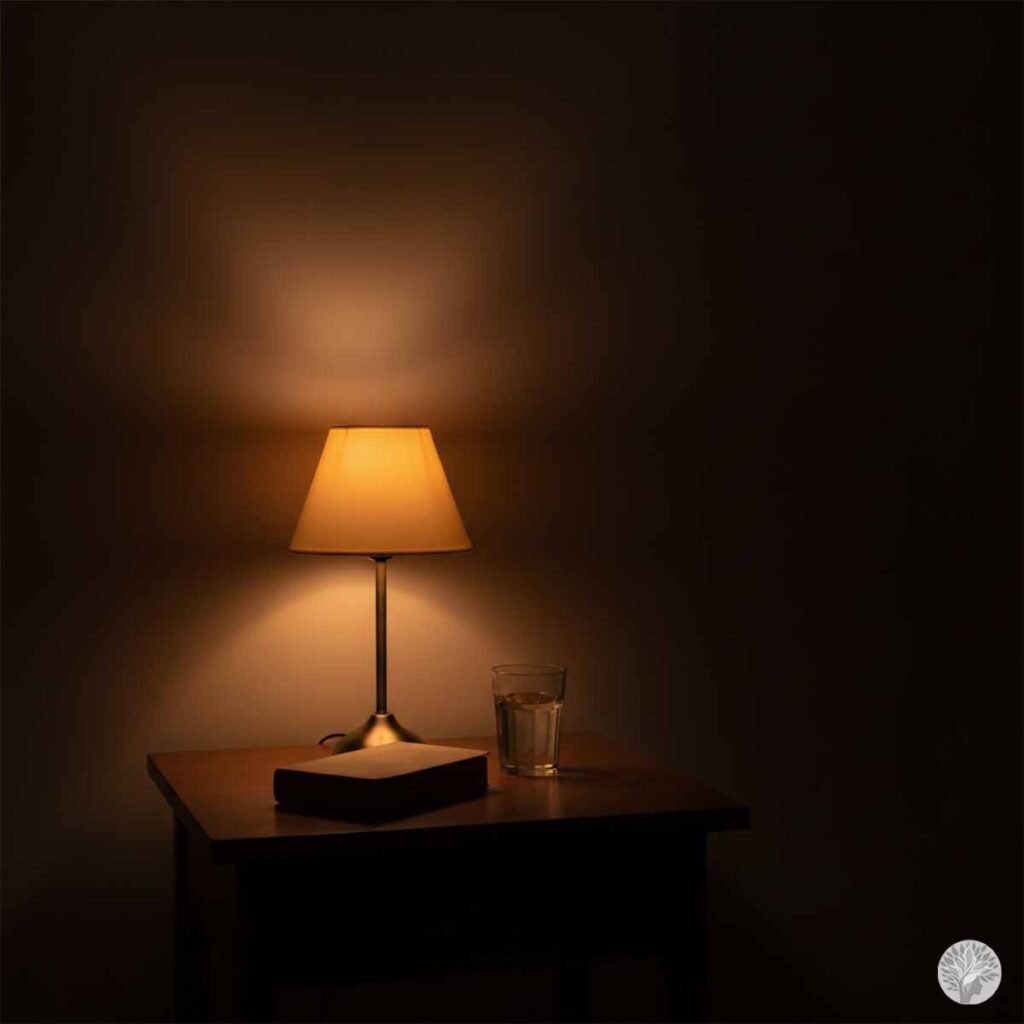
We apply the 70/30 Rule to our evening surfaces. We aim to keep 70 percent of our anchor surfaces completely clear. This is especially important for your nightstand. Your nightstand is the last thing you see before you sleep and the first thing you see when you wake up.
Start Small Today
- Clear your nightstand before you sleep.
- Close the kitchen by wiping one clear counter.
When you walk into a room with clear surfaces, your heart rate actually slows down. You are making a choice to wake up to a Sanctuary of Being instead of a factory of chores. It is the ultimate act of self-care for the woman you will be tomorrow morning. By clearing the static tonight, you are giving yourself the gift of a calm start tomorrow.
The Family Calm: Modeling Presence
One of the most common questions I get is how to bring the rest of the family into these habits. The secret is that you do not manage your family into a calm home. You model your way into it. In the Hetal Method, we believe that the atmosphere of the home is a reflection of the mother’s internal state.
When your children see you protecting your Morning Anchor, they learn the value of silence and boundaries. When they see you performing a Mid-Day Reset, they understand that physical order leads to mental peace. You are not giving them more chores. You are giving them a rhythm that makes them feel safe. A calm home is a predictable home. A predictable home is a sanctuary for a child’s nervous system.
The Collective Exhale
As you implement these Daily Habits For A Calm Home, you will notice a shift in the people around you. When the “Visual Static” of the home decreases, the irritability of the family decreases with it. You are creating a space where everyone can breathe. You are shifting the family culture from one of constant “Doing” to one of restful “Being.”
Quick Daily Habit Checklist
This is your manual in a snapshot. Use this as your Daily Reset Routine until these actions become as natural as breathing.
- [ ] The Morning Anchor Protect your first ten minutes. Choose warmth or light or breath. Stay away from the screen.
- [ ] The Mid-Day Reset Clear one anchor surface. Put away three items. Close a mental tab before the afternoon rush.
- [ ] The Afternoon Pivot Shift the atmosphere. Dim the lights. Change the sound. Light a grounding scent.
- [ ] The Evening Surface Reset Apply the 70/30 rule. Clear your nightstand. Close the kitchen for the night.
FAQs: Daily Habits For A Calm Home
What are daily habits for a calm home?
They are predictable and repeatable rhythms designed to lower stress and reduce cognitive load. They move your home from a state of reactive survival to proactive peace. These habits are the physical application of Intentional Living.
How long should a daily reset take?
A reset should never feel like a burden. The Mid-Day Reset and the Evening Surface Reset should take no more than five to ten minutes. We focus on high impact anchor surfaces to get the most “Visual Silence” for the least amount of effort.
How do I stay consistent with a calm home routine?
Consistency comes from the One-Degree Shift. If you miss a day, do not try to “catch up” by doing a deep clean. Simply return to your next anchor. Focus on making the habit too small to fail.
How do I start when my house is currently a mess?
Do not look at the whole house. Look at one square foot. Clear your nightstand tonight. That is your first win. Once you experience the peace of one clear surface, you will have the energy to clear the next.
The Final Step to Reclaiming Your Power
Your home is the most important environment in your life. It is the place where you rest and recover and connect. By choosing Daily Habits For A Calm Home, you are deciding that you deserve a sanctuary. You are deciding that your mental health is worth the two minutes it takes to clear a counter or take a deep breath.
Tonight, I want you to choose one surface. Just one. Clear the static. Close the mental tabs. Experience the Visual Silence. You are the Architect of your Home’s Atmosphere. It is time to start building.
"Your home is not a factory of tasks but a sanctuary of being, where each small habit acts as a mindful anchor for your peace."
Love ya, stay mindful!

