
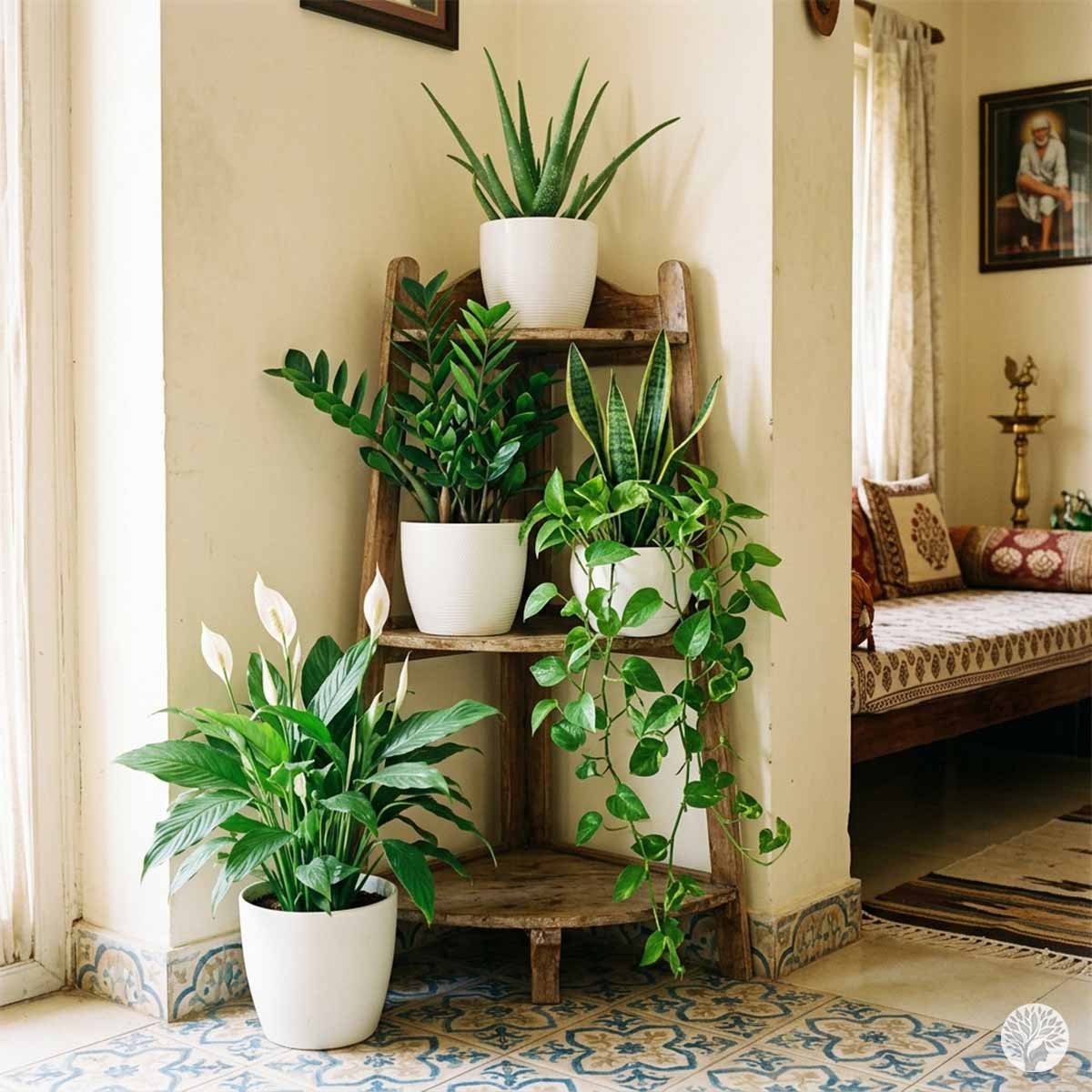

Mindful Gardening For Mothers is more than caring for plants. It is a quiet practice that teaches patience, presence, and trust in life’s natural rhythm. By creating a small green corner at home, mothers can slow down, reconnect with nature, and rediscover calm in the middle of busy family life.
Hey Beautiful!
There is a specific speed to motherhood that no one truly prepares you for. It begins quietly, but as a baby arrives, your days inevitably start filling with small, essential tasks like feeding, cleaning, organizing, and responding. Initially, these tasks feel natural and even joyful, performed with the kind of love that makes effort feel effortless. But slowly, almost without notice, life begins to accelerate. Morning routines become tighter, evenings become crowded with unfinished lists, and the day starts feeling like a race that begins the moment your feet touch the floor. In the middle of that movement, an unspoken expectation takes root and that is a “good” mother must be efficient, must manage everything, and must keep the house running without a hitch. We spend our days moving, fixing, and managing, rarely finding a moment where we are allowed to simply wait.
For a long time, I did not realize how deeply I had absorbed this rhythm of urgency, believing that if I slowed down, the delicate balance of my home would fall apart. I lived in a state of constant motion, completely unaware that the healing power of gardening was waiting to ground me and offer a much-needed sanctuary from the demands of my daily life.
Gardening As a Mindful Practice for Modern Mothers
Disclaimer: This post may contain affiliate links. I only share products that I personally use and love.
Mindful gardening for mothers is more than just a hobby; it is a vital spiritual discipline that serves as a counterbalance to the relentless chaos of modern existence. For me, the journey toward a calmer, more centered home began in the form of a single plant. I had visited a nursery one afternoon, intending to buy a snake plant simply as a piece of decor to brighten my living room. I placed it near a window where the afternoon light settled softly, and for a few days, I treated it like any other ornament a touch of green to fill a shelf.
Everything changed when I began to pay attention. Every morning, I would glance at the leaves and notice how the sunlight touched them differently each day. Then, one morning, I saw it. A small, tender shoot emerging from the soil. It was tiny, fragile, and almost hidden between the larger leaves. Watching it, I felt a wave of wonder. How long had those roots been quietly strengthening beneath the surface before that first leaf appeared? I realized then that the plant had not grown because I rushed it; it had grown because it was given the grace of time. I learned that indoor gardening for busy moms isn’t about having a “green thumb” or a massive backyard it’s about having a willing heart and a space to pause.
Why Plants Are Teachers of Patience in Motherhood
In the beginning, I had approached my plants with the same frantic efficiency I applied to motherhood water the plant, check the leaves, and move on. But plants do not respond to urgency. You can provide sunlight, water, and soil, but the most essential ingredient is patience. You cannot force a seed to break open, nor can you demand a bloom before its season. The plant follows its own rhythm. As I began to adjust to that pace, my “green corner” transformed. It ceased to be mere decoration and became a sanctuary. Today, that small collection of pots is where the frantic noise of my day finally softens. In the presence of growing things, time feels different.
Over time, I noticed a profound parallel between the plants I was tending and the child I was raising. Motherhood can easily feel like a project with a series of steps to guide, mistakes to correct, and situations to manage. But children, like plants, grow in their own time. You can create a nurturing environment, but growth itself cannot be forced. Confidence and understanding unfold slowly, just like the seed beneath the soil. Seeing motherhood through this lens allowed something within me to soften. I stopped feeling responsible for controlling every outcome and instead focused on the simple act of presence. It is the realization that plants as teachers of patience are the most effective mentors we have in this high-speed world.
What I have come to realize is that the “green corner” is not an aesthetic choice. It is an altar where I go to remember that I am a participant in the rhythm of life, not merely its manager. In a culture that demands we constantly produce, choosing to wait for a flower to bloom is, in itself, a quiet form of rebellion. It is a declaration that there is inherent value in the “not yet.” When I sit with my plants, I am learning the discipline of detachment. I am learning that I can provide the water, I can clear the dead leaves, but I cannot dictate the pace of the miracle.
This surrender is perhaps the hardest lesson for a mother. We are so used to carrying the weight of our children’s success, their happiness, and their progress that we forget we are not the source of their growth; we are only the environment in which they flourish. Watching a seedling struggle to push through the crust of the soil before it finds the light, that is motherhood. It is witnessing the beautiful, sometimes painful, effort of becoming. And in the moments when I am tempted to “fix” my child, I go to my green corner. I look at my plants and I remind myself: Everything has its own time.
There is a quiet intelligence at work in the garden that we often ignore. The roots know where to go in the dark; the leaves know exactly how to turn toward the sun. None of this happens through force or management. It happens through an instinctual trust. When I observe this, I feel a deep sense of peace settle over me, because it reminds me that life is not something I must constantly control. Sometimes, my only role is to nurture, to observe, and to allow.
A Beginner’s Guide to Creating a Green Corner at Home
If you are feeling the weight of the race, I invite you to stop running. You do not need an acre of land or a green thumb to experience this shift. Creating a green corner at home does not require a massive investment; you only need the willingness to begin. Start with one single pot on your windowsill.
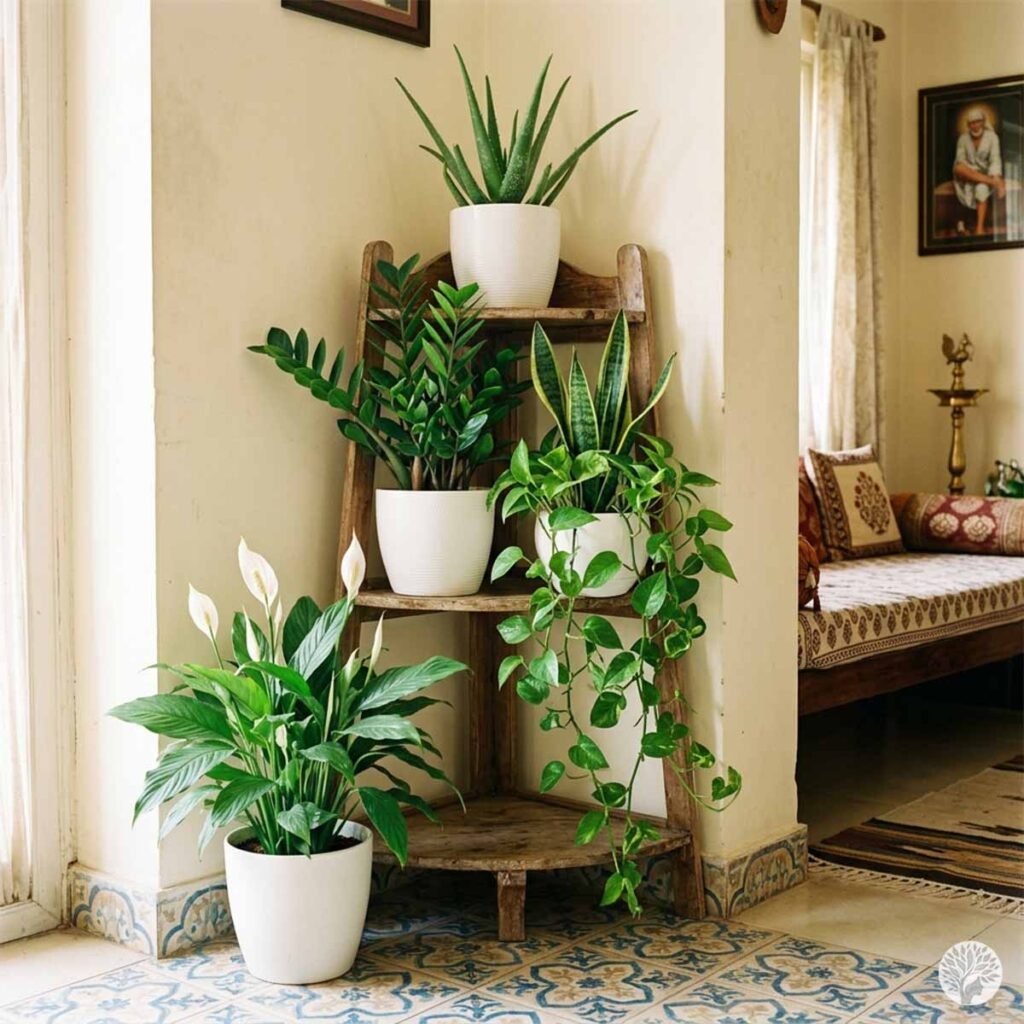
If you aren’t sure where to begin, or if you fear you don’t have the “right” touch, let me take that pressure off your shoulders. Gardening is not about perfection; it is about participation. To get you started, here are five “hard-to-kill” companions that are incredibly resilient, forgiving of a busy schedule, and perfect for your first green corner:
- Snake Plant: Nearly indestructible and thrives on neglect.
- Money Plant (Pothos): Beautiful, trailing vines that grow quickly and signal when they need water by slightly drooping.
- ZZ Plant: The ultimate “low-light” survivor that brings a lush, deep green to any space.
- Peace Lily: A wonderful communicator its leaves will droop when it’s thirsty and perk right back up after a drink.
- Aloe Vera: Perfect for a sunny windowsill, asking for very little while offering medicinal benefits right at your fingertips.
In the coming days, I will bring out the specific plants I love and the simple care tips that will help them truly flourish and bloom. For now, treat your start as a ritual of return. When you water the soil, touch the earth with your own hands. Feel the coolness of it against your skin. This is your anchor. This is the moment where the frantic noise of the day softens, and you are reminded that you are not just a manager of tasks, but a person of presence.
Frequently Asked Questions about Mindful Gardening
1. Can I start a mindful garden if I only have a small balcony? Absolutely. Mindful gardening is not about the size of the plot, but the depth of your connection. A single pot of Tulsi or a small tray of microgreens on a windowsill can be a sanctuary. In small spaces, focus on “Vertical Mindfulness”—using hanging planters or wall shelves to bring nature to your eye level.
2. What are the best plants for a beginner mindful gardener in India? I always suggest starting with plants that are resilient and have a sensory connection. Tulsi (Holy Basil) is wonderful for its sacred aroma, Aloe Vera for its healing properties, and Money Plants (Pothos) because they grow quickly and remind us of the flow of life. These plants are forgiving and allow you to focus on the ritual of care rather than the stress of maintenance.
3. How does gardening help with anxiety and daily stress? Gardening acts as a “grounding” practice. When you put your hands in the soil, you are physically connecting with the earth’s energy. The rhythmic tasks of watering, pruning, and weeding force the mind to slow down and focus on the present moment. It is a form of active meditation that shifts your focus from your “to-do list” to the “living list” in front of you.
4. Is mindful gardening expensive to start? Not at all. Mindfulness is about using what you have with intention. You can upcycle old kitchen containers into planters, use kitchen scraps like dried chili seeds or tomato slices to start new plants, and make your own compost. The most valuable investment in a mindful garden is your time and your presence, not your money.
If you have tried and failed before, or if your last plant didn’t survive the season, let that go. Even the most seasoned gardeners lose plants; it is simply part of the rhythm of growth and decay. If you are restarting, start today. Choose a plant that brings you joy and make a silent pact with yourself: for these few minutes, I am not a mother, a wife, or a worker. I am just a gardener.
You will soon realize that you are not just caring for a living thing you are being cared for in return. The plant is teaching you to pause. It is reminding you that you are allowed to rest, that you are allowed to be, and that you, too, are growing in ways you cannot yet see.
So, step into your own sanctuary. Don’t worry about the “how-to” or the rules of cultivation. Just begin. Trust the soil, trust the light, and most importantly, trust your own capacity to grow alongside your sanctuary. Your green corner is waiting for you, and it is ready to teach you the most beautiful lesson of all that patience is not a weakness, but the very soil from which your mindful presence grows.
Take that first step today. Put your hands in the dirt, breathe, and begin again. One quiet moment at a time.
The garden is a mirror. It shows us that growth is never a race, and that beauty only unfolds when we are mindful enough to simply stand still and let it happen.
Love ya, Stay Mindful!
