

Mindful Cooking at Home and the Art of Presence help you slow down in a busy kitchen. By focusing on one task at a time, you reduce stress, improve awareness, and turn everyday cooking into a calm, grounding ritual that supports both your home and your inner balance.
Hey beautiful!
It was a Sunday that did not feel like a Sunday. Usually, our weekends are defined by a slow and restorative rhythm where the clock is a secondary thought, but this particular morning, March 22nd, 2026, came with a ticking timer and the sharp, caffeinated energy of competition. I found myself standing in a vast and echoing community hall that had been transformed into a temporary arena for creativity, surrounded by thirty-five participants and the heavy air of a high-stakes cooking contest organized by the Chitpavan Brahman Sangh in Baroda. While I was positioned at counter five and she was at counter one, I could still feel the presence of my mother who first taught me that the energy we bring to the stove is just as important as the ingredients we put into the pot.
Although we belong to Maharashtra, we have made our home here in Baroda in Gujarat for many years, and this event organized by the local Marathi society felt like a gathering of family and shared heritage. Yet, the atmosphere shifted into something remarkably intense the moment the clock struck nine that Sunday morning and the first round officially began. We had exactly forty-five minutes to prepare a fusion Chaat dish along with a refreshing summer drink. For those unfamiliar with this Indian culinary staple, Chaat is best described as the ultimate street-side small plate, offering a complex harmony of sweet, savory, and spicy notes that rivals the vibrant soul of Spanish Tapas or the bold, textured layers of an authentic Mexican Street Taco. While the base of our cooking was done in the familiar comfort of our own kitchen, this live round was about something much deeper than just heat and salt. It was an exercise in plating, cleanliness, movement, and absolute presence under the gaze of professional judges.
Lessons in Cooking with Presence and Awareness
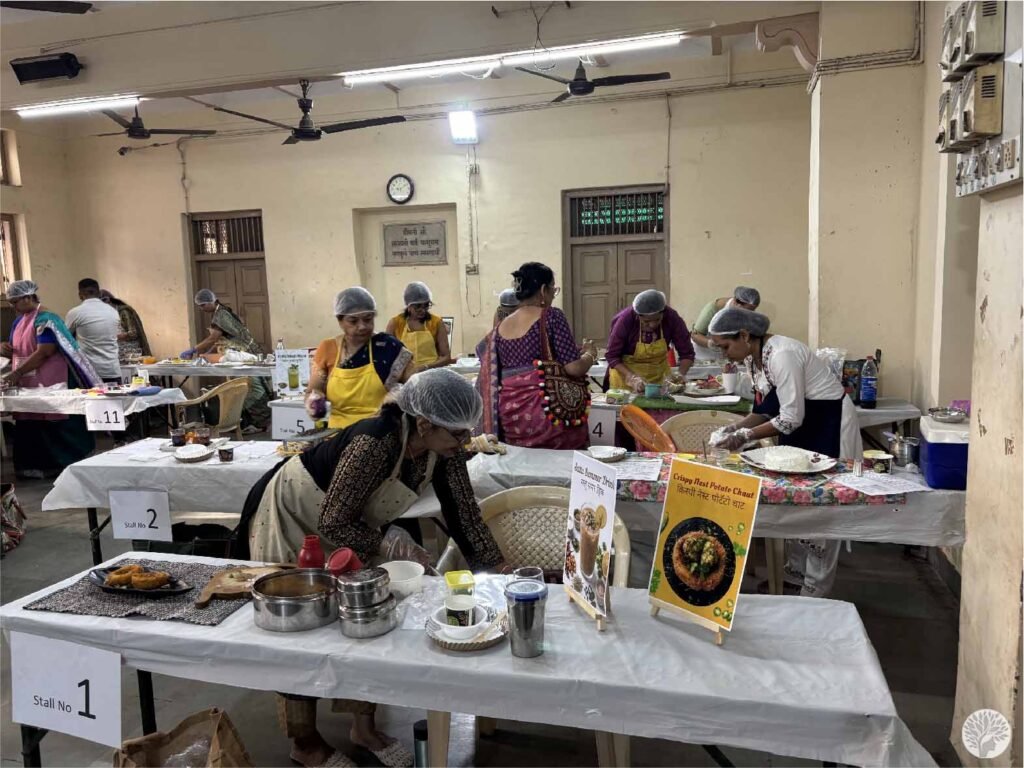
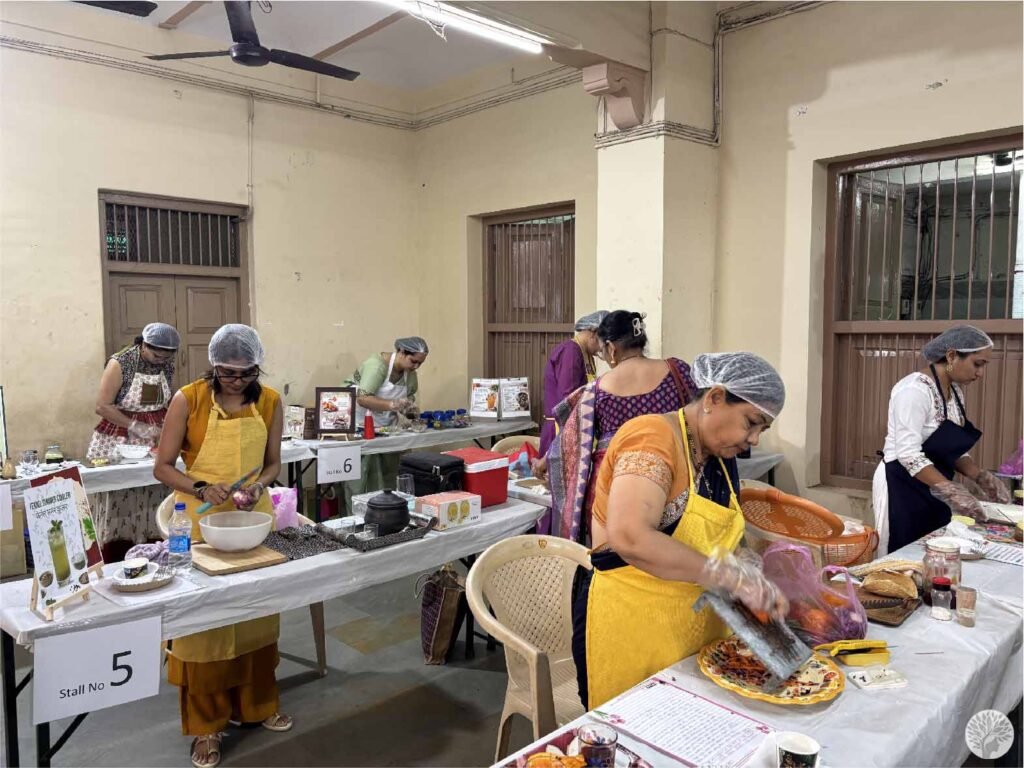
As the round started, the hall became a blur of motion and I felt the collective hum of adrenaline as thirty-five of us worked in a concentrated rush. The sound of footsteps and clinking metal filled the high-ceilinged space like a chaotic symphony, and from my own station at counter five, I was acutely aware of the frantic energy surrounding me. Even as I focused entirely on my own plating, I could feel the invisible weight of thirty-five sets of hands adjusting a dozen different elements at once while the pressure of the clock sat heavy in the air. This environment is the ultimate example of logistical noise, where the fear of not doing enough often causes us to overcomplicate the very things that should be simple.
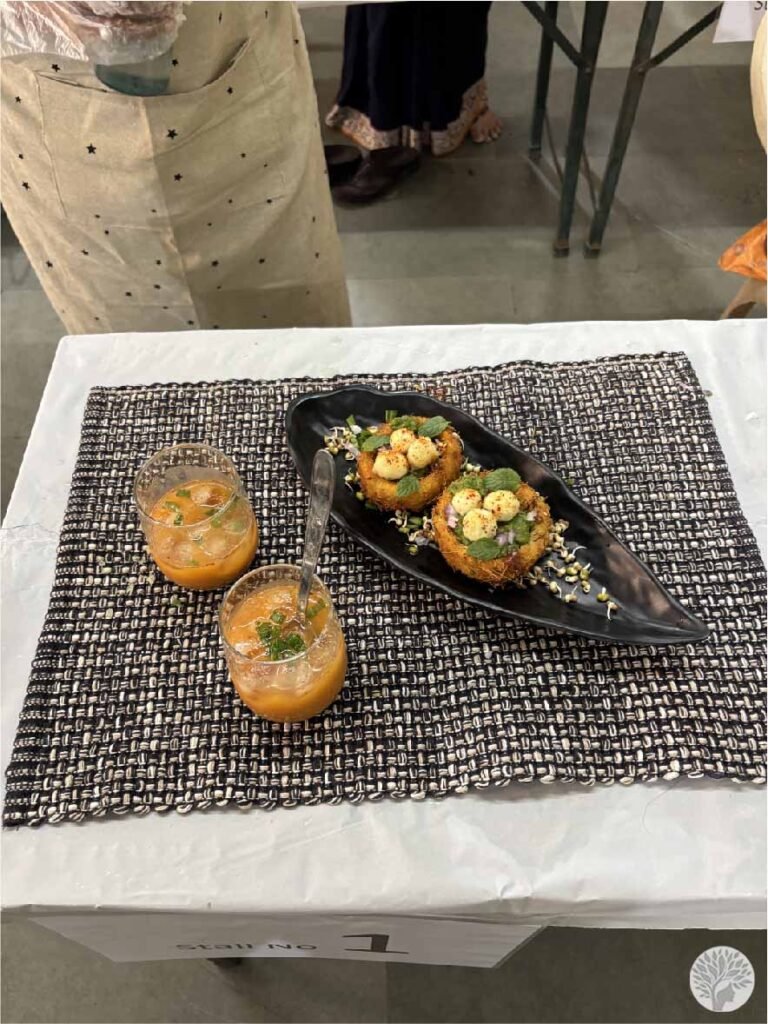
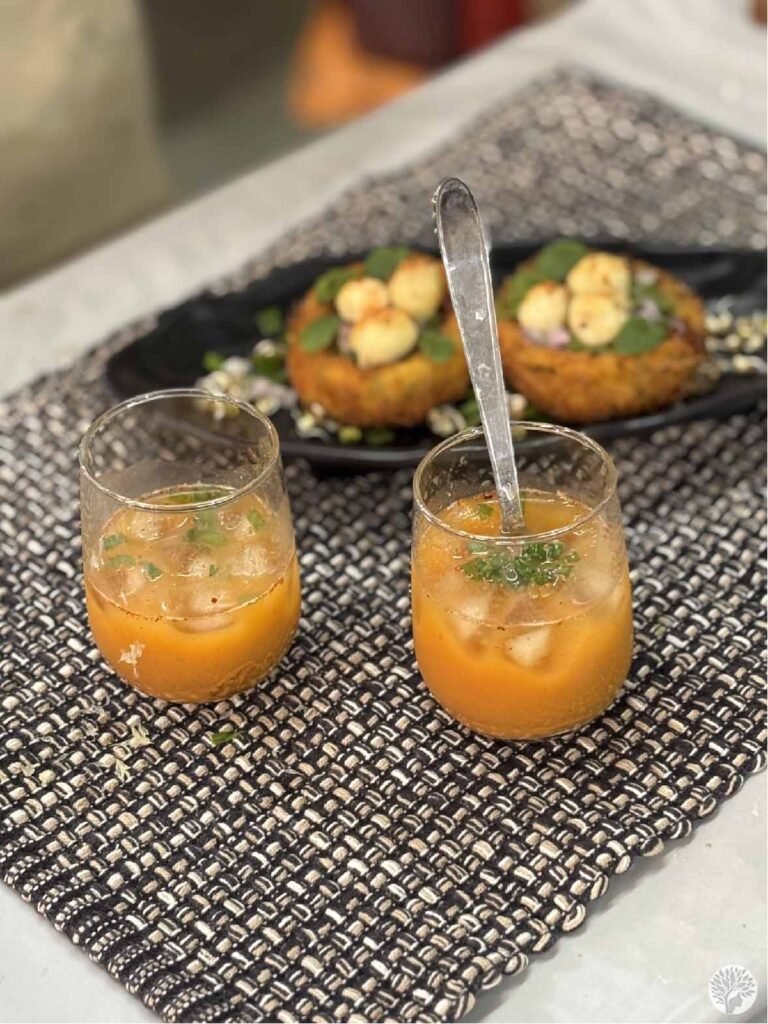
In the middle of this collective hum and the rush of my own plating, I caught a glimpse of my mother across the hall at counter one. She was not rushing. While the world around her seemed to be accelerating, she remained anchored in a state of cooking with presence. She was not interested in adding extra layers or complicated decorations just for the sake of impact. Instead, she was refining exactly what she already had. She focused on her Crispy Nest Potato Chaat, a delicate and savory dish featuring golden potato baskets filled with spiced fillings and vibrant chutneys. There is a sophisticated, almost architectural quality to it, much like a deconstructed potato croquette served in a crisp and edible vessel that holds a world of flavor in a single, textured bite.
Beside her main dish, she placed her Sattu Summer Drink. To those unfamiliar with this traditional Indian cooler, think of it as a savory and protein-rich power shake made from roasted grams flour. It has an earthy and toasted flavor that is incredibly grounding, acting as a natural electrolyte during the intense heat of summers. It is a drink that does not demand attention with bright colors or artificial sugars, but rather offers a deep and quiet nourishment that settles the nervous system.
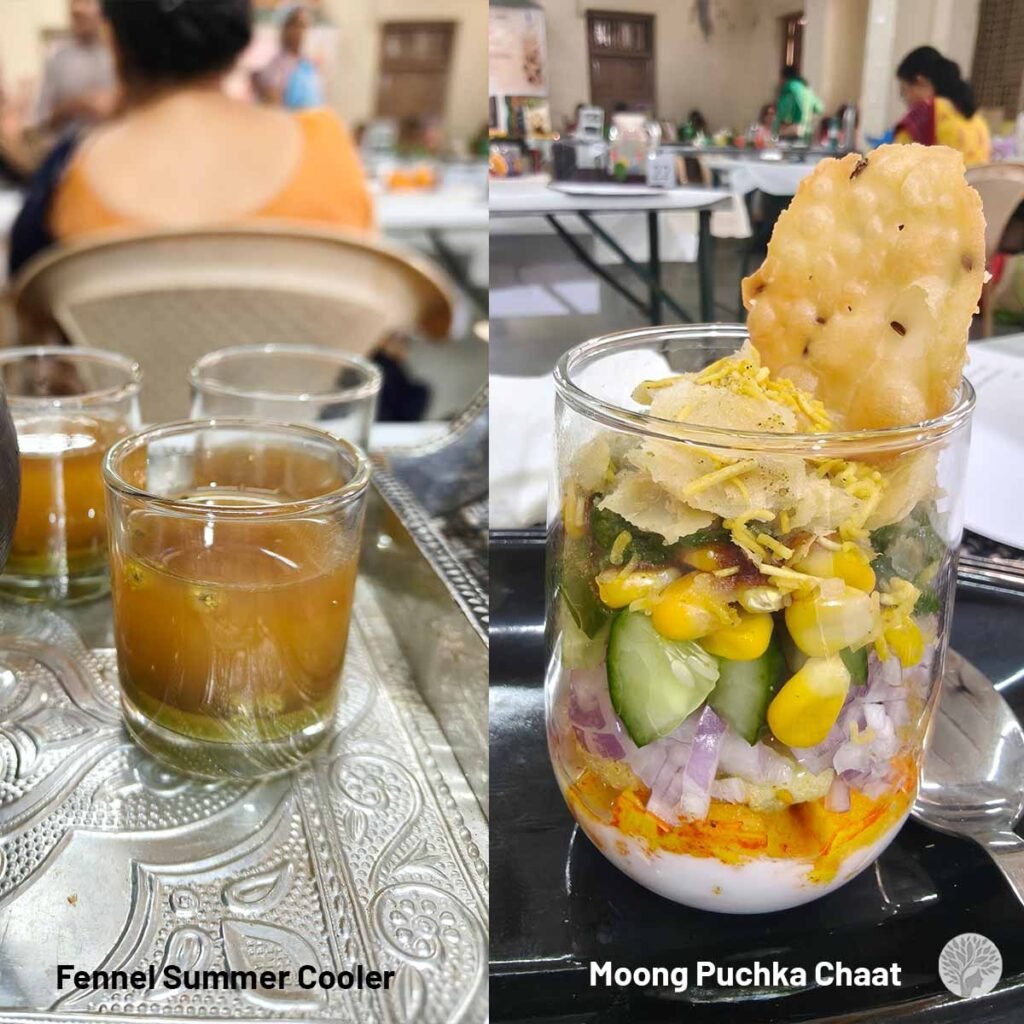
I had prepared a Moong Puchka Chaat, which offers a culinary experience similar to a sophisticated, bite-sized Mexican tostada or a savory French pastry shell. At their heart, these are light and golden fritters made from a delicate, air-whisked moong dal batter that I had soaked and ground to a smooth perfection. These savory spheres are deep-fried until they are crispy on the outside yet soft within, creating the perfect base for layers of cool curd, spiced potatoes, and fresh diced onions and cucumber. When topped with bright and tangy chutneys, they offer a rhythmic burst of flavor in a single, balanced bite. To accompany the spice, I served a Fennel Summer Cooler, a light and aromatic botanical drink that provides a cooling sensation similar to a chilled herbal tisane but with a deeper and sweet-savory finish that lingers on the palate.
The Philosophy of Visual Silence on the Plate
There was a profound lesson in watching my mother move through her station. While others were crowded by the need to do more, she chose to express rather than to impress. She stayed with her original concept and trusted the simplicity of her vision. She added a few micro-sprouts to her plate to symbolize a bird gathering raw grains for its nest. It was a quiet rhythm of nature brought onto a white ceramic surface, and it stood out because of the space she allowed to remain. She understood that mindful living through cooking begins with the courage to leave things out.
In our modern world, we are taught that abundance is the only measure of success. We are told that more ingredients, more steps, and more complexity lead to a better result. But as I watched the judges move through the room, I noticed that they were drawn to the counters that felt calm. They were looking for the Visual Silence that allows a single ingredient to shine. My mother’s station was clean and her movements were deliberate. She was practicing the art of removing friction, ensuring that every motion had a purpose and every element on the plate had a reason to be there.
This approach is exactly what I mean when I talk about mindful cooking at home. It is the ability to shut out the external noise of expectations and focus entirely on the tactile reality in front of you. When you are not fighting against the clock or your own anxiety, you can actually hear the sizzle of the pan and feel the texture of the dough. You become a witness to the transformation of raw ingredients into a meal, and that witnessing is where the healing happens.
Transitioning to a Calm Cooking Routine Under Pressure
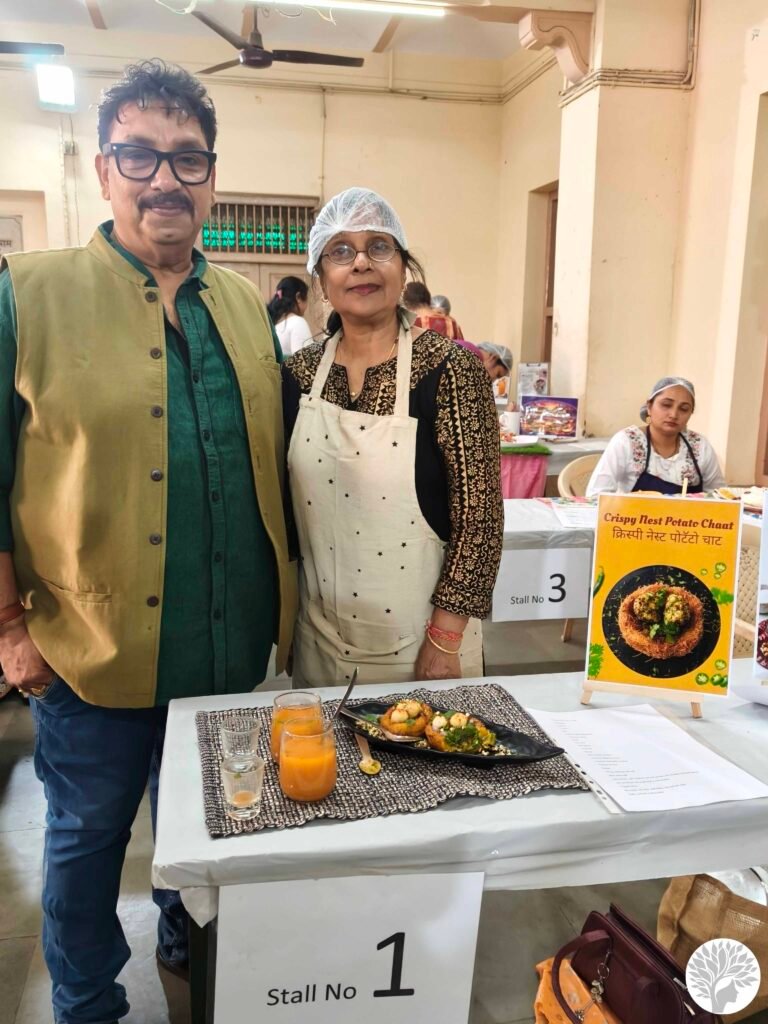
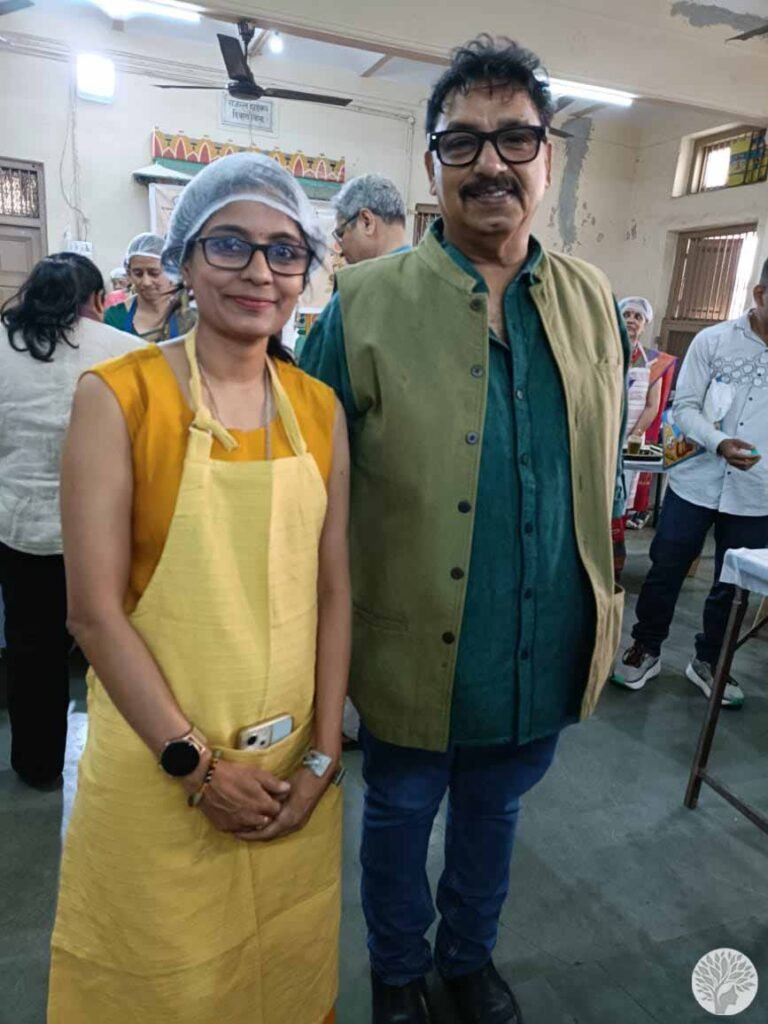
When the forty-five minutes ended, a heavy silence fell over the room. The professional chefs, including the renowned Chef Vishnu Manohar, began their walk through the stations. They were not just tasting the food for its salt and spice. They were looking at our posture and how we maintained the integrity of our workspace. This is the true essence of a calm cooking routine because it requires you to be aware of every spill and every pause. It is easy to be mindful when you are alone in a quiet kitchen, but the real test is maintaining that peace when the stakes are high.
There is a significant difference between cooking in your own sanctuary and cooking in an unfamiliar space. At home, you reach for a spoon or a spice without thinking, but in a contest, you must be fully awake to every movement. My mother was not the fastest person in that room, and she was certainly not the loudest, but she was undoubtedly the most present. She had the final vision of the dish held firmly in her mind long before her hands ever touched the plate. This mental clarity is a form of stress free cooking that we can all benefit from in our daily lives.
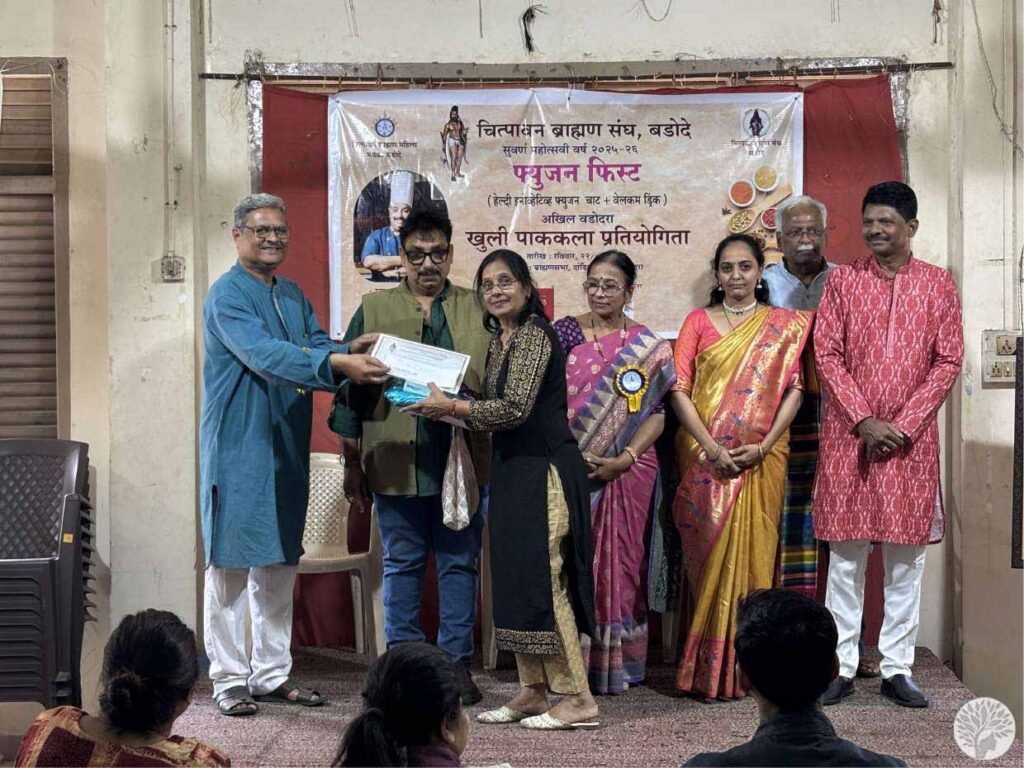
When the results for the first round were announced, her name was called first. We moved into the final round where she had to recreate that same magic under even more scrutiny. Again, she leaned into her slow cooking mindset and refused to let the tension of the room dictate her pace. When the final announcement came and she was awarded the first position, I felt a surge of pride and emotion, but the placement was not what stayed with me. What lingered was the realization that mindful cooking at home is not about the final result, but about the quality of the journey to get there.
A Small Peek Into What We Made
If you feel like trying these at home, here’s a simple glimpse:
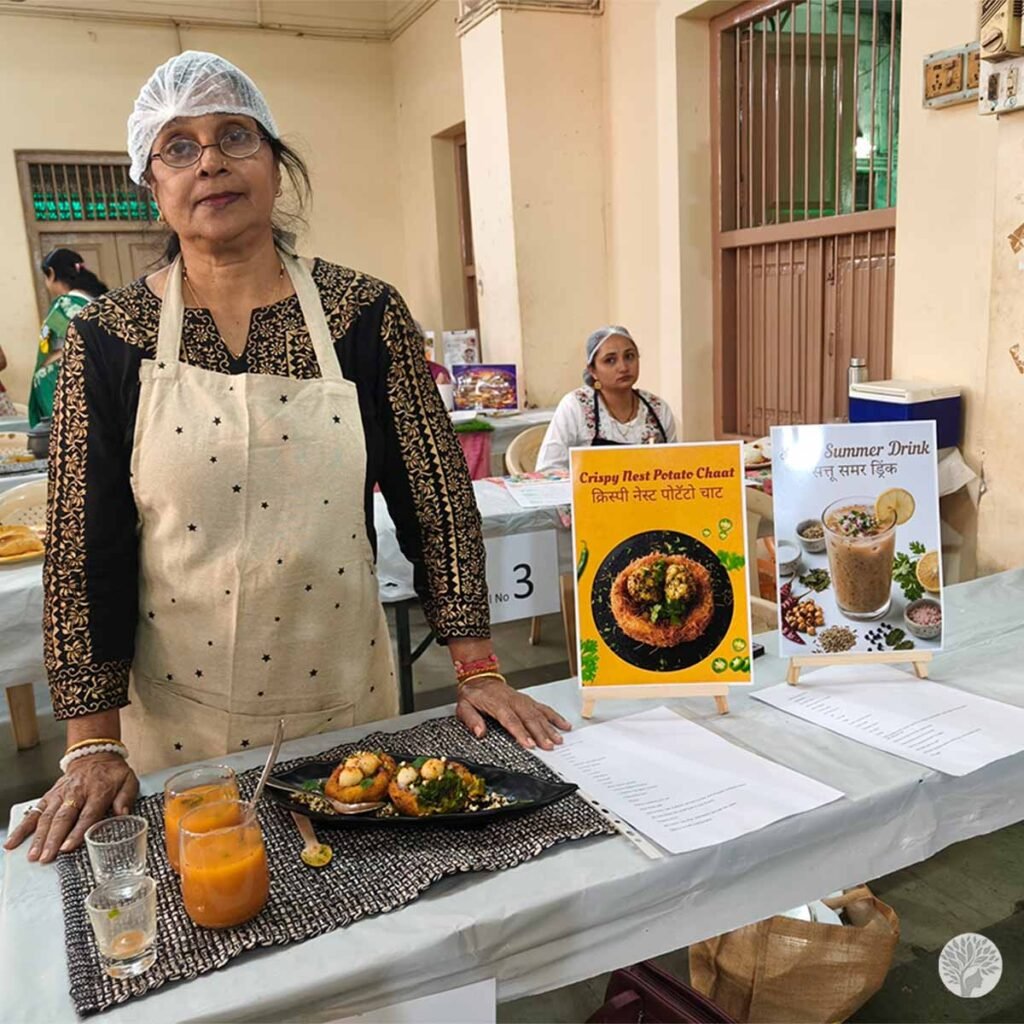
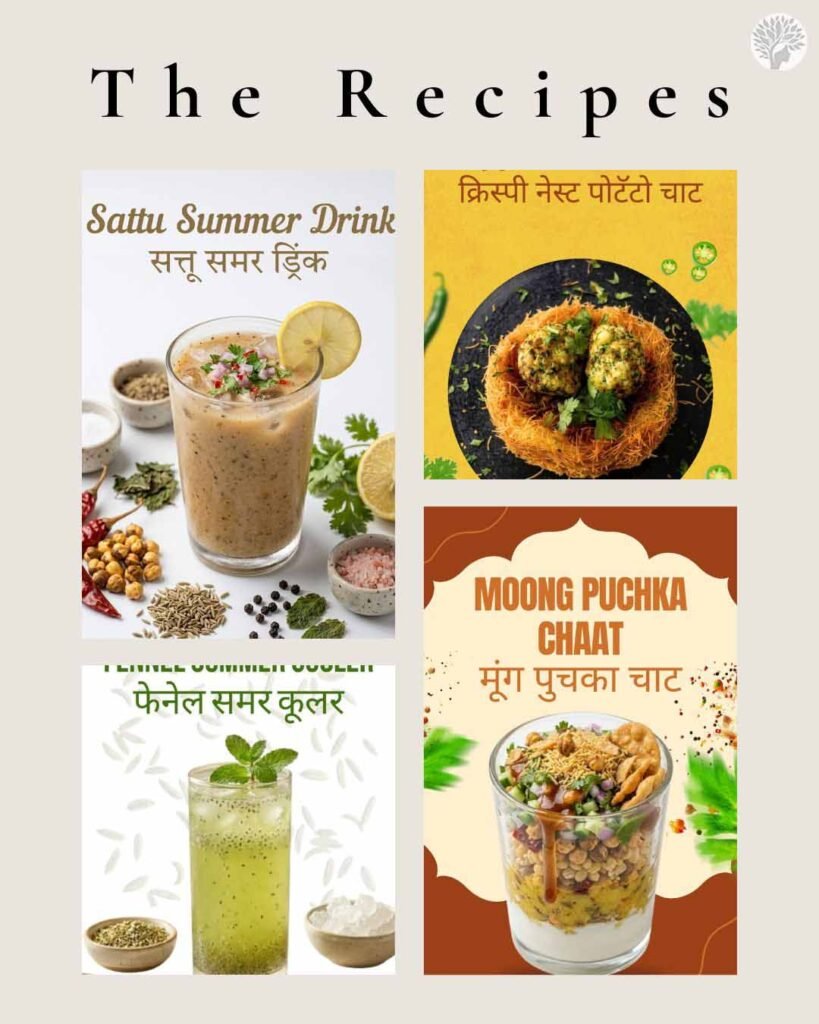
- Crispy Nest Chaat Mashed potatoes shaped into nests, coated, and fried until crisp before being filled with chutneys and paneer.
- Sattu Summer Drink Roasted gram flour blended into a cooling and savory drink with lemon and roasted spices.
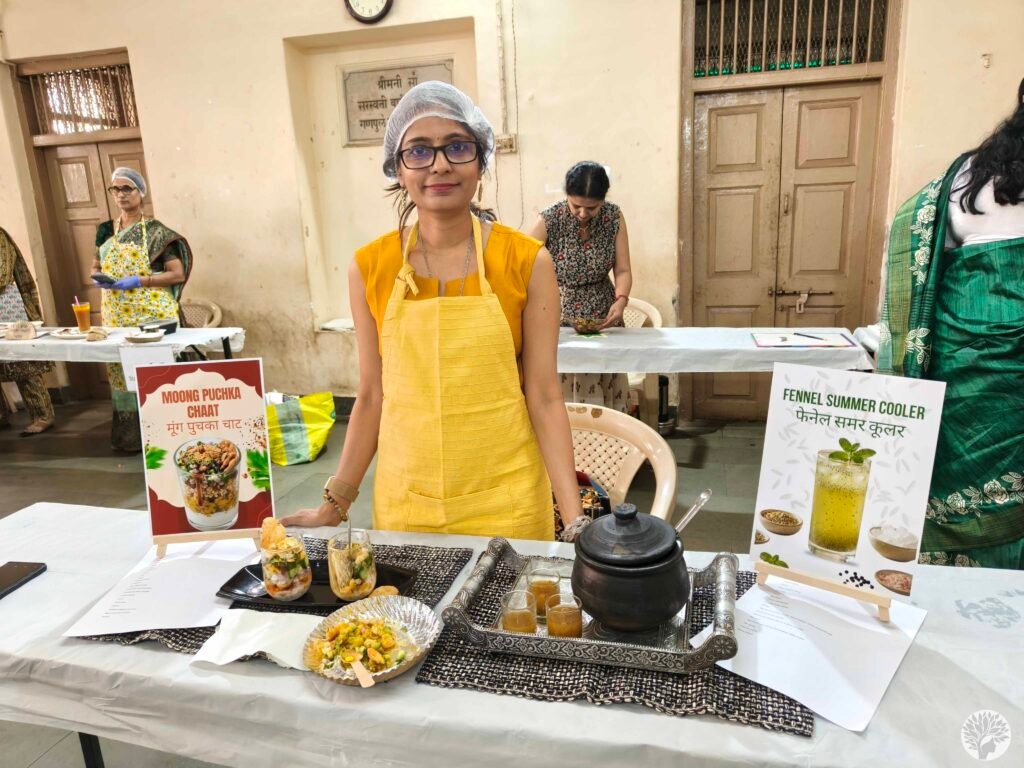
- Moong Puchka Chaat Crispy shells filled with spiced moong, chilled curd, chutneys, and fresh pomegranate toppings.
- Fennel Summer Cooler A light fennel-based drink with mint and cooling seeds which is perfect for hot days.
👉 I’ll be sharing each of these recipes in detail in the coming posts so you can bring this same sense of presence into your own kitchen.
Cultivating a Simple Cooking Mindset Every Day
This experience reminded me that cooking outside of your comfort zone is a powerful way to build confidence and resilience. However, we do not need a professional contest to practice these lessons. Every evening offers us a chance for a tactile reset. When we choose to simplify the plate, we quiet the mind. We can take the lessons from that Sunday in Baroda and apply them to our own Monday nights.
Begin by clearing your counter of anything that does not belong there. This creates the Visual Silence your brain needs to stop scanning for problems. Focus on the feeling of the water on your hands as you wash your vegetables. Listen to the sound of the knife against the board. These are sensory anchors that pull you out of the future and back into the present moment. By treating your kitchen as a sanctuary rather than a factory, you transform a chore into a restorative ritual.
Mindful Living Through Cooking and Gratitude
I want to extend a heartfelt thank you to the organizers at the Chitpavan Brahman Sangh and the sponsors of this beautiful contest. You did more than just provide a platform for us to cook. You created a space that allowed us to experience mindfulness in its simplest and most real form. You helped us realize that even in a crowded room of thirty-five people, one can still find a sense of cooking as self care.
That Sunday, I did not just see my mother win a competition. I saw what calm looks like in action. I saw that while cooking outside your comfort zone builds confidence, cooking with true presence builds something much deeper. It builds peace. When we learn to stay present during the rush of a competition, we learn how to stay present during the rush of life.
"Mindful cooking at home is not about doing more, but about being present with what you are already doing."
Love ya, stay mindful!