

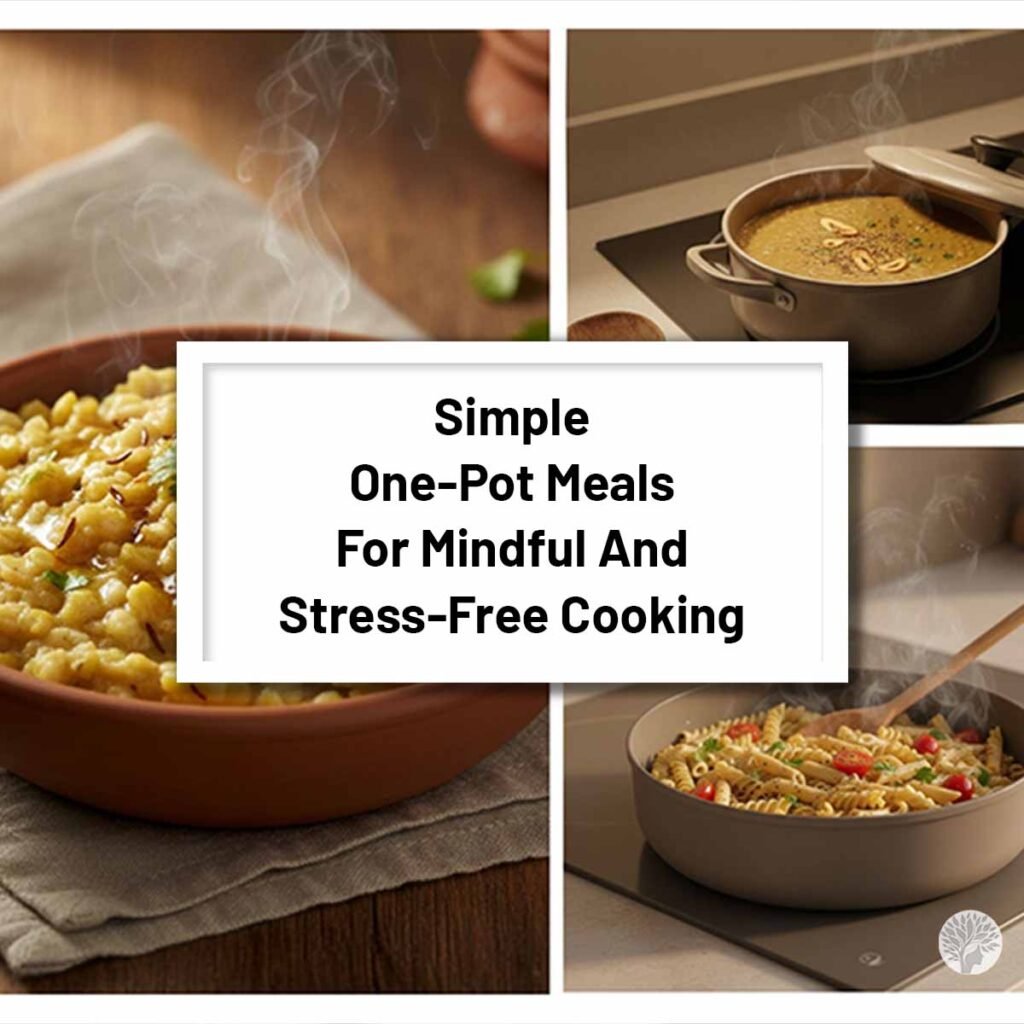
Simple One-Pot Meals For Busy Moms turn stressful evenings into calm, manageable routines. With fewer steps, less cleanup, and simple ingredients, you can cook nourishing meals without overwhelm and create a peaceful kitchen environment even on your busiest days.
Disclaimer: This post may contain affiliate links. I only share tools that I personally use and love in my kitchen sanctuary.
Hey Beautiful!
Dinner shouldn’t feel like a battlefield.
I want you to close your eyes for a moment and picture a Friday at 5:14 PM. For me, that specific Friday was the “loudest” day of the week. My son was at the kitchen table with his laptop open to a high-speed game, the aggressive click-clack of his mechanical keyboard hitting the hardwood acting as a metronome for my growing anxiety. On the counter, my own laptop was open to a half-finished email, its cold blue light competing with the harsh, buzzing overhead LED.
I was trying to cook a full meal that got multiple dishes, too many steps, all at once. Like so many of us, I felt that invisible pressure to produce a “perfect” Friday night dinner to mark the end of the week and prove I was keeping it all together.
But as I stood there, I realized I wasn’t just cooking; I was managing a crisis. And the kitchen was winning.
There were three different pots on the stove, all boiling at different speeds. The sink was already overflowing with prep bowls. Every time I turned around, I bumped into a stray sports bag or a pile of mail. My shoulders weren’t just near my ears; they were practically fused to them.
That was the evening I stopped fighting the kitchen.
The Shift Toward One-Pot Simplicity
In that moment of Friday overwhelm, I turned off the burners, took a deep breath, and made a choice. I realized that if I could simplify the physical vessel of our dinner, I could simplify the emotional frequency of our entire evening.
One-pot meals are more than just a shortcut; they are a deliberate act of sensory decluttering. When you commit to a single pot, you aren’t just reducing the number of dishes in the sink—you are reducing the “decibels” of your environment. You are creating a visual and mental boundary that tells your nervous system, “We are only doing one thing right now. It is safe to settle.”
The calm you want in your life often begins in the kitchen. When you simplify the process, your home stops demanding your energy and finally starts supporting it. It moves the kitchen from a place of “Logistical Noise” to a place of Visual Silence.
A Simple Reset You Can Try Tonight
Before you start dinner, pause for a moment. Try this 3-step ritual to bring the “Hush” back into your kitchen:
- Select Your Vessel – Choose a heavy, beautiful pot (like a Dutch oven) that feels grounded and high-quality in your hands.
- Edit Your Ingredients – Strip your recipe down to the essentials. Fewer textures and colors on the cutting board lead to less mental static.
- Lower the Tempo – Intentionally move slower than you think you “should.” Match your physical pace to the gentle simmer of the food rather than the ticking of the clock.
Why One-Pot Cooking Creates a Calm And Peaceful Home Environment
Beyond the emotional relief, there is a biological reason why narrowing our focus to a single pot works so effectively for a busy mother’s brain. Here is how one-pot cooking acts as a functional system for peace:
- Eliminating Decision Fatigue – By 5:00 PM on a Friday, your “Executive Function” the part of the brain responsible for complex choices is exhausted. A multi-course meal requires constant monitoring and timing. One-pot cooking provides a singular, linear path that preserves your remaining mental energy.
- The “Invisible Sink” Effect – Visual contrast, like a sink full of clashing pots and pans, keeps the brain in a “High-Beta” alert state. By minimizing utensils, you ensure the kitchen remains visually quiet. This allows for a “Visual Reset” that makes your post-dinner relaxation actually feel restorative.
- Linear Rhythms vs. Frantic Multi-tasking – Human brains don’t actually multi-task; we “switch-task” rapidly, which spikes cortisol and anxiety. A one-pot process is a rhythmic activity. It acts as a Sensory Anchor, turning a chore into a moving meditation that grounds you in the present moment.
The Tactile Reset of the Cooking Ritual
Now, when I start our Friday dinner, I perform a small, intentional ritual. I begin by clearing the “Logistical Noise” off the granite counter like the school circulars, the half-finished coaching assignments, and the tangled charging cables that seem to multiply on their own. I put my laptop away and tuck the mail into its closed wooden box.
Then comes the most important shift. I switch off the “Big Light.” You know the one that harsh, white tubelight that makes everything feel like a high-stakes exam hall. Instead, I turn on the small, warm lamp tucked in the corner of the backsplash. Instantly, the sharp edges of the kitchen soften. The stainless steel stops glaring, and the room begins to whisper rather than shout.
Next, I pick my vessel. Usually, it’s a heavy, matte-textured Dutch oven or my favorite deep kadhai that has that grounded, high-quality weight to it.
As I begin to chop the vegetables, I don’t rush. I’ve stopped treating the prep like a race to the finish line. Instead, I listen to the rhythmic thump of the knife against the heavy wooden board. I notice the sharp, bright aroma of fresh ginger and the way the mustard seeds dance and pop the moment they hit the warm oil.
This isn’t a chore anymore; it’s a meditation.
Because I’ve committed to a single pot, I know there isn’t a mountain of bartan waiting for me at the end of the night. That knowledge alone drops my heart rate. It allows me to actually be there while the food is cooking.
I can truly listen to my son as he leans against the counter, finally opening up about his day or some new track he’s listening to. I can notice the way the steam from the pot catches the golden lamp light, rising in soft curls like a physical manifestation of the peace we’re building.
In these moments, I am no longer the “Chief Operating Officer” of a high-stress, high-decibel household. I am a woman creating a sanctuary. I am teaching my teenager and myself that even in the middle of a chaotic week, we can choose to create a calm and peaceful home environment.
The Sensory Harmony of a One-Pot Kitchen
When we step away from traditional, multi-course meals, we aren’t just changing a recipe; we are removing “Kitchen Friction.” Modern cooking has become an exercise in high-stakes multitasking which is a symphony of competing timers, a landscape of overflowing prep bowls, and the constant mental calculation of “what goes in next.” This high-friction environment is what drains our remaining “Friday energy” before we even take the first bite.
By moving to a one-pot rhythm, you fundamentally change the sensory architecture of your evening:
- Expanding Your Visual Margin – In our pursuit of Visual Silence, we look for “negative space.” In a one-pot kitchen, your countertops remain clear and breathable. Instead of a crowded stovetop with steam rising from four different corners, you have one singular focal point. This physical breathing room prevents that “closed-in” feeling that often strikes after a long week of managing a busy household.
- The Power of a Singular Aroma – Complex cooking often creates what I call a “Scent Collision”, a mix of competing, high-contrast smells that can be subtly overstimulating for a tired brain. A one-pot meal, whether it is a slow-simmered harvest stew or a fragrant grain bowl, offers a singular, cohesive fragrance. This act of Sensory Anchoring allows your mind to settle into one comforting scent rather than frantically processing a chaotic bouquet of aromas.
- A Graceful Transition into the Golden Hour – The “aftermath” of a meal is often the biggest barrier to maintaining a calm and peaceful home environment. When the meal is over and there is only one vessel to rinse, the “Home Reset” takes minutes, not an hour. You aren’t just cleaning a dish; you are reclaiming your evening. This fast reset ensures that your transition into the “Golden Hour”. That precious time for rest and true presence with your family is seamless and stress-free.
The Mindful Shift through the Cooking Process
When we choose a one-pot meal, we aren’t just selecting a recipe; we are choosing a different pace for our evening. This is where the “Work of the Home” becomes the “Rest of the Soul.” To move from a high-decibel Friday into a calm and peaceful home environment, try these three intentional shifts as you cook:
- Slowing Down the Prep – Treat the chopping of vegetables as a rhythmic, grounding activity. In the world of Visual Silence, we appreciate the raw beauty of natural materials. Notice the crisp, satisfying sound of the knife against the wood and the vibrant, unedited colors of the produce. By focusing on the blade and the board, you pull your attention away from the “Logistical Noise” of the week and anchor it in the present.
- Focusing on the Aroma as an Anchor – As your ingredients begin to meld in the pot, take a deep breath. Instead of checking your phone or the clock, let the rising steam and the singular scent of the spices act as a Sensory Anchor. This is a biological signal to your brain that the “doing” is done and the “being” has begun.
- Cooking with Intention – There is a profound difference between frantic stirring and mindful movement. View the act of stirring your one-pot meal as a way of infusing calm into the very nourishment that will sustain your family. This shift in perspective turns a kitchen chore into a restorative ritual, ensuring that by the time you sit down to eat, your internal environment is as peaceful as your home.
Three Simple Ideas for One-Pot Nourishment
To begin your journey toward a quieter kitchen, I want to share three foundational concepts. These are not just meals. They are sensory experiences designed to anchor your evening.
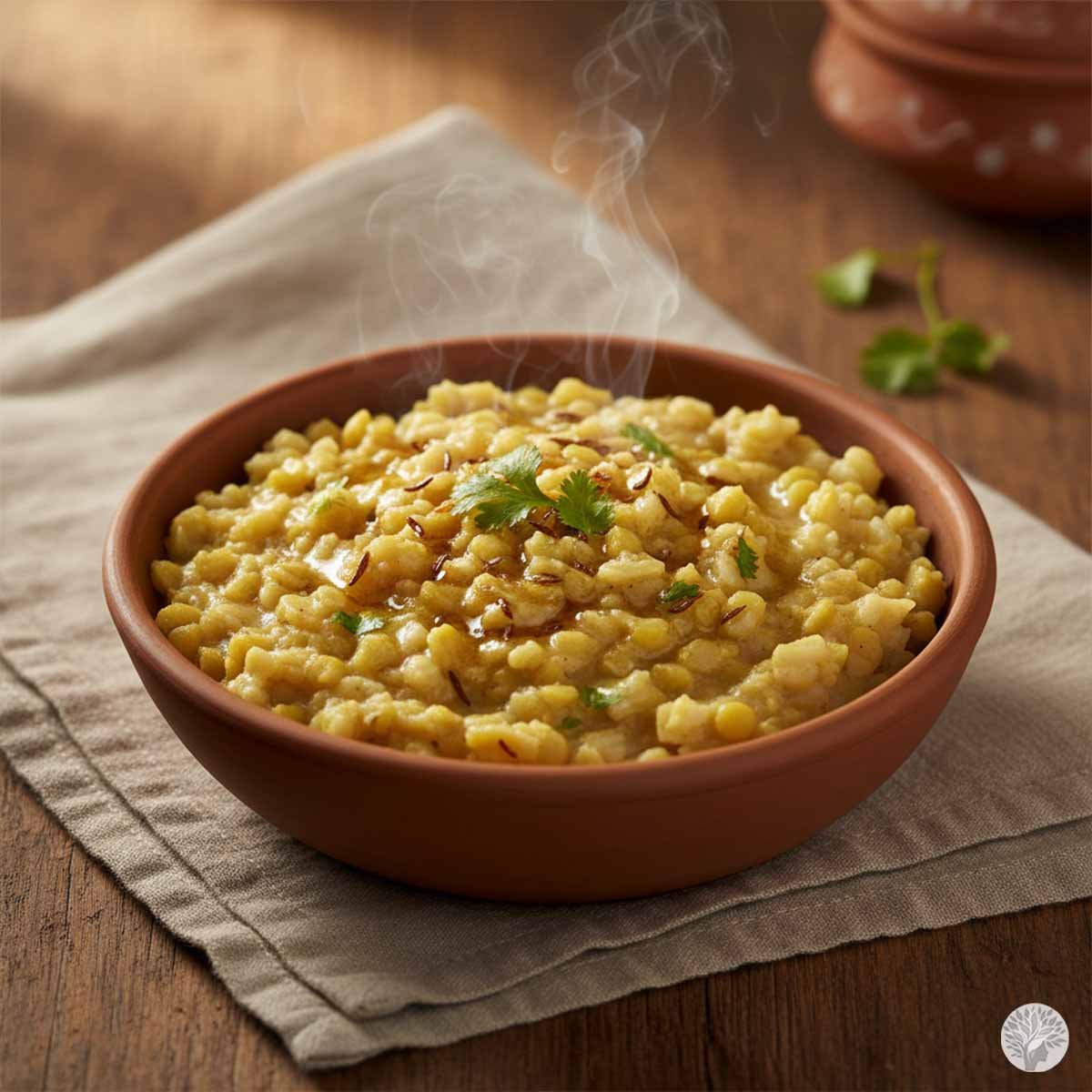
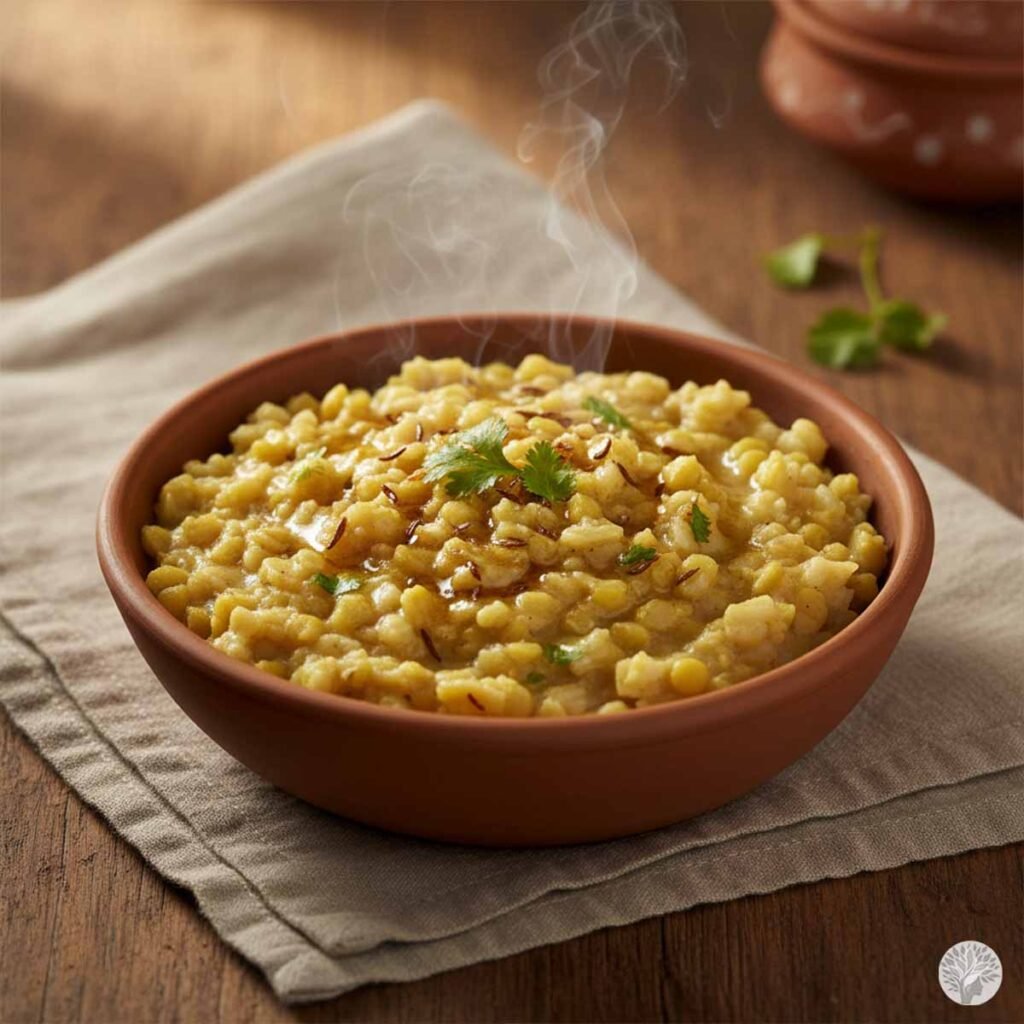
Vegetable Khichdi as a Grounding Bowl – This is a gentle and ancient blend of rice and lentils with warming spices like turmeric and toasted cumin. It acts as the ultimate hug in a bowl for rainy days or particularly stressful weeks. Because the ingredients merge into a single, soft texture, it requires very little “sensory work” from your body to digest. It is the culinary equivalent of slipping into your favorite linen sheets at the end of a long day.
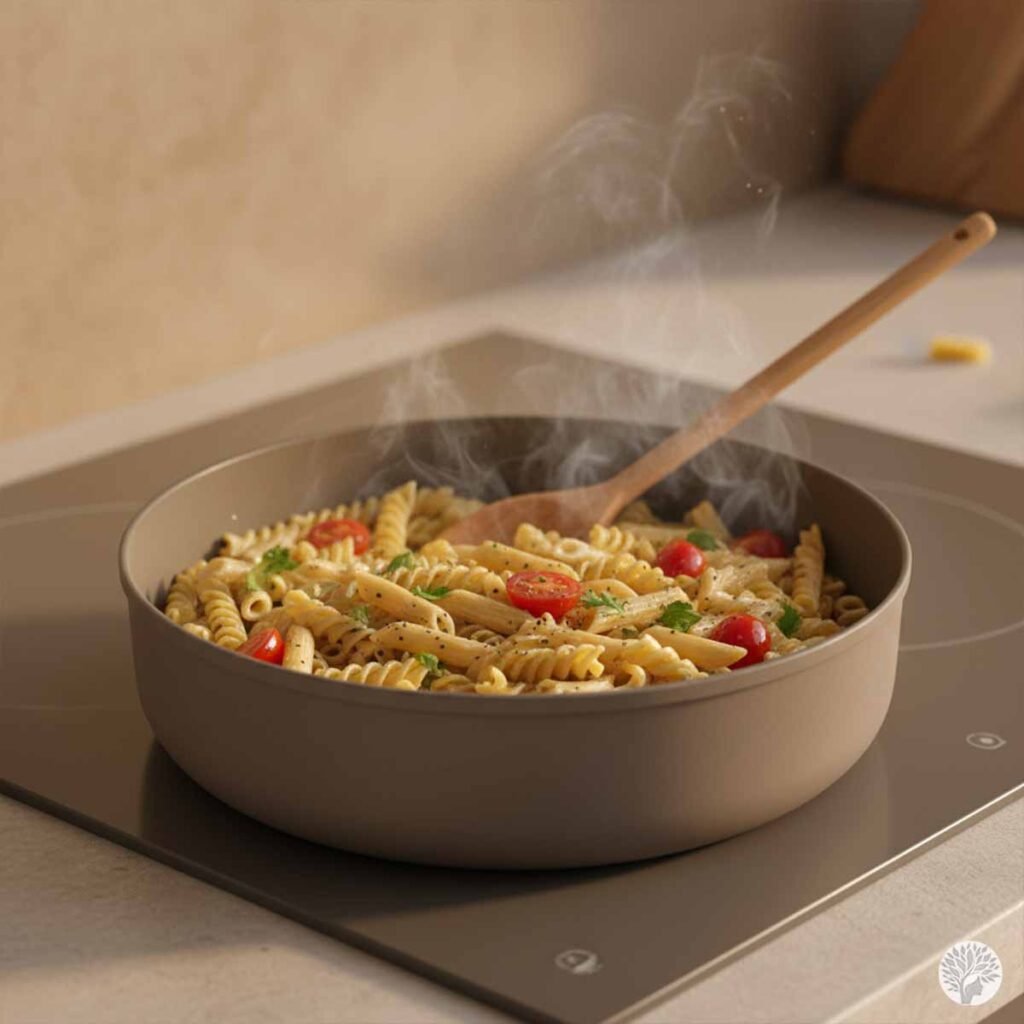
One-Pot Pasta for Seamless Evenings – Cooking the pasta directly in its own sauce is a revelation for the modern home. It allows the natural starches to create a silky and unified texture without the need for a separate colander or the high-decibel noise of boiling water. The process is quiet and linear. It results in a dish that feels sophisticated and intentional while leaving your stovetop remarkably clear.
Simple Lentil Soup for Deep Vitality – This is a protein-rich and earthy soup that simmers quietly on the stove. It fills the house with a sense of warmth and security that no candle can replicate. Because it is a “set and forget” meal, it creates an emotional margin. You can step away from the stove to sit with your teenager or simply watch the light change in your living room while the pot does the work for you.
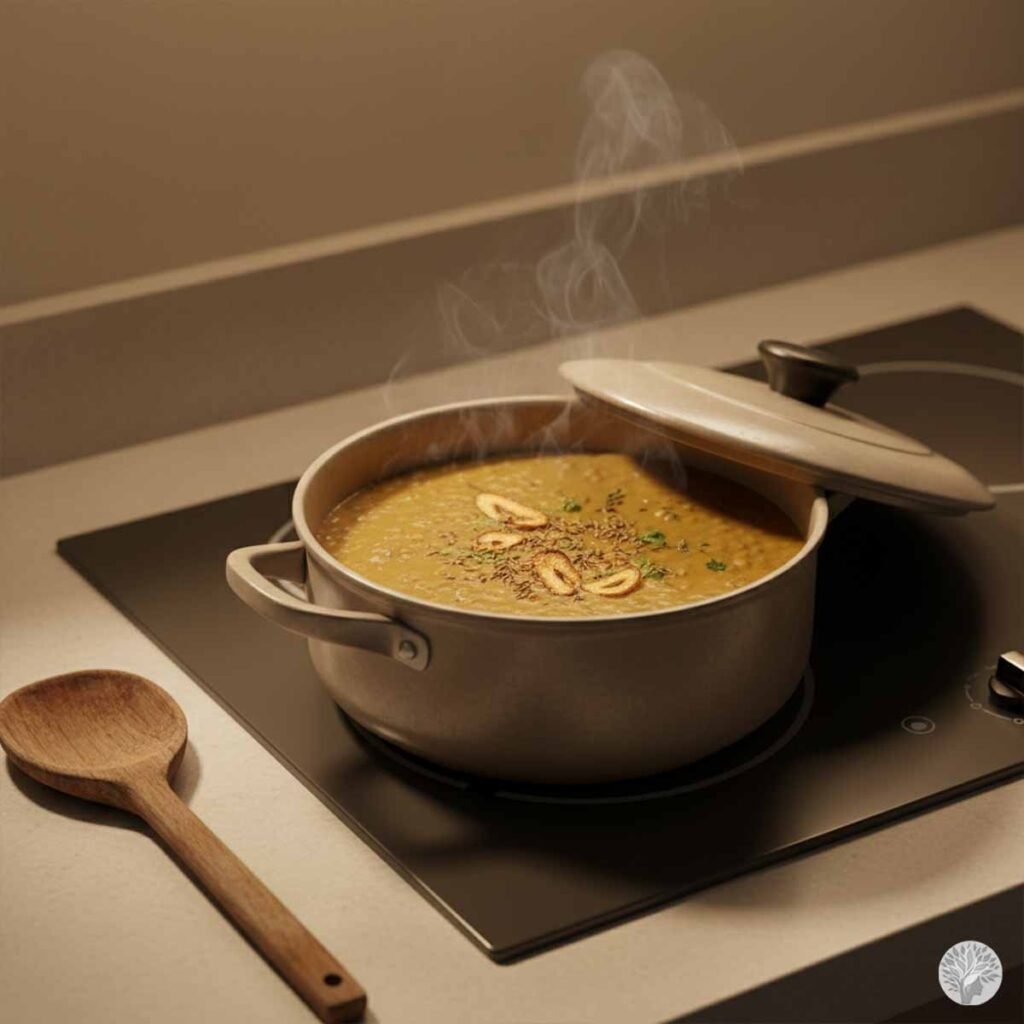
In the coming days, I will be sharing the detailed and step-by-step rituals for each of these three dishes. Each one is designed to be a “Low-Decibel” experience that respects your time and your need for Visual Silence. We will look at how to bring these calming textures into your own kitchen with ease and intention.
I would love to hear from you in the comments below. Which of these three sounds like the “hug in a bowl” you need this Friday? Are you leaning toward the Grounding Khichdi, the Seamless One-Pot Pasta, or the Vitality Lentil Soup? Let me know which one you want to see first.
Final Thoughts on Reclaiming Your Friday Night
The transition from a high-pressure week into a restful weekend does not require a grand gesture. It begins with the small and intentional choice to lower the volume of your environment. By choosing a single pot, switching off the “Big Light,” and leaning into the rhythmic process of cooking, you are doing more than just making dinner.
You are teaching your nervous system that the day is done. You are showing your family that peace is a priority. And most importantly, you are creating a calm and peaceful home environment where you can finally breathe.
"When we simplify the plate, we quiet the mind."
Love ya, stay mindful!

I am blown away by how sensorially nuanced this article is. Amazing, Hetal ji!
Thank you so much. It means a lot that you felt it so deeply.