
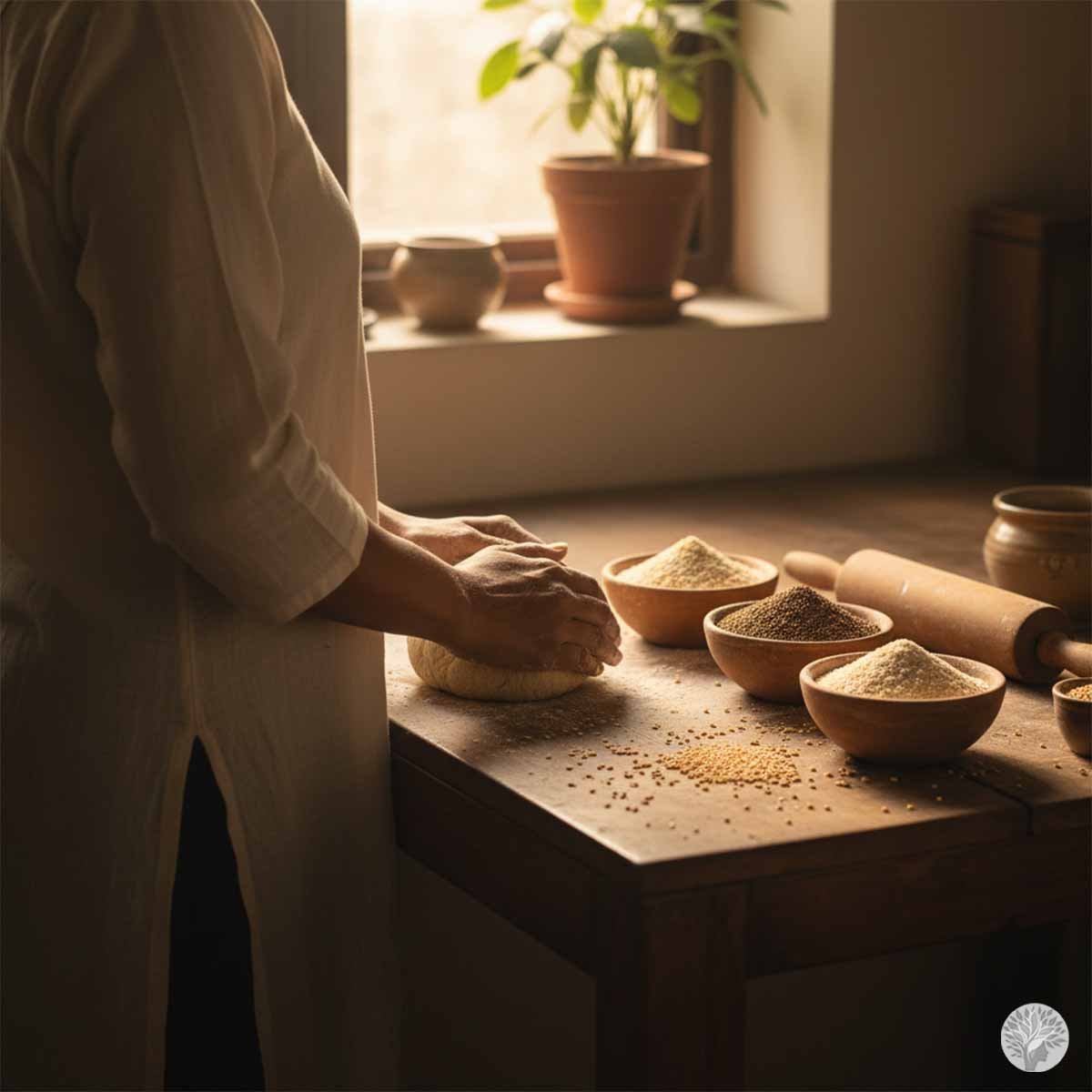

Benefits of Ancestral Grains lie in their natural nutrition, slower digestion, and deep connection to traditional food wisdom. Unlike refined flour, grains such as bajra, ragi, barley, and jowar retain their fiber, minerals, and natural vitality, helping stabilize energy levels while supporting digestion and long-term health through wholesome, minimally processed nourishment.
Hey Beautiful!
There is a specific kind of silence that fills a kitchen when you are preparing something from scratch. It isn’t the empty, hollow silence of a house waiting for life to return; it is a heavy, warm, and expectant silence. It is the silence of creation. When you stand at your counter, hands dusted with flour, you aren’t just making a meal. You are participating in an ancient rhythm that has sustained humanity since the beginning of time.
For years, my time in the kitchen felt like a task to be checked off. It was a race to get nourishment on the table before the day spiraled into the next requirement. I used whatever was easiest, whatever was fastest. I realized that while my garden was blooming with intention, my pantry was filled with “convenience” items that carried no vitality. I started looking closely at the flour in my pantry. It was the fine, stark-white powder we had come to accept as normal. Yet the more I looked at it, the more distant it felt from the field where grain once grew. Something about it felt stripped of its story.
That quiet discomfort led me to explore the grains our grandparents once used without question. Choosing ancestral grains slowly became my way of reclaiming that connection. It is not just about nutrition; it is about bringing a piece of history and a steadier rhythm back into our daily bread.
The Wisdom of Ancient Grains is Now A Disconnect in the Modern Pantry
To understand why ancient grains are so vital, we have to look at what we have lost. Modern wheat has been engineered for yield and industrial efficiency. By the time that white flour reaches your kitchen, it is effectively “dead.” It provides calories, but it does not provide prana meaning the vital life force.
When we consume these highly processed flours, our bodies react to that lack of nourishment. We experience blood sugar spikes and inflammation. We are full, but we are still hungry for the grounding force that only the earth can provide. Across generations, a handful of grains quietly nourished our homes. Bajra, Jowar, Barley, and Ragi were not exotic ingredients; they were simply everyday wisdom.
Why Choose Whole Grain Cooking?
Whole grain cooking is an act of returning to our roots. Ancestral grains are like silent teachers. They haven’t been forced to change to fit a machine; they have simply held the rhythm of the seasons. In our culture, these grains have always been there, waiting for us to return to them.
Bajra (Pearl Millet) – The Winter Grain for Sustained Energy
Bajra is the grain of the winter. It is sturdy, warming, and deeply grounding. When you hold a handful of Bajra flour, you notice its grayish-green hue and its coarse texture. It feels substantial.
- Benefits: Warming and grounding for the body.
- Nutritional Power: High in magnesium and potassium, making it a heart-healthy choice.
- Vitality: Provides a slow release of energy, preventing the mid-day crash.
Jowar (Sorghum) – The Balanced Grain for Healthy Digestion
Jowar is incredibly versatile and cooling. It is a staple in many Indian households for a reason. It has a neutral, earthy flavor that makes it a perfect canvas for mindful seasoning.
- Benefits: Naturally gluten-free and gentle on the gut.
- Nutritional Power: Packed with antioxidants and high fiber.
- Vitality: Helps regulate our digestive fire (Agni), ensuring we truly assimilate the goodness of our food.
Barley – The Cooling Grace of Ancient Staples
Barley is one of the oldest cultivated grains on the planet. It is gentle, light, and remarkably cooling. In the heat of the summer, a barley-based bread or porridge can act as a balm for a restless mind.
- Benefits: Highly alkaline and cooling for the system.
- Nutritional Power: High in soluble fiber, which keeps us feeling light and clear-headed.
Ragi (Finger Millet) – Mineral Wealth and Grounding
Ragi is a powerhouse. It is deep, dark, and rich. When I use Ragi, I feel like I am eating the very minerals of the earth.
- Benefits: Incredible for bone health and natural nourishment.
- Nutritional Power: Famous for high calcium and natural iron.
- Vitality: Its amino acids help reduce anxiety and promote a sense of calm.
My First Bajra Roti and the Shift that Followed
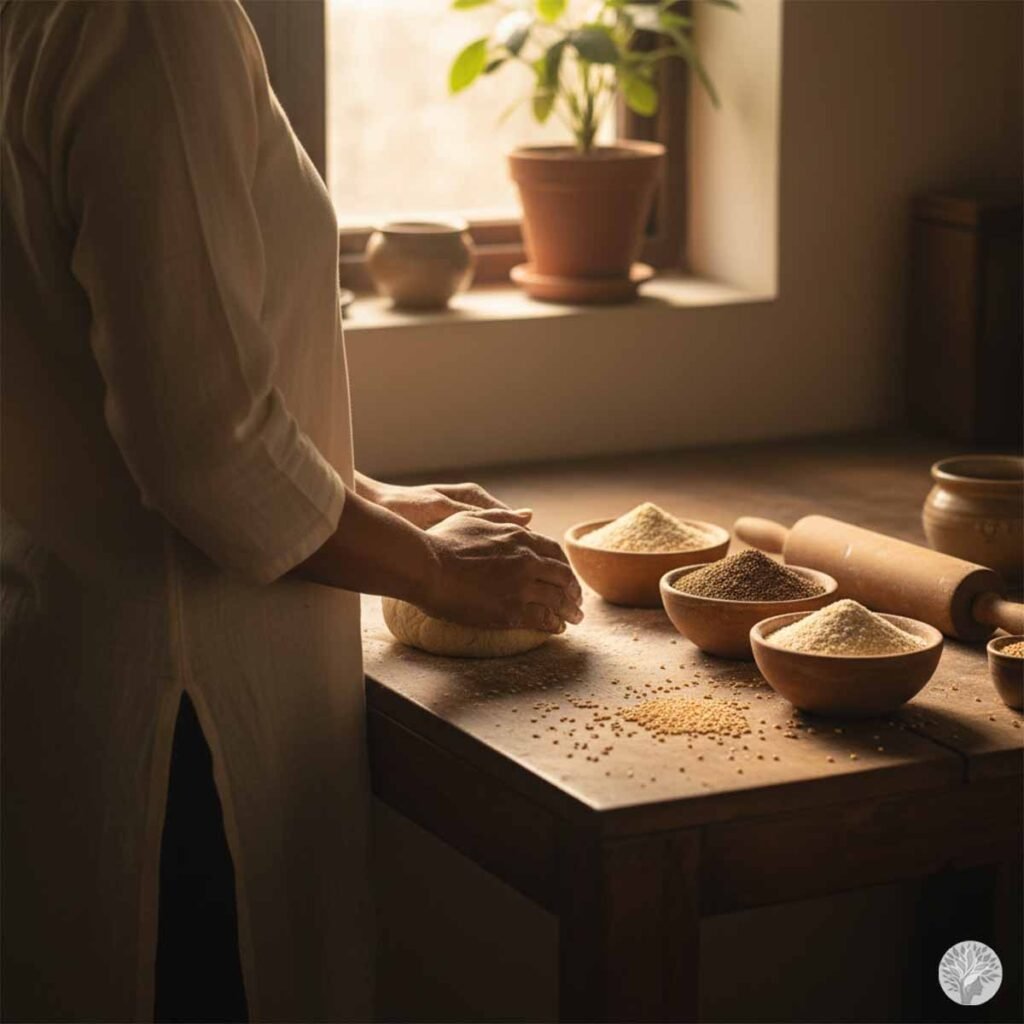
I remember the first time I made a simple Bajra roti on a crisp winter evening. For years, I had made standard wheat rotis on autopilot. But Bajra wouldn’t allow for that. As the dough formed under my hands, it felt heavierand more fragile. I felt a shift in my own rhythm. I couldn’t rush this. If I hurried, the dough would crack. I had to be present with the moisture level and the heat of the griddle. I wasn’t just cooking. I was tending to something real. When we eat this way, the “frantic energy” of the day begins to settle.
Mindful Flour Selection as a Ritual of Connection
If your pantry currently holds only refined flour, start slowly. You don’t need a total overhaul. Replace just one meal a week with an ancestral grain. The next time you walk into your pantry, I invite you to start a ritual of connection:
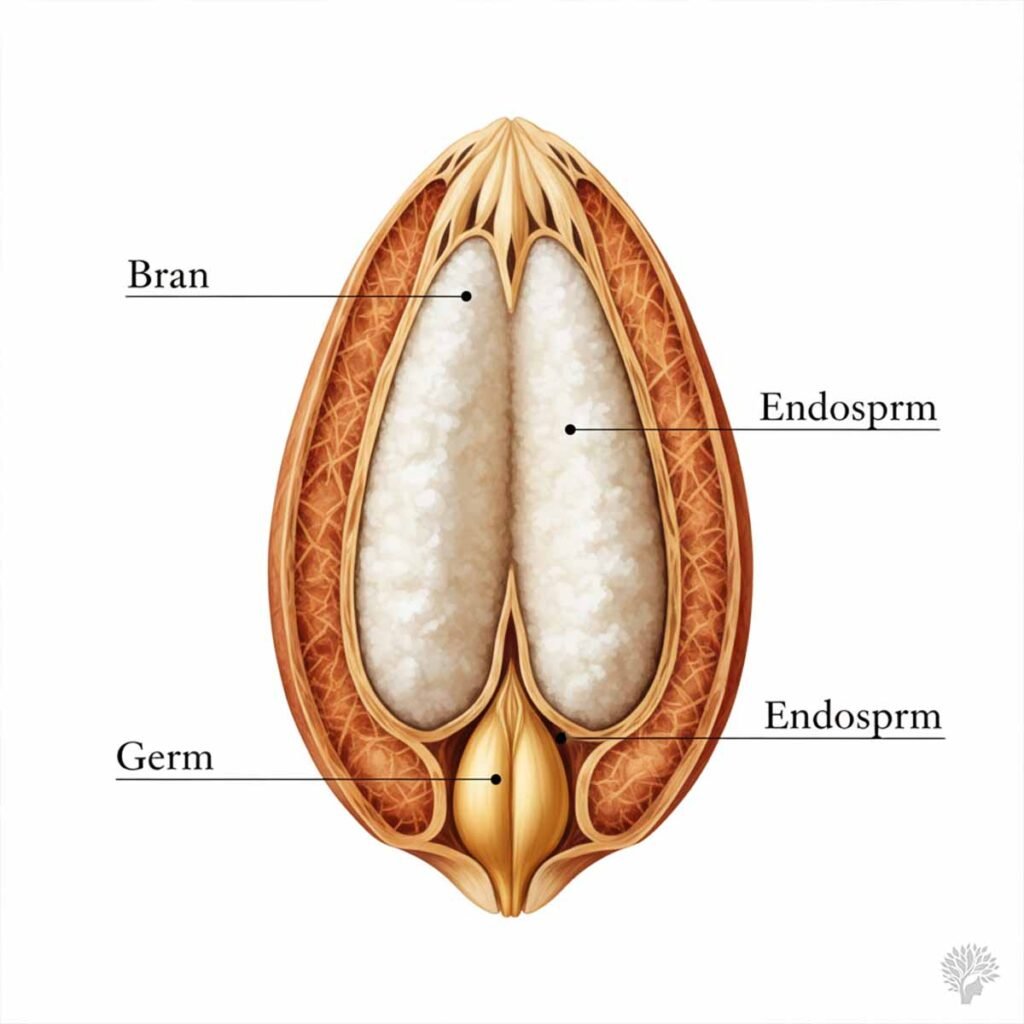
- Notice the Texture: Stone-ground flour should feel alive that means it is slightly coarse and rich in color. You should see the flecks of the bran and the germ.
- Understand the Source: Look for brands that prioritize stone-grinding (Chakki) over roller-milling. It keeps the temperature low, preserving the “soul” of the grain.
- Honor the Season: Choose flours that match the weather. Use dense flours like Bajra in winter and lighter heritage grains like Barley when the air turns warm.
Just as we learned in the practice of The Art of Slow Cooking, patience is often the secret ingredient.
Simple Millet Recipes for the Ritual of the Mindful Morning Porridge
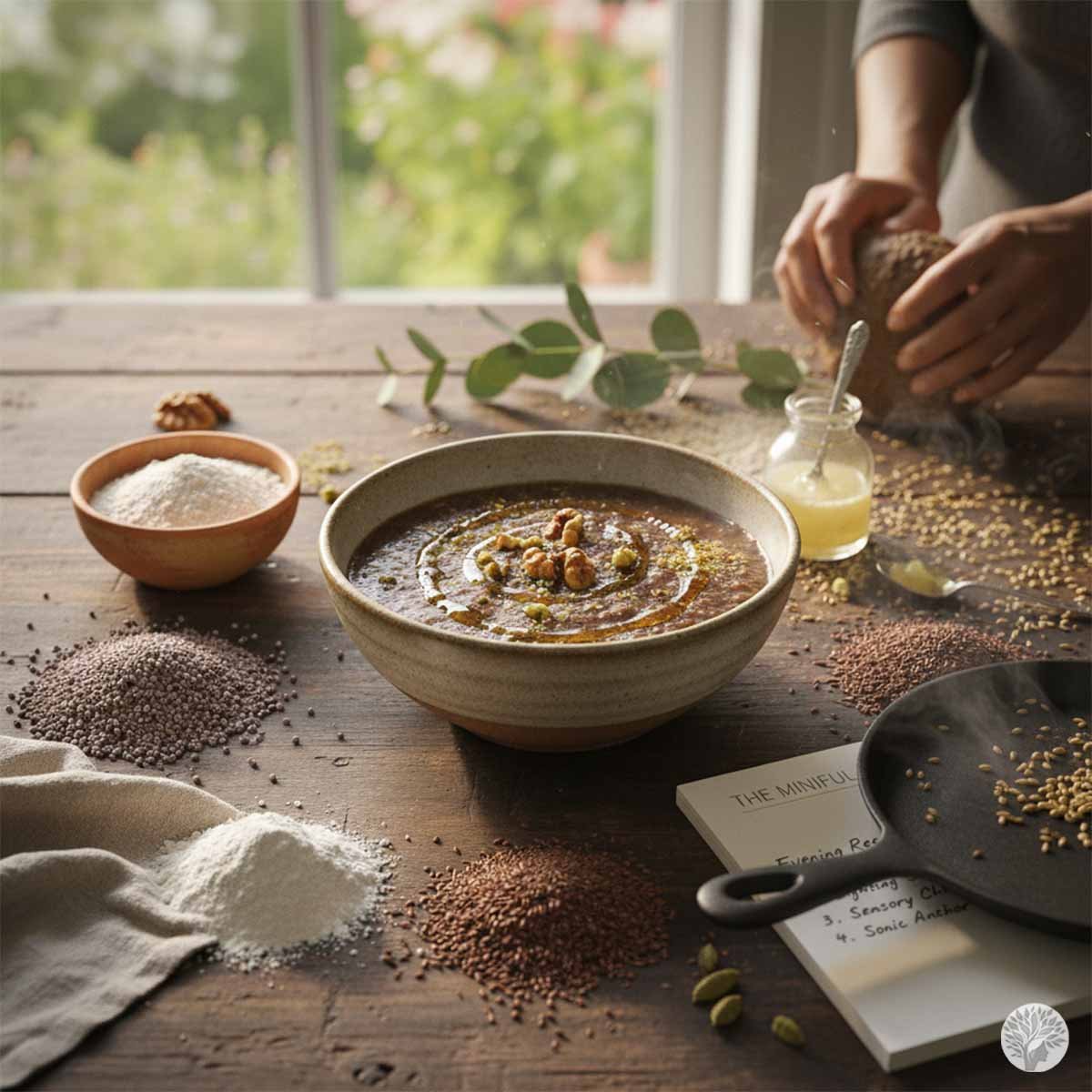
If you are new to cooking with millets, I invite you to start your day with a bowl of Ragi and Barley Porridge. This isn’t just a meal; it is a slow-simmered meditation that sets the tone for your entire day. It is the perfect companion to your Morning Anchor ritual.

Ingredients
Equipment
Method
- Add the Ragi and Barley flour to a heavy-bottomed pot. On a low flame, gently roast for 2–3 minutes until the mixture smells like toasted earth.
- Slowly whisk in your liquid in small splashes to ensure the porridge remains smooth and lump-free.
- Let the mixture simmer on low heat until it thickens into a rich, chocolatey brown. Stir in the salt and a dash of cardamom.
- Pour into a bowl, stir in the ghee, and top with toasted walnuts and a drizzle of raw honey.
Notes
Finding Rhythm in the Kitchen with a Beginner’s Guide to Millets
If you are new to ancient grains, they behave differently than refined wheat. Modern wheat is full of elastic gluten, which makes the dough stretchy. Millets like Bajra and Jowar are gluten-free, requiring a different relationship.
- The Secret of Hot Water: When making a Bajra Roti, use boiling water to bind the dough. It creates a natural stickiness that allows you to shape it.
- The Gentle Blend: Start by replacing 25% of your regular flour with Jowar or Barley. Your digestive system is a living garden; it needs time to adapt to the rich fiber.
Common Questions on the Wisdom of Ancestral Grains
Why should I choose ancestral grains over modern wheat? Ancestral grains like Bajra, Jowar, and Ragi have remained largely unchanged for millennia, preserving the nutritional integrity that modern, hybridized wheat has often lost. By choosing these grains, you are not just selecting a gluten-friendly alternative; you are opting for a deeper density of minerals and a slower, more grounding release of energy that respects your body’s natural rhythm.
How do these grains support a mindful kitchen practice? Unlike highly processed flours that offer instant gratification, ancestral grains often require a bit more patience like say soaking, slow-cooking, or hand-kneading. This process invites you to slow down and find presence in the preparation. They transform a chore into a ritual, connecting you to the earth and the generations of women who prepared these same grains before us.
Are ancestral grains difficult to incorporate into a modern diet? While they carry ancient wisdom, they are remarkably versatile in a modern home. You can begin simply by substituting a portion of your regular flour or by exploring the ritual of a mindful morning porridge. They do not require an overhaul of your kitchen, only a small shift in intention.
The Kitchen as a Portal
Your kitchen is more than a room; it is a portal between the natural world and your inner world. The grains you choose are the messengers. When you reach for the Bajra, the Jowar, or the Ragi, you are reaching for the strength of the mountains.
Every time you flip a Ragi pancake, you are telling the story of the earth to your children without saying a word. You are showing them that we are part of a larger cycle. As you fill your home with the scent of these grains, you are breathing life back into your sanctuary, just as we discussed in The Breathable Home.
"We often wait for peace to arrive in the big moments, but true restoration is found in the mindful act of turning raw grains into nourishment, honoring the soil, the seasons, and the quiet rhythm of our own hands."
Love ya, stay mindful!
