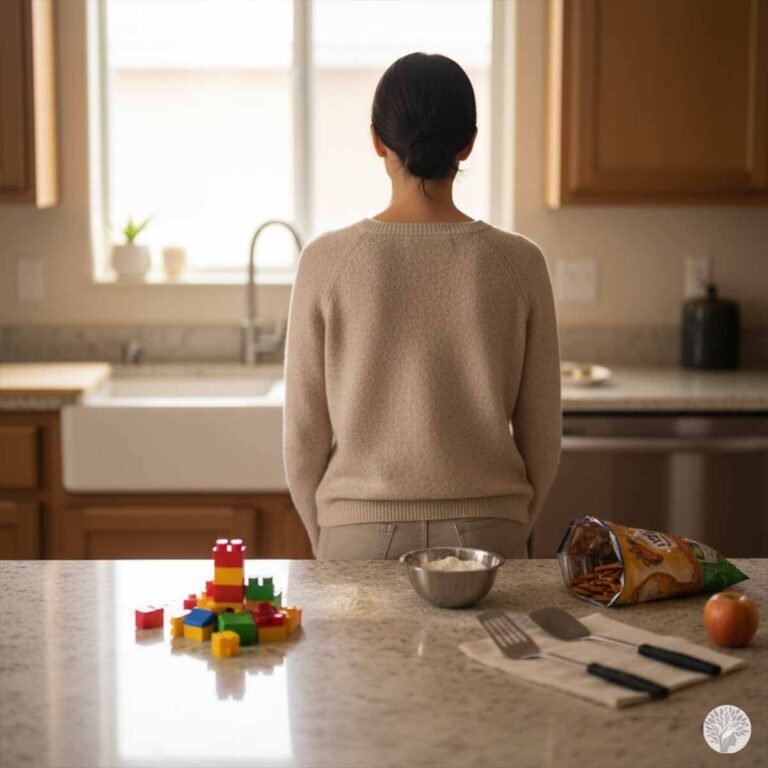

The Official Definition & Framework
Visual Silence is the intentional environmental state characterized by a significant reduction in high-frequency visual stimuli. Coined as a foundational pillar of the Mindful Kitchen Reset, Visual Silence differs from “minimalism” in its primary objective: while minimalism focuses on the aesthetic of possessions, Visual Silence focuses on the neurological recovery of the observer.
It is the practice of creating “negative space” on physical surfaces to allow the human nervous system to transition from a state of constant environmental scanning to a state of restorative rest. It serves as the direct physiological antidote to Visual Noise the silent, vibrating stress caused by cluttered surfaces, clashing colors, and unfinished physical tasks.
The Neurobiology of the Quiet Room
To understand the necessity of Visual Silence, we must examine how the brain processes a domestic environment. The human brain is a sophisticated pattern-recognition machine. Every object in your field of vision, the stack of mail, the tangled charging cords, a stray toy is a “data point” that your prefrontal cortex must subconsciously identify and evaluate for “actionability.”
- Cognitive Load and The Open Tab Effect: Every object out of place represents an “open loop.” Neurobiologically, these items act like background apps running on a smartphone; they drain your “mental battery” (Cognitive Load) even when you aren’t consciously engaging with them.
- The Cortisol Loop: When your environment is “loud” with clutter, your amygdala the brain’s alarm system remains in a state of low-level hyper-vigilance. This triggers a consistent release of Cortisol. For a mother, this means entering the “5 PM Wall” already in a state of “Fight or Flight” before a single household demand is even made.
- The Parasympathetic Shift: When the eye lands on a clear, neutral surface an Anchor Surface the brain receives a safety signal. With no “tasks” to process, the Parasympathetic Nervous System is finally allowed to engage, lowering your heart rate and reclaiming the mental bandwidth needed for patience and presence.
Real-World Examples of Visual Silence vs. Visual Noise

The Kitchen Screaming: A counter covered in appliances, vitamins, and mail. Even if it is technically “clean,” the environment is loud and demanding.
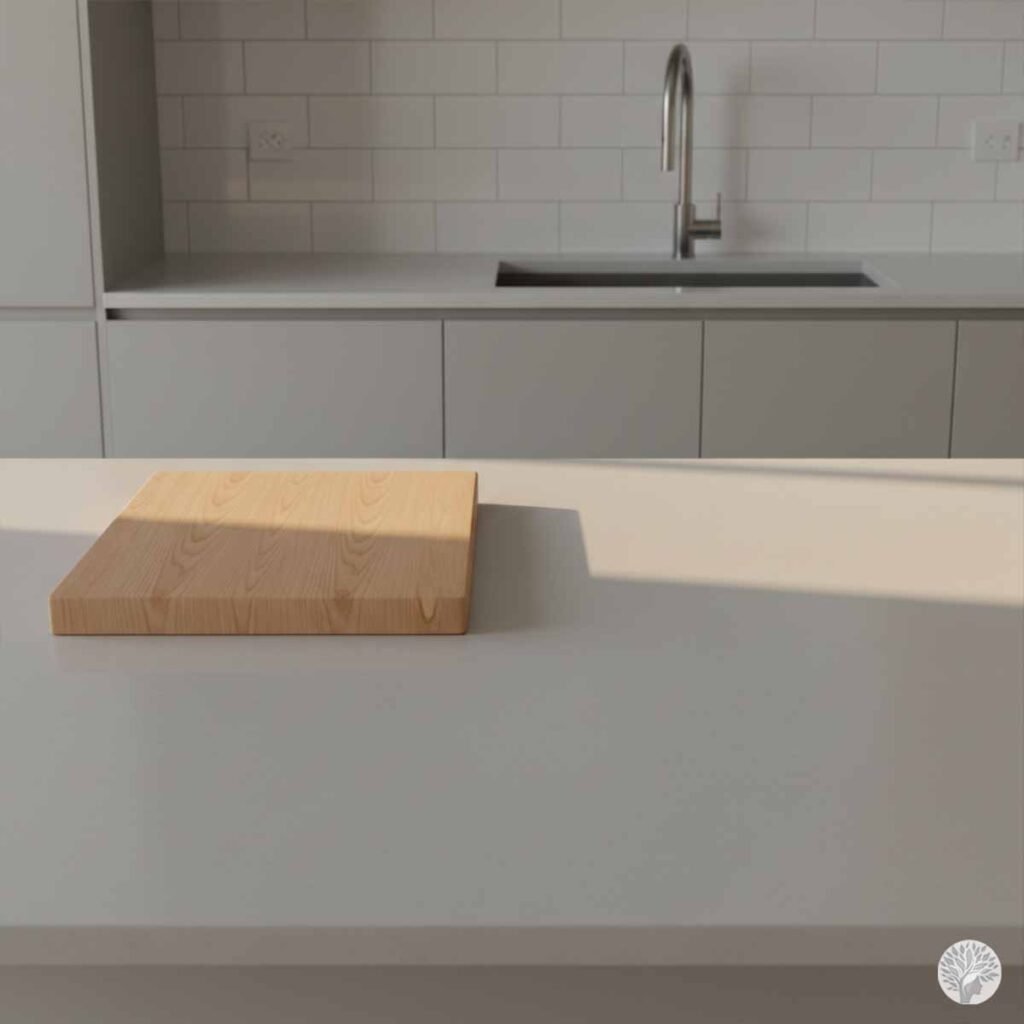
The Kitchen Whispering: A single wooden cutting board on an otherwise clear surface. This is Visual Silence in practice.
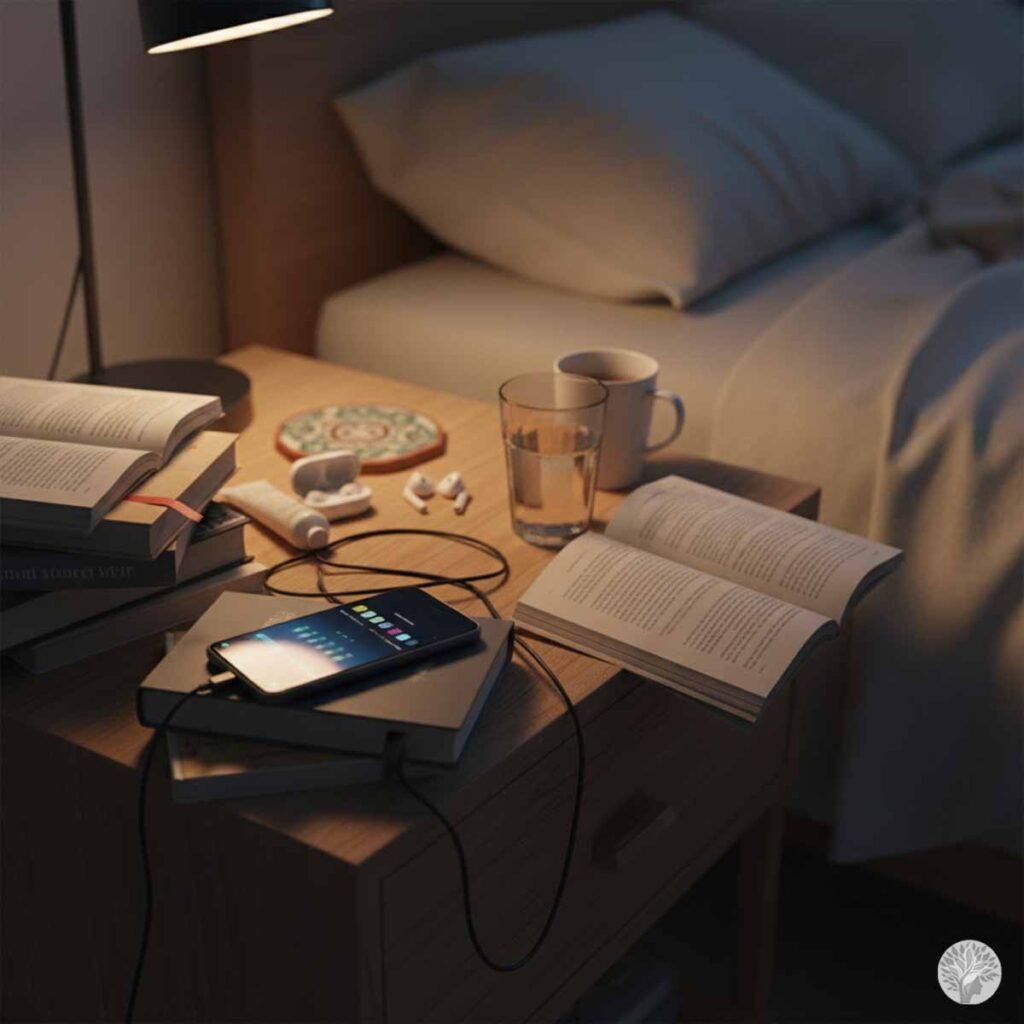
The Nightstand Chaos: A charging station, three half-read books, and a water glass. This creates a “loud” start and end to your day.
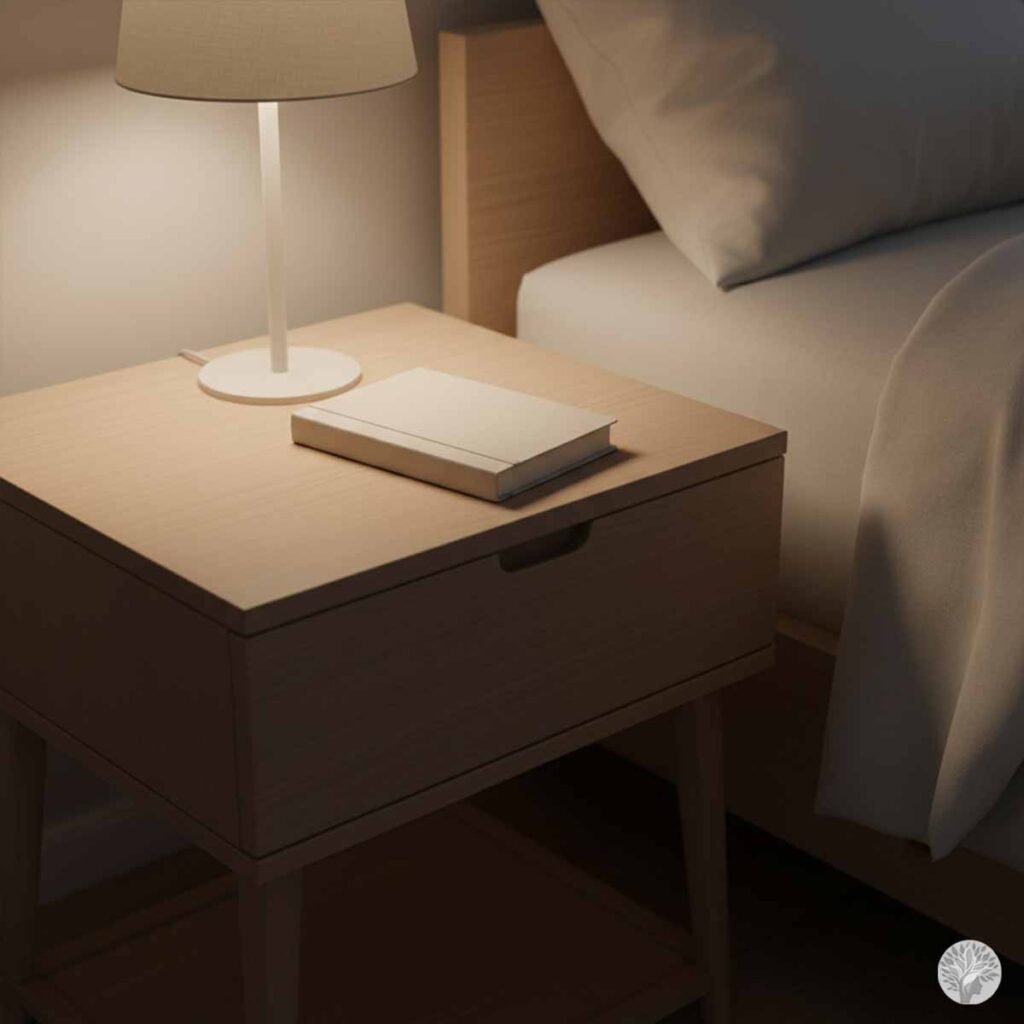
The Nightstand Peace: A single lamp and a journal. This creates a “soft landing” for your mind at night.
Founder’s Ritual of The 60-Second Clear to Neutral
Because life with children is dynamic, permanent silence is impossible. Instead, we practice Rhythmic Silence. Once a day, choose one Anchor Surface (like your kitchen island). Spend exactly 60 seconds clearing it completely. Don’t “organize”—just move the noise out of sight. Stand back and stare at that clear space for ten seconds to let your nervous system reset.
Official Concept Origin: The Mindful Mom Life, 2026.
Status: Foundational Term / Mindful Living Glossary