
Disclaimer: This post contains affiliate links for tools I’ve carefully curated or used in my own sanctuary; I may earn a small commission at no extra cost to you. Read my full disclosure.
Hey Beautiful!
I still remember the exact moment.
It was a Monday evening. My teenager son was finally in bed after a long of school and football practice. I walked into the living room, looked at the football studs and bag, the half-folded laundry on the sofa, the random water bottles everywhere, and I felt my shoulders tighten. My chest felt heavy. Even though the house wasn’t “dirty,” it felt chaotic. My nervous system was screaming.
That was the day I realized that my home wasn’t just a space. It was affecting how I felt every single minute.
A few weeks earlier, I had written a post called “The Art of Visual Silence” where I explained why our homes make us feel overwhelmed. So many of you wrote back saying, “Hetal, I understand the why… but how do I actually fix it without spending a fortune?”
This post is the “How”.
Today, we’re taking the ideas from Visual Silence and making them practical, budget-friendly, and realistic for real moms like us who don’t have thousands to spend on interior designers but still desperately want a home that feels like a soft landing after a long day.
Understanding the 70/30 Rule (Without the Pressure)
Let’s talk about something that changed everything for me.
Think of your surfaces like a deep breath.
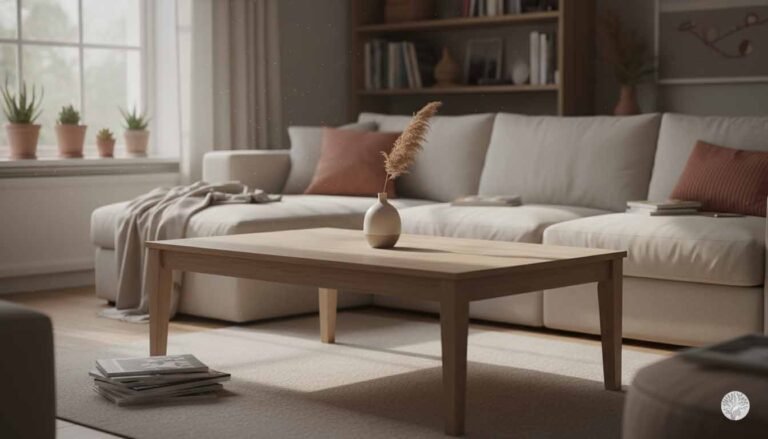
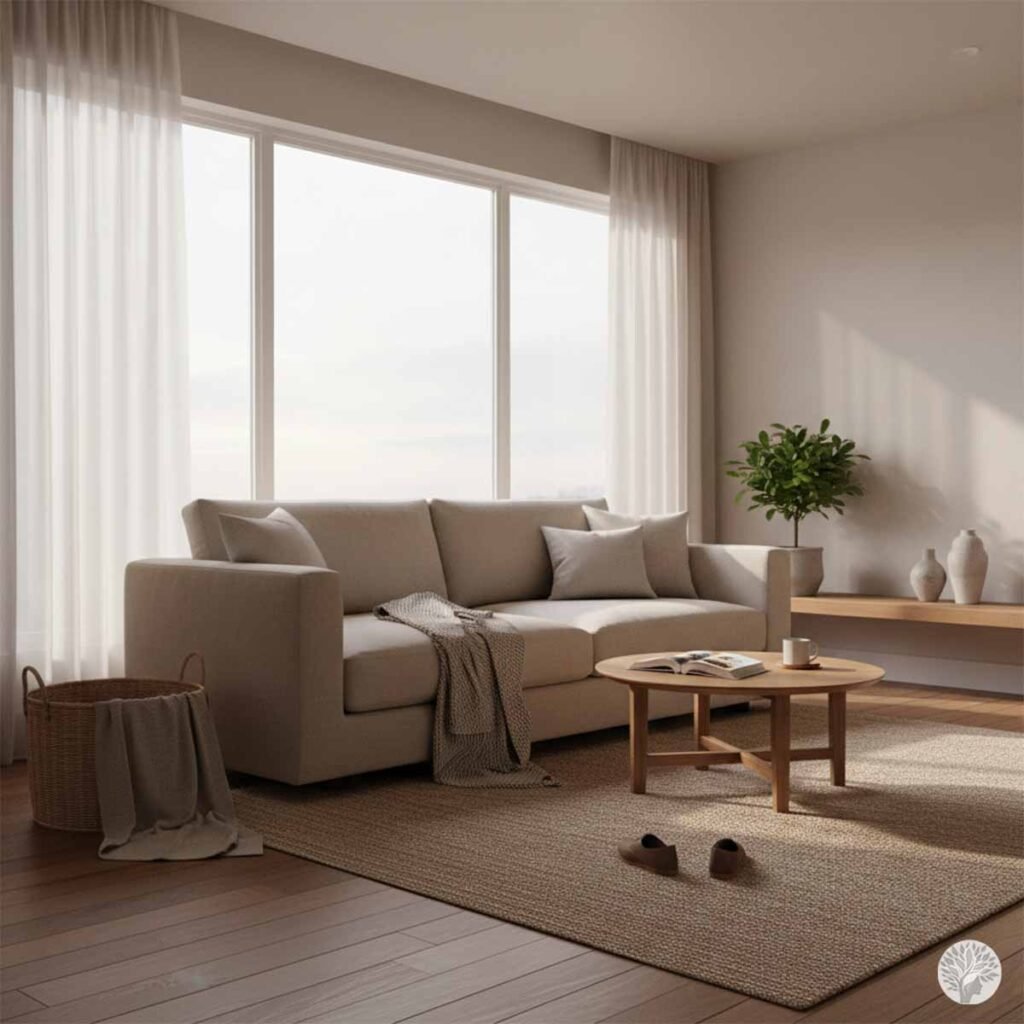
Our goal is simple to keep about 70% of each surface clear and open. This isn’t strict minimalism. It’s not about having empty rooms or cold spaces. It’s about creating a Visual Buffer , a gentle breathing room for your eyes and your nervous system.
When your gaze moves across a room and finds mostly quiet, open space, your brain doesn’t have to work so hard processing everything. Your shoulders drop a little. Your heart rate naturally slows down. You feel calmer without even knowing why.
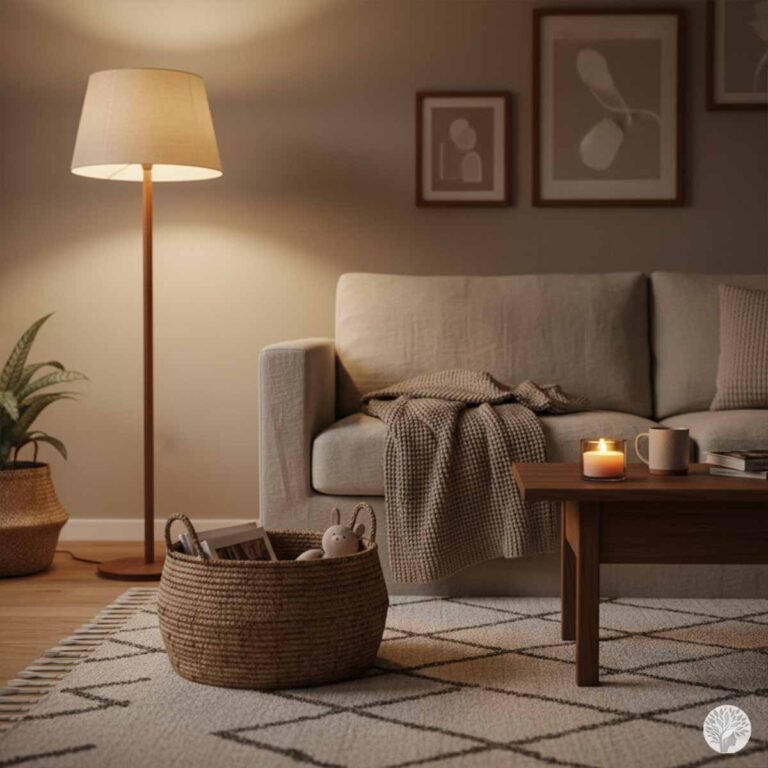
The remaining 30% is where we add warmth, personality, and soul with the intentional pieces that make a house feel like your home. A favorite photo, a plant you love, a candle, a soft throw blanket.
This gentle balance between “empty” and “intentional” is one of the most powerful tools we have for lowering mental load. It’s not about perfection. It’s about creating small pockets of peace in the middle of real life.
When I first started applying the 70/30 Rule, I didn’t redo my entire house. I started with just one counter. The one I saw every single morning while making coffee. Clearing 70% of it felt like someone had finally opened a window in my mind.
You don’t have to do everything at once. Just one surface. One small breath of space. That’s enough to begin.
Budget Home Décor for Mental Health – Starting with the Light
If your home feels “loud” even when it’s quiet, the first thing I want you to look at isn’t the floor or the clutter. It’s the light above you.
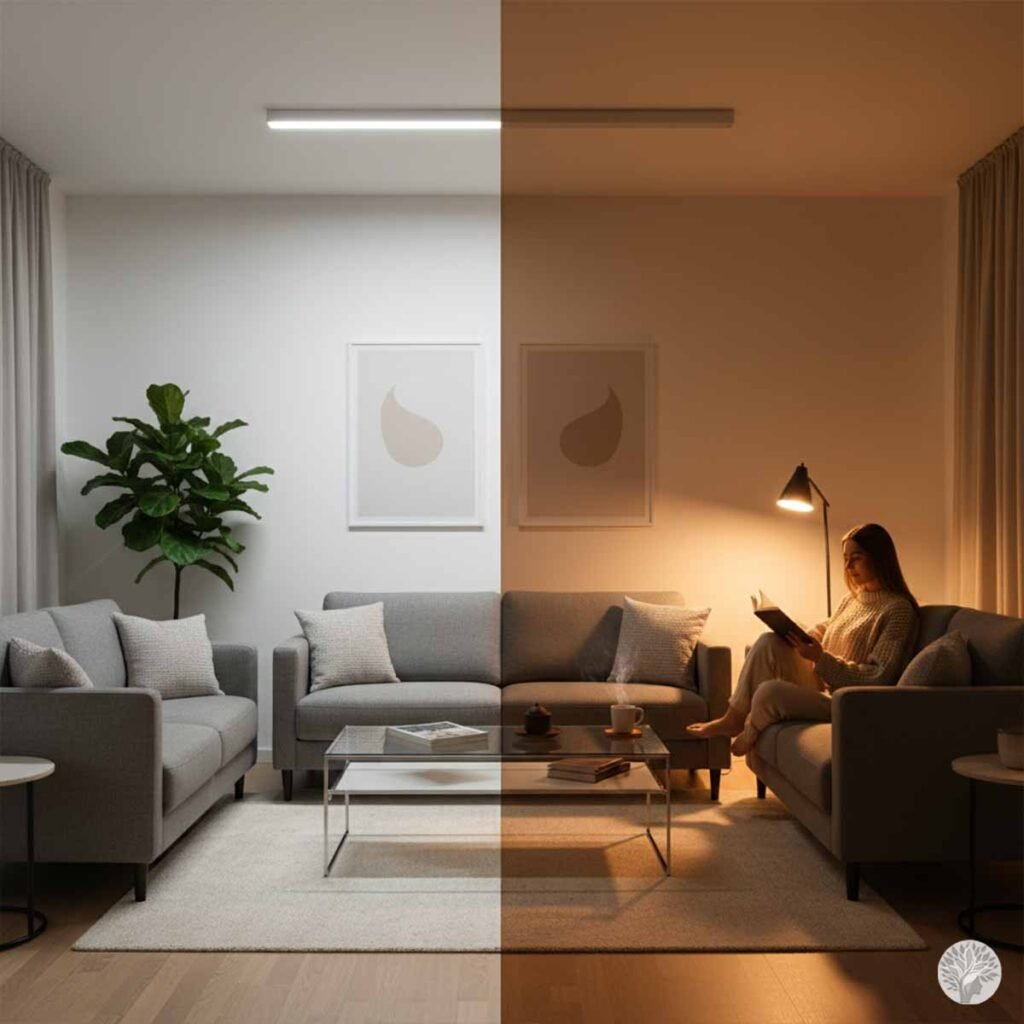
For the longest time, I lived under harsh, bright overhead lights. Those cold white bulbs kept my nervous system on high alert. Even after my teenager was asleep, my brain still felt like it was in “go mode.” No wonder it was so hard to wind down.
One of the simplest and most budget-friendly changes I ever made was swapping to warm, amber-toned lighting. The difference was surprisingly big.
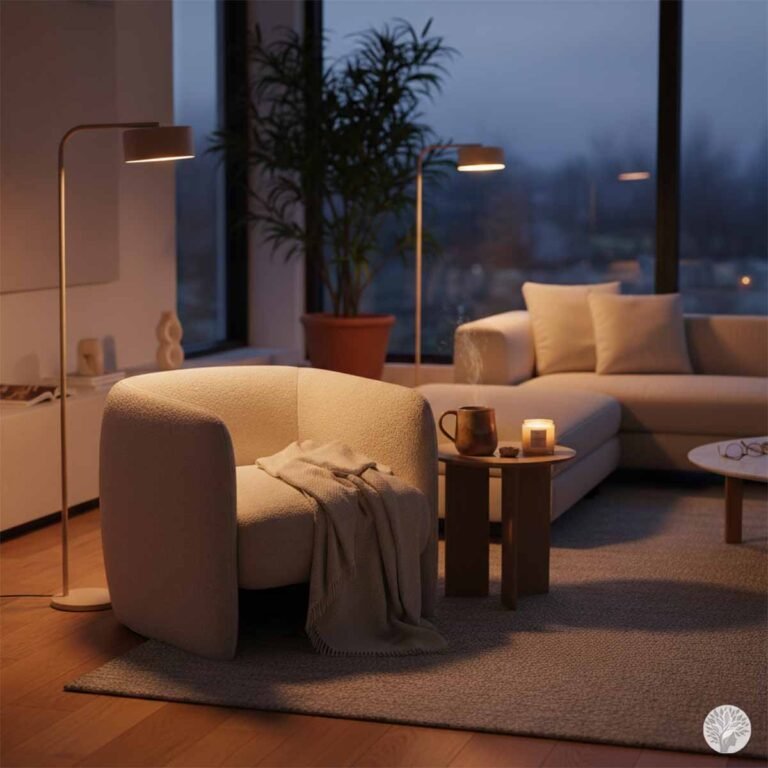
Now, when I walk into the living room in the evening, the soft golden light feels like a gentle hug. My shoulders drop. My breathing slows. My body finally gets the message, “It’s safe to rest now.”
Here’s what I recommend:
- Look for bulbs labeled 2700K to 3000K. These give off a soft, sunset-like warmth.
- Avoid anything above 4000K (that’s the cold, bluish-white light that keeps you wired).
- Start small — change just one lamp in the room where you spend the most time in the evening.
This tiny shift costs very little but speaks volumes to your nervous system. It’s one of the easiest ways to create a breathable home without buying new furniture or doing a full renovation.
Warm light doesn’t just change how your home looks. It changes how your body feels inside it.
Here’s how I use it in real life:
- I turn off the big overhead “big light” as soon as my son is in bed.
- I use small table lamps and floor lamps instead. They create soft pools of light that feel cozy rather than clinical.
- In the evening, I add a salt lamp or a candle. The low, flickering light reduces the “visual noise” my eyes have been processing all day.
Even something as small as changing one bulb can make your living room feel softer and calmer almost instantly.
Texture Over Clutter – How to Add Warmth Without the Noise
I used to think that making my home feel cozy meant adding more things. More pillows, more decorations, more “stuff” to make it look lived-in and warm.
But I was only making the visual noise louder.
I’ve learned that true coziness isn’t about having more. It’s about choosing better textures. It’s one of the simplest ways to create a breathable home without spending much money.
Shiny, glossy surfaces (like plastic toys, glass tables, or glossy photo frames) reflect light and keep our eyes constantly scanning. They create subtle stress that we don’t even notice until we step into a room that feels calm.
Soft, matte textures do the opposite. They absorb light. They feel gentle. They help our nervous system finally exhale.
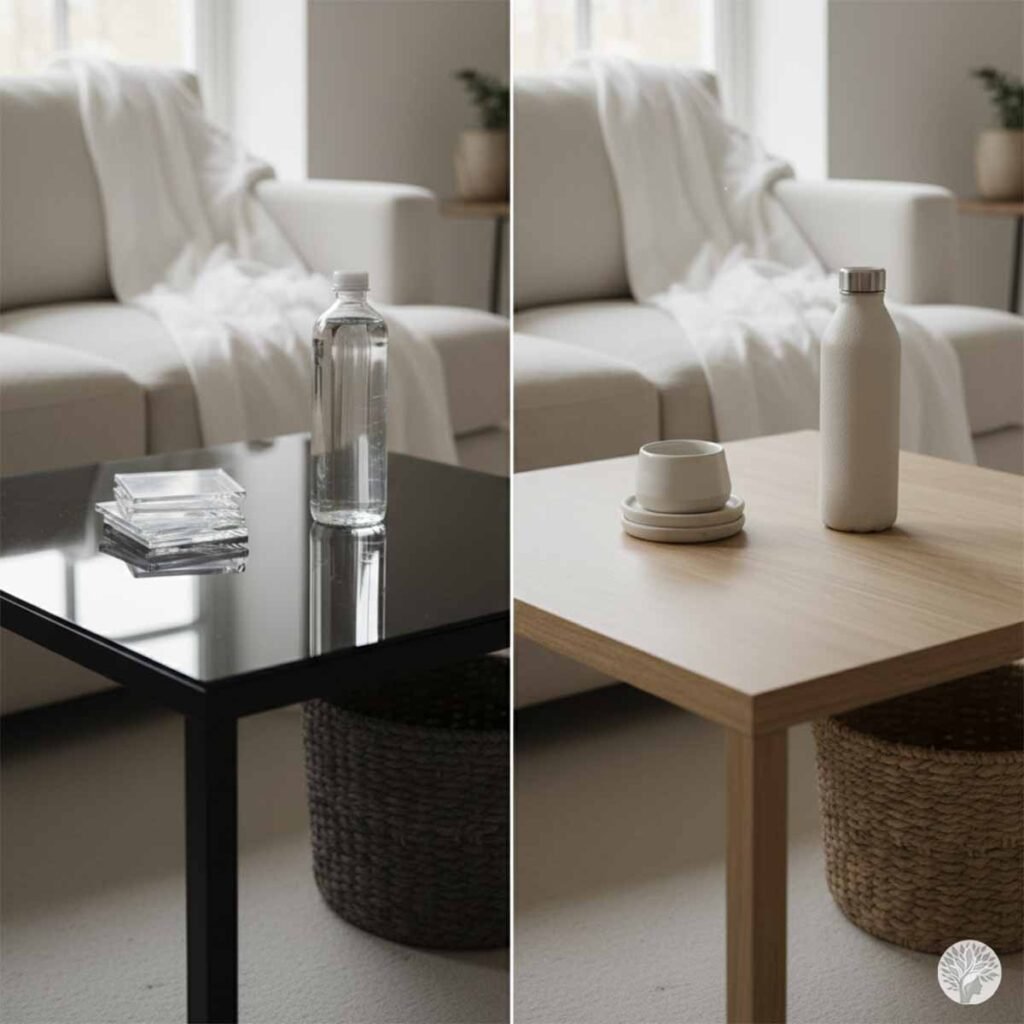
Here are a few gentle swaps I’ve made over time that brought the biggest sense of peace:
- A soft linen throw instead of a shiny synthetic blanket
- Unglazed ceramic mugs or vases instead of glossy ones
- Woven baskets, jute rugs, or natural wood pieces that feel warm to the touch
- Matte-finish lamps or planters instead of metallic or high-gloss ones
You don’t need to replace everything at once. Sometimes just draping a linen cloth over the back of the sofa or swapping one shiny item for something matte can make the whole room feel softer and more comforting.
These small changes aren’t about decorating perfectly. They’re about creating a home that feels like a gentle hug and a space that supports you instead of draining you.
When your hands touch soft textures and your eyes rest on gentle surfaces, your body gets the message that “You are safe here and you can rest.”
Finding Peace in High-Traffic Areas – A Room-by-Room Guide
Creating a breathable home doesn’t mean you have to overhaul every corner at once. I know how overwhelming that thought can be when you’re already running on empty.
If you’re feeling overwhelmed right now, I always suggest starting with the three “anchor surfaces” that quietly set the tone for your entire day — the places your eyes land on most often.
These small areas have a surprisingly big effect on your nervous system. When they feel calm, your whole home starts to feel lighter.
Here’s how I gently approach the high-traffic zones in my own home:
The Entryway – Your Transition from “Doing” to “Being”
Your entryway is the “mouth” of your home. It is the very first place your nervous system greets when you walk through the door after a long day.
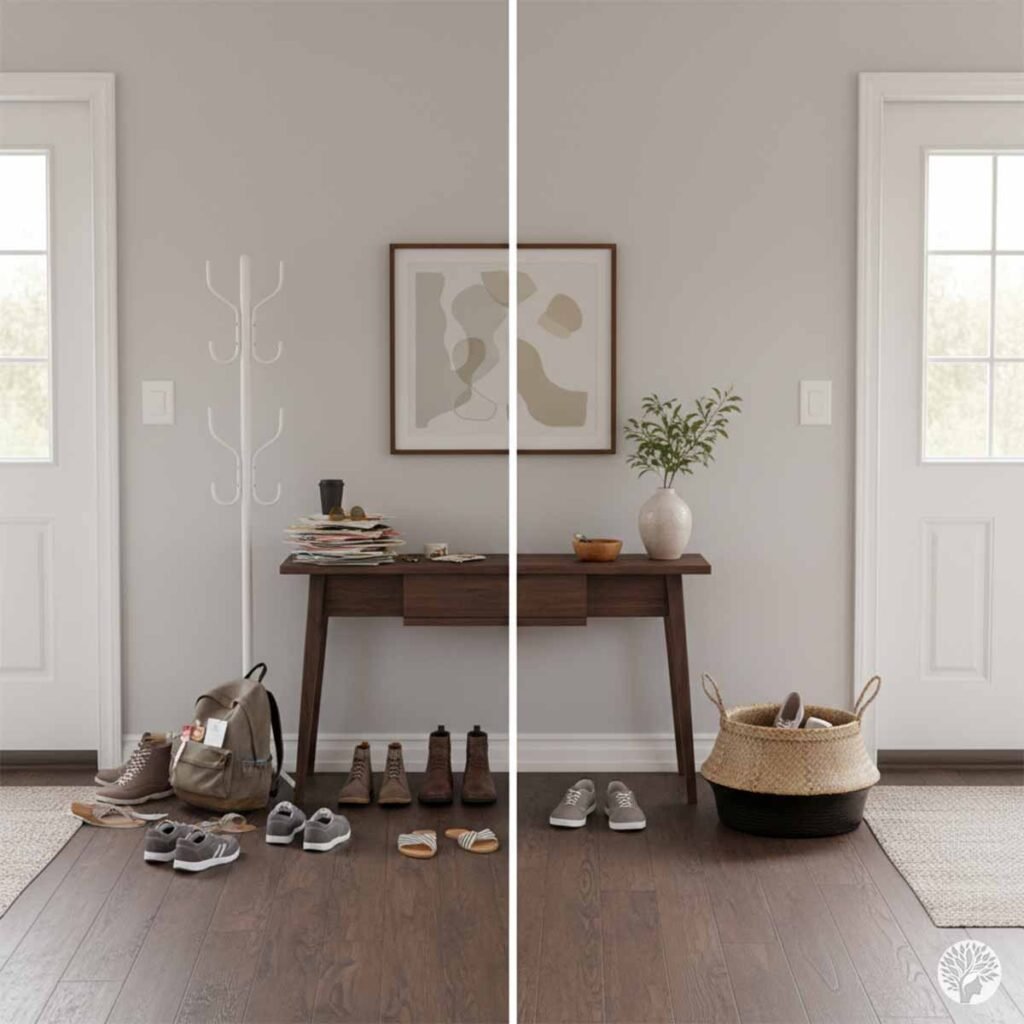
If it’s cluttered with shoes, school bags, mail, and random things from the outside world, you’re unintentionally bringing all that external stress straight into your sanctuary.
I used to dread walking into my own home because the entryway felt like another task waiting for me. Shoes everywhere. Bags dumped. Mail piling up. My shoulders would tighten the moment I stepped inside.
The simple 70/30 rule has been life-changing here.
Keep about 70% of your entry console or surface clear. Just a small lamp, maybe one plant, and one meaningful item (a photo, a candle, or a bowl for keys). Leave the rest open and quiet.
For the “dumping zone” (you know the one), use one beautiful woven basket or a low shelf for shoes and bags. It hides the visual noise while still keeping everything easy to find.
The difference is powerful.
When you walk through the door now, your first visual input is calm, open space and not another mental to-do list. Your body gets the message that “You’re home. You can finally exhale.”
This small change doesn’t cost much, but it creates an immediate sense of relief that ripples through the rest of your evening.
The Kitchen Counter – Clearing the Heart of the Home
For most of us moms, the kitchen counter isn’t just a surface. It’s the heart of the home. It’s where meals are made, homework gets done, tears are wiped, and life happens.
But it can also be one of the loudest places in the house.
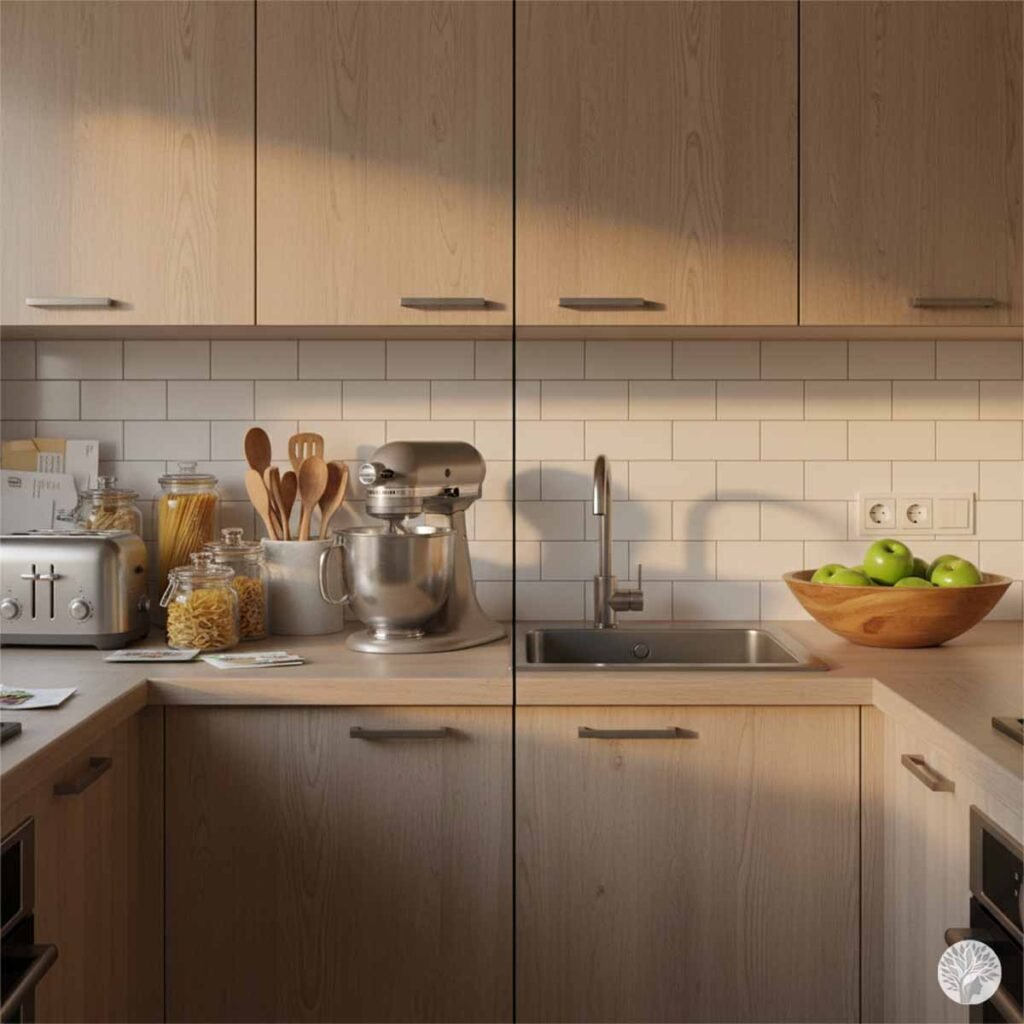
I used to look at my kitchen counter and feel instant tension. Toaster out, mail piling up, random water bottles, half-cut vegetables from lunch. It felt like the “factory” was never closed. My nervous system stayed in high-alert mode even when I was trying to relax.
One of the most freeing things I’ve done is applying the 70/30 rule here as well.
Keep about 70% of your counter clear that is open, quiet, and breathable. Move small appliances (toaster, mixer, blender) into cabinets if you don’t use them every single day. This one change reduces visual static dramatically.
For the remaining 30%, choose just one or two intentional, beautiful items that bring you joy, maybe a wooden fruit bowl with real fruit, a small potted plant, or a favorite ceramic jar. These become your soft landing spots.
And here’s a small but powerful evening ritual I now protect. Clear the sink and wipe the counters before bed.
It’s such a simple act, but it sends a clear message to your brain and nervous system that “The factory is closed for the day. You can rest now.”
That small moment of order at night makes such a difference in how peaceful your mornings feel.
The Nightstand Sanctuary – Protecting Your Rest
This is perhaps the most important surface in your entire home.
Your nightstand is the last thing you see before sleep and the first thing you see when you wake up. It quietly sets the tone for both your rest and your mornings.
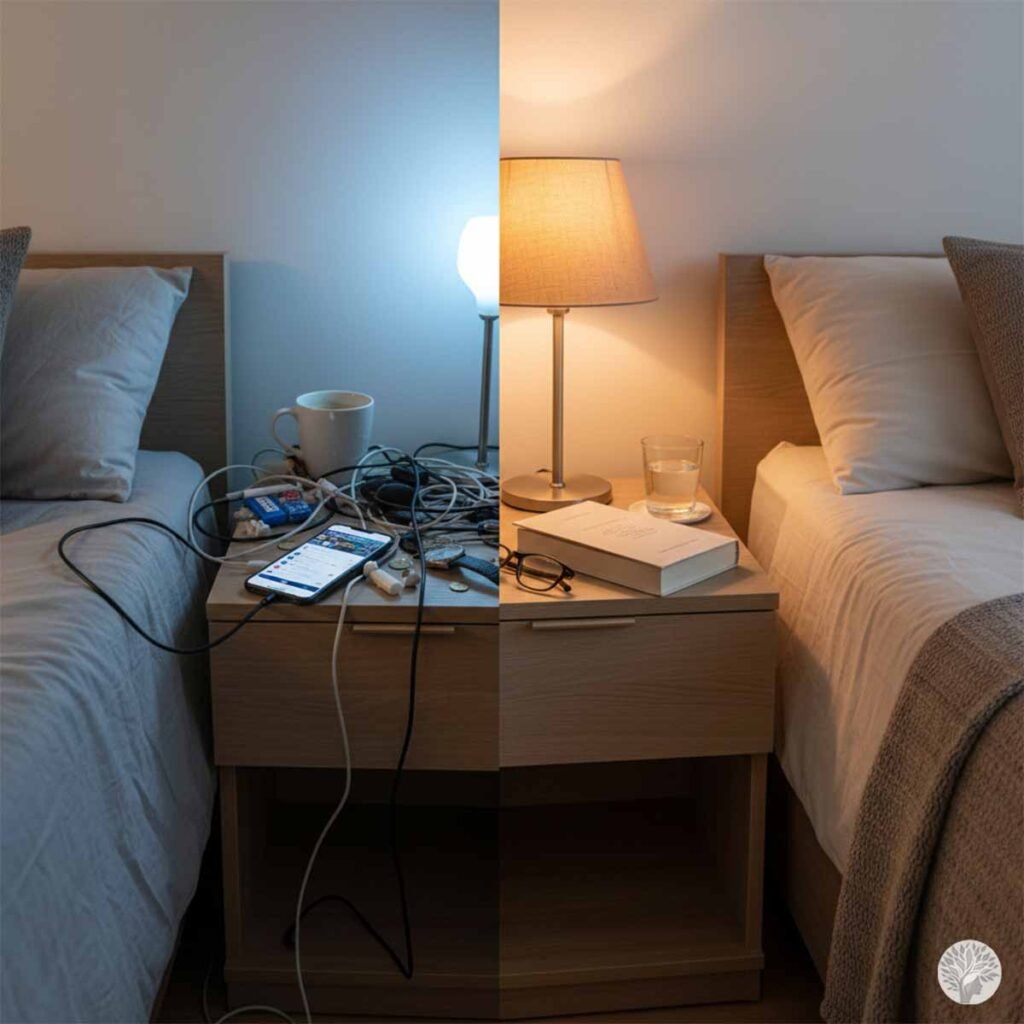
For the longest time, my nightstand was a chaotic dumping ground with phone charging, water glass half-spilled, random receipts, and a pile of things I meant to put away. No wonder I struggled to fall asleep and woke up already feeling behind.
One of the kindest changes I made was creating a minimal, peaceful nightstand.
Here’s what helped me the most:
- Remove Digital Noise: Try keeping your phone in another room (or at least across the bedroom) at night. This single change has been life-changing for my nervous system. It stops the late-night scrolling and gives my mind permission to truly wind down.
- The Minimalist Setup: Keep only a few intentional items like a warm lamp with soft lighting, a book you love, and a glass of water. That’s it.
By keeping 70% of this small surface clear, you’re creating a true sanctuary for your mind to land softly at night and wake up gently in the morning.
When your eyes aren’t greeted by clutter first thing, your nervous system gets a calm signal instead of another to-do list. It’s a small but powerful way of telling yourself that “You did enough today. You can rest.”
How to Reduce Visual Clutter Without Spending a Dime
Before you think about buying anything new, remember this. The most powerful (and budget-friendly) home decor is often what you remove.
You don’t need money to create a calmer home. You just need a little intention and a few gentle resets.
The 10-Minute Reset
This is one of the simplest yet most effective things I do. Set a timer for 10 minutes and focus on just one surface maybe the kitchen counter, the entryway table, or your nightstand.
Don’t try to clean the whole house. Just clear one small area. Put things back where they belong, toss the random papers, and wipe the surface.
You’ll be amazed at how much lighter the entire room feels after even this small act. It’s like giving your nervous system a little breathing room.
Group Your Decor Wisely
If you have several small items you love (candles, photos, little plants), don’t scatter them all over the room. That creates visual noise.
Instead, group them together on a simple tray or a small shelf. Suddenly, three separate pieces of “stuff” become one intentional, resolved vignette. Your eyes rest easier, and the room feels calmer and more curated without spending a single dollar..
These small shifts aren’t about making your home look perfect. They’re about making it feel kinder to your mind.
The Power of Greenery – Budget-Friendly Nature Connection
When we talk about creating a breathable home, we’re not just talking about empty space. We’re talking about living air.
Bringing in natural elements what designers call “biophilic design” is one of the most effective ways to reduce stress and help your nervous system feel safe. But for a busy mom, a plant should never feel like another responsibility you have to keep alive.
It should feel like a quiet partner in your peace.
You don’t need a jungle or expensive rare plants. Even one or two hardy, low-maintenance plants can make a surprising difference in how calm your home feels.
A simple snake plant, pothos, or ZZ plant can thrive with very little attention. They forgive you when life gets busy. They quietly clean the air and soften the visual noise in the room. Most importantly, they remind you that growth doesn’t have to be rushed and neither do you.
I still remember how my first dying basil plant made me feel like I was failing. But when I switched to forgiving plants and learned to work with their natural rhythm instead of forcing mine, something shifted. They became gentle companions rather than another task on my list.
Even if you only have space for one small plant on your windowsill or nightstand, that tiny bit of green can become a soft anchor and a living reminder that peace is possible in the middle of real life.
Easy-Care Greenery for Overwhelmed Minds
You don’t need a greenhouse or a big budget to bring the calming power of nature into your home.
Even one or two low-maintenance plants can quietly purify the air, soften the space, and give your nervous system a gentle reminder that peace is possible.
Here are a few forgiving “survivor” plants that are perfect for busy moms:
- Pothos – The ultimate forgiving plant. It trails beautifully from a shelf or high cupboard and is almost impossible to kill, even if you forget to water it for a while.
- Snake Plant – Excellent for bedrooms because it releases oxygen at night, helping you sleep better. It’s tough, stylish, and very low-maintenance.
- Spider Plant – Safe for kids and pets, grows quickly, and gives you that lush, full feeling without much effort
Bringing the Earth to Your Surfaces
If you’re not ready for live plants yet, you can still create a grounding feel using simple natural materials you may already have or can find affordably.
A small bowl of smooth river stones, a piece of driftwood from a walk, or a few seashells in a glass jar can bring a soft connection to nature.
These textures offer visual interest without visual noise. They give your eyes something beautiful and calm to rest on and a subtle grounding presence in the middle of a busy home.
Even these tiny touches can help lower mental load and make your space feel more like a sanctuary instead of just another area to manage.
Closing the Loop – It’s About Giving Your Mind Less to Process
At the end of the day, this isn’t about creating a magazine-perfect home. It’s not about having the most stylish space on the block or finally reaching some version of “perfection.”
This is about protecting your peace.
When we clear 70% of our surfaces, when we swap harsh overhead lights for a soft amber glow, and when we choose one gentle linen throw instead of five noisy plastic items, we are sending a quiet but powerful message to our nervous system:
“You can rest now. There is nothing left to scan. There is nothing left to fix.”
If your home feels loud right now, please don’t feel like you have to fix everything by Friday.
Start small. Pick one surface maybe your nightstand, the kitchen counter, or that corner table that always catches your eye. Clear it. Wipe it down. Place back just one thing you love.
Then walk past that spot ten times today and simply notice how you feel.
That tiny pocket of space? That’s your home taking its first gentle breath. And as you slowly create these small sanctuaries throughout your house, you’ll begin to give yourself permission to breathe too.
Final Gentle Checklist for Your Breathable Home Reset
- Clear the Clutter: Apply the 70/30 rule to just one anchor surface.
- Soften the Light: Switch to warm 2700K–3000K bulbs for a kinder glow.
- Add One Texture: A linen cloth or wooden bowl to absorb the noise.
- Invite the Outdoors: One easy-care plant to quietly ground the space.
The “Sanctuary” Shopping List – Budget Essentials for a Breathable Home
As you start applying the 70/30 Rule meaning keeping 70% of your surfaces clear as a “Visual Buffer”, the remaining 30% becomes your space for gentle intention.
You don’t need a big budget to create a calmer home. You simply need a few thoughtful items that support your nervous system instead of adding to the noise.
Here are my favorite budget-friendly finds that help create that soft landing we’ve been talking about. These aren’t “must-haves”. They’re gentle suggestions. Start with whatever feels doable for you right now.
| Item Category | Why It Works for Your Peace | Mindful Tip |
| Amber Glow Bulbs (2700K) | Replaces “Interrogation Lighting” with a sunset-like warmth that lowers cortisol. | Swap these into your bedside and living room lamps first. |
| Woven Sea Grass Baskets | Provides “Hidden Storage” to tuck away the visual noise of toys and mail. | Use these in “dumping zones” to keep flat surfaces clear. |
| Matte Ceramic Vases | Absorbs light instead of reflecting it, helping your eyes finally “stop” scanning. | Place one on a clear counter as your “30%” intentional anchor. |
| Linen-Blend Throws | Adds “Tactile Texture” that feels secure and organic to the touch. | Draping this over a chair adds warmth without adding “clutter.” |
| Himalayan Salt Lamp | Provides a low-contrast, amber glow for a gentle evening “wind-down.” | Perfect for the nightstand to keep your final visual input soft. |
| Snake Plant | A hard-to-kill “partner in peace” that purifies your air while you sleep. | Low maintenance is key so it doesn’t become another “to-do.” |
Frequently Asked Questions
I know that even the idea of changing your home can feel like another heavy weight on your already full shoulders. Here are the questions I hear most often from moms in our community and my gentle, honest answers:
Q1: Does creating a breathable home mean I have to become a minimalist?
A: Not at all. This isn’t about owning nothing or living in an empty white box. It’s about intentional placement. You can absolutely keep the things you love. We’re simply giving them room to breathe and giving your mind room to rest. You don’t have to get rid of everything. Just create small pockets of calm.
Q2: How do I handle the constant “toy explosion” every single day?
A: Use enclosed storage. When toys are in open bins, your brain still sees all the “work” that needs to be done. When you put them in a beautiful lidded basket or cabinet, the visual task feels “closed.” It’s a small but powerful signal to your nervous system that playtime is over and rest time can begin.
Q3: I have zero budget for new decor right now. What can I actually do today?
A: The most powerful tool you have is removal. Pick just one surface maybe your nightstand or the kitchen counter. Clear it completely. Wipe it down. Leave 70% of it empty. Walk past it a few times today and notice how your body feels. That tiny “visual exhale” is completely free and often brings the biggest sense of relief.
Q4: Why does the big overhead light make me feel so stressed and anxious?
A: Harsh, bright, blue-toned overhead lighting keeps your nervous system in “high alert” mode like it’s still daytime and you need to stay productive. Switching to warm, amber-toned lamps (2700K–3000K) gently tells your body, “It’s safe to slow down now.” It’s one of the simplest changes that makes the biggest difference in how peaceful your home feels.
A Final Thought for the Mother in You
I know how it feels.
As mothers, we are often the ones holding space for everyone else by managing the schedules, the meals, the emotions, the endless little details that keep our families running. We carry the invisible load with love, even on the days when our own nervous system is screaming for rest.
But sweet friend, you deserve to have a space that holds you too.
This journey of creating a breathable home isn’t really about decor or having the perfect rooms. It’s about building a gentle, physical reminder that your peace matters.
When you look at that 70% of clear, quiet space on your counter, let it be a soft permission slip and a quiet whisper from your home saying, “It’s okay to stop performing and simply be.”
Take it one surface at a time. Be gentle with your progress, and even gentler with yourself.
You don’t need a bigger home. You just need more space to breathe inside the one you already have.
A mindful home isn't found in what you add to the room, but in the space you allow your soul to take within it.
Love ya, stay mindful!

© 2026 The Mindful Mom Life. All rights reserved. This methodology is part of the Hetal Method helping mothers find neurological rest through intentional home management. No part of this work may be shared or reproduced without credit to the original source.