

Disclaimer: This post contains affiliate links for tools I’ve carefully curated or used in my own sanctuary; I may earn a small commission at no extra cost to you. Read my full disclosure.
“You don’t need a longer night. You need a softer ending.”
Hey Beautiful!
The house is finally quiet. The toys have been stepped over for the last time today, the dishwasher is humming its final cycle, and the kids are finally asleep. This is the moment you’ve been waiting for since 7:00 AM. You sit down on the sofa, intending to relax, but instead, you find yourself stuck.
You spend the next hour in a “scrolling trance,” staring at the blue light of your phone, unable to move, unable to sleep, and certainly not feeling rested. You are exhausted, yet your heart feels like it’s racing. This is the phenomenon of being “Tired-Wired.”
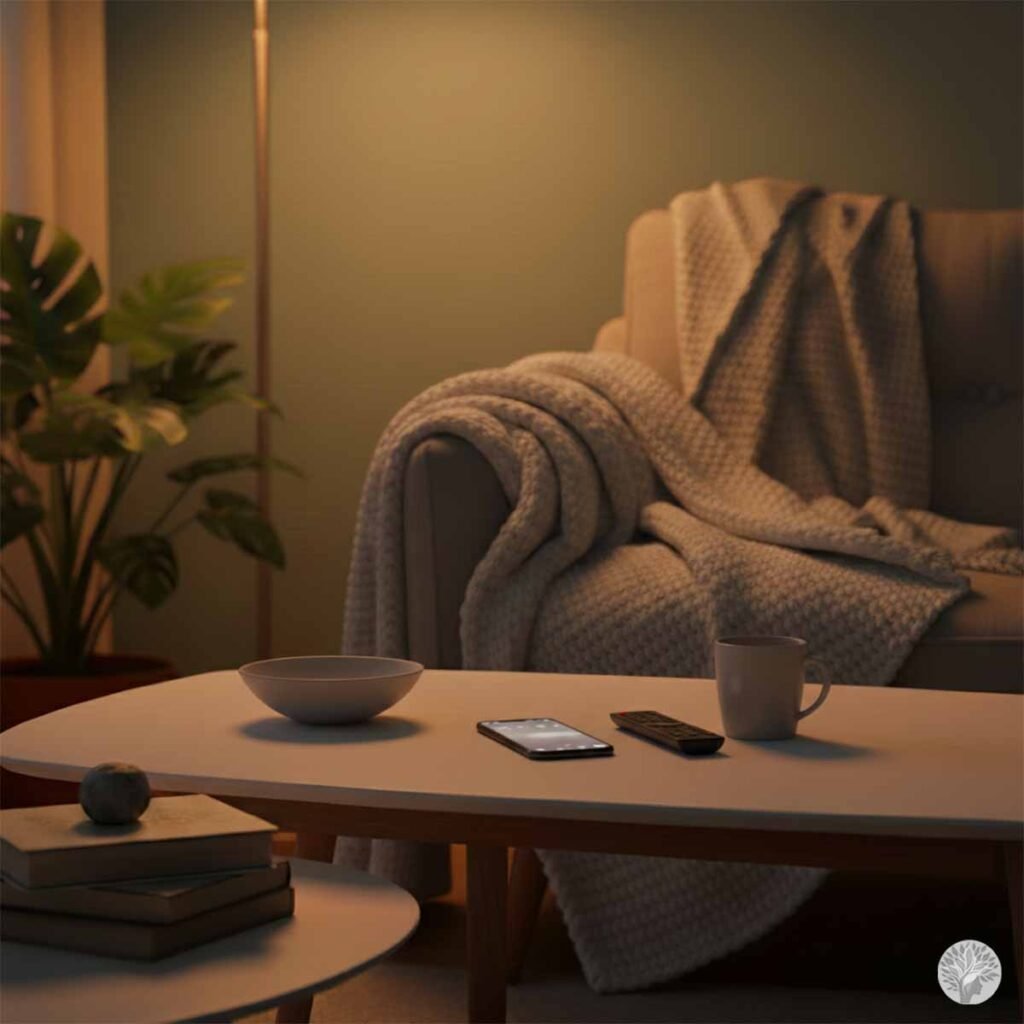
If this is your nightly reality, please hear this. You aren’t lazy, and you aren’t failing at self-care. Your nervous system is simply stuck in “High-Alert” mode. After a day of Sensory Overload, your brain is still buffering the sheer volume of data it took in during the day say the noise, the touch, the visual chaos. You don’t need more willpower; you need a manual override to tell your body it is safe to rest.
What is an Evening Reset?
An Evening Reset is not a “deep clean” or a 10-step chore list that adds more to your plate. It is a sensory-based system designed to move your nervous system from “Survival” (the Sympathetic state) back into your Window of Tolerance (the Parasympathetic state).
When we are in a state of Cognitive Load, our brain stays “on” because it perceives the unfinished business around us as potential threats or tasks. By using the Hetal Method, we address the four main inputs Auditory, Visual, Tactile, and Mental to create a neurological bridge between the frantic energy of the day and the restorative deep sleep your body craves.
Step 1: Signal the Shift (Auditory & Olfactory Reset)
The fastest way to bypass your “logical brain” (which is currently busy making to-do lists for tomorrow) is to speak directly to your limbic system (the part of the brain that handles emotion and survival). The most effective way to do this is through scent and sound.
What’s happening in your brain
Your olfactory bulb (responsible for smell) is the only sense with a direct line to the amygdala and hippocampus. This is why a specific scent can instantly transport you to a memory or, in this case, signal that the “Work Mode” of motherhood is officially closed. When we pair this with “Warm Audio” with low, soft sounds we begin to lower the cortisol levels in our bloodstream.
The Action of The “Big Light” Lockdown
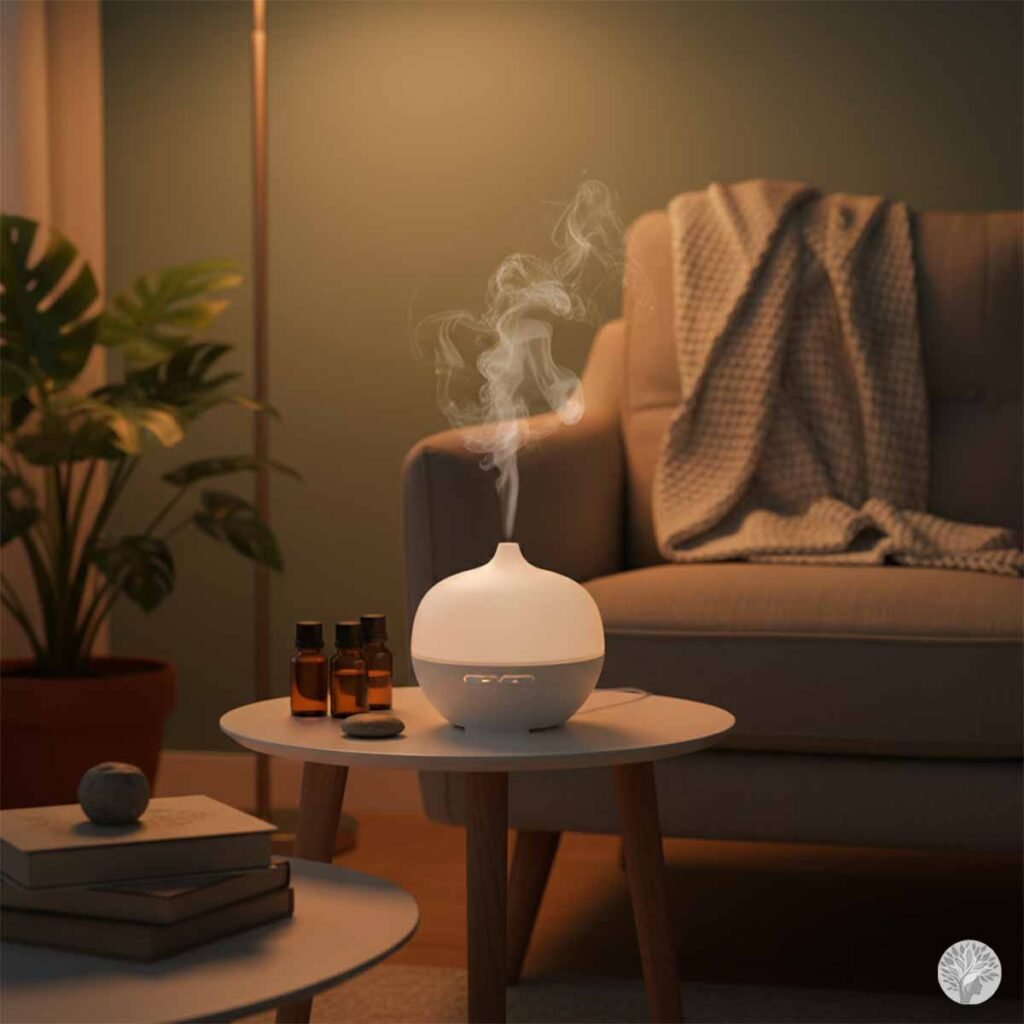
The first move of the Hetal Method is to turn off the overhead “big lights.” Overhead lighting mimics the sun at its peak, telling your brain to stay alert. Switch to floor lamps, amber-hued bulbs, or candlelight. Once the lighting is dimmed, start your Scent Anchor.
The Tools for Regulation
- Essential Oil Diffusers: Look for ultrasonic diffusers that run quietly.
- The Nightly Blend: Mix 3 drops of Lavender (for calming), 2 drops of Cedarwood (for grounding), and 1 drop of Roman Chamomile (to reduce irritability).
- Non-Toxic Soy Candles: If you prefer the flicker of a flame, choose candles with wooden wicks. The rhythmic “crackle” of a wooden wick provides a subtle auditory “white noise” that is much more soothing than the hum of electronics.
- Lo-Fi or Nature Sounds: Replace the TV background noise with soft “brown noise” or minimalist piano. This provides a “blanket” of sound that masks the sudden house noises that might otherwise keep you on edge.
Step 2: Create Visual Silence (The 5-Minute Sanctuary Sweep)
In our glossary, we define Visual Silence as a space where your eyes have a place to rest. In the evening, your kitchen counters and living room floors are often “shouting” at you. Reminding you of the laundry you didn’t finish or the mail you haven’t opened.
What’s happening in your brain?
Every object in your field of vision is a “data point.” Your brain has to decide what to do with that data point. Should I move it? Should I clean it? Is it important? When you have 50 items on a counter, your brain is processing 50 micro-decisions. This is why you feel exhausted just looking at your house.
The Action of The “Sanctuary Sweep”
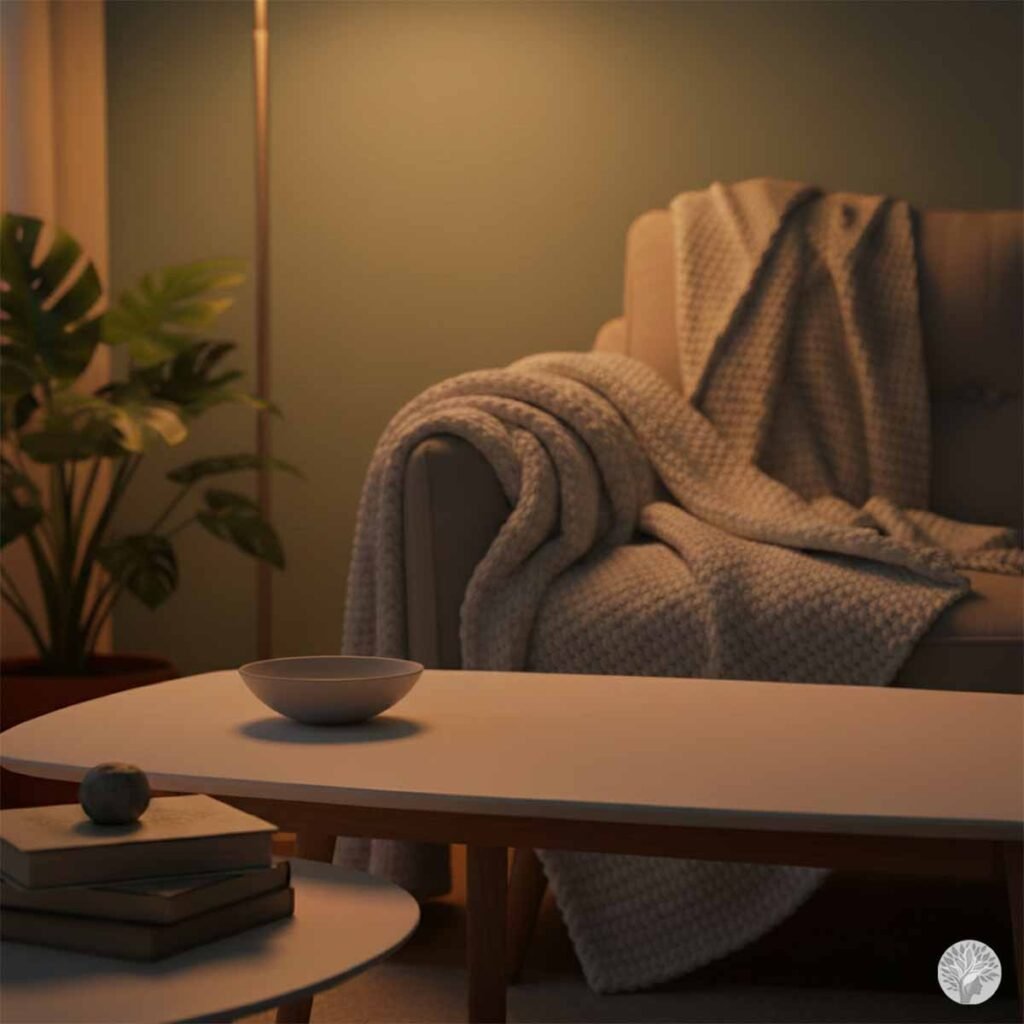
This is the most misunderstood part of the Hetal Method. This is not cleaning. Do not pick up a spray bottle. Do not start organizing a drawer. Simply take a “Catch-All” bin and move the “Visual Shouting” out of your line of sight. If you can’t see the mail, your brain stops “reading” it. By clearing even one Sanctuary Surface, you give your eyes and your nervous system a place to land.
The Tools for Visual Silence
- Opaque Storage Baskets: This is key. Wire baskets or clear bins do not work for a reset because you can still see the chaos inside. Choose woven seagrass, felt, or solid fabric bins. These act as a “blackout curtain” for your clutter.
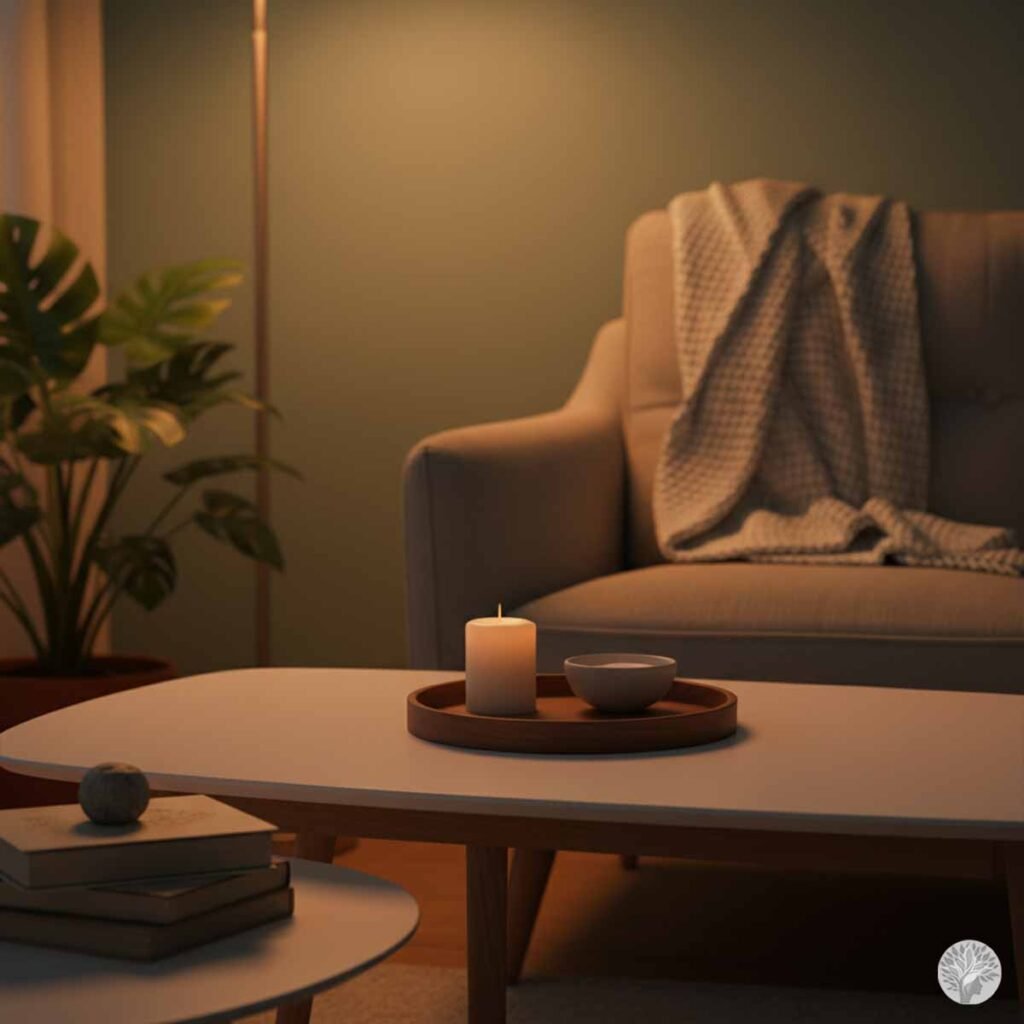
- The “One-Surface” Tray: Use a beautiful wooden or marble tray on your coffee table. This becomes your “Designated Silent Zone.” Even if the rest of the room is messy, keeping this one tray clear provides the visual relief your brain needs to start the “Drain” process.
Step 3: Heal the “Touched Out” Feeling (Tactile Regulation)
By 8:00 PM, many mothers experience a visceral aversion to physical contact. After a day of nursing, toddler clinging, and constant skin-to-skin demands, your primary sensory organ your skin feels “raw.” This isn’t a lack of affection; it is Tactile Overstimulation.
What’s happening?
Your body has two primary touch systems. One that identifies what we touch and one that processes the emotional quality of touch. When you are “touched out,” your system is saturated. Your nervous system stays in a state of high arousal because it can no longer distinguish between a loving hug and a sensory intrusion. To fix this, your body needs “heavy input” that is predictable, deep pressure that tells your brain exactly where your body ends and the world begins. This grounding sensation helps lower your heart rate and cortisol levels almost instantly.
The Action of The “Heavy Input” Ritual
To move from the Threshold back into a state of calm, you must swap “light, unpredictable touch” (like a child tugging your hem) for “heavy, intentional pressure.” Incorporate magnesium to chemically signal muscle relaxation and use weight to provide neurological grounding. A lukewarm shower or bath with magnesium flakes helps reset your internal temperature and prepares your muscles for a restful state.
The Tools
- Magnesium Bath Flakes: These are significantly more bioavailable than standard Epsom salts. Magnesium is the “chill pill” of the mineral world; it helps regulate neurotransmitters that quiet the nervous system.
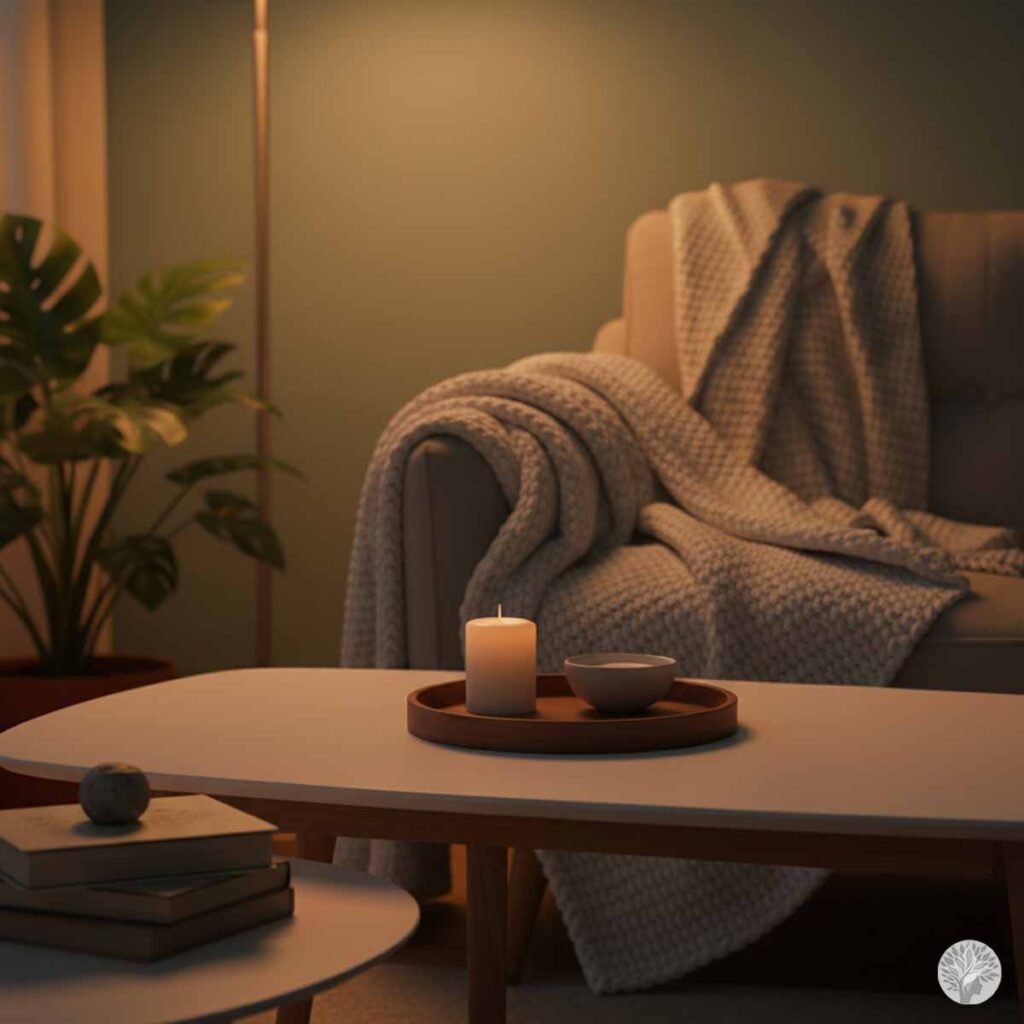
- The Weighted Blanket: This is the ultimate tool for tactile regulation. Aim for a blanket that is roughly 10% of your body weight. This provides Deep Pressure Stimulation (DPS), which encourages the release of serotonin and melatonin the “rest and digest” hormones.
- Natural Fiber Loungewear: After your bath, the texture of your clothing matters. Choose organic linen or high-GSM cotton. Synthetic fabrics can feel “scratchy” to a sensitive system, while natural fibers provide a consistent, gentle tactile field.
Step 4: Close the Mental Tabs (The Brain Dump)
The reason you can’t sleep at night isn’t usually because you aren’t tired; it’s because your brain is afraid you will forget something important tomorrow. Your mind is like a computer browser with 50 tabs open, each one drawing power and keeping the “processor” running at high heat.
What’s happening
This is Cognitive Load in its purest form. When tasks remain unfinished or unwritten, the brain uses a psychological phenomenon called the Zeigarnik Effect to keep those tasks in your active memory. This creates “Mental Loops” that cause sleep-onset insomnia. By physically writing these thoughts down, you signal to your brain that the information is “safe” and no longer needs to be actively tracked. You are essentially hitting “Save and Close” on those open tabs.
The Action of The 5-Minute Brain Dump
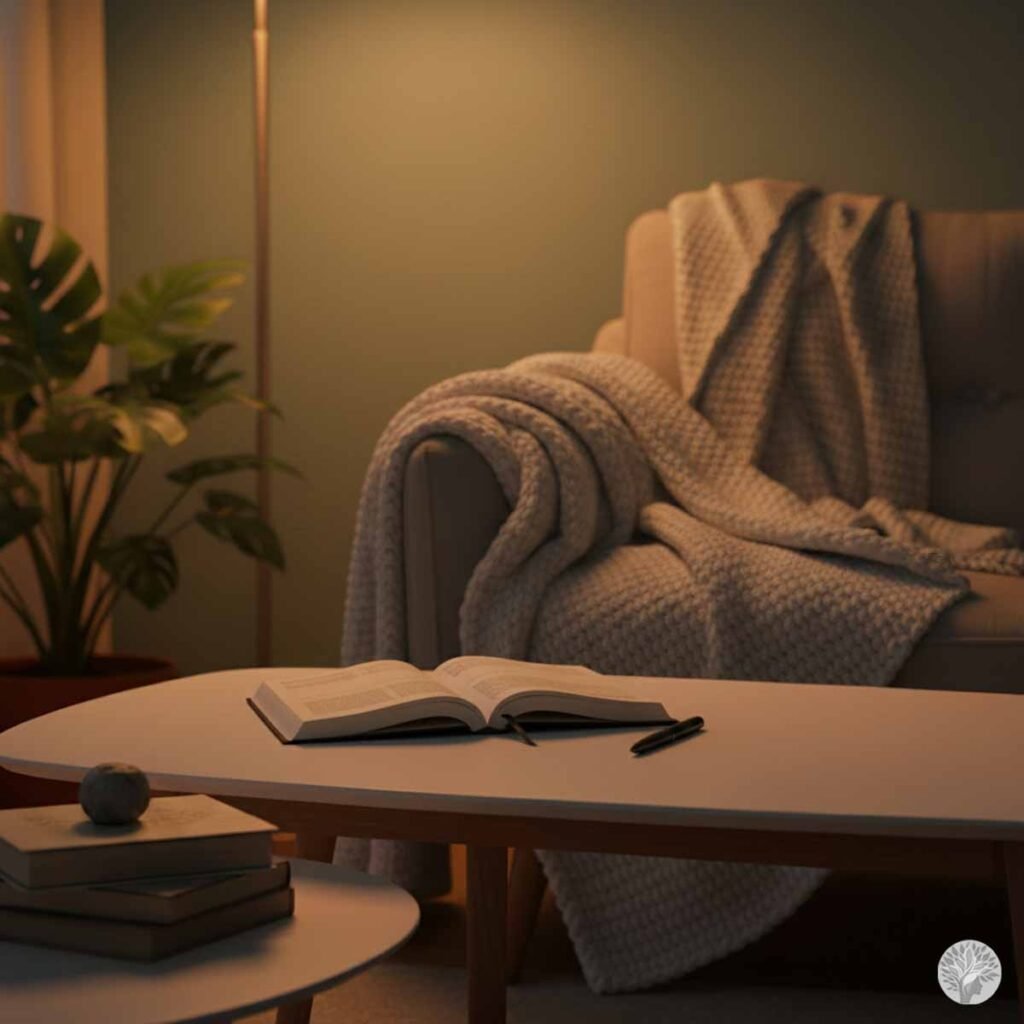
Before your head hits the pillow, spend five minutes with a physical notebook. Do not use your phone. The blue light and the potential for new notifications will only re-stimulate your brain. Move the thoughts from your head to the paper using the Hetal Method 3-Line System. This is not a “to-do” list; it is a mental evacuation.
The Tools
- Linen-Bound Journal: Choose a notebook that feels high-quality and “silent.” A journal dedicated solely to your evening resets helps build the habit.
- A Smooth-Flowing Pen: The tactile experience of writing should be effortless. Use a pen that glides across the paper to keep the “drain” process as smooth as possible.
- The 3-Line Prompts:
- The Loop: Write 3 specific things currently circling your mind (e.g., “sign permission slip,” “buy milk”).
- The Win: Write 1 “Big Win” from today. It doesn’t have to be productive; it can be as simple as “I stayed calm during the cereal spill.”
- The Release: Write 1 thing you are officially releasing until tomorrow morning. Physically tell yourself. “I am not responsible for this until 8:00 AM.”
The Low-Energy Version (For the Hard Nights)
Some nights, even four steps feel like too much. You’ve had a day of back-to-back tantrums, a sick child, or a relentless workload. On these nights, your goal isn’t “regulation”. It’s simply to stop the bleeding of your energy. When you are in “Survival Mode,” do the “Hetal Minimum.”
What’s happening
When you are at the absolute edge of your Window of Tolerance, even the thought of a routine can feel like another demand. The Hetal Minimum is designed to be the “floor” of your self-care. It’s the bare minimum required to stop the sensory overflow so you can eventually fall asleep.
The Action of The 60-Second Pivot
Don’t try to heal. Just try to breathe.
- Turn off the overhead light: Immediately stop the visual stimulation of bright LEDs.
- Clear one Sanctuary Surface: Find just 12 inches of space be it a a coffee table tray or a nightstand and push the clutter aside. Look at that clear space for 10 seconds.
- Take one deep breath: One intentional, diaphragmatic breath signals to your vagus nerve that you are safe.
The Tools
You don’t need tools for survival nights. You only need permission to be “enough.”
Common Questions about Evening Resets
Q.1 Why am I so tired but I can’t sleep? This is a physiological phenomenon known as “Revenge Bedtime Procrastination.” Because you felt like you had zero control over your time or your body during the daylight hours, your brain stays awake at night to reclaim a sense of agency. It’s a “revenge” against the demands of the day. However, since the brain is still in a state of Sensory Overload, it seeks “low-effort” dopamine like scrolling social media, which actually keeps the brain in a high-alert state. The Evening Reset replaces that low-effort dopamine with actual nervous system regulation.
Q.2 How long does an evening reset take? The Hetal Method is designed to be scalable. A full reset takes about 15 to 20 minutes, but the neurological shift begins in the first 60 seconds. It is not about the duration of the tasks; it is about the intentionality of the sensory shift. Moving from a “Big Light” environment to a “Scent and Shadow” environment happens instantly.
Q.3 What if I don’t have a bathtub for the Magnesium step? You don’t need a full soak to get the benefits. A Magnesium oil spray or a concentrated foot soak in a small basin works just as well. The goal is to get the mineral into your system to support GABA production, which helps quiet the “chatter” in your brain.
Q.4 Can I do this while my kids are still awake? Actually, yes. Starting the “Auditory and Olfactory” shift (Step 1) while the kids are in their final hour of play can actually help their nervous systems begin to wind down too. When you dim the lights and start the diffuser at 7:00 PM, you are co-regulating with your children, making their bedtime transition smoother.
Q.5 Will this help with my morning anxiety? Absolutely. Morning anxiety is often the result of “Unclosed Mental Tabs” from the night before. By performing Step 4 (The Brain Dump), you ensure that your brain doesn’t spend the night “looping” on tasks. You wake up with a clear roadmap rather than a sense of impending dread.
Reclaiming Your Evening Peace
Motherhood in the modern world is a loud, high-demand, sensory-heavy experience. You were not designed to be “on” for 16 hours a day without a break in the input. By implementing a Gentle Evening Reset, you are not just “getting ready for bed”. You are reclaiming your humanity. You are telling your nervous system that you are more than a caretaker; you are a person who deserves silence, soft textures, and a peaceful mind.
Related Terms: [Sensory Overload], [Visual Silence], [Cognitive Load]
“Being mindful isn’t about having a mind full of tasks; it’s about creating enough space for your mind to finally feel at home.”
Love ya, stay mindful!

© 2026 The Mindful Mom Life. All rights reserved. This methodology is part of the Hetal Method helping mothers find neurological rest through intentional home management. No part of this work may be shared or reproduced without credit to the original source.