

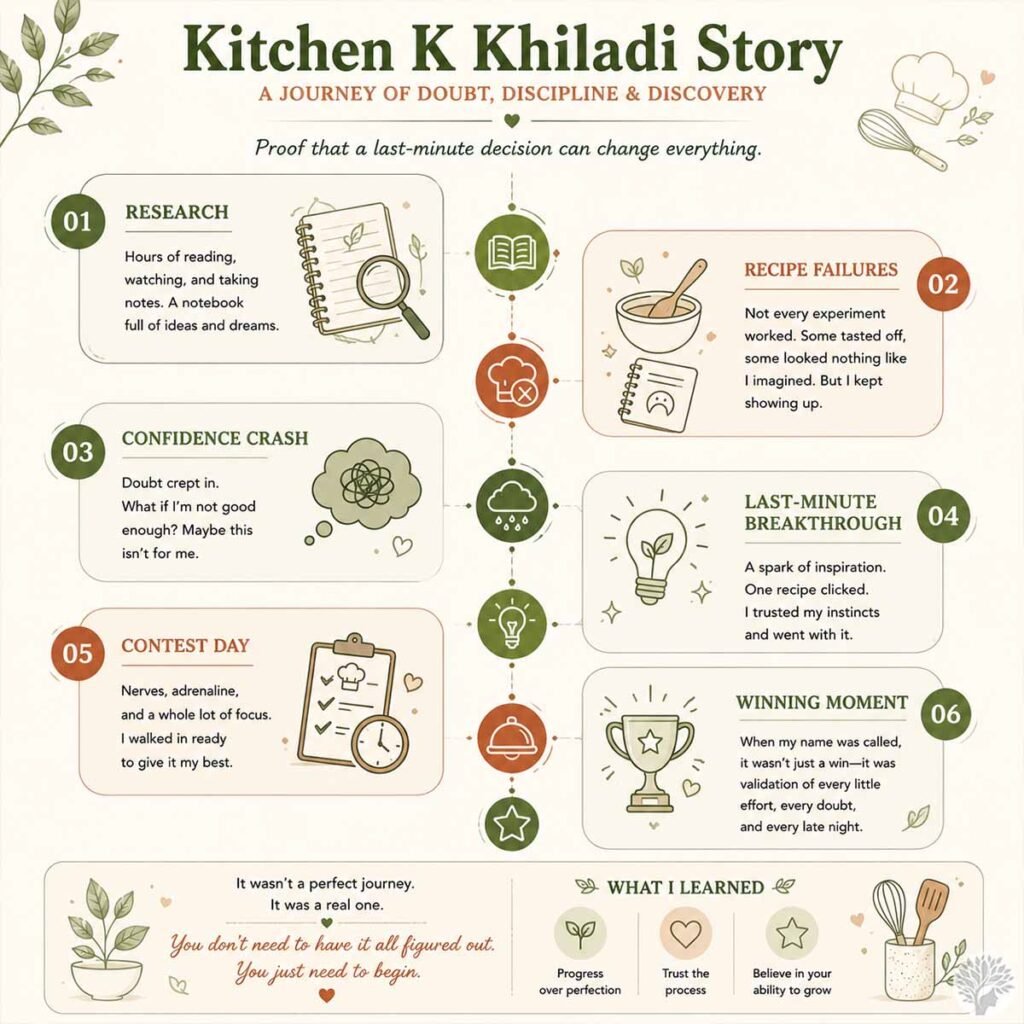
What was it like competing in the Kitchen K Khiladi Season 3 cooking contest? My Kitchen K Khiladi Season 3 journey was an unforgettable experience filled with intense preparation, family teamwork, and a thrilling twist on the main stage. From conceptualizing a healthy milestone tiffin menu to navigating the high-stakes competitive floor, here is the full story of our culinary journey, the recipes that won over the judges, and the unforgettable moments shared between a mother and daughter.
Disclaimer: This post contains affiliate links for tools I’ve carefully curated or used in my own sanctuary; I may earn a small commission at no extra cost to you. Read my full disclosure.
Hey Beautiful!
When I first saw the flyer for Kitchen K Khiladi Season 3, organized by the Infinity Women’s Activity Club right here in Vadodara (India), my immediate reaction was simple, perhaps even a little naive, “This should be easy.” After all, cooking meals and packing tiffins is something I do every single day as a mother.

But what looked straightforward on paper soon turned into one of the most challenging, humbling, and deeply rewarding creative journeys I have experienced in a long time. It forced me to step right out of autopilot and look at the daily rhythms of my kitchen through a completely different lens.
The Illusion of the “Easy” Task
The theme of the competition was “Tiffin Recipes” what many mothers in other parts of the world know as a packed school box. As a mother of a teenage son, I pack these boxes almost on autopilot. It is part of the morning routine, a silent language of care spoken in the quiet hours before dawn. Yet, the moment I started thinking seriously about the contest, I realized I was facing a unique emotional and creative hurdle.
I didn’t want to just cook a performative plate for a panel of judges. I wanted to cook for my son. And that shift in perspective changed everything.
My son has three breaks during a typical school day. He is active, plays football, and needs food that provides sustained, real energy to carry him through the afternoon. While it wasn’t mandatory to prepare three separate dishes for the contest format, my mind completely refused to think like a contestant. It thought like a mother.
If I was preparing a true tiffin for my boy, how could I stop at just one box?
The Perfect Tiffin Dilemma
Suddenly, a cascade of real-world challenges hit me:
- The Nutritional Balance: It needed to be genuinely healthy, sustaining a teenager’s energy without a sudden crash.
- The Teen Appeal: It couldn’t just look healthy; it had to look appealing enough for a teenager to want to open it in front of his peers.
- The Transport Factor: It needed to travel well, remain structurally sound, and stay completely fresh for hours after preparation.
Then came the container dilemma. Plastic lunch boxes felt practical but didn’t align with my environmental values. Trendy bento boxes looked attractive on social media but weren’t something my son naturally preferred to carry. I spent hours researching shopping platforms, comparing dimensions, and imagining how an active teenager would actually interact with each container during a busy, fast-moving school day.
Eventually, I found the right boxes. I thought the difficult part was over. I was wrong. The actual challenge was waiting for me ahead.
The real test had only just begun.
The Trials, the Errors, and the Jowar Taco Disaster
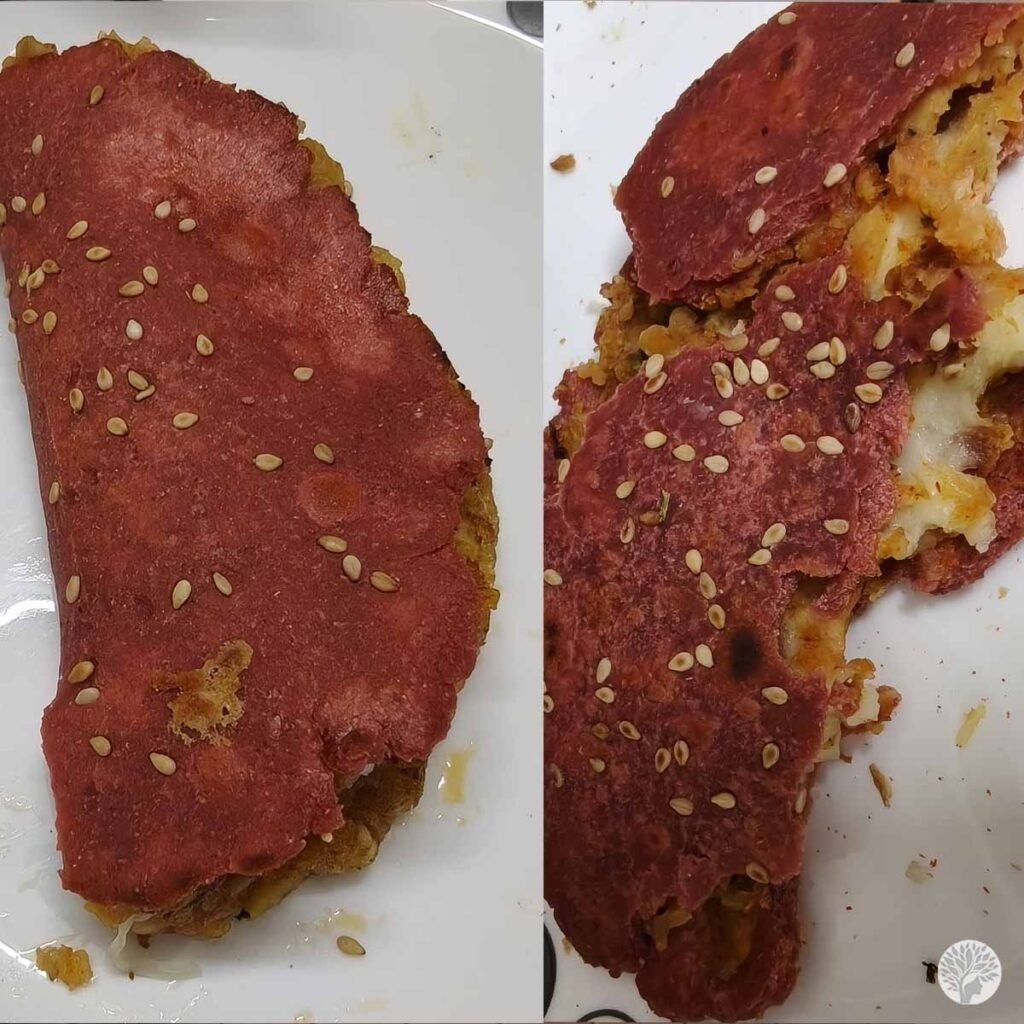
My first big idea was tacos. I felt confident, perhaps a bit too confident. Determined to make them as nutrient-dense as possible, I attempted to create taco shells using 100% jowar flour.
What is Jowar Flour? Jowar flour is a gluten-free flour ground from whole-grain sorghum, a resilient ancient grain native to Africa and Asia.

In the USA: It is simply called Sorghum Flour and is widely available in the gluten-free baking aisle of major supermarkets.

In the UK: It is also sold as Sorghum Flour, though in international markets or specialized Asian grocers, you might see it labeled by its African name, Juwar or Sorghum.
The result was a complete disaster. They were dry, flaky, and broke apart at the slightest touch. The filling wasn’t much better. I had paired chickpeas with a potato-cheese mixture, hoping for a balance of protein and comfort. Instead, the combination felt dry and totally disconnected. The tacos completely lost their place in my heart.
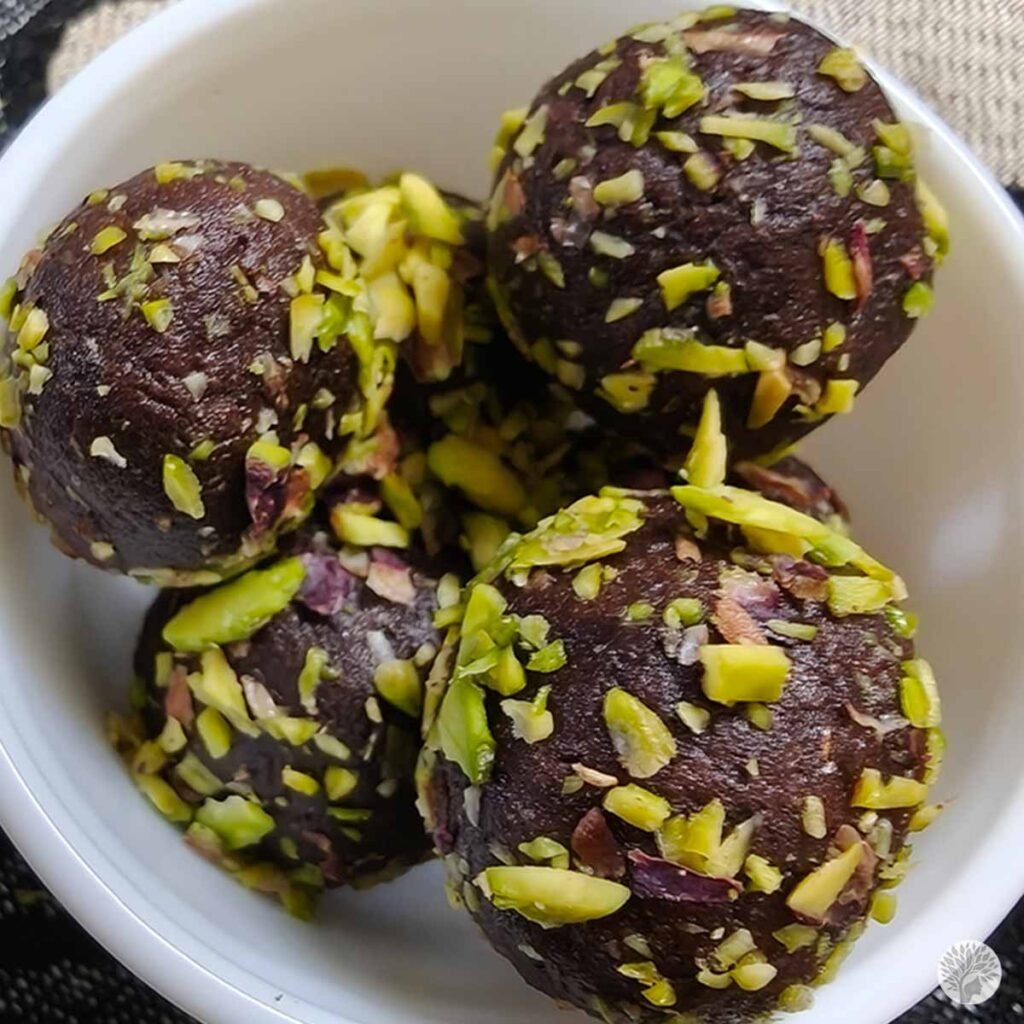
Next, I moved on to a sweet treat, ragi cocoa truffles. The recipe appeared simple on paper, yet my first batch turned out with an intense bitterness that instantly told me something had gone wrong.
What is Ragi Flour?
Ragi is a nutrient-dense, gluten-free ancient grain that has been cultivated in India and Africa for thousands of years. It is incredibly rich in calcium, fiber, and iron, making it a powerhouse ingredient for maternal and child nutrition.

In the USA: It is primarily known as Finger Millet Flour. You can find it in the baking or international aisles of specialty grocers, health food stores, or online.

In the UK: It is also called Finger Millet Flour or simply Millet Flour (though specifically derived from the finger millet variety). It is widely available in Asian supermarkets and health food shops across the country.
At this point, I had planned three ambitious dishes, and I effectively had zero. My confidence began to unravel. I remember sitting in my kitchen thinking, “Now what? Should I just back out?”
But the answer came quickly from within, No. I wanted to participate. There was no turning back.
Finding the Rhythm of The Final Menu
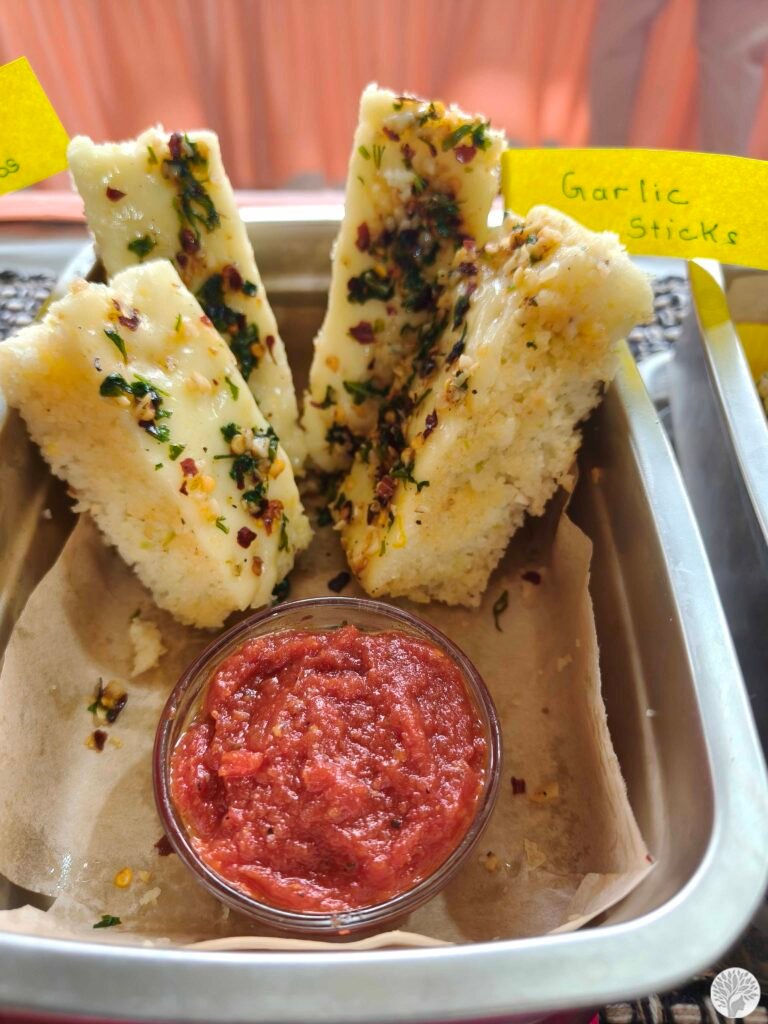
So, I started again from scratch. This time, I leaned into familiar comfort. I created a rava-moong dal dhokla and successfully infused it with the savory, nostalgic flavors of café-style garlic bread. For the first time in days, something clicked perfectly. That small success gave me the courage to keep going.
What is Rava and Moong Dal?
Rava (Semolina): Rava is coarsely ground durum wheat. In the USA and UK, it is universally known as Semolina. It is prized in baking and breakfast dishes for providing a wonderful, light, and slightly grainy texture.

Moong Dal (Split Yellow Mung Beans): This is skinless, split mung beans. In Western supermarkets, look for them labeled as Split Yellow Mung Beans or Yellow Lentils. They are incredibly easy to digest, packed with plant-based protein, and lend a creamy, mild base to recipes.

What is Dhokla?
Dhokla is a classic, savory street food and breakfast dish originating from the state of Gujarat, India. Unlike many fried savory snacks, a traditional dhokla is steamed, making it naturally light and healthy. It has a soft, spongy, cake-like texture and is typically cut into bite-sized squares.

Before serving, it is finished with a "tempering" (called tadka), a quick sizzle of mustard seeds, curry leaves, and green chilies in a tiny bit of warm oil poured over the top to infuse it with aroma and moisture.
But my heart wasn’t ready to abandon the taco idea just yet. I returned to it cautiously, adjusting the variables. The second version used whole wheat flour, and I removed the dry chickpeas entirely, relying instead on a moist, savory potato-paneer combination.
My son tasted this version and liked the flavor, but my maternal instincts told me it still wasn’t quite there. Sometimes everyone else says it is good, but your internal compass tells you it isn’t ready.
With only two days remaining before the competition, I lay awake on the night of June 18th. My mind kept returning to muscle memory. Why was I trying to force myself into an artificial contest format when my heart already knew the rhythm of my own? Every single school day, I pack three boxes. That rhythm is embedded in me.
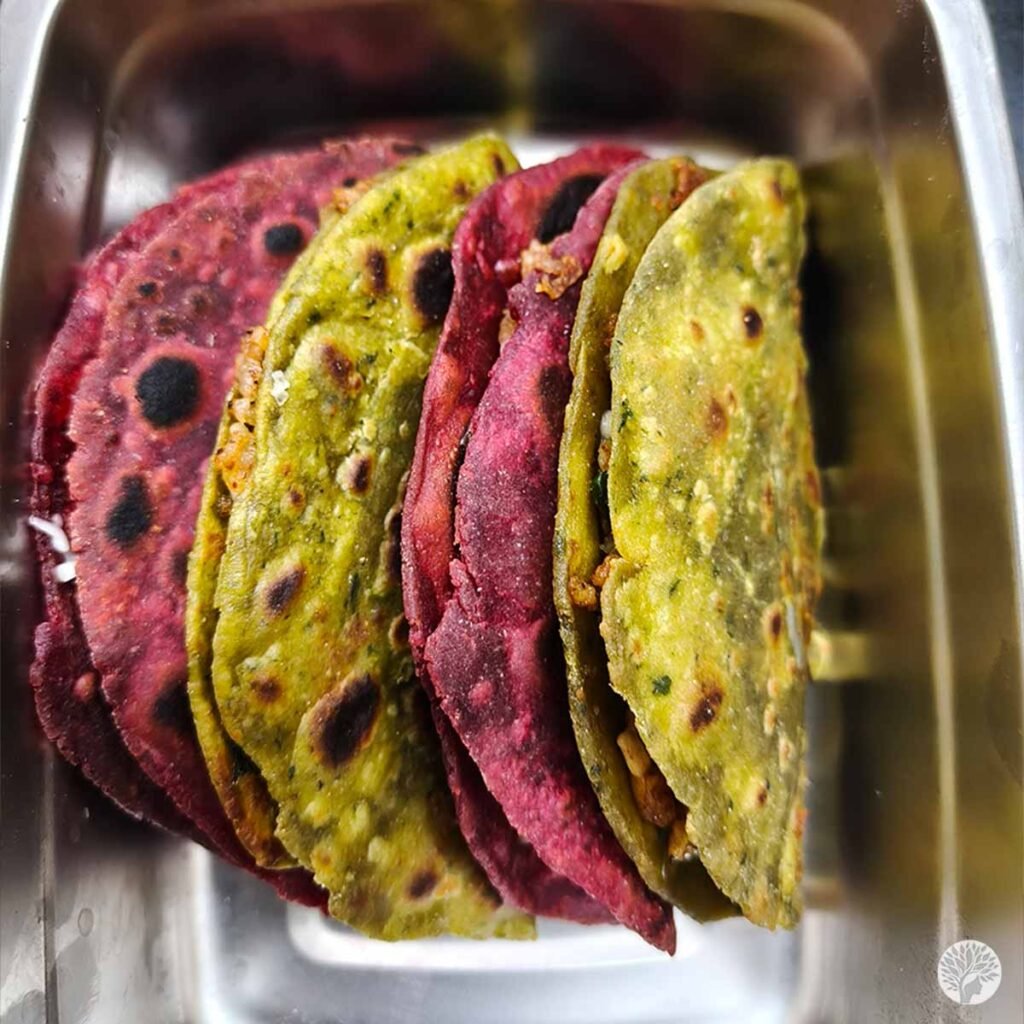
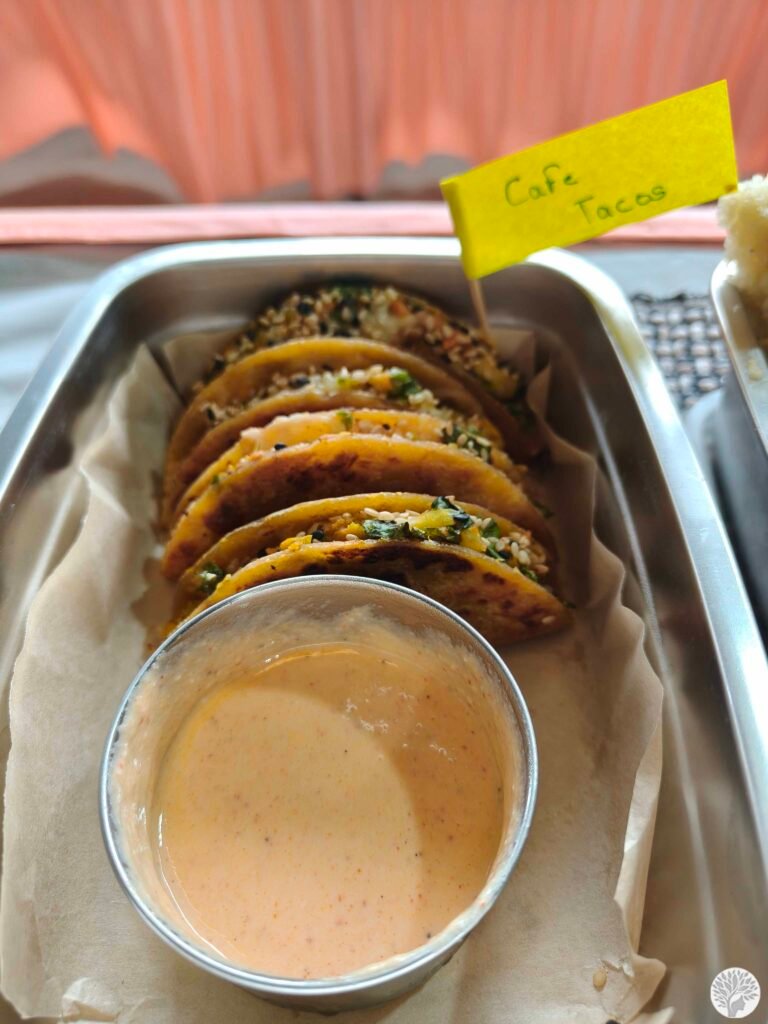
The next morning, I decided to trust that instinct. The tacos would stay, but they would evolve one final time. I combined whole wheat flour with grated wax gourd directly into the dough to ensure lasting softness. I paired it with a vibrant vegetable-potato-paneer filling designed to stay perfectly moist and stable for hours. Finally, everything felt balanced.
Meanwhile, I retried the ragi cocoa truffles, carefully adjusting the ratios. When my son tasted this batch after returning from school, his eyes widened.
“Mumma, this is awesome.”
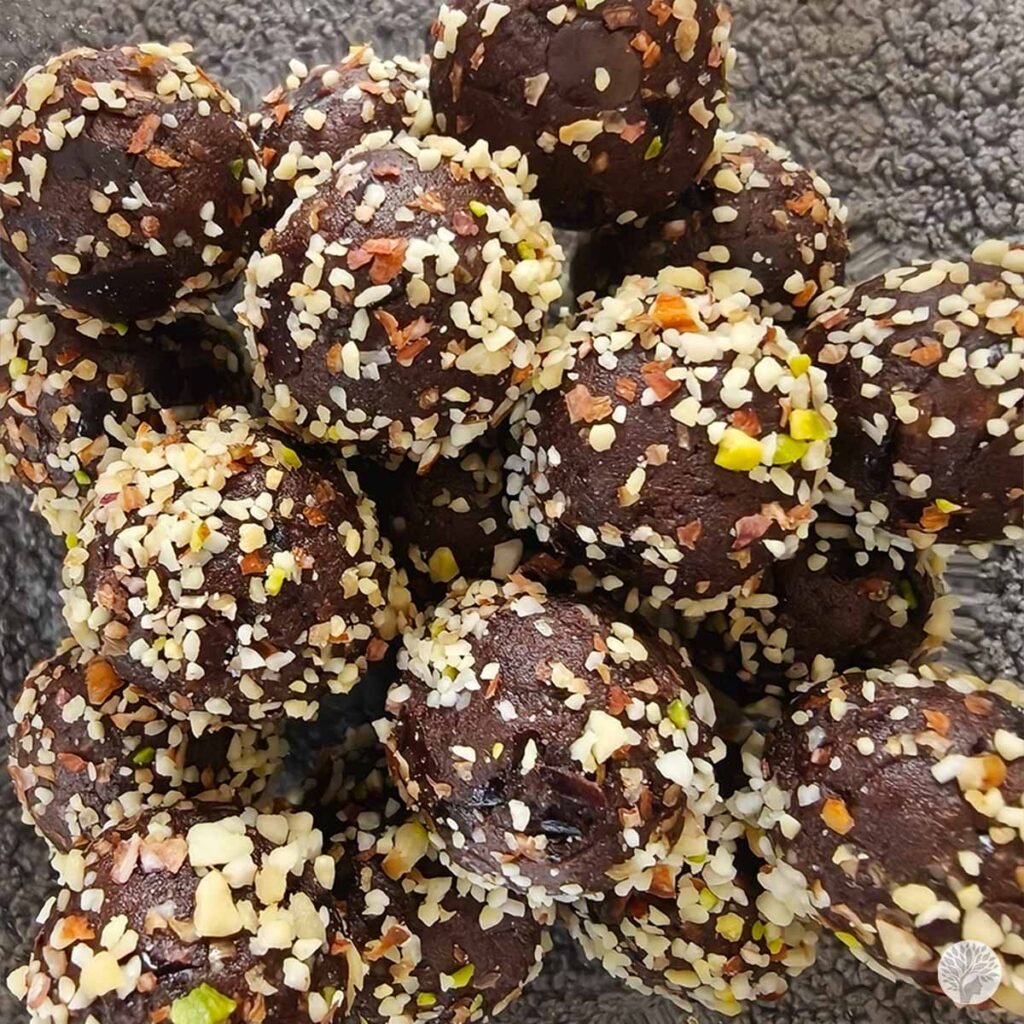
The immense relief I felt in that moment was worth more than any potential prize.
Then came a challenge no recipe book talks about, logistics. The food would be judged several hours after preparation. It needed to remain fresh, appealing, and safe to eat. Presentation mattered too, not from a judge’s perspective alone, but because I wanted the entire tiffin to look like something my teenage son would genuinely be excited to open during a school break.
The day before the contest, I prepared the ragi cocoa truffles, mayonnaise, and tomato sauce. Everything went through my most trusted quality-control expert, my son. His approval gave me the baseline confidence I needed.
Contest Morning – A Blur of Adrenaline
The morning of the contest was an absolute whirlwind of domestic adrenaline. Taco dough, simmering fillings, steaming dhokla, assembly, tempering, and packaging. Then came the endless checklists of boxes, display placards, recipe sheets, and last-minute wardrobe decisions as the dress code was maroon or red color.
I kept checking my bag repeatedly, struck by that universal fear all participants share that one tiny forgotten item could undo weeks of quiet preparation. And through it all, a small worry lingered, because he had to leave early and my son never actually tasted the final version of the taco filling. The judges would be tasting it before he did.
We reached the venue right on time, navigating a crowded room of talented local cooks. After securing our tokens, we carefully made our way to our designated tables. I arranged the tiffin boxes, recipe sheets, placards, and presentation materials, then checked everything again. And then checked it once more. Even after two weeks of preparation, my mind kept asking the same question, “Did I forget something?”
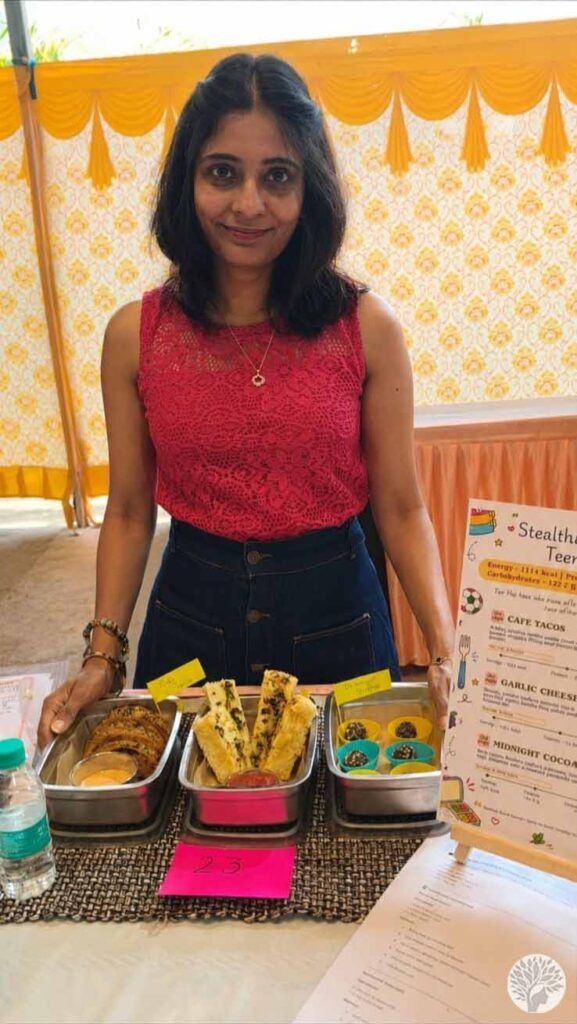
I was presenting my “Stealthy Healthy Teen Tiffin,” featuring
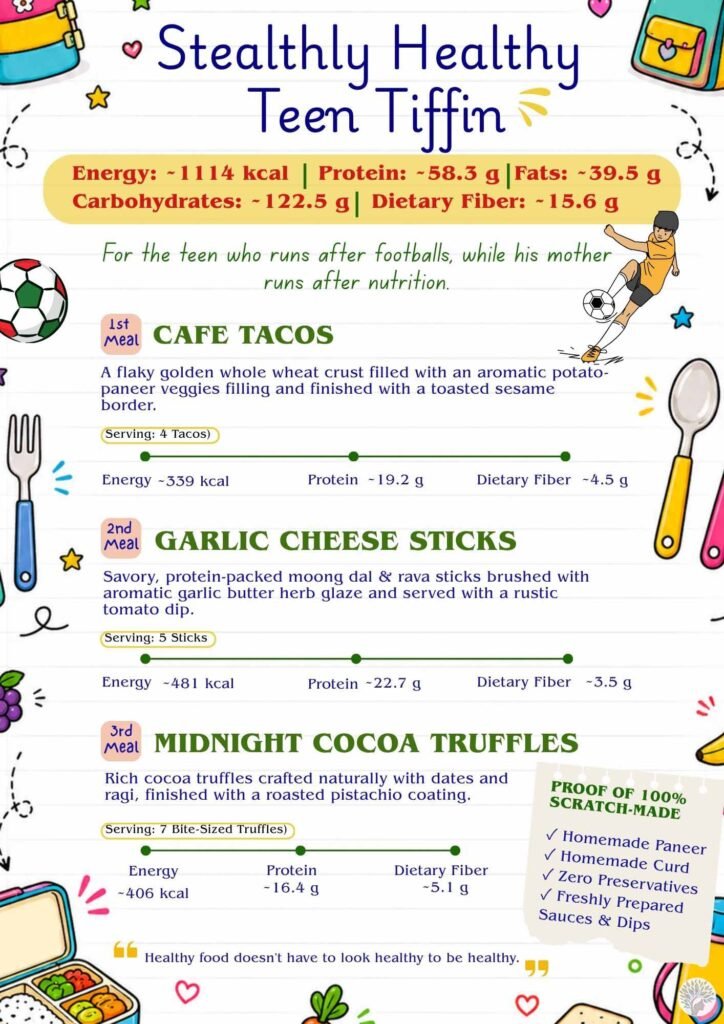
Cafe Tacos: The soft whole-wheat version with the savory potato-paneer filling that finally won my son over!
Garlic Cheese Sticks: A flavorful, savory twist on a classic that packed a beautiful punch.
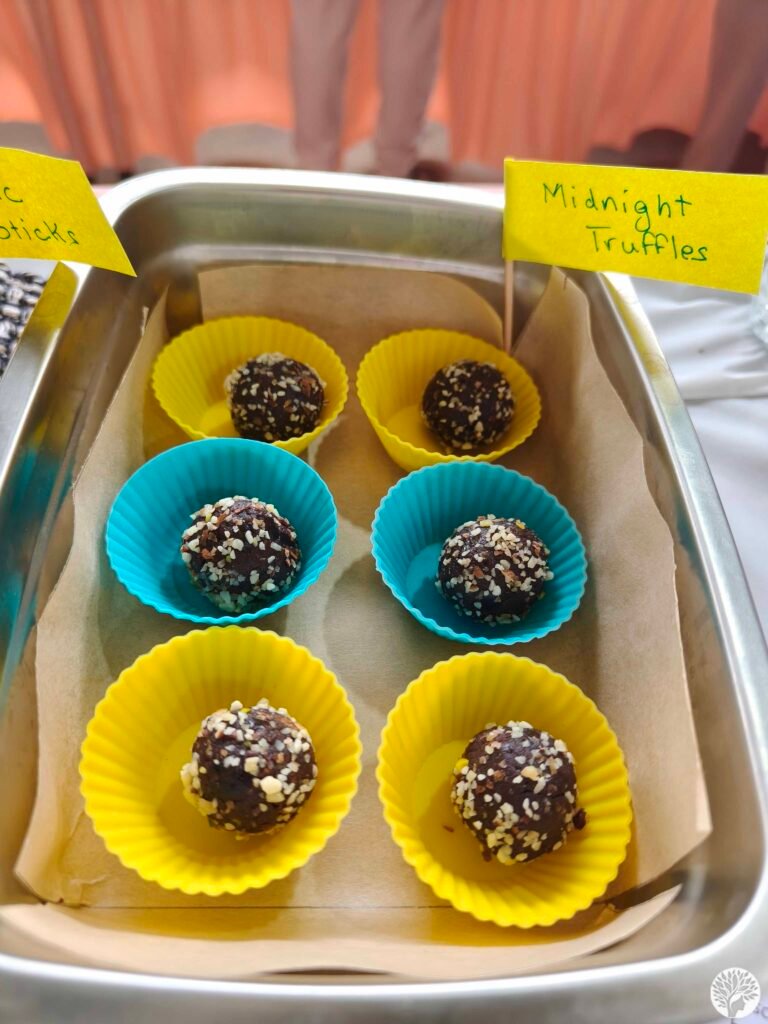
Midnight Cocoa Truffles: The perfected, nut-crusted ragi cocoa bites that made my son’s eyes widen.
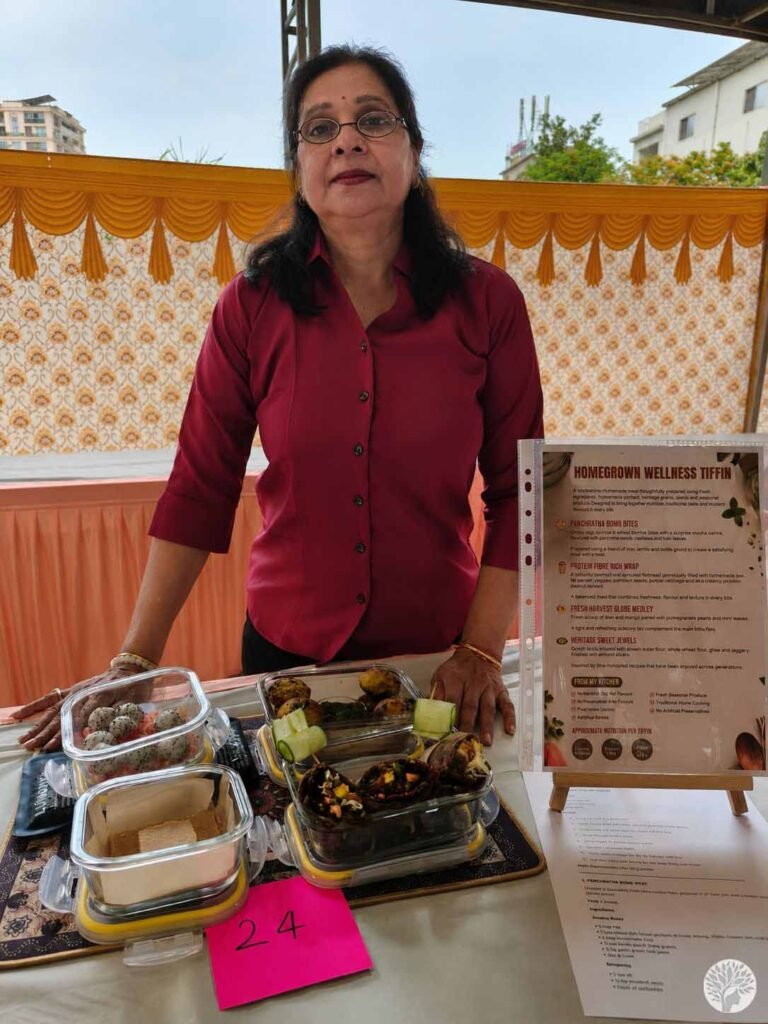
My mother was right next to me, presenting her beautiful “Homegrown Wellness Tiffin,” which featured
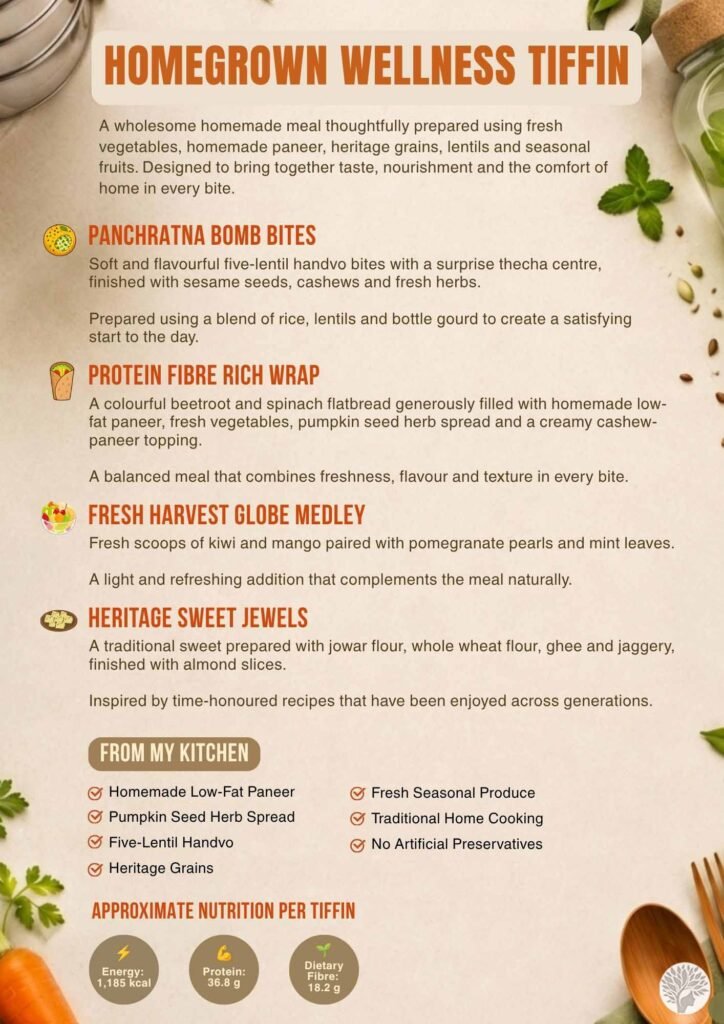
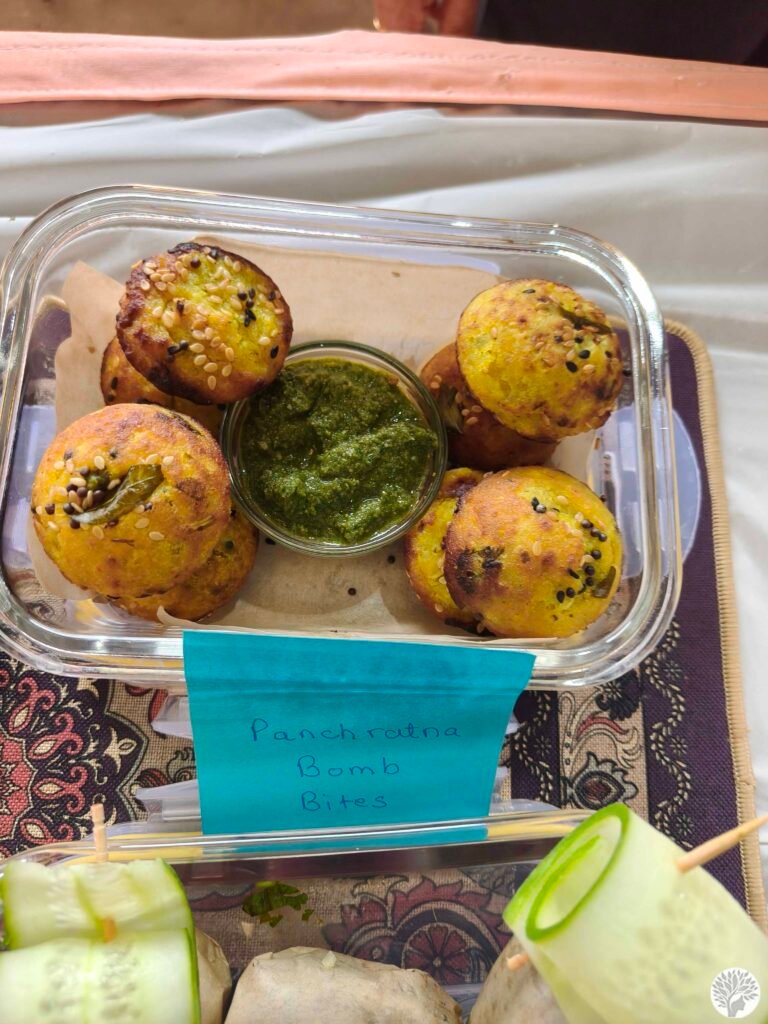
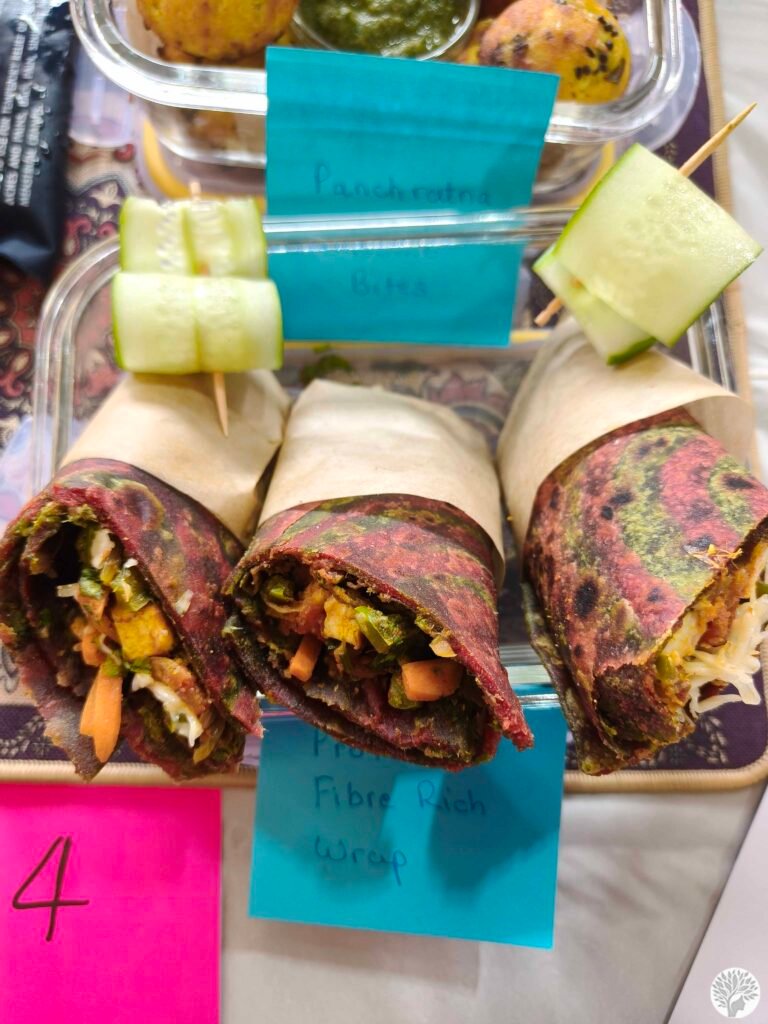
Panchratna Bomb Bites: Crispy rice flour and five lentil bites with a surprise savory center, garnished with fresh cucumber ribbons.
Protein Fibre Rich Wrap: A vibrant beetroot and spinach flatbread generously filled with homemade low-fat paneer, veggies, pumpkin seeds, and a creamy pickle-peanut spread.
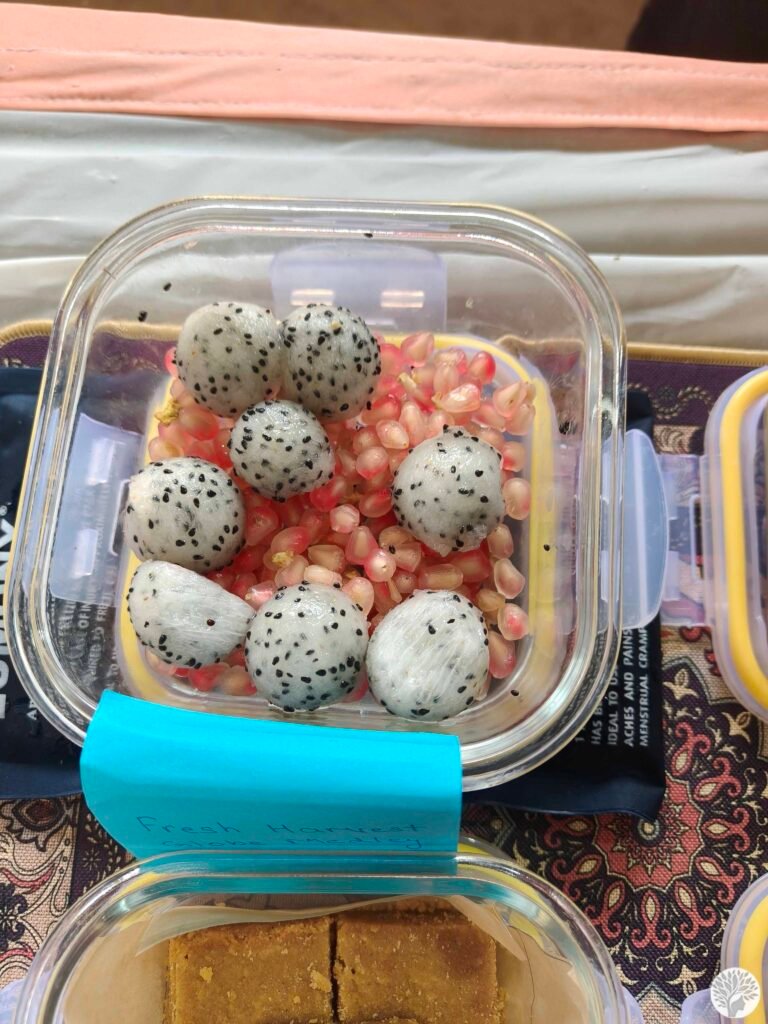
Fresh Harvest Globe Medley: A refreshing, light side dish of kiwi paired with pomegranate pearls and fresh mint leaves.
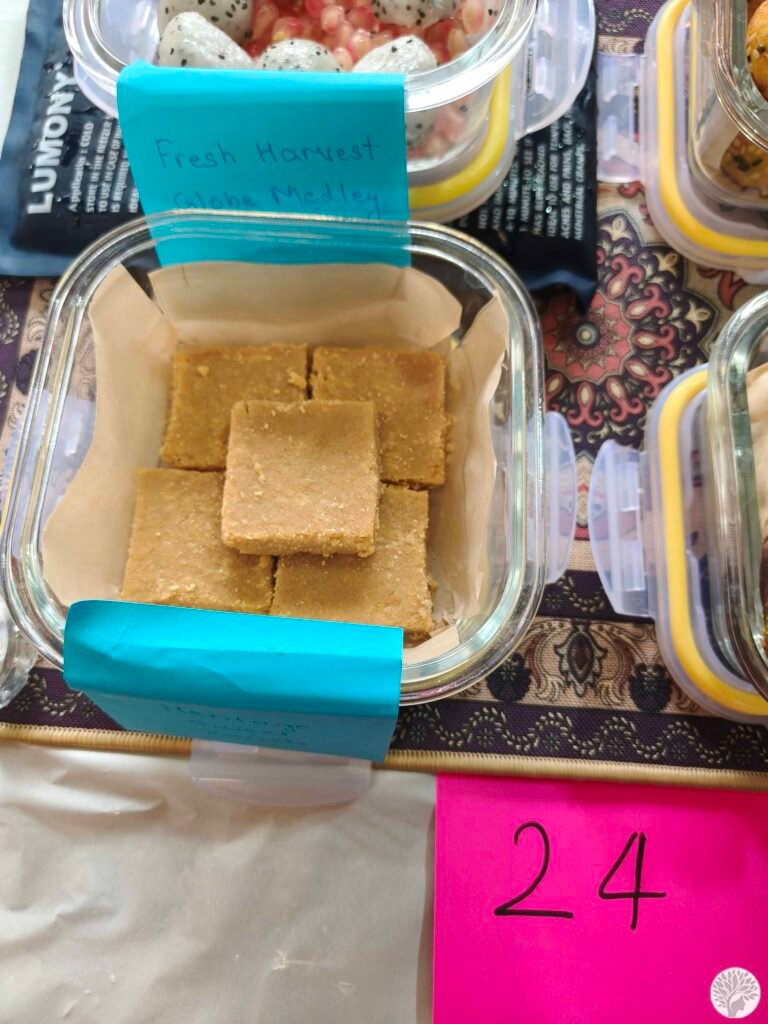
Heritage Sweet Jewels: Nutrient-dense sweet made with juvar flour, whole wheat flour, ghee, and jaggery.
I glanced over at my mother’s counter; she was ready too, but she met my anxious eyes with a calm smile. In that moment, I knew everything was going to be fine. With lightened hearts, we stepped back and happily clicked photos of each other at our tables.
Once everything was in place, I finally allowed myself to breathe. I walked around, admired other participants’ creations, exchanged smiles, took photographs, and appreciated the incredible effort everyone had put into their entries.
Soon, we were all seated for the main event. The organizers felicitated sponsors and volunteers, followed by a series of talks by doctors on health and women’s wellness. To my surprise, that became the highlight of the event for me at that point. The sessions were informative, interactive, and filled with practical insights that resonated deeply with many of us in the room.
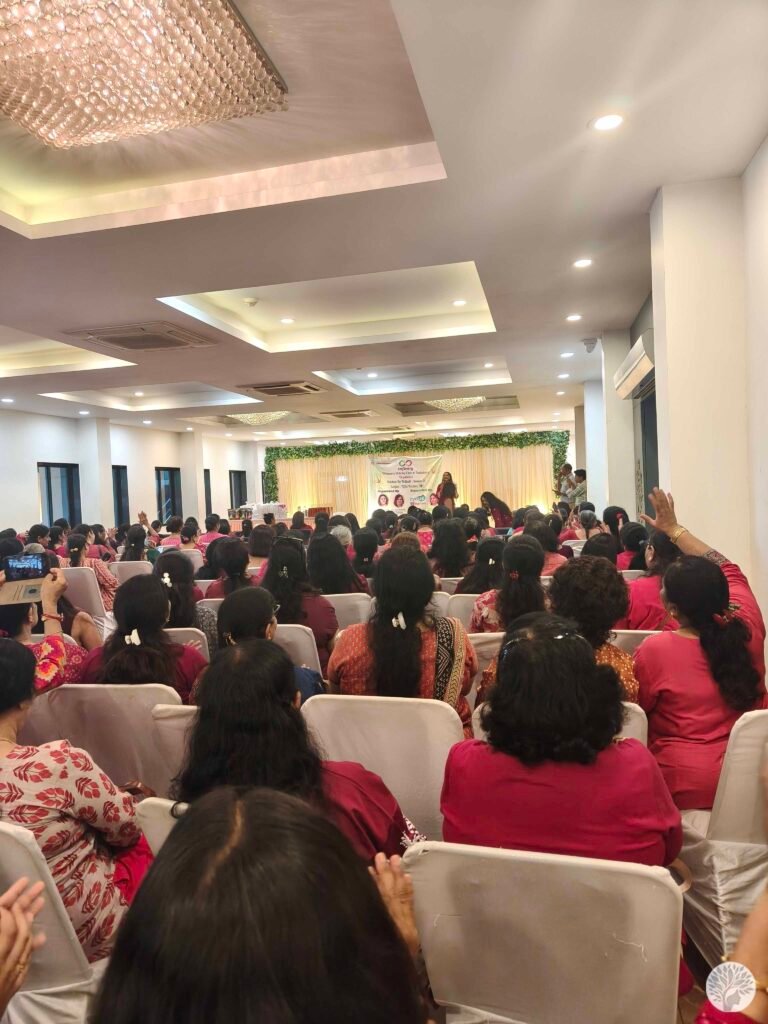
Then came the housie game. Like every hopeful participant, I watched my ticket carefully and silently negotiated with fate. “Come on, just one more number.” Luck, however, had other plans.
A Heart-Pounding Twist of Fate
Before I could recover from my unsuccessful housie career, the moment everyone had been waiting for arrived, the results. The organizers began announcing winners from the fifth position upward. Each recipe name was greeted with applause.
When the fifth-place winner was announced, I felt genuinely happy. It was an elderly participant whose experience and dedication deserved recognition. Fourth place followed. Then third. At no point did I imagine that my recipe’s name would be called. In my mind, I was simply grateful that I had participated and completed the journey.
Then suddenly, I heard the name of my recipe being called for the second position. For a split second, my heart stopped.
As I started moving toward the stage, a familiar name reached my ears: Panchratna Bomb Bites. That was one of the special components of my mother’s beautiful, thoughtful menu! In that moment, I thought she had won first place, and I was absolutely thrilled for her. She had won a cooking contest before as well. A proud moment that I had shared our journey through right here on the blog. Walking toward the stage, I carried an overwhelming wave of excitement, ready to celebrate her victory once again.
When I reached the stage, the organizers asked for my token. I rushed back to my seat, opened my bag, and searched for it. Then came the incredible correction from the microphone:
- Token number 23 had won first place.
- Token number 24 had won second place.
I was token number 23. My mother was token number 24.
For a few seconds, nothing made sense. I simply stood there trying to process what I had heard. First place was mine; second place belonged to my mother. A clean sweep for our family kitchen!
I had skipped breakfast and lunch that day because of the frantic preparation and nerves. The sudden rush of raw emotion hit me all at once. My hands trembled, my heart raced, and I genuinely felt as if I might faint from a wave of happiness I couldn’t contain.
Connecting to the Heart of the Mindful Home
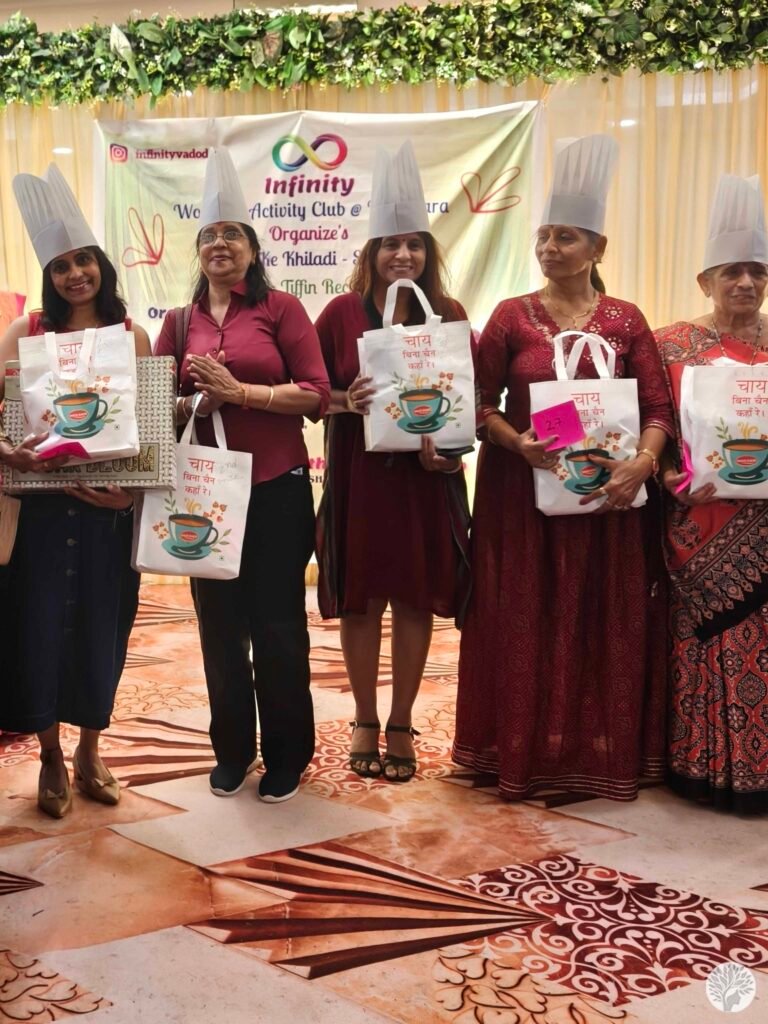
Standing on that stage as they handed me the first-place prize, the goodie bag, and placed the chef’s cap on my head, the dizziness cleared, and a profound realization settled in. I hadn’t won this competition alone. In fact, I hadn’t really won it at all. My son had won it through me.
This entire journey represents the very heartbeat of The Mindful Mom philosophy. It is a living testament to what happens when we stop trying to perform for external validation and instead root our actions deeply in intentional, everyday love.
In modern life, we are constantly caught in The Management Trap, the pressure to execute tasks flawlessly, to build perfect routines, and to treat our households like high-performance machines. When I first saw that competition flyer, I briefly fell into that exact trap. I viewed the tiffin as a checklist of parameters to satisfy a panel of experts.
But true mindfulness in homemaking begins when we shed the need to perform. The moment I shifted my focus away from the judges and back to my son, the competition stopped being a stressful chore and became an extension of our home’s natural rhythm.
Every single hurdle I faced was solved not by looking at a rigid rulebook, but by tuning in to the specific, practical needs of my family.
- The failed jowar tacos reminded me that sustainable nourishment shouldn’t be forced or rigid; it has to bring genuine comfort and joy to the table.
- Blending grated wax gourd into the dough wasn’t a calculated culinary trick to impress experts. It was a mother’s practical solution to ensure her child’s lunch stayed soft, moist, and comforting hours after he left the house.
- Listening to his honest feedback on the ragi cocoa truffles taught me to trust the slower, iterative process of trial and error rather than demanding perfection on the first try.
All through this journey, my focus was never the validation. It was the simple, grounded reality of an active teenage boy opening a lunch box during a hectic school day. I wanted him to feel sustained, seen, and deeply cared for in the middle of his football practice and class breaks.
We enter so many “competitions” in our daily lives as mothers quietly comparing our homes, our schedules, and our parenting to idealized standards. But this journey taught me that the real reward is discovering that when love becomes the main ingredient, even our failures, doubts, broken tacos, and bitter truffles eventually find their way to something beautiful.
The chef’s cap is a wonderful keepsake, and the recognition from the Infinity Women’s Activity Club is incredibly meaningful. But the deepest lesson Kitchen K Khiladi Season 3 taught me is one that applies to every single morning we stand at our kitchen counters.
Sometimes, the winning recipe isn't the one you cook. It's the reason you cook it mindfully.
Love ya, stay mindful!

© 2026 The Mindful Mom Life. All rights reserved. This methodology is part of the Hetal Method helping mothers find neurological rest through intentional home management. No part of this work may be shared or reproduced without credit to the original source.

Find Your Next Pocket of Calm
- Tired of the Chaos? Create a Calm Home Sanctuary That Heals Overwhelmed Moms
- My Mom Won a Cooking Contest – Our Mindful Cooking Experience
- Intentional Living for Busy Moms as a Manifesto for the Proactive Mother
- The Gentle Evening Reset Routine for Finally Unwinding When You’re “Tired-Wired”
- 12 Homemaking Habits I’m Unlearning at 42 to Protect My Peace


Congratulations Di…i didn’t know u r a. Excellent cook too… hoping to taste a few soon! May Baba bless you abundantly for everything you undertake and truly deserve!❤️🙏
Dear Pooja, Thank you so much! ❤️ That means a lot. Honestly, I’m still learning and experimenting in the kitchen. This contest pushed me well beyond my comfort zone, and I’m grateful it turned out the way it did. I would love for you to taste something I’ve made someday. 😊 Thank you for your beautiful wishes. May Sai Baba bless you and your family abundantly too. 🙏❤️
What an inspiring story
Loved reading it !!