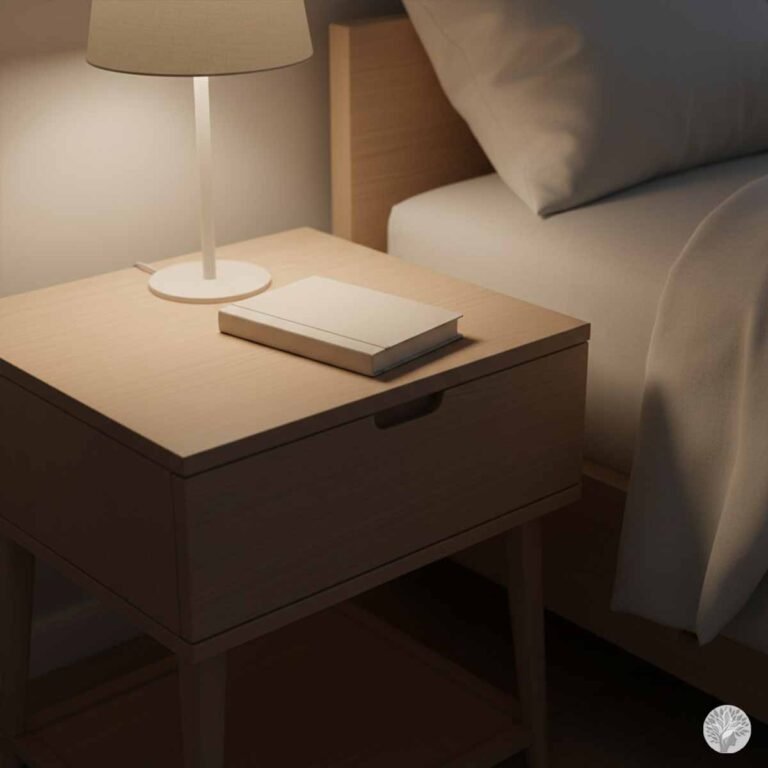

What is sensory overload in mothers and why does it happen at home?
Sensory overload in mothers happens when constant noise, clutter, touch, and mental demands exceed the brain’s ability to process them. This leads to irritability, fatigue, and sudden emotional reactions, even to small triggers, as the nervous system becomes overwhelmed and overstimulated.
Some days, it isn’t just about the mess. It’s about everything hitting you at once.
The Moment You “Snap”
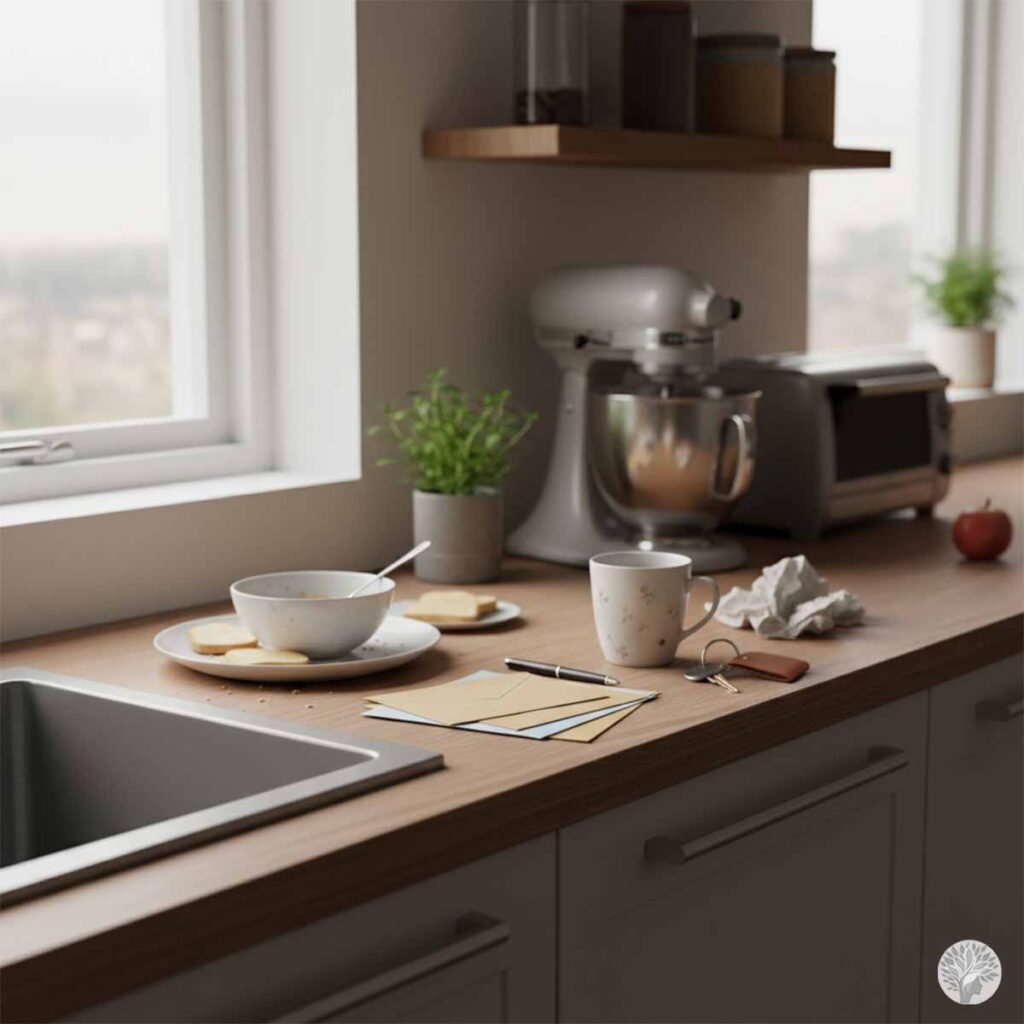
You’re standing in the kitchen. The dryer is buzzing a rhythmic, aggressive hum in the background. Your toddler is tugging at the hem of your shirt, their small hands creating a constant, repetitive pull. You look at the counter, and instead of seeing “dinner prep,” you see a jagged landscape of mail, a half-empty juice box, and a crusty cereal bowl.
Then, someone asks you a simple question: “Where are my socks?”
And you snap.
In that moment, you aren’t an “angry mom.” You are a Sensory-Overloaded mom. Your brain hasn’t failed; it has simply run out of room.
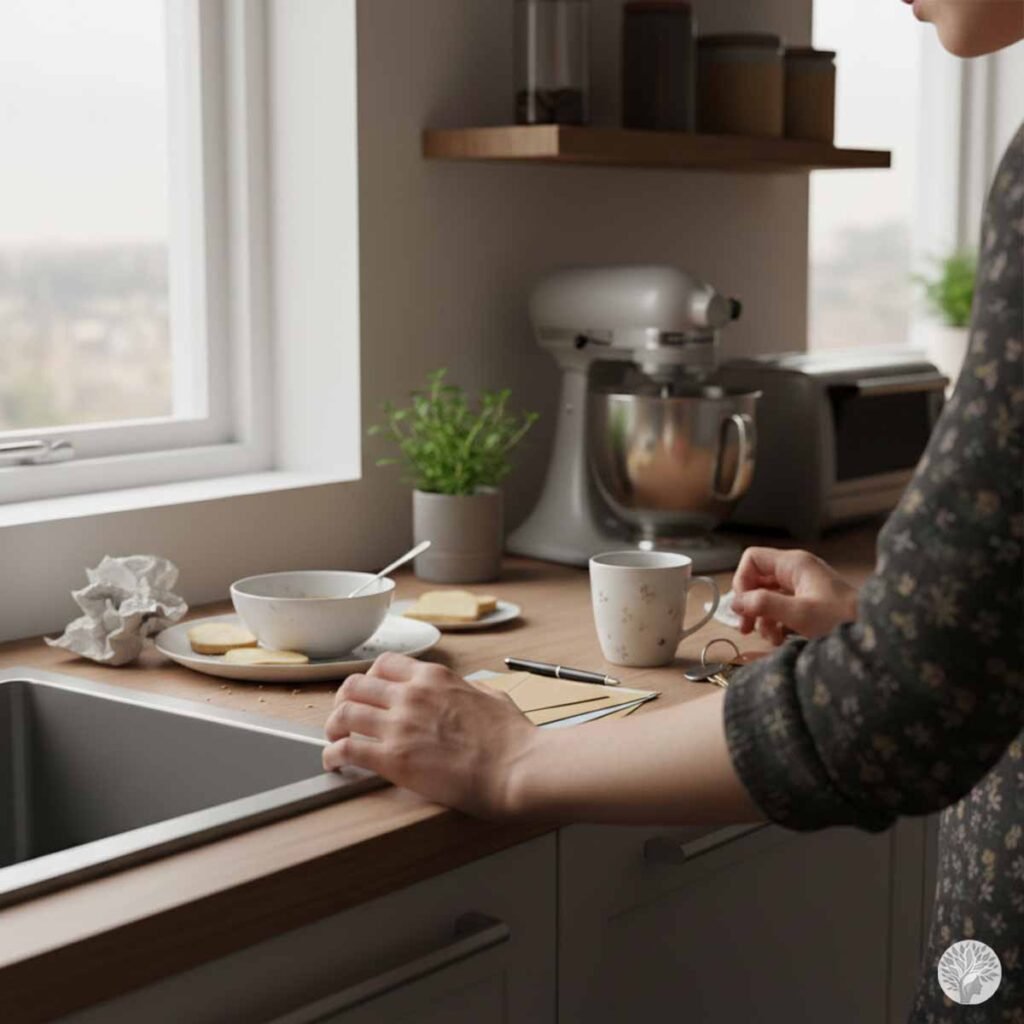
The Simple Definition
Sensory Overload is a physiological state where your nervous system receives more information from your environment than your brain has the bandwidth to process. Think of your brain as a high-speed processor when too many “tabs” are open (noise, clutter, physical touch), the system begins to lag, overheat, and eventually, it shuts down or glitches.
This is the biological “bottleneck” that occurs when the cumulative input from your five senses exceeds your current Window of Tolerance.
The Science & The “Mom Angle”
While clinical journals often discuss sensory overload in relation to neurodiversity, it is a daily, lived reality for mothers managing a high Cognitive Load.
In motherhood, we deal with “Stacked Inputs.”
- Auditory: The constant “Mom, mom, mom,” the TV, the dog barking.
- Tactile: Being “touched out” from breastfeeding, carrying children, or even the feeling of a tight waistband.
- Visual: What I call “Visual Shouting” the clutter that demands your attention every time you walk into a room.
When these inputs stack, your brain shifts from its “Rest and Digest” state into a “High-Alert” survival mode. Your body begins producing cortisol, preparing you to fight a threat even if the “threat” is just a pile of laundry on the sofa.
The 3-Stage Roadmap to the “Snap”
1. The Drip (Accumulation) – The day begins quietly, but the “sensory cup” starts filling immediately. It’s the toy you tripped over at 6:00 AM. It’s the ping of a work email. It’s the bright, overhead kitchen light. Each one is a single drip into the cup. You feel fine, but the capacity is shrinking.
2. The Threshold (Saturation) – Your cup is at the brim. You are now “hyper-aware” of every sound and movement. This is the stage where you feel the desperate urge to hide in the bathroom just for five minutes of silence. Your brain is physically saturated; it cannot take in one more data point without overflowing.
3. The Drain (Regulation) – To find your way back, you don’t need a “spa day” or a complicated self-care routine. You need to reduce the input. Establishing Visual Silence by clearing a counter or closing a cabinet acts as a literal drain for your sensory cup. It lowers the environmental volume so your nervous system can breathe again.

How to Recognize the Feeling
Sensory overload doesn’t always look like a meltdown. Sometimes it looks like:
- The “Short Fuse”: Feeling an immediate, intense flash of anger over a tiny inconvenience.
- The Blur: Staring at a messy room and feeling physically unable to move or decide where to start.
- Tactile Aversion: A sudden, visceral need to not be touched by anyone, including your partner or children.
- Brain Fog: Forgetting what you were doing the moment you walk into a crowded or loud room.
The 60-Second Reset (The Hetal Method)
When you feel yourself reaching the Threshold, don’t try to “tough it out.” Use these three steps to manually lower your internal volume:
- Find Your Sanctuary Surface: Look away from the chaos and direct your gaze to your one pre-designated clear spot (like your coffee table tray or a clean corner). Let your eyes rest there for 10 slow seconds.
- Kill One Input: Take one physical action to reduce the noise. Close the pantry door, dim the lights, or put on noise-canceling headphones. If you can’t fix the whole house, fix one sensory trigger.
- Acknowledge the Biology: Take a deep breath and tell yourself, “I am not a bad mom. I am not failing. My nervous system is just full.”
Moving Toward a Silent Home
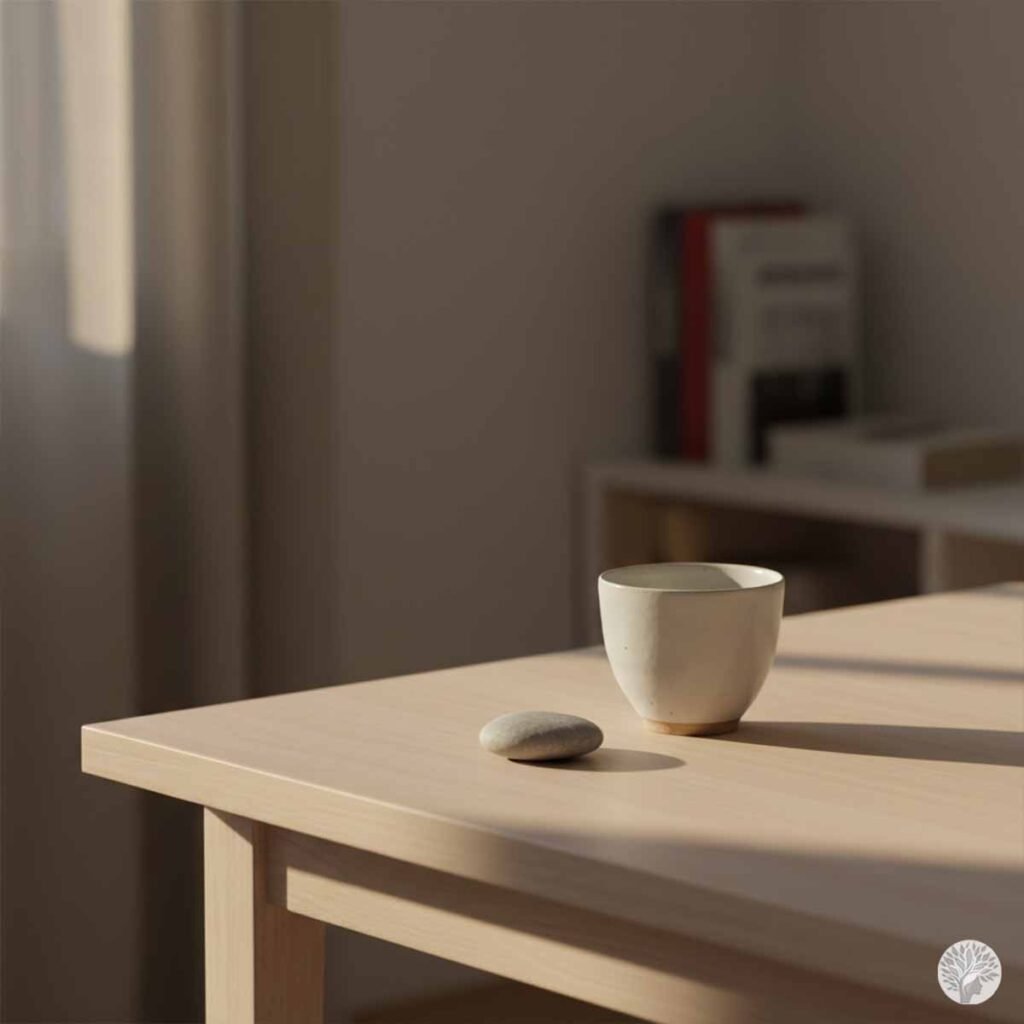
We cannot stop the noise of motherhood, but we can manage the Visual Friction that contributes to our overload. By shifting from open shelves to closed cabinets and from clear bins to opaque ones, we aren’t just “organizing” we are protecting our peace.
Related Terms: [Visual Silence], [Cognitive Load], [Window of Tolerance]
Love ya, stay mindful!

© 2026 The Mindful Mom Life. All rights reserved. This methodology is part of the Hetal Method helping mothers find neurological rest through intentional home management. No part of this work may be shared or reproduced without credit to the original source.
Official Concept Origin: The Mindful Mom Life, 2026
Status: Foundational Term / Mindful Living Glossary