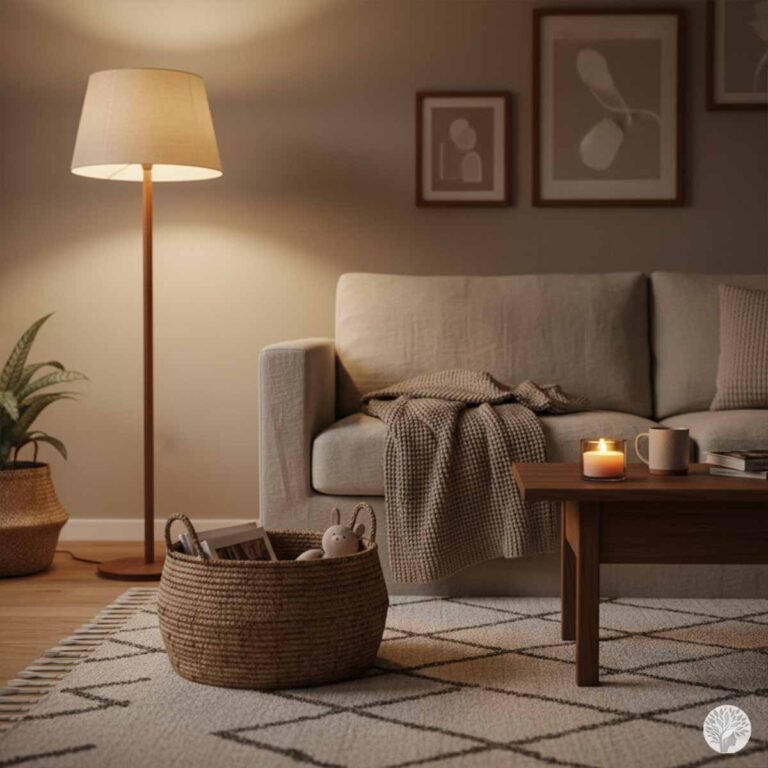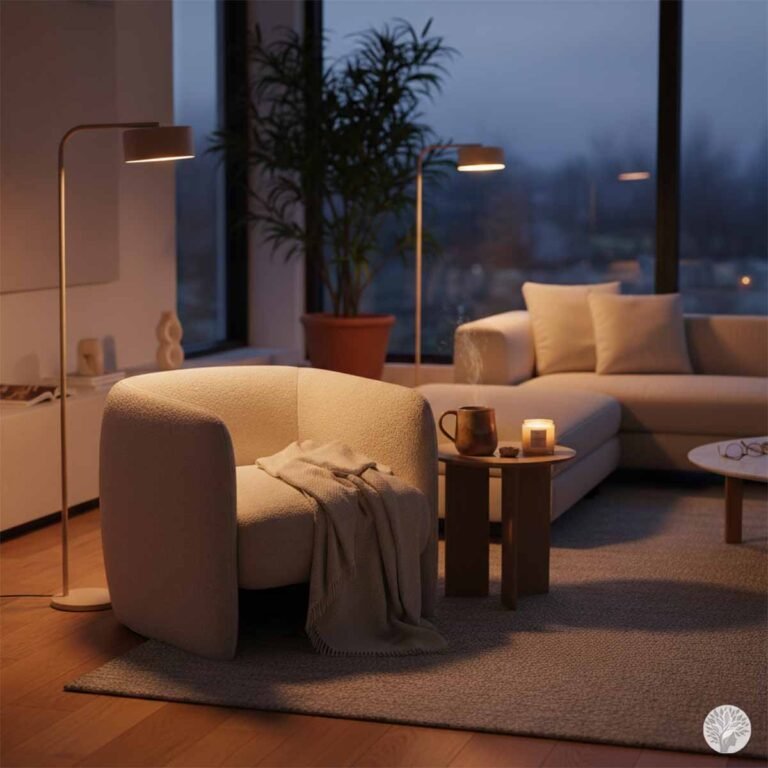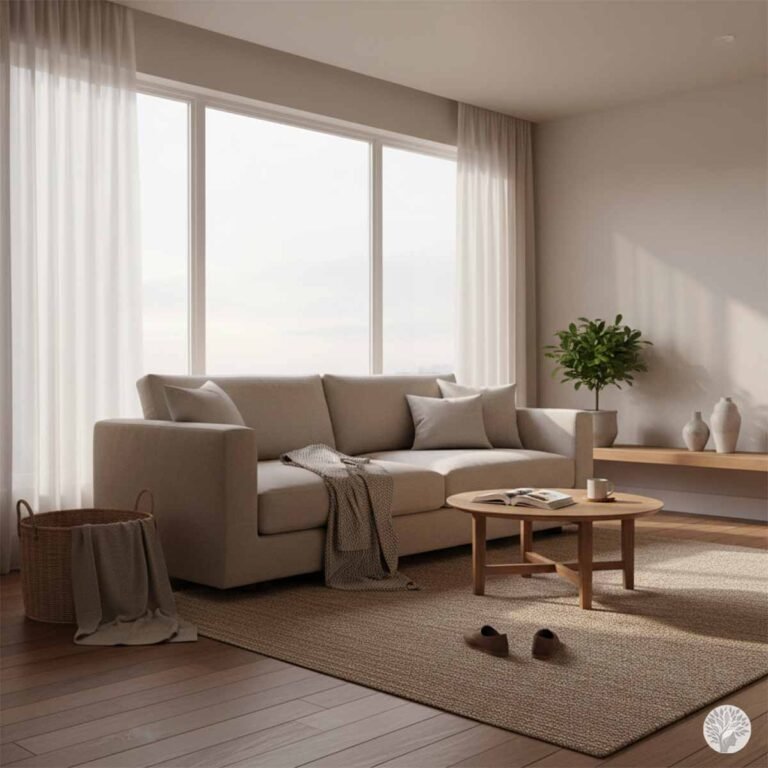

Decluttering Your Mind Through Space begins with clearing one small surface. When your home feels visually calm, your mind stops scanning and starts settling, helping you reduce stress and feel more present in your daily life.
Disclaimer: This post may contain affiliate links. I only share products that I personally use and love.
Hey Beautiful! Decluttering your mind through space starts with what your eyes see first.
Decluttering for mental clarity doesn’t begin with deep cleaning. It begins with clearing one small space.
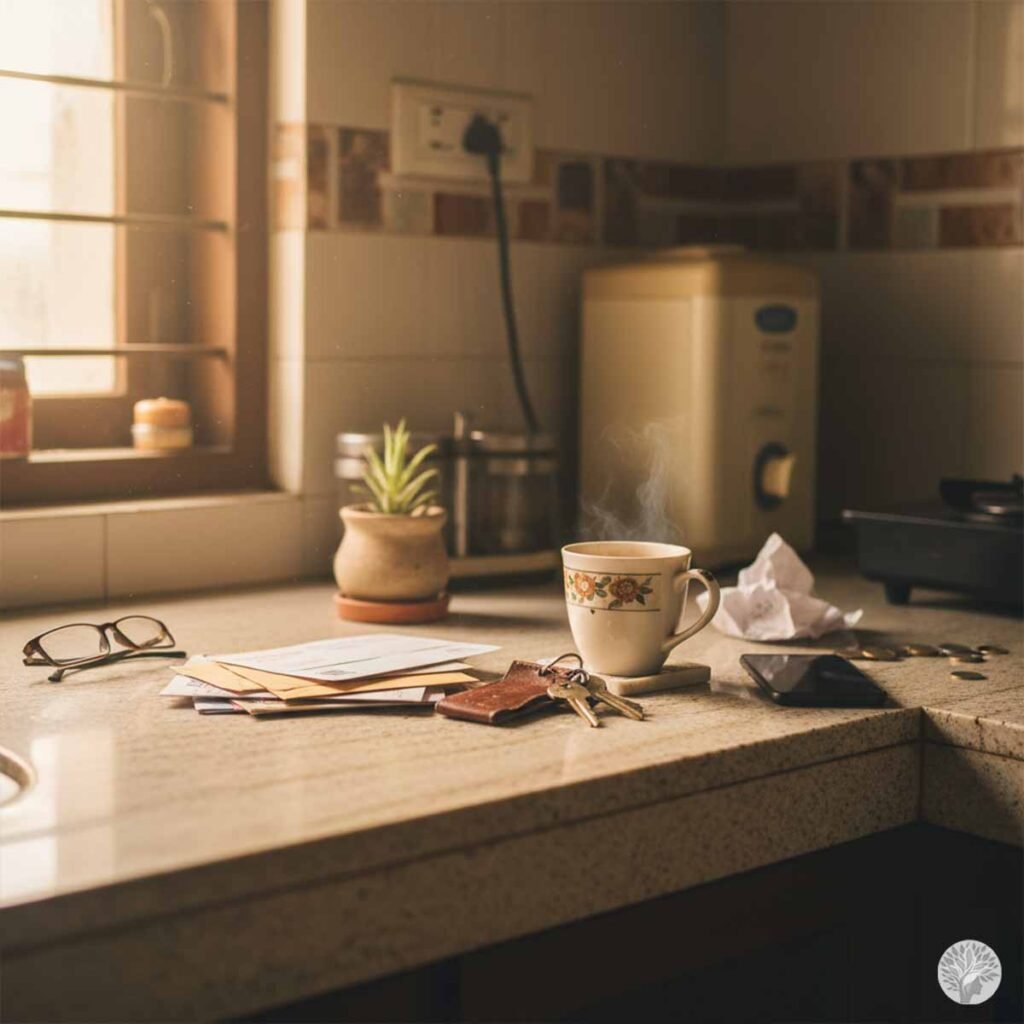
I thought I needed a clearer mind. What I actually needed was a clearer surface. The house wasn’t messy in the traditional sense. There weren’t piles of trash or unwashed floors. But it wasn’t calm either. There were small things everywhere. Mail on the table. Keys near the edge. A cup left behind from the morning rush. One chair slightly out of place. Nothing big but nothing quiet.
I noticed something as I sat down to handle the digital strategy for my company. My eyes kept moving. They darted from one object to another. Even when I tried to settle into my work or a moment of rest, I couldn’t fully land. After I learned to give myself the permission to pause, I noticed that the space around me was still shouting. It was a form of constant busyness that I hadn’t even named yet. Creating visual silence in the home is one of the simplest ways to reduce stress and feel mentally clear.
This is the reality of being an overstimulated mom. We think the stress is all in our heads, but so much of it is actually in our line of sight. Today we are going to explore decluttering for mental clarity and how visual silence in the home can finally give your nervous system the rest it deserves.
Why A Busy Space Feels Heavy On A Mother’s Heart
It is not always about how much you own. It is about how much your eyes have to process every single second. When every surface in your home is filled with random objects, your mind keeps scanning them. This is a survival instinct that is deeply rooted in our evolution. Your brain asks what is this and should I move it or do I need this later. This process is known as Visual Competition.
Neuroscientists at Princeton University found that our visual cortex can be easily overwhelmed by task-irrelevant objects. When multiple visual stimuli are present in your field of vision, they compete for neural representation. Essentially, every stray shoe or unfiled bill is fighting for a “slice” of your brain’s processing power. This competition restricts your ability to focus and limits your brain’s capacity to process information. This is exactly how decluttering improves mental clarity. By removing the competition, you allow your brain to settle into a state of singular focus.
It feels small in the moment. But when this happens hundreds of times a day, it becomes physically exhausting. This is the core of busy mom mental overload. Your mind simply cannot enter a state of deep rest in a crowded space because it is too busy acting as a manager for the objects around you. For those of us raising a teenage son, this weight is even heavier. We are managing their growing world and their larger gear while trying to maintain our own inner calm at home.
Science tells us that visual silence in the home directly impacts our cortisol levels. A famous study by the UCLA Center on Everyday Lives and Families (CELF) discovered a direct link between high cortisol levels in mothers and the density of household objects. The study found that women who described their homes as cluttered or full of unfinished projects had higher levels of the stress hormone cortisol throughout the day.
When your eyes have a clear place to land, your brain receives a signal that the work is done and you are safe to relax. This is why it is hard to relax even when everything is done. If the surfaces are still loud, your brain stays in a state of high alert. It thinks the office is still open and that there are still problems to solve. By choosing to declutter your home mindfully, you are not just cleaning a room. You are protecting your mental energy and physically lowering your body’s stress response.
By creating visual silence in the home, you are essentially telling your sympathetic nervous system that the “emergency” of the day is over. This allows your parasympathetic nervous system to take over, which is the state where healing and rest actually happen. Understanding how to stop feeling overstimulated at home begins with recognizing that your environment is a biological trigger. If you want to change how you feel, you must change what you see.
How Decluttering Improves Mental Clarity For The Modern Woman
As a woman entrepreneur who has been in the business world since 2008, I know that clarity is my greatest asset. In the digital space, we are constantly managing data, pivoting strategies, and making split-second decisions. If my physical environment is cluttered, those decisions are slower and my creative spark feels dimmed. This is because decluttering for mental clarity is a professional tool as much as it is a spiritual one. When you remove the physical distractions from your line of sight, you are essentially clearing the cache of your mind to make room for big ideas and deep connections with your family.
For the modern woman, the home has become a multi-purpose hub. We are leading companies from our kitchen tables and managing global brands from our home offices. When these spaces are filled with “visual noise,” our professional performance suffers. A study published in the journal Journal of Neuroscience explains that when your environment is cluttered, the chaos restricts your ability to focus. The clutter competes for your attention in the same way a crying toddler or a buzzing phone does. By learning how to declutter your space, you are giving yourself a competitive advantage in your career. You are choosing to work in a “High-Flow” environment rather than a “High-Stress” one.
Creating a home sanctuary starts with the realization that your space should support you rather than pull from you. Every object out of place is a micro-task begging for your attention. Even if you don’t consciously think about the stack of unread mail or the tangled chargers, your brain is “pinging” those items in the background. This creates a constant drain on your battery. By reducing stress at home through intentional clearing, you are freeing up the cognitive bandwidth you need to lead your business and your household with grace. This is the ultimate shift from being a reactive manager who is always “extinguishing fires” to being a mindful leader of your life.
Furthermore, mindful home management is about recognizing the “Mental Load” we carry as women. We are often the ones who know where every lost sock is and when the milk expires. This “Invisible Labor” is exhausting enough on its own. When we add physical clutter to that mental list, we reach a breaking point. Decluttering tips for busy moms aren’t just about aesthetics. They are about survival. When you clear a surface, you are declaring that your mental peace is more important than the “stuff” that has accumulated. You are teaching your brain that it is allowed to rest because the environment is no longer demanding its attention.
This professional-level clarity allows you to be more present when the workday ends. Instead of scanning the room for things to fix, you can actually look into your teenager’s eyes and listen to their day. You aren’t just a business owner or a mom. You are a woman who has reclaimed her space and her spirit. Creating a peaceful home environment is the foundation upon which you build your empire and your family’s happiness.
Start With One Surface To Declutter Today
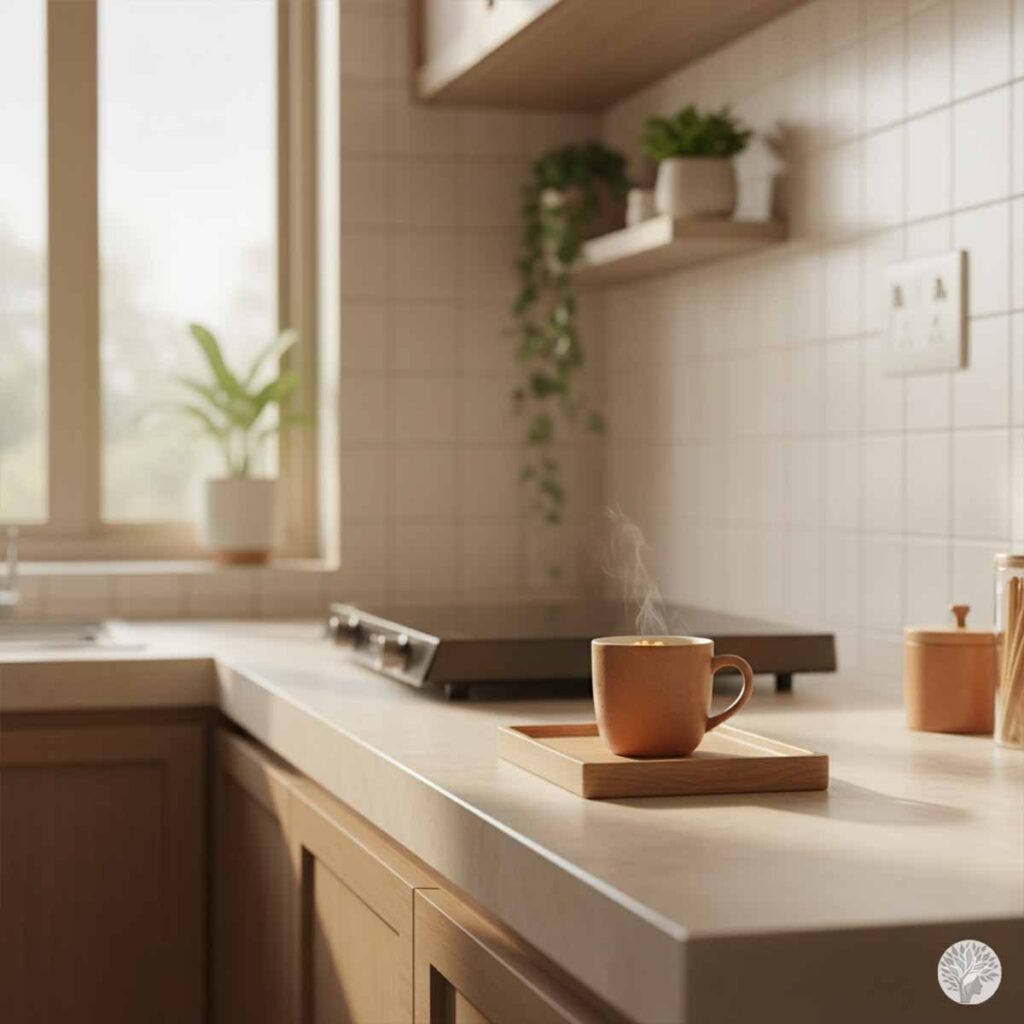
I didn’t start by cleaning the whole house. I didn’t try to reorganize every closet or follow a complicated system that required buying expensive bins and labels. I started with one single place. My kitchen counter.
I removed everything that didn’t belong there. I took away the stray mail, the loose change, the half-empty water bottles, and the tangled charging cables. I left just one or two intentional items. A small wooden tray. A single ceramic cup. And most importantly, I left space. That was it. And something shifted immediately. It wasn’t a shift in the architecture of the house. It was a shift in me.
My eyes stopped searching the room. My shoulders dropped. I didn’t feel pulled in ten directions by the mental to-do list of the counter. Just one clear space was all it took to begin creating a peaceful home environment. This is one of the most effective simple decluttering tips I can give you. Pick one surface and declare it a Visual Silence zone. Let that be the place where your eyes rest when the world feels too loud.
The Anatomy Of A Visual Silence Zone
To successfully declutter your home mindfully, you must understand that a Visual Silence zone is not about hidden messes. It is about intentional “nothingness.” When you look at a clear surface, your brain’s “Prefrontal Cortex“, the part responsible for decision-making is finally allowed to go offline.
If you are wondering how to declutter your space without getting overwhelmed, follow these three specific steps to create your first sanctuary surface:
- Define The Boundary. Choose a surface that you see often. It could be the kitchen island, your nightstand, or the center of your coffee table. This is your “Anchor Surface.”
- The Total Clearance. Remove every single item from that surface. Do not just “tidy” it. Strip it bare so you can see the material of the furniture itself. This “reset” is vital because it breaks the mental habit of seeing the clutter as part of the decor.
- The 10 Percent Rule. You are allowed to put back only 10 percent of what was there. If it was your nightstand, perhaps only a lamp and a book remain. If it was the kitchen counter, perhaps just a tray with a candle. The remaining 90 percent of that surface must remain as empty space.
Mindful Home Management and the Psychology of Letting Go
The hardest part of decluttering for mental clarity is not the physical act of moving an object. It is the mental decision to let it go. We often keep things not because we need them, but because we are used to seeing them. Every object in our home carries an emotional weight or a “silent story.” That unread book on the nightstand tells a story of a hobby we haven’t started. That stack of old magazines tells a story of a version of ourselves that had more “free time.”
When we hold onto these items in our “Visual Silence” zones, we are holding onto the guilt associated with those stories. This is how to stop feeling overstimulated at home at a deep, psychological level. You must give yourself permission to release the items that no longer serve the woman you are today. If an object doesn’t have a home, and it doesn’t add to your peace, it is just “noise” disguised as a possession.
Simple Ways To Create A Calm Home Through Release
If you find yourself struggling to clear a surface because you feel “guilty” getting rid of things, try these simple ways to create a calm home:
- The Container Concept. Your home has a finite amount of space. Instead of asking “should I keep this,” ask “does this fit into the life I am building?” If your “Visual Silence” zone is your kitchen counter, anything that doesn’t contribute to the calm of that space needs a new home or needs to leave the house.
- The 24-Hour Holding Zone. If you aren’t ready to throw something away, put it in a “holding box” in a closet. If you don’t reach for it or think about it for 24 hours, your brain has already moved on. You can then donate or discard it without the emotional spike.
- Mindful Home Management for the Family. As a mother to a teenager, I’ve learned that I cannot declutter for him, but I can lead by example. When we treat our own spaces with respect and keep them clear, the rest of the family begins to feel the difference. They start to realize that a clear table is an invitation to sit and talk, rather than a place to dump more gear.
The Soul of Letting Go and My Pressure Cooker Story
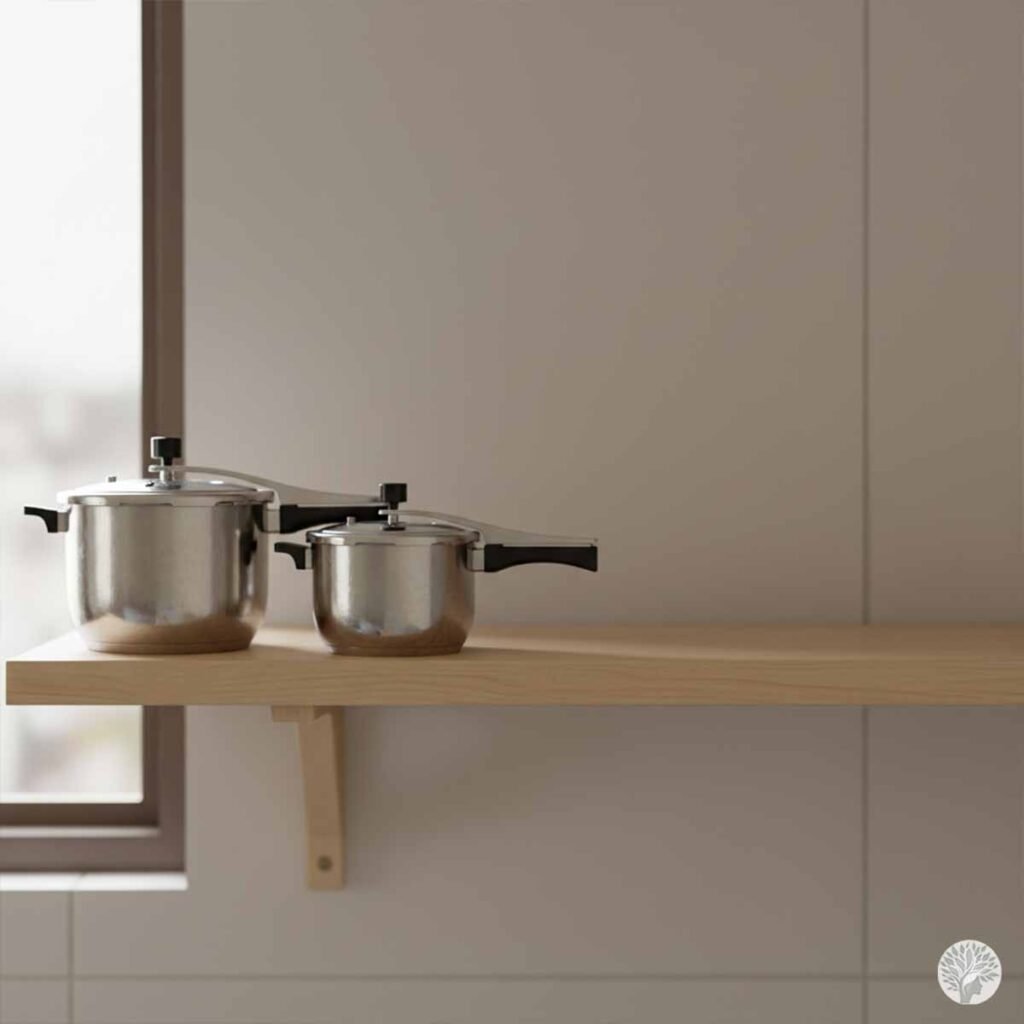
I wish to make a confession here. For the longest time, I was that same mom who believed I could not discard an item because it might be of some use one day. Every Diwali, I would perform the same ritual. I would take things out, clean them, and put them right back, only to remember them again during the next year’s cleaning. I was essentially managing clutter instead of clearing it.
The turning point for me was an old pressure cooker. It was a gift from my mother, intended for making my son’s dal when he was little. Even though it had become vulnerable and unsafe to use, I kept it for years out of a sense of duty and memory. When I finally gave myself permission to let it go, something incredible happened. I was able to arrange my other two functional pressure cookers in a neat and easy to access way.
By releasing the broken memory, I gained a functional and peaceful kitchen.
We often think of decluttering tips for busy moms as a way to get organized, but it is actually a way to get free. Every time you choose to clear a surface or a cupboard, you are choosing your peace over your possessions. You are practicing mindful living by acknowledging that your environment dictates your internal weather.
When you master how to declutter your space, you stop being a slave to your belongings. You become the curator of your sanctuary. This is the shift from a home that feels like a to-do list to a home that feels like a deep breath. By choosing visual silence in the home, you are creating a sacred space where your soul can finally catch up with your body.
Easy Daily Decluttering Habits to Maintain Your Sanctuary
Once you have experienced the power of decluttering for mental clarity, the goal is to keep that momentum without adding more stress to your life. These easy daily decluttering habits are designed for the woman entrepreneur who is balancing a hundred different roles:
Digital Decluttering. Remember that visual noise exists on your screens too. Spend five minutes a week clearing your desktop or unsubscribing from emails that add to your mental load.
The “One-In, One-Out” Rule. For every new item that enters your home sanctuary, one must leave. This prevents the slow creep of visual noise.
The Evening Surface Sweep. Spend two minutes before bed returning your “Visual Silence” zone to its clear state. This ensures that when you wake up, the first thing your eyes see is peace rather than a project.
The Gift of a Quiet Heart
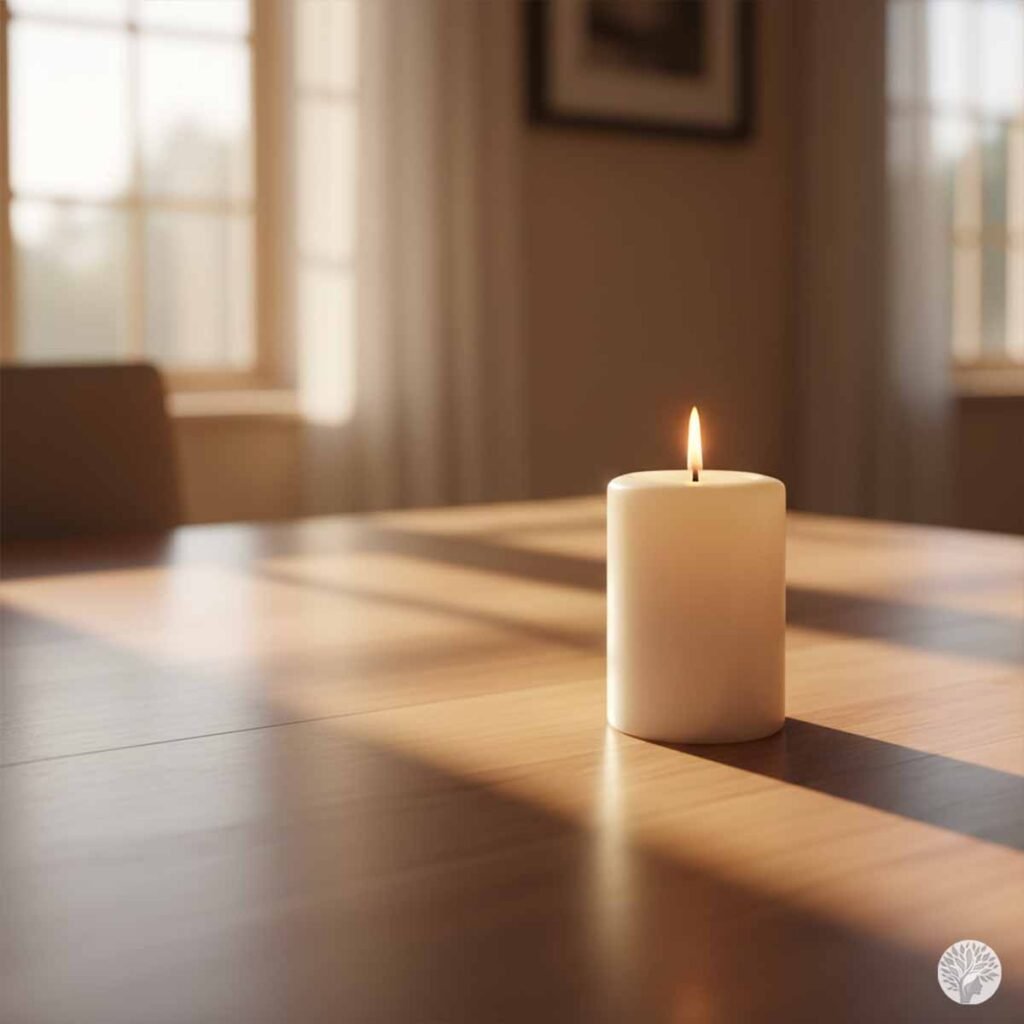
Decluttering for mental clarity is not a final destination we reach once the house is perfectly curated. It is a daily, and often hourly, choice to stop the “doing” and start the “being.” It is the moment you decide that a kitchen counter that is “light” is far better for your soul than a home that is “perfect.” Perfection is a demanding boss that never gives you a day off; peace is a friend that tells you that you have done enough.
Choosing this balance means giving yourself permission to ignore the one stray item on the floor because the rest of the room is quiet enough to allow your mind to rest. It is about recognizing that your son needs a mother who is calm and connected more than he needs a mother who is busy polishing every surface. When you prioritize your emotional balance, you are changing the entire climate of your home. You are shifting from a reactive state where every mess is a crisis to an intentional state where you have the bandwidth to handle the real challenges of raising a teenager.
By creating a calm home as a mother, you are building a sanctuary where you can finally step out of your role as the manager and step into your role as the heart of the family. You are making room for the laughter, the deep conversations, and the quiet moments of connection that clutter often crowds out.
Start small. Clear one thing. Feel the difference.
"A beautiful home is not one filled with things, but one where the space is mindful of the peace you deserve and the presence you keep."
Love ya, stay mindful!