
Simple Comfort Meals For Busy Evenings help you cook without stress or overthinking. With easy, one-pot ideas and minimal steps, you can prepare nourishing meals that support your energy and bring calm back into your kitchen after a long day.
Hey Beautiful!
By 6:00 PM, I don’t want new ideas. I don’t want a “culinary adventure.” I don’t want to be “inspired” by a reel or a colorful cookbook. I just want something that works.
If you are a mother, you know exactly the weight of that hour. It’s the threshold where the day’s demands meet the evening’s exhaustion. By this time, your mind has already processed a thousand tiny, taxing decisions. You’ve navigated work deadlines, synchronized school schedules, managed the complex logistics of a household, and carried the invisible emotional labor that hums in the background of every single hour.
We often talk about a “budget,” but we forget that our Decision Budget is the most fragile one we own. By the time the sun starts to set, that budget is spent. Our mental reserves are hovering at zero. And then, in that moment of peak depletion, comes the question that can feel like the heaviest weight of all, “What’s for dinner?”
In my earlier years of motherhood, I used to think the answer was better planning. I fell into the trap of believing that if I just had more recipes, more variety, or a more complex Sunday meal-prep strategy, the 6:00 PM stress would magically disappear. I chased the “extra”, the extra ingredients, the extra side dishes, the extra effort.
But after 16 years in the kitchen, I’ve realized a profound truth. It wasn’t about needing more ideas. It was about needing less noise.
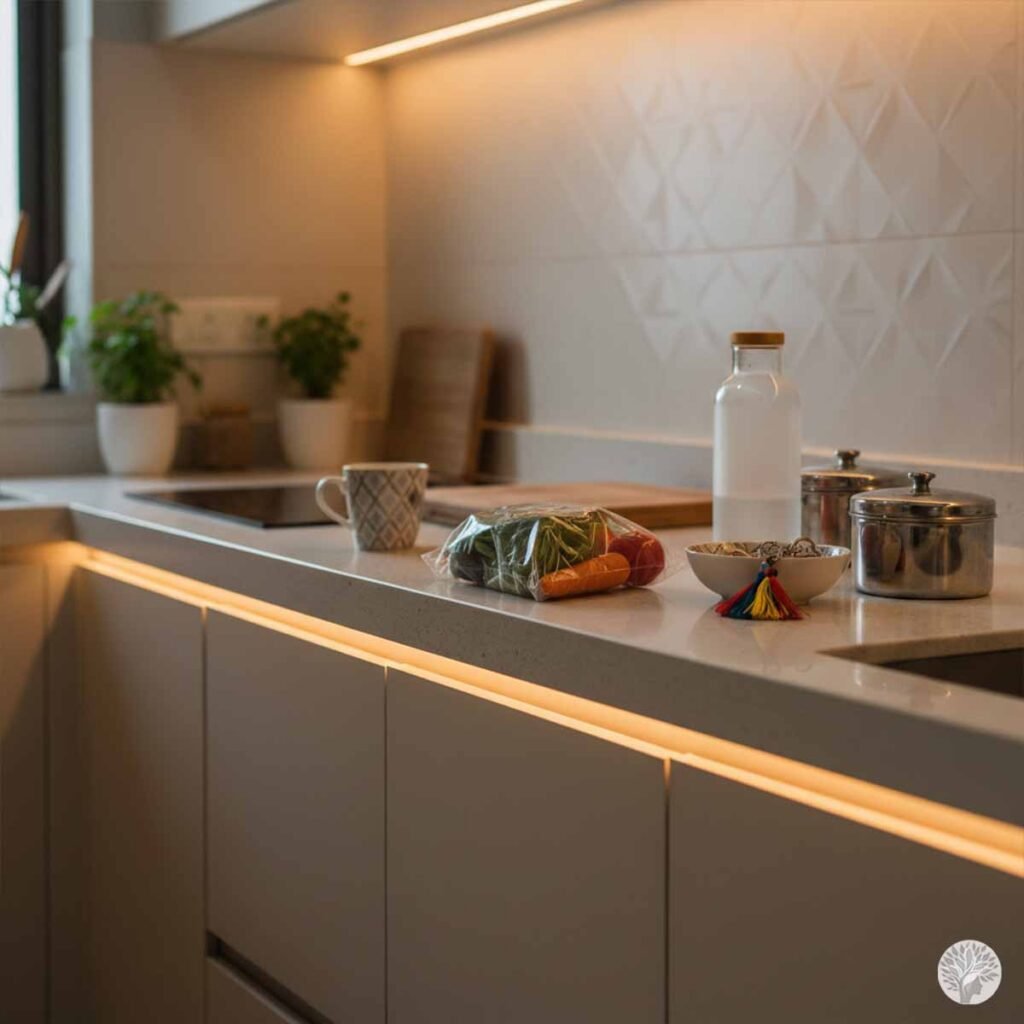
The “noise” wasn’t just the television in the background or the kids playing; it was the visual and mental clutter of the kitchen itself. It was the packs of fresh veggies on the corner of the island, the five different spice jars left out from lunch, and the pressure to perform a “culinary feat” every single night.
This is where the connection between our home and our habits becomes undeniable. After I cleared my kitchen counters and finally embraced the concept of Visual Silence, I noticed a physical shift in my body the moment I stepped into the kitchen. When the physical space felt lighter, my mental load lightened with it. I realized that when my counters were clear, I didn’t crave complicated, multi-step cooking anymore. I didn’t need to “prove” anything with a complex menu.
I wanted calm food. I wanted nourishment that provided a soft landing for my family, rather than a meal that demanded a piece of my soul in return for a seat at the table. I traded the “culinary adventure” for the “ritual of enough,” and for the first time in nearly two decades, the 6:00 PM hour stopped feeling like a battle and started feeling like a return to center.
Simple Meals I Cook When Even Thinking Feels Like Work
The Philosophy of Frictionless Cooking
Why does cooking feel like such a chore some days? If you’ve ever stood in your kitchen and felt a wave of resentment toward a head of broccoli or a bag of lentils, you aren’t a “bad cook.” You are simply experiencing Friction.
Friction is the unseen resistance that drains your remaining energy. It is the extra effort required to dig through a cluttered cabinet for a specific spice jar. It is the physical struggle of trying to find six inches of clear space on a crowded counter. It is the heavy mental tax of trying to follow a recipe with fifteen steps when your brain can only handle two. When we cook under these conditions, we aren’t just making dinner, we are also fighting our environment.
When I finally stopped rushing my cooking, I stopped looking at the recipes and started analyzing the room. I began to ask, Where does the friction live?
What I found was that it lived in the “Extra.” We are taught that more is better. More side dishes, more exotic ingredients, more complex techniques to prove we care. But the “extra” always comes with a price. It means extra pots to wash when you should be resting. It means extra expectations we place on ourselves to be “perfect” home cooks for an invisible audience. After 16 years, I’ve learned that perfection is the ultimate friction.
In a mindful kitchen, we aim for the radical opposite and that Frictionless Nourishment.
Frictionless nourishment isn’t about being lazy; it is about being protective of your peace. It is about removing every unnecessary hurdle between you and a warm bowl of food. It means choosing meals that respect your current state:
- Minimal Prep: We lean on the staples say the ancestral grains and hardy vegetables that don’t require a last-minute, high-stress trip to the grocery store.
- Minimal Vessels: We intentionally choose the “One-Pot” or “One-Pan” path. This isn’t just about the cooking; it’s about protecting your “Future Self” from a sink full of dishes at 9:00 PM.
- Maximum Comfort: We choose ingredients that settle the nervous system rather than over-stimulating it. We aren’t looking for a “culinary explosion”; we are looking for a grounding, steady energy that helps the body transition into sleep.
When you remove the friction, the kitchen stops being a place of work and starts becoming a place of Flow. The cooking becomes a background rhythm to your evening, rather than the loudest noise in the room.
The Rescue One Pot and the Universal Language of Comfort
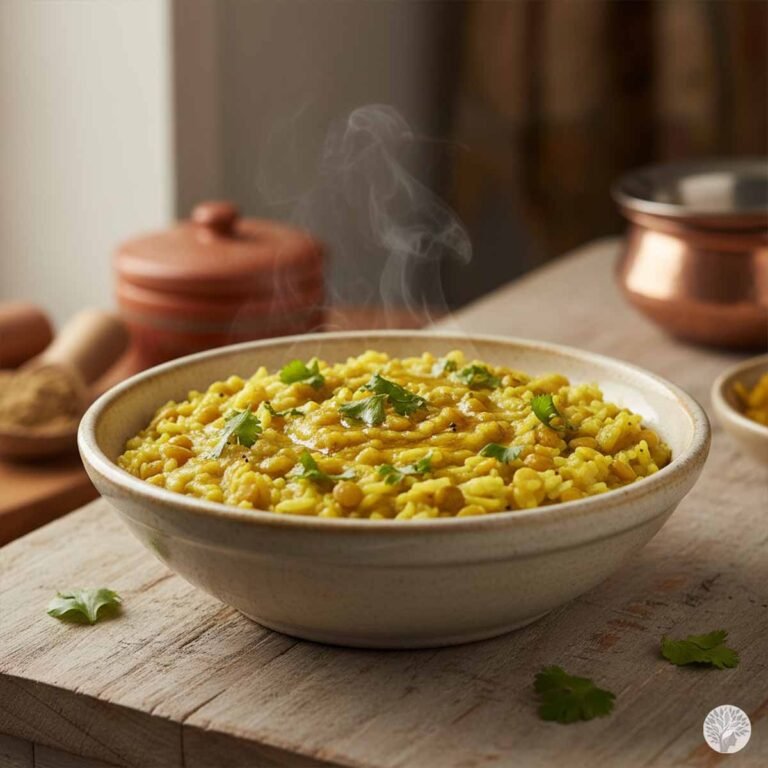
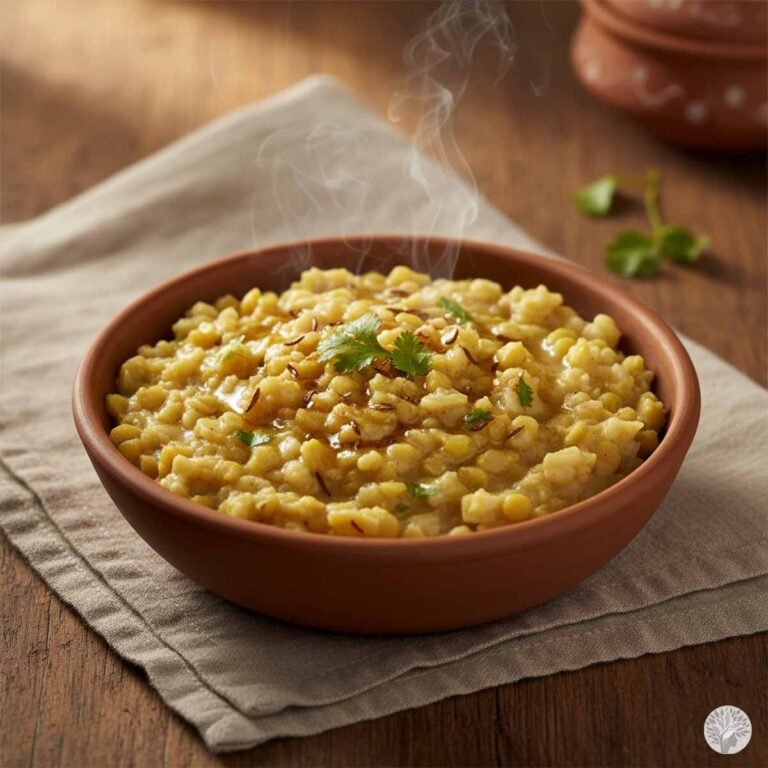
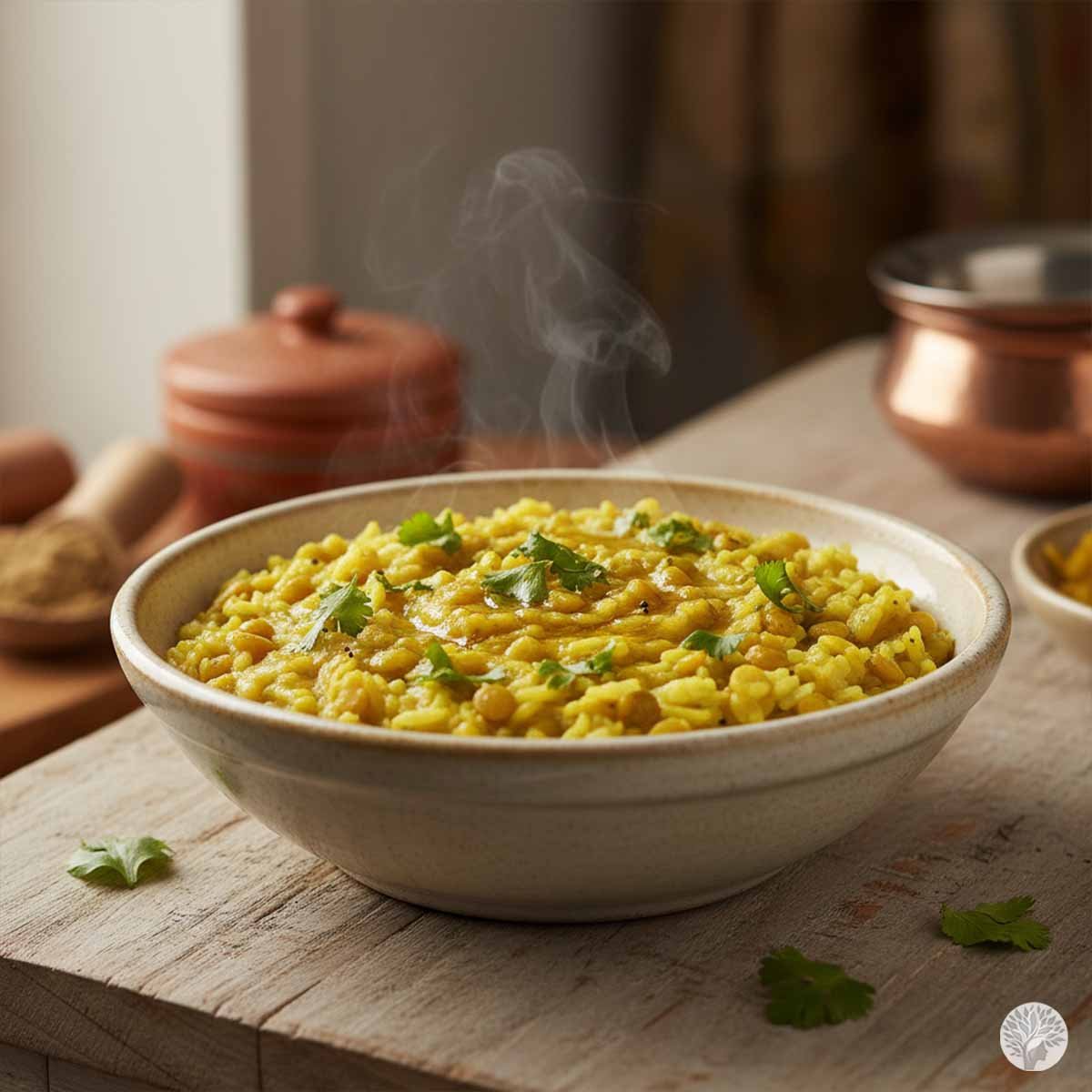
There is a reason why almost every culture on earth has a version of the one-pot grain and legume dish. Whether it is a savory porridge, a thick lentil stew, or the traditional Indian Khichdi, the intent is universal because it provides deep and easy nourishment.
This is my ultimate low-bandwidth meal. It is the one I turn to when the day has taken everything out of me and I have nothing left to give to a recipe book. It is a quiet meal. Unlike a stir-fry that demands constant attention or a sauce that might break if you look away, this pot doesn’t hiss loudly or demand a piece of your focus. It just sits there and gently cooks itself into something beautiful while you reclaim your breath. If your heart is calling for this specific kind of peace tonight, you can find my Simple One-Pot Moong Dal Khichdi Recipe here to help you begin.
The Mindful Methodology
Instead of seeing this as a basic or lazy meal, I want you to see it as a transition ritual. The act of washing the grains, feeling the cool water run through your fingers and watching the cloudiness disappear is the exact moment you can choose to leave work mode and enter home mode. It is a tactile reminder that you are now nourishing and not just producing.
The Wisdom of the Grain
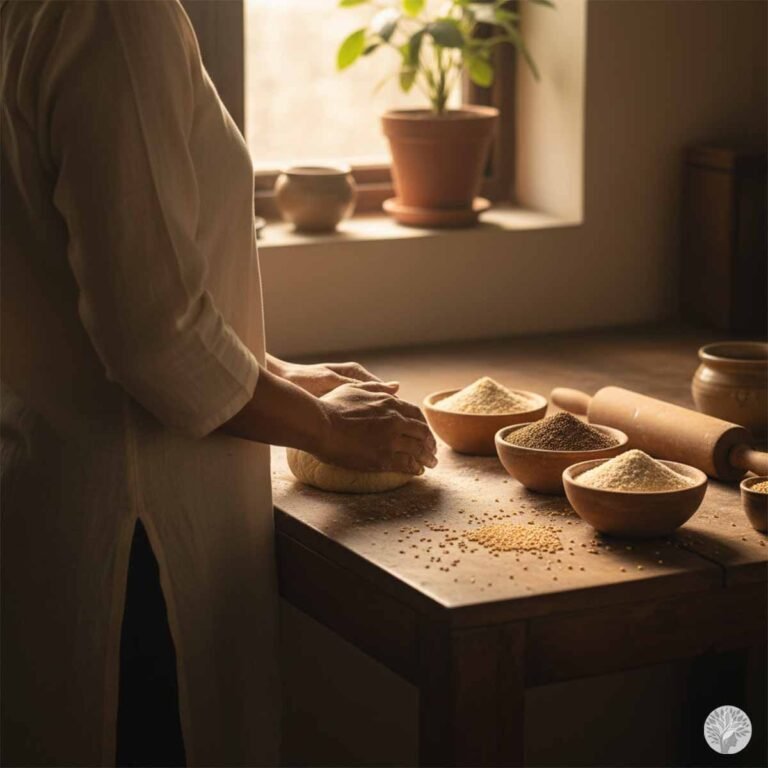
I always advocate for the ancestral grains we discussed before. They carry a weight of wisdom that modern and highly processed grains lack. These grains digest slowly and release energy in a steady stream rather than a jagged spike. When you are already frazzled, the last thing your body needs is a sugar crash. You need the grounding stability of a grain that has sustained generations.
A Medicinal Spice Profile
We keep the seasoning focused and medicinal. We use turmeric for its anti-inflammatory properties, fresh ginger to stoke the digestive fire, and a tiny pinch of hing to keep the meal light and easy on the gut. When you sit down to a bowl of this, you aren’t just eating because you are actually resetting your internal rhythm.
The Hands Off Roasted Harvest
As a mom, the greatest gift you can give yourself in the evening is Time. Not time to do more chores or catch up on emails, but time to simply be. This is why roasting is my favorite hands-off technique.
In the 16 years I’ve been cooking, I’ve found that roasting brings out a deep and caramelized sweetness in vegetables that boiling or steaming never can. It’s the magic of the oven where the machine does the heavy lifting while you regain your balance.
The Strategy of Space
The beauty of a Roasted Harvest is that it requires no grocery store stress. You take whatever seasonal vegetables are currently living in your fridge like cauliflower florets, thick coins of carrots, cubes of potato, or slices of bell pepper. Chop them roughly and don’t worry about perfect shapes or chef-like precision. Perfection is just another form of friction.
The Evolution of the Sheet Pan
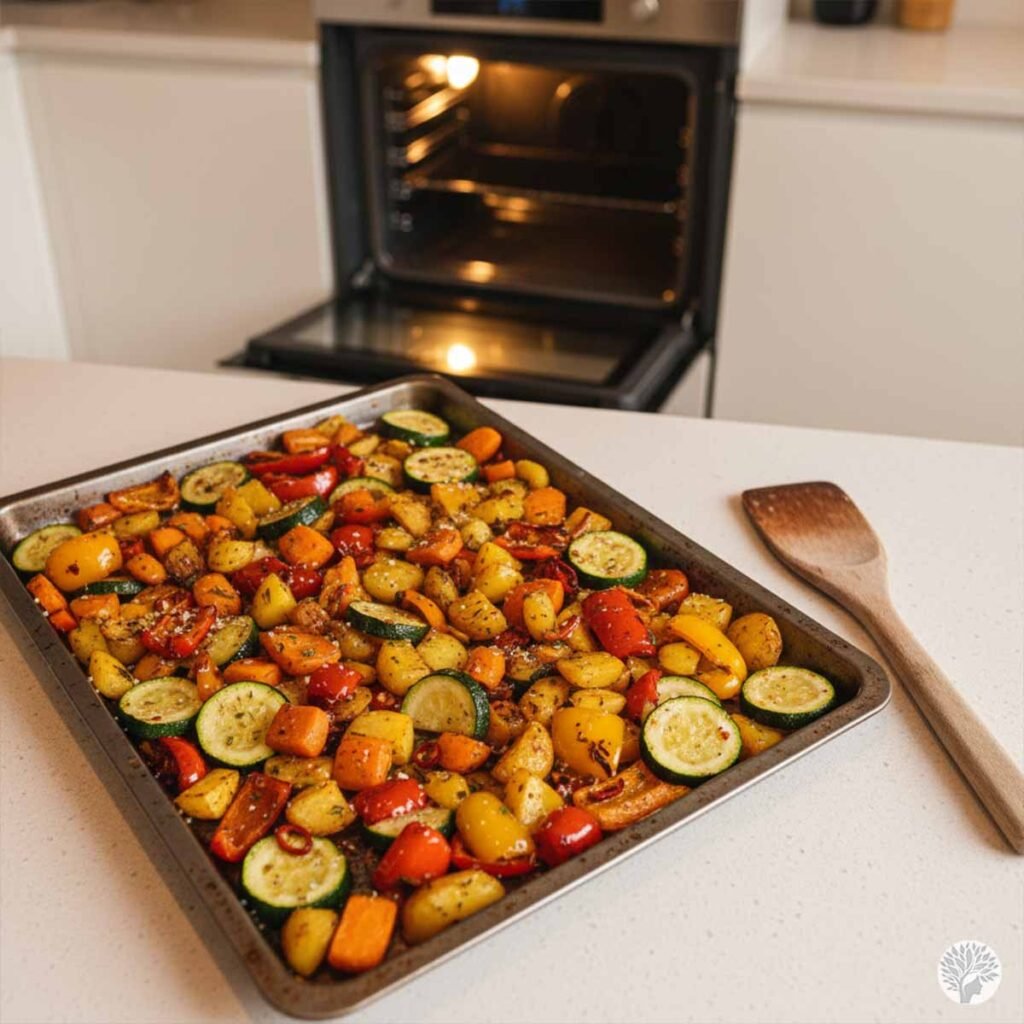
Toss them directly on a single sheet pan with a high-quality mustard or olive oil and your simplest seasonings. By using one pan, you are decluttering your future. You aren’t standing over a steaming pot for forty minutes while stirring and checking. Instead, you are sitting with your family or perhaps just sitting in the quiet of your Home Sanctuary while the warm aroma of roasting vegetables fills the air. This is a meal that respects your boundaries. It doesn’t ask you to watch. It just asks you to wait.
The 15 Minute Protein Reset
We’ve all had those nights where even the 30-minute wait for the oven feels like a mountain you cannot climb. You need protein and you need to feel full right now.
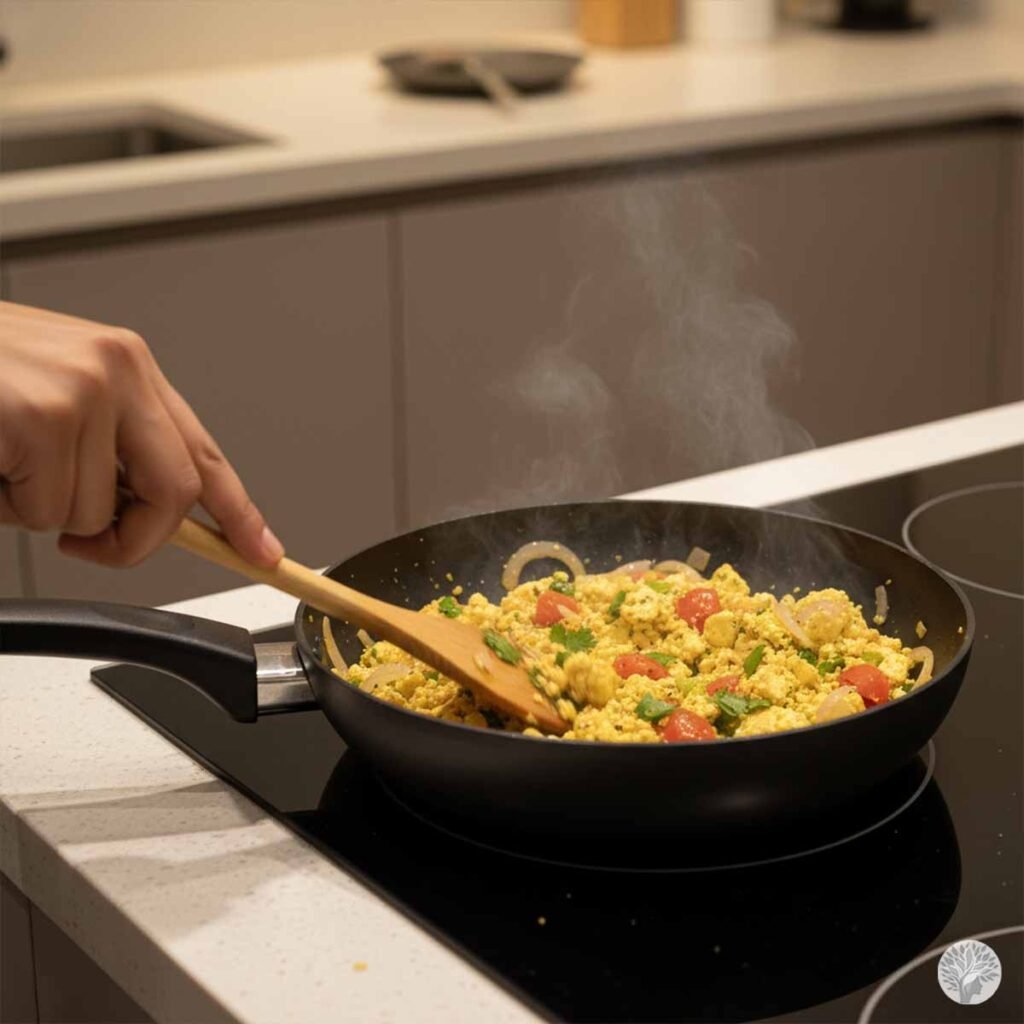
This is where the Fast Scramble becomes your best friend. Whether you are using crumbled Paneer, firm Tofu, or even a simple vegetable-heavy egg hash, the goal is speed without sacrificing the integrity of the ingredients. This proves to your brain that you can have a real dinner without a real time investment.
Efficiency as an Act of Grace
In a professional kitchen, we call this efficiency. In a mindful home, I call it Grace. Giving yourself permission to cook a meal in fifteen minutes is a radical act of kindness toward yourself. You are acknowledging your limits and working within them rather than pushing yourself into a state of burnout just to meet an imagined standard of what a proper dinner should look like.
When you prioritize a quick protein reset, you are choosing satiety over complexity. You are ensuring that your body has what it needs to repair itself overnight without exhausting your spirit to get it onto the plate.
Why Quiet Food Changes the Home Energy
When we cook complicated meals, we often end the process feeling frazzled and drained. The kitchen becomes a battlefield where the dishes are piled high, the counters are sticky, and our own energy feels jagged. We don’t realize that this frantic energy is actually an invisible ingredient in the food. It transfers to the family and to the conversation at the table. When the cook is stressed, the meal feels like another task to be finished rather than a moment to be shared.
But when the cooking is quiet, everything changes. When the counters stay clear and the steps are few, the entire energy of the evening begins to soften. You aren’t rushing to the table in a cloud of heat and frustration because you are actually arriving at it with a sense of calm. The meal becomes a bridge between the chaos of the day and the rest of the night.
As we discussed in the 5-Minute Home Reset Routine, the state of your kitchen at 8:00 PM determines your peace of mind at 8:00 AM the next day. By choosing these frictionless meals, you are ensuring that your morning reset is effortless. You aren’t waking up to the ghosts of last night’s dinner in the sink. Instead, you are closing the loop of the day with a sense of completion rather than exhaustion.
This quiet approach to food is how we protect the sanctuary of our home. It is about realizing that a simple bowl of rice and lentils prepared in peace is infinitely more nourishing than a gourmet feast prepared in anger or haste. When you choose quiet food, you are choosing to let the evening unfold with grace. You are giving yourself the gift of a kitchen that feels like a haven instead of a chore.
The Master Record of 16 Years and My Never Fail Tips
To help you transition into this simpler way of cooking, here are the things I’ve learned that save me every single time. These are not just kitchen hacks because they are actually lifestyle shifts that protect your energy.
The Zero Prep Pantry
Keep your staples visible but organized. When you are tired, your brain has to work harder to find things. By having a clear and designated place for your lentils and spices, you reduce the visual search that tires your brain. When you can see your ingredients at a glance, the mental barrier to starting dinner disappears.
The One In One Out Dish Rule
Wash as you go but only if it doesn’t interrupt your peace. If washing a pot feels like a chore, let it soak. Don’t fight the friction because you should actually flow around it. The goal is to keep the counters clear as you work so the kitchen feels like it is resetting itself alongside you.
The Power of the Prep Bowl
Take two minutes to measure your spices and chop your ginger before you turn on the heat. This small act of preparation prevents the panicked searching for a salt jar while the oil is smoking. It allows the cooking process to feel like a steady rhythm rather than a series of small emergencies.
The Enough Mindset
A simple meal is enough. You don’t need three side dishes and you don’t need a complex garnish to make a meal valid. The nourishment is the goal. When you accept that one pot of well seasoned food is a complete success, you release the pressure of being a perfect home cook and start being a mindful one.
Cooking as a Form of Care
Simple food is not a compromise. It is not settling for less or giving up on your health. It is a radical form of care for the person doing the cooking which is you. We often focus so much on the nourishment of the family that we forget the person standing at the stove deserves a peaceful evening too.
When your cooking becomes quieter, your evenings naturally become softer. Your home stops being a place of endless tasks and starts becoming a place of true rest. You are teaching your family that the kitchen is a sanctuary and that a meal is a moment to arrive rather than a task to complete.
"We don't just cook food; we create the mindful space our family needs to thrive."
Love ya, stay mindful!