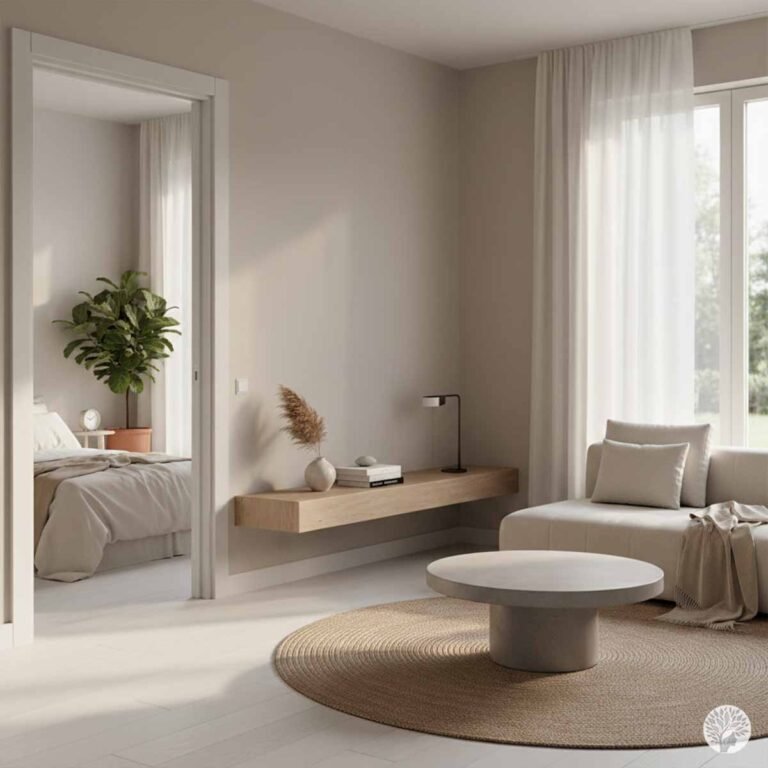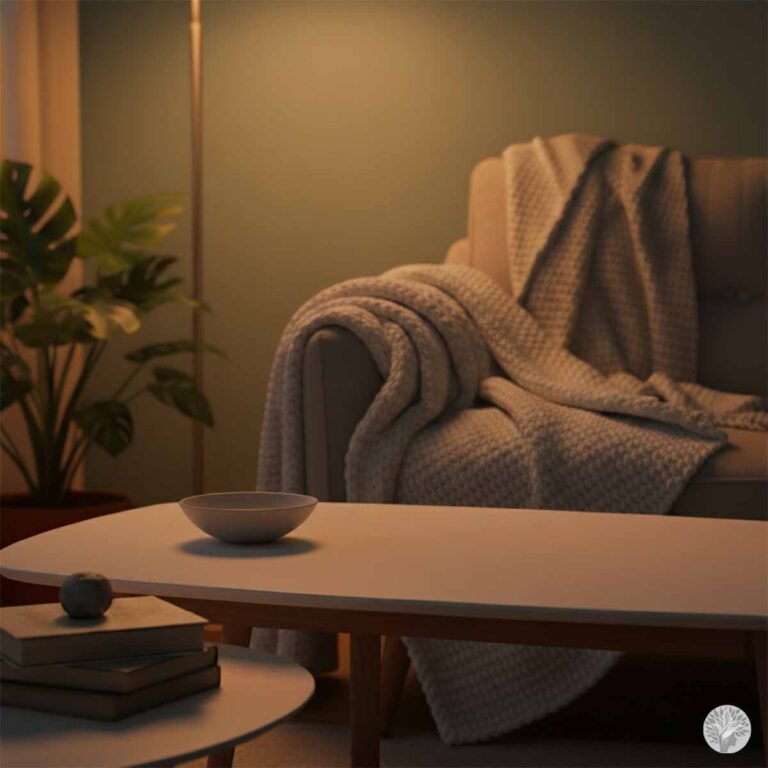

A Mindful Home Routine is a simple system of small, repeatable rituals that lower visual noise, reduce mental load, and support nervous system regulation, helping you move through your day with more calm, clarity, and emotional balance
Hey Beautiful!
Sometimes, the loudest thing in your house isn’t the children. It is the silence of a hundred unfinished tasks.
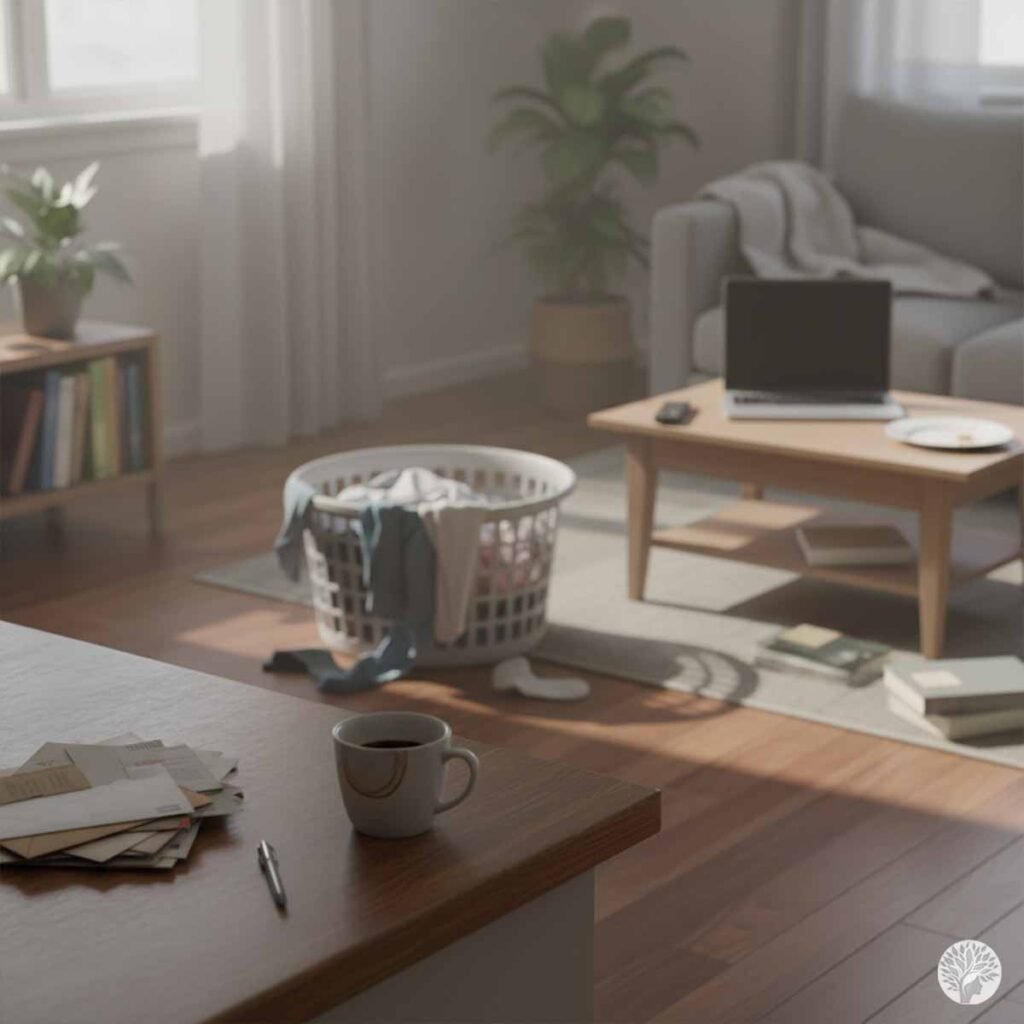
You feel it the moment you open your eyes. It isn’t just a “mess”. It is a weight. It is the laundry pile visible through the cracked closet door, the stack of mail on the counter that hasn’t been sorted, and the half-empty coffee mug from yesterday. This is what we call Visual Static. To your brain, every one of these items is a “tab” left open in your mental browser. They hum with a subtle, constant demand, Look at me. Fix me. You’re behind.
The Factory vs The Ecosystem
Most modern productivity advice treats your home like a factory. It tells you to wake up at 5:00 AM, optimize your “output,” and manage your chores like a foreman overseeing a production line. This approach assumes that the problem is your lack of efficiency.
But your home is not a factory, and you are not a foreman. Your home is an Ecosystem.
In an ecosystem, everything is connected. When the physical environment is loud, your nervous system cannot be quiet. If your counters are “screaming,” your brain stays in a low-level state of “threat,” waiting for the next task to tackle. You aren’t “lazy” or “unorganized”. You are sensory-overloaded.
From Visual Noise to Visual Silence
A Mindful Home Routine is the process of lowering that volume. It is about moving from a state of constant Visual Noise to a state of Visual Silence.
- Visual Noise is the clutter that triggers a “to-do” list in your head.
- Visual Silence is the clear surface that gives your eyes permission to stop scanning.
We aren’t building a rigid schedule to help you “get more done.” We are building a sanctuary so you can finally rest. The goal is to create a home that supports your nervous system instead of draining it.
The Identity Shift
The shift begins when you stop looking at a spill as a failure of management and start seeing it as a sensory event. You stop trying to reach a finish line of “perfect” because that line doesn’t exist. Instead, you focus on the baseline.
Your home does not need to be perfect. It needs to feel safe.
When your home feels safe, your Window of Tolerance widens. You can handle the spilled milk or the toddler’s meltdown because your environment isn’t already pushing you to the edge. You are creating a space where your mind can finally land softly.
The Anatomy of a Mindful Routine
A mindful routine is built on Anchor Rituals. These are small actions you repeat daily that require no complex thinking. They act as steady points in your day, grounding your nervous system when the world feels too loud. Think of them as the “resting points” for your brain.
Phase 1 – The Morning Anchor

The Promise Start your day without noise.
The goal of the morning is to fill your own cup before the demands of the world begin to drain it. If you start your day by checking your phone or jumping straight into chores, you are starting in a state of high cortisol.
The Morning Anchor is a five-minute window where you do one thing purely for your own presence. This might be sitting with a warm cup of tea and looking out the window, or simply breathing deeply before you wake the children.
The Sensory Layer – Feel the warmth of the ceramic mug against your palms. Smell the steam. This physical touch anchors your mind in the present moment, telling your body that you are safe and in control of the pace.
Deep Dive – How the Morning Anchor Ritual Can Change Your Entire Day
Phase 2 – The Mid Day Reset
The Promise Stop the build-up before it overwhelms you.
By noon, the house usually begins to “scream.” Toys are scattered, the mail is piling up, and the kitchen counters are beginning to collect Visual Static. This is when the mental load starts to feel heavy.
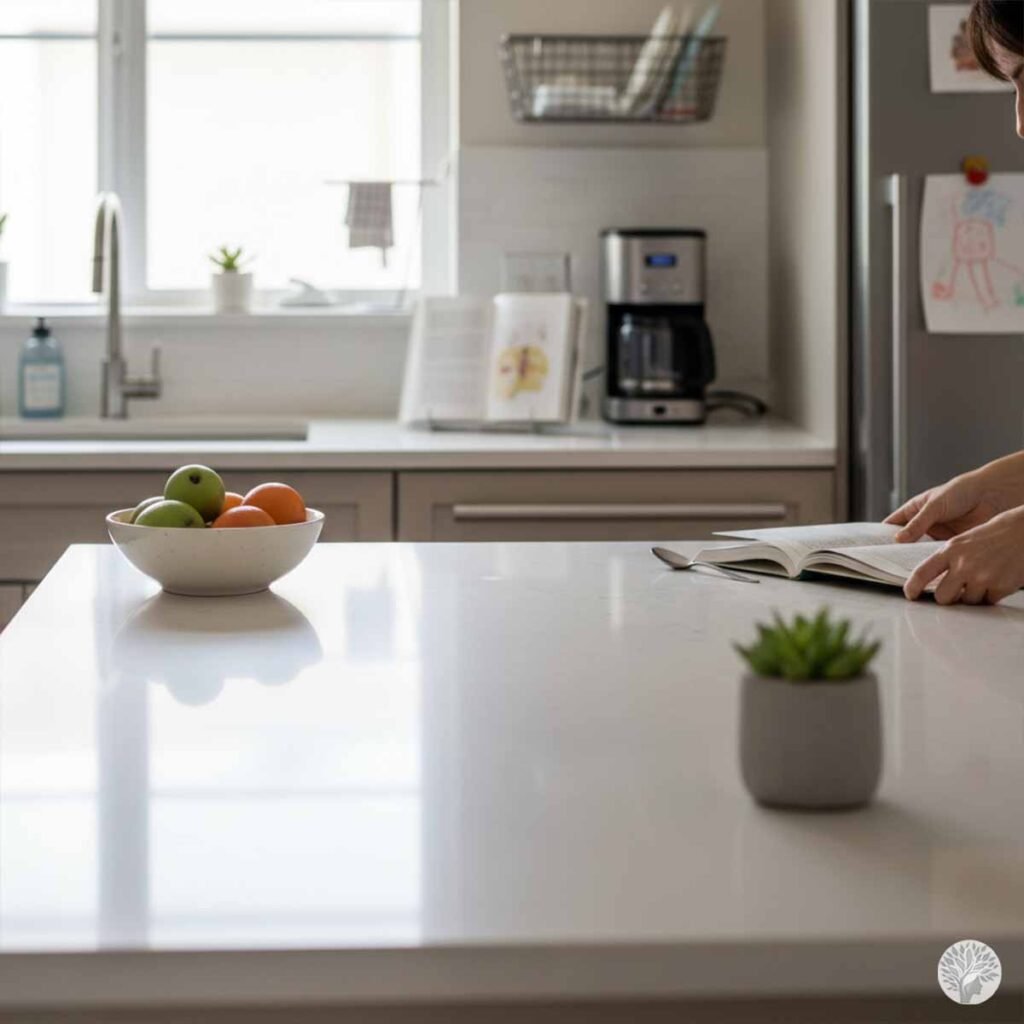
The Mid-Day Reset is about reclaiming Visual Silence. You don’t need to deep clean the house. You simply need to clear your Anchor Surfaces.
The Action Clear one primary surface, like the kitchen island or the dining table. When you look across the room and see that clear space, it gives your brain a “Soft Landing” spot. It signals that the chaos is contained and that there is still room for you to breathe.
Deep Dive – The Mid-Day Reset: How to Close Your Mental Tabs and Reclaim Visual Silence
Phase 3 – The 5 PM Pivot
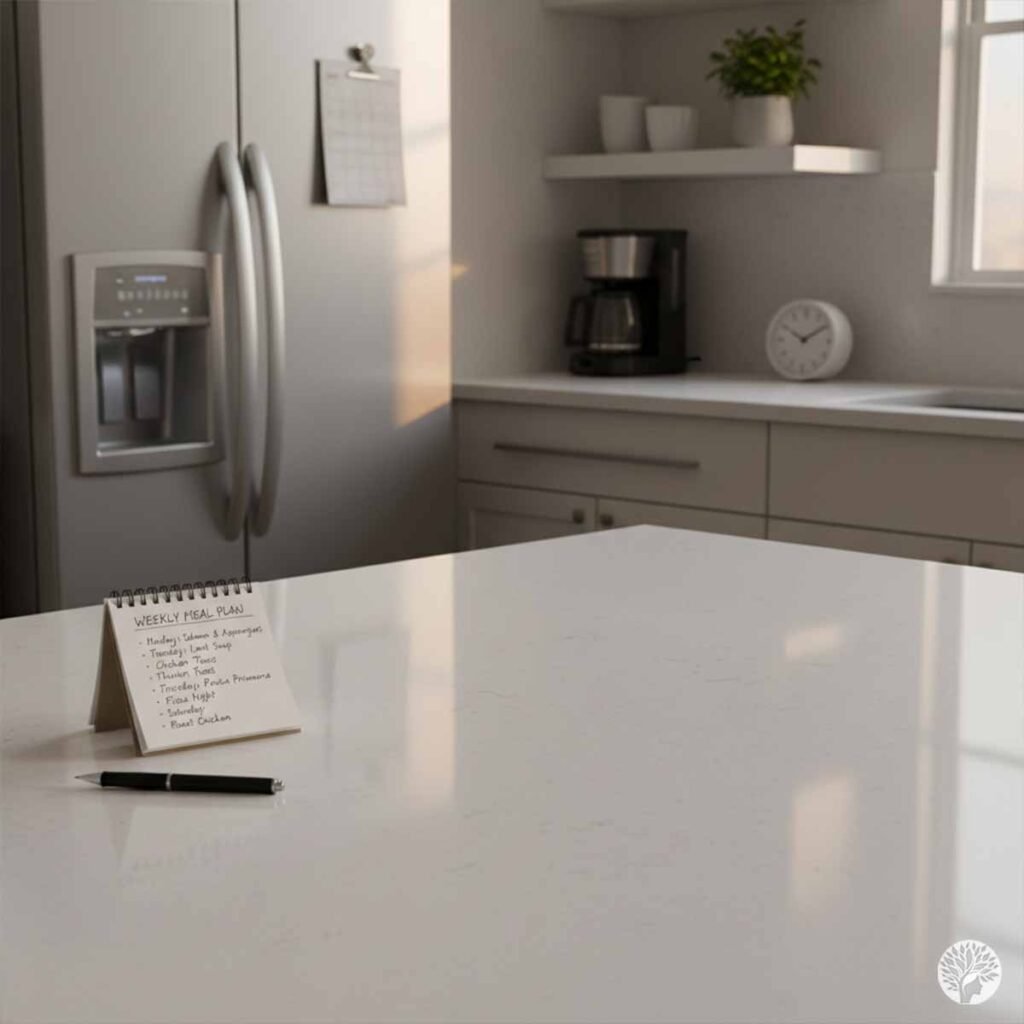
The Promise Remove the hardest decision of the day.
The 5:00 PM hour is the most vulnerable time for a mother’s nervous system. This is when Decision Fatigue hits its peak. The hardest part of dinner isn’t the cooking, it’s the choosing.
The Pivot is about moving from “Plan Mode” to “Action Mode.” Because you have already externalized your plan on the fridge, you no longer have to think. You simply follow the rhythm.
The Identity Shift – You are no longer the “Fixer” trying to solve the problem of a hungry family. You are the “Facilitator” moving through a pre-drawn map. This protects your vocal energy and keeps your frustration levels low.
Deep Dive: Simple Weekly Meal Planning For Busy Moms
Phase 4 – The Evening Soft Landing
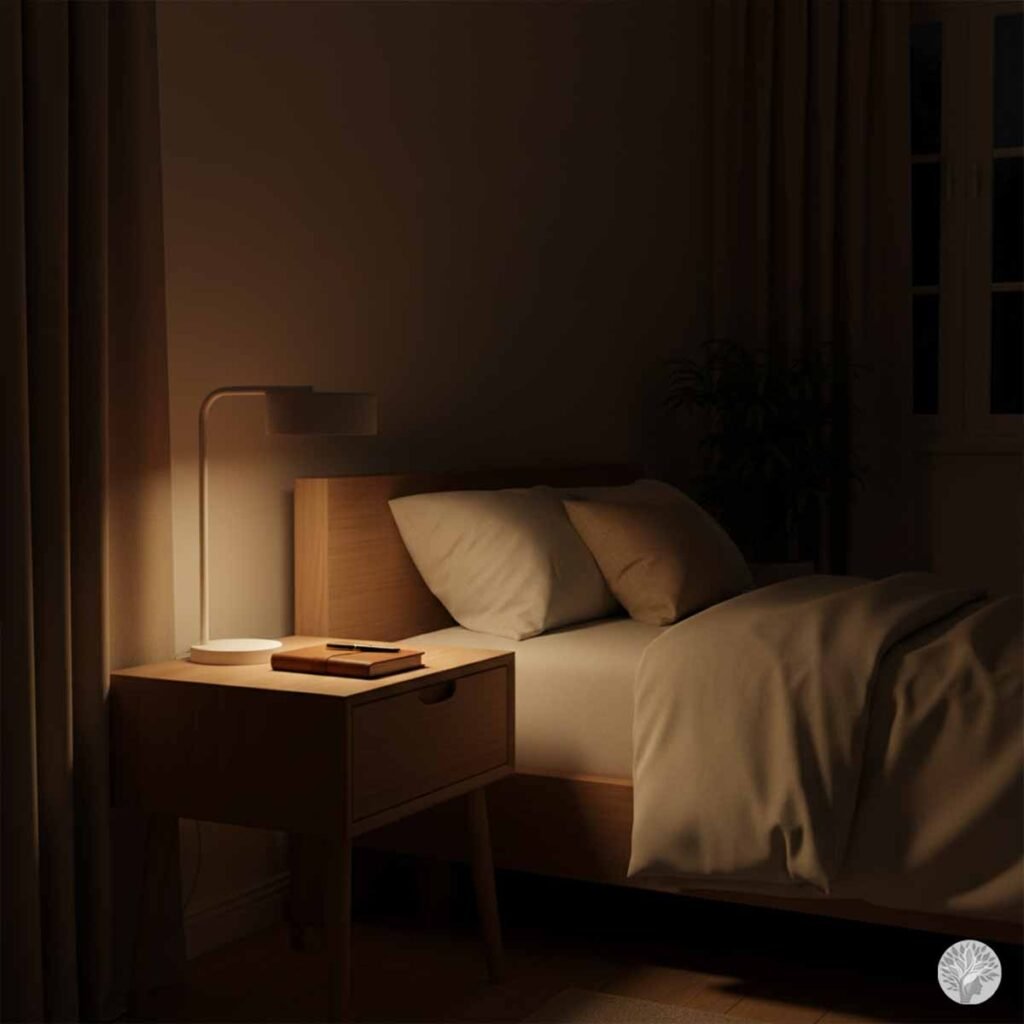
The Promise Help your body slow down naturally
As the sun sets, your home should begin to whisper. The Evening Soft Landing is the transition from the “doing” of the day to the “being” of the night.
This is the time to apply Visual Silence to your bedroom. Your nightstand should not be a charging station for your stress. It should be a sanctuary for your rest.
The Sensory Layer – Dim the overhead lights and switch to warm lamps. The shift in light triggers your brain to begin producing melatonin. Touch the linen of your journal or the fabric of your bedding. This is your signal to the nervous system that the day is done.
Deep Dive: Evening Reset Routine For Calm Nights
If You Can Only Do One Thing
Mindfulness should never feel like another heavy item on your to-do list. If we treat intentionality like a chore, it becomes just another source of guilt when life gets messy. There will be days when the Mid-Day Reset doesn’t happen, the 5 PM Pivot feels like a scramble, and your Morning Anchor was interrupted by a crying child.
In those moments, when your day feels completely out of control and your nervous system is pushed to its absolute limit, do not try to fix everything. Do not try to rescue the whole house. Instead, do this:
Clear Your Nightstand
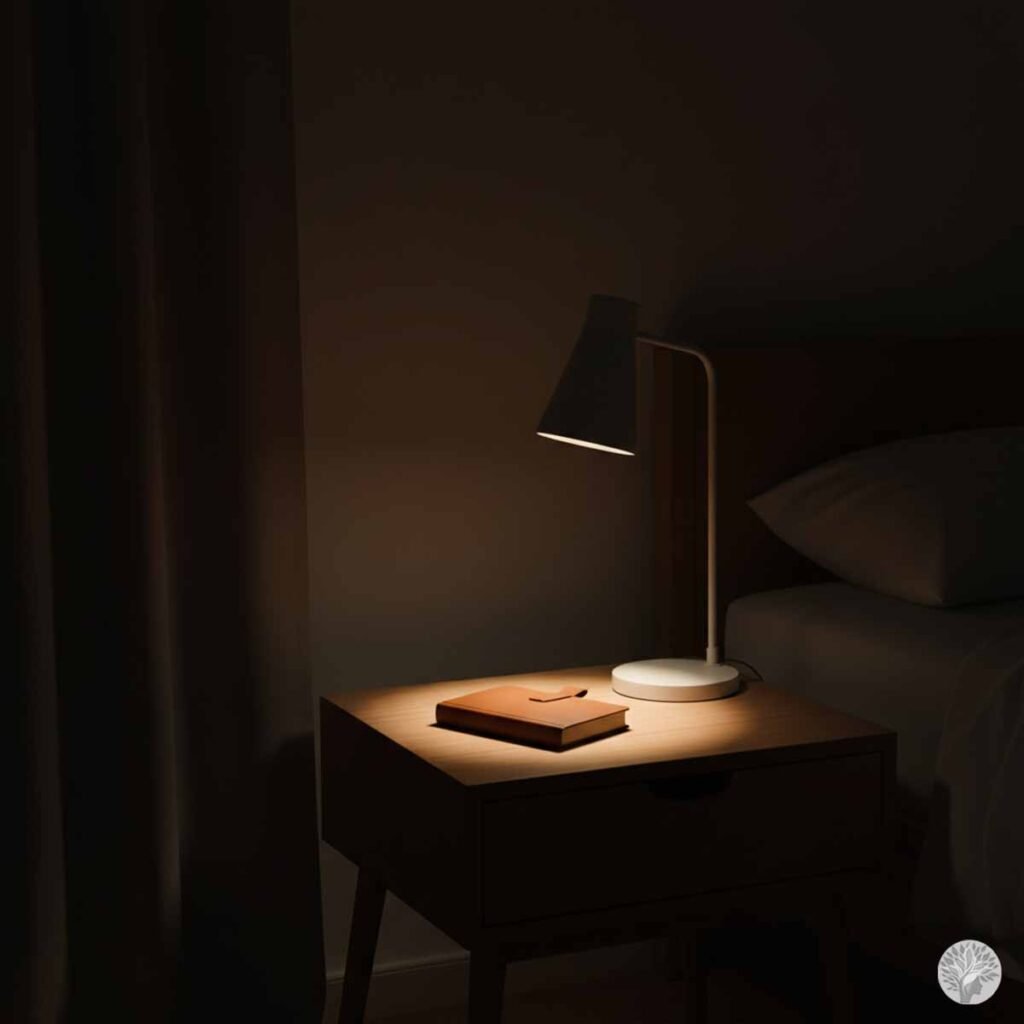
It sounds almost too simple to be effective, but the nightstand is the most influential “Anchor Surface” in your home. It is the last thing you see before you close your eyes and the first thing you see when you open them.
When your nightstand is cluttered with half-empty water glasses, charging cables, unread mail, and loose hair ties, your brain is processing Visual Static in the very moments it should be entering a state of rest. By clearing this one small surface, you are creating a “Pocket of Peace.”
The Power of the Micro-Reset
Starting and ending your day with a clear, quiet surface is the fastest way to lower your baseline stress. It acts as a mental bookend. By clearing those few square inches of space, you are performing a small act of rebellion against the chaos. You are telling your brain: The world might be loud, but right here, it is quiet.
This is the “Minimum Viable Ritual.” It doesn’t require a cleaning supply, a meal plan, or a 10-minute window. It requires sixty seconds and the decision to protect your immediate line of sight.
Why It Works
When you wake up to a clear nightstand, you aren’t immediately greeted by a reminder of “unfinished business.” You are greeted by a Soft Landing. This small win provides a micro-dose of dopamine and a sense of agency that carries into your morning. It proves that you don’t need to control the whole world to feel a sense of calm—you just need to control your anchor.
If the rest of the house is screaming, let it scream for a moment. Clear your nightstand, take one deep breath, and remember that you are the dweller, not the foreman.
The Cumulative Effect of Why Consistency Beats Perfection
One of the most common questions I get is, “What happens if I miss a phase?” The beauty of the Mindful Home Routine is that it is not a chain that breaks if one link is missing. It is a safety net. If you miss your Morning Anchor, you still have the Mid-Day Reset to catch you. If the afternoon gets away from you and the kitchen is “screaming” by 5:00 PM, the Pivot is there to simplify your decisions so you don’t spiral into overwhelm.
When you practice these four phases consistently, you begin to experience a Cumulative Effect. Your baseline stress level the “hum” of anxiety that many mothers live with starts to lower. You aren’t just cleaning surfaces; you are training your brain to recognize your home as a place of safety.
By closing these “mental tabs” throughout the day, you preserve your emotional energy. You’ll find that by 8:00 PM, you aren’t just a shell of a person waiting for bed; you are a woman who still has a bit of herself left. This is the ultimate goal of Messy Mindfulness: to ensure that at the end of the day, there is more of you than there is of the mess.
The Mindful Home Toolkit
To help you transition from the “Factory” mindset to the “Ecosystem” mindset, I have curated a few simple tools that I use to anchor these rituals. These aren’t just “cleaning supplies”; they are sensory triggers that tell my nervous system it’s time to reset.
- For the Morning Anchor: A Stone Ceramic Mug with a weighted bottom. There is something grounding about the weight of a real mug that a plastic travel cup just can’t replicate. [Affiliate Link]
- For the Mid-Day Reset: A Natural Seagrass or Woven Basket. I use this to “collect the noise” from my Anchor Surface. It’s beautiful enough to sit out, but functional enough to hide the clutter. [Affiliate Link]
- For the Sensory Wipe: An Essential Oil-Based Surface Cleaner in a scent like Lemon or Eucalyptus. The scent is the “reset button” for my brain. [Affiliate Link]
- For the Evening Soft Landing: Amber-Toned Edison Bulbs or a small, cordless warm lamp. Switching off the “big lights” is my favorite way to tell my body that the work day is officially over. [Affiliate Link]
A mindful home isn't found in the absence of a mess, but in the intentional creation of a space where your soul can finally land softly.
Love ya, stay mindful!