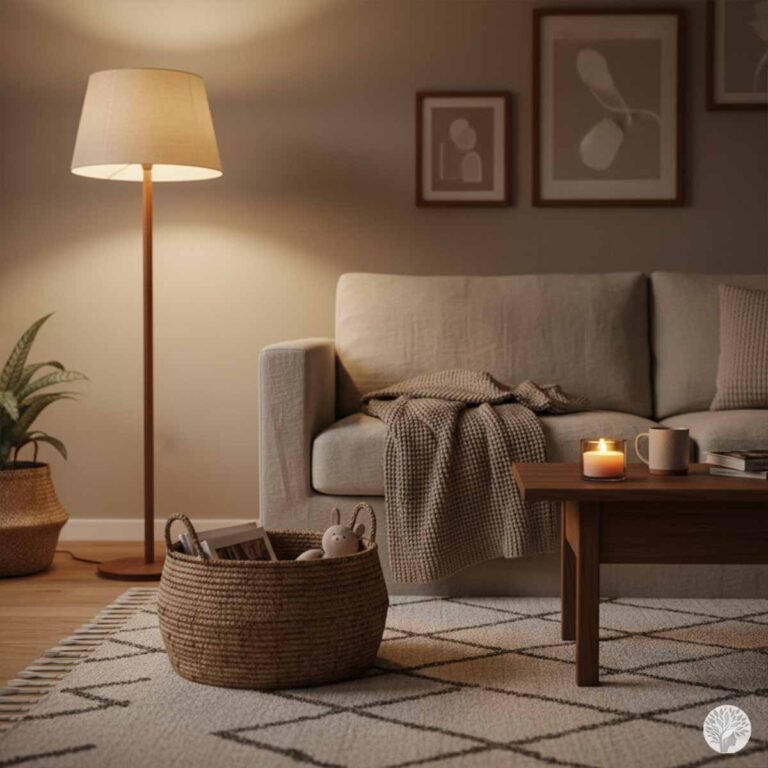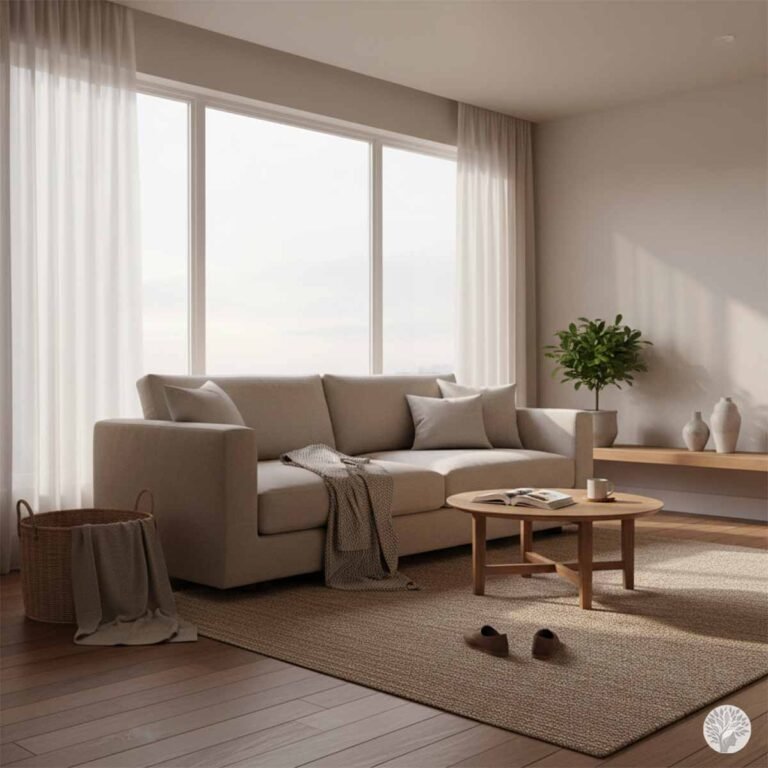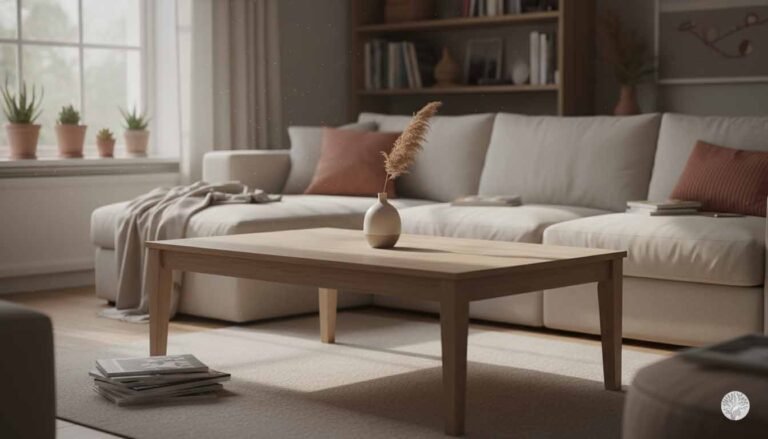

If your home feels emotionally loud even when it looks clean, your nervous system may be missing a safe place to land. A calm corner is not about perfection or expensive decor. It is a small intentional space that helps overwhelmed moms step out of constant management mode and reconnect with softness, stillness, and emotional breathing room.
Hey Beautiful!
Many mothers spend the entire day responding.
Responding to questions. Responding to needs. Responding to noise, routines, reminders, meals, laundry, emotions, and invisible mental tabs that never seem to close.
Then evening comes. The house finally quiets down. You sit on the sofa with your tea, hoping your body will relax.
But instead of resting, your brain keeps moving.
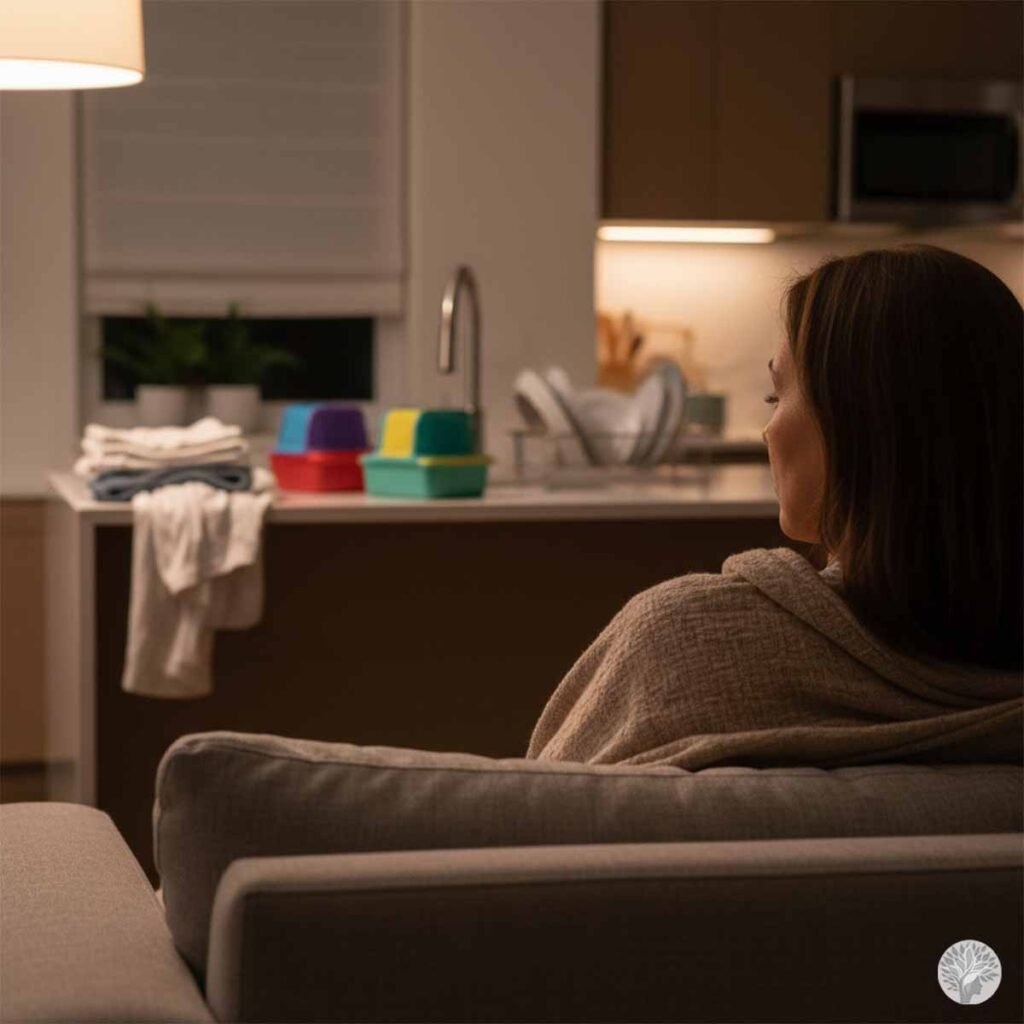
Your eyes notice the kitchen counter. You remember tomorrow’s lunchboxes. You mentally calculate the morning schedule while replaying unfinished conversations from the day.
This is the emotional reality many overwhelmed mothers quietly live inside.
The body pauses, but the mind never fully lands.
Over time, the home slowly becomes a place we manage instead of a place we emotionally dwell inside.
That is why a calm corner matters.
Not because mothers need another trend to follow. Not because every home needs a beautifully styled sanctuary. A calm corner matters because the nervous system needs somewhere to feel emotionally safe for a few minutes.
It is a visual and sensory reminder that you are allowed to exist inside your home too, not only as the manager of everyone else’s needs.
What A Calm Corner Actually Means
A calm corner does not need to look impressive.
You do not need a separate room, expensive furniture, or an aesthetically perfect setup you saw online.
A calm corner can simply be:
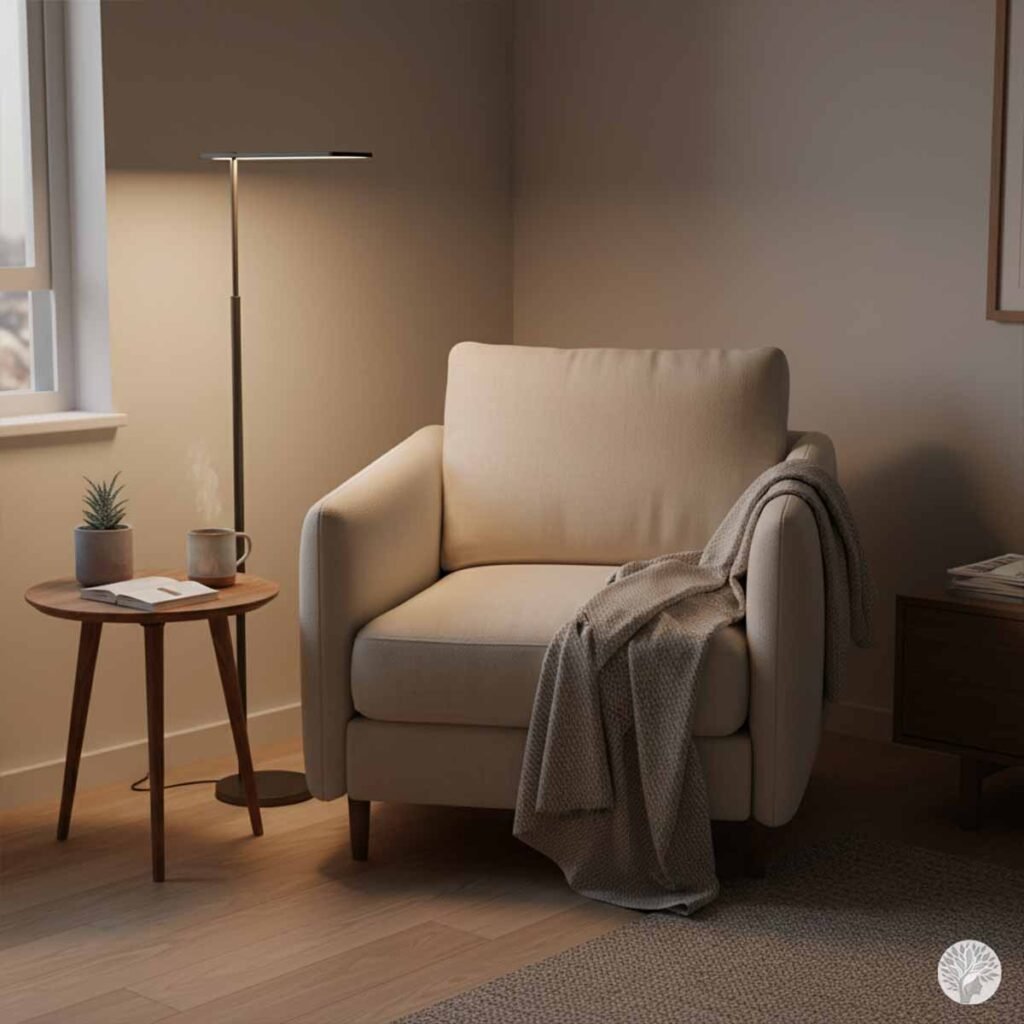
- one chair beside a warm lamp
- one tray on a bedside table
- one quiet shelf with a candle and book
- one small corner near a window
- one soft blanket and a place to sit
The purpose is not decoration. The purpose is emotional transition.
Our nervous system constantly responds to the spaces around us. Harsh lighting, visual clutter, noise, and unfinished tasks quietly communicate urgency to the brain all day long. Even when we sit down physically, our environment can keep us emotionally alert.
A calm corner interrupts that pattern. It creates a softer sensory experience through:
- warm lighting
- breathable space
- grounding textures
- reduced visual noise
- gentle routines that signal safety
For overwhelmed mothers, this matters deeply because so much of motherhood happens in a state of anticipation. We are constantly scanning the home before problems happen. A calm corner becomes the one place where we stop monitoring everything for a few moments.
That shift may sound small, but emotionally it is powerful.
Choosing A Spot That Feels Emotionally Quiet
The best calm corner is not always the prettiest part of your home. It is the space where your nervous system feels least interrupted.
Start by paying attention to areas that already feel emotionally heavy.
For example, many mothers feel overstimulated near:
- overflowing counters
- laundry piles
- work desks
- noisy play areas
- heavily cluttered surfaces
These spaces keep the brain in “management mode.”
Instead, look for a spot that naturally feels slower and softer. This could be a corner near a window, a quiet chair in the bedroom, or even one small section of your living room that is not visually crowded.
If you live in a small apartment or busy family home, do not assume you need more space.
You do not need an entire sanctuary room. You only need one intentional transition point.
Sometimes a calm corner is simply:
- a lamp
- a soft throw
- a clear surface
- a place to breathe for ten minutes
That is enough.
One of the biggest misconceptions about mindful living is that calm only exists in large minimalist homes. In reality, the nervous system responds more to emotional cues than square footage.
A small peaceful corner inside a busy home can still create a profound emotional shift.
Why Warm Lighting Changes The Feeling Of A Home
One of the fastest ways to change the emotional atmosphere of a room is through lighting.
Many homes are filled with bright overhead lights that quietly keep the nervous system stimulated. Cold white lighting often makes a space feel active, clinical, and emotionally “on.”
That is why so many mothers struggle to wind down at night, even after the responsibilities of the day are technically over.
Warm lighting creates a different emotional signal.
Soft amber-toned lamps, candles, salt lamps, or warm bulbs around 2700K create a gentler visual environment that helps the body feel safer and calmer.
Instead of using one bright overhead light, try layering smaller light sources throughout your calm corner.
For example:
- a warm table lamp beside a chair
- a candle near your book
- a dim floor lamp in the evening
- soft bedside lighting instead of ceiling lights
These changes may seem simple, but they significantly reduce visual harshness.
Many overwhelmed mothers believe they need a full home makeover to feel emotionally better. Often the nervous system simply needs softer sensory input.
The emotional difference between harsh light and warm light is much bigger than most people realize.
The Importance Of Grounding Textures
The body responds emotionally to texture.
That is why soft natural materials often feel calming in a way that shiny or synthetic surfaces do not.
When mothers spend the entire day overstimulated by noise, decisions, interruptions, and mental load, the body naturally starts craving grounding sensations.
This is why many people instinctively reach for:
- blankets
- soft clothing
- warm tea
- textured pillows
- comfortable corners
The nervous system is searching for softness. Your calm corner should support that feeling. You do not need luxury products. Even small changes can create emotional warmth. Some beautiful grounding additions include:
- linen throws
- woven baskets
- cotton floor cushions
- soft rugs
- weighted lap blankets
- textured neutral pillows
Natural textures absorb light differently and visually feel quieter. They help a space feel more breathable and emotionally grounded.
The goal is not creating a designer room. The goal is helping your body stop bracing for stimulation.
Creating A Softer Emotional Atmosphere Through Scent
Scent is one of the fastest ways to emotionally shift the feeling of a space.
A calm corner should gently signal to the brain that this moment is different from the rest of the day.
Strong overpowering fragrances can sometimes create more overstimulation, especially for mothers already carrying sensory overload. Softer grounding scents tend to work best.
Beautiful calming options include:
You can introduce scent gently through:
The purpose is not creating a luxury spa environment. The purpose is creating emotional association.
Over time, your nervous system begins recognizing this space as a place where it is safe to soften instead of constantly preparing for the next task. That emotional familiarity matters more than perfection.
Less Visual Noise, More Breathing Room
Many overwhelmed mothers believe their homes need more organization systems, more decor, or more storage.
But often what the nervous system truly needs is less visual pressure. A calm corner should never feel crowded. You do not need ten decorative items to make a space feel meaningful. In fact, emotional calm usually increases when the eye has more room to rest. This is where intentional simplicity becomes powerful.
A few grounding objects are enough:
- one candle
- one ceramic vase
- one meaningful book
- one small plant
- one framed quote
Leave the rest visually open. Empty space is not unfinished.
For an overstimulated nervous system, empty space often feels like emotional breathing room.
This is especially important for mothers whose homes constantly communicate another task, another responsibility, or another decision waiting to be made.
Your calm corner should communicate the opposite.
Nothing to solve. Nothing urgently demanding your attention. Just softness.
Why Quiet Matters More Than We Think
One of the least acknowledged parts of motherhood is auditory overload.
Many mothers spend the entire day listening.
Listening for children. Listening for questions. Listening for problems. Listening for interruptions.
Even when the house becomes quiet, the nervous system often stays prepared for the next demand.
That is why the sound environment inside your calm corner matters.
You do not necessarily need guided meditations or complicated rituals. Often the most healing thing is simply reducing emotional noise.
You can support this through:
- soft instrumental music
- white noise
- nature sounds
- gentle silence
- subtle wind chimes
Even five uninterrupted quiet minutes can help the nervous system begin settling after a mentally crowded day.
Your First Few Minutes Inside The Calm Corner
When you enter your calm corner, try not to turn it into another task to “do correctly.”
This is not about performing mindfulness.
It is about allowing your body to stop carrying responsibility for a few minutes.
Sit down slowly. Notice the lighting. Notice your breathing. Notice that for this moment, nothing urgently needs your attention.
You might:
- drink tea slowly
- read one page of a book
- look outside the window
- listen to soft music
- light a candle
- simply sit quietly
That is enough.
Many mothers unconsciously believe they must earn rest after every task is complete. But motherhood rarely fully completes itself. There will always be another lunchbox, another message, another pile, another responsibility.
A calm corner teaches the nervous system that rest does not need to wait for perfection.
One gentle phrase can help during this transition: “The manager is off the clock. The woman is home.”
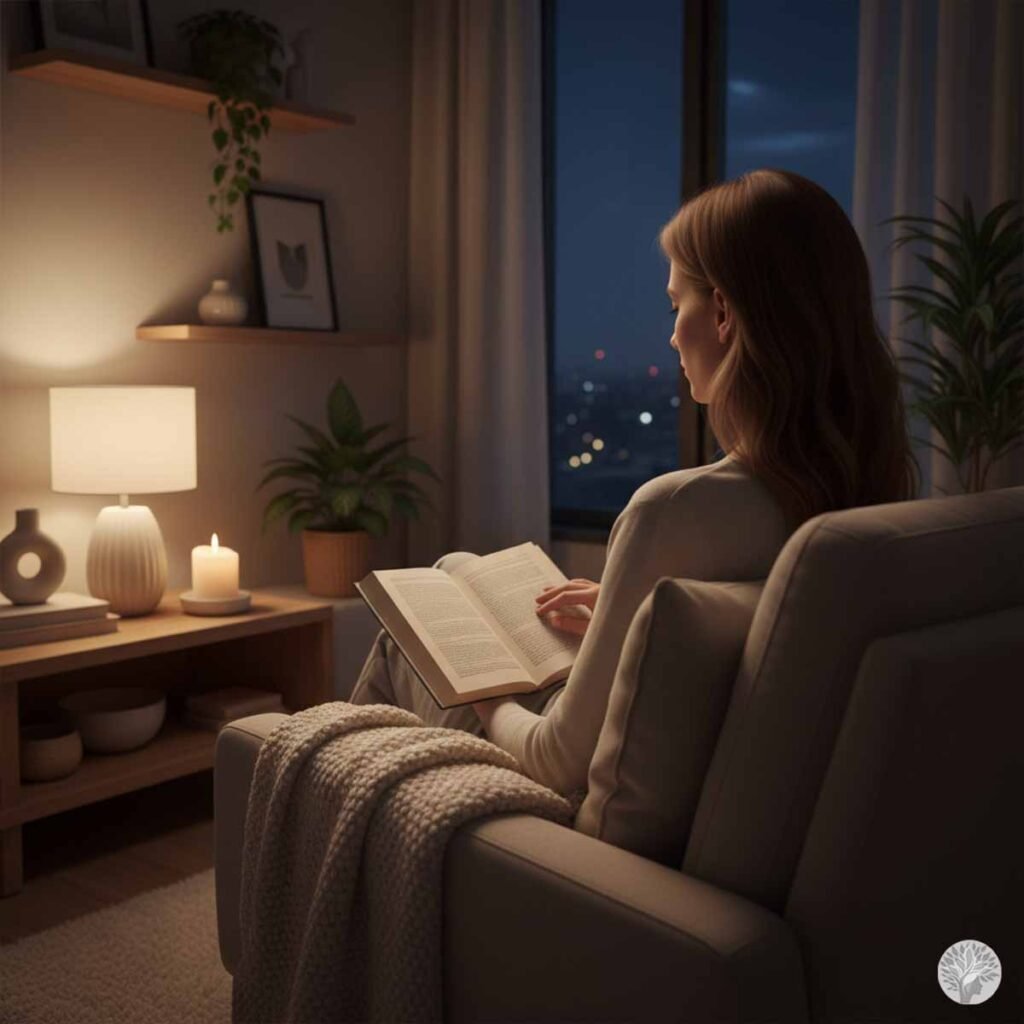
Not because responsibilities disappear, but because you deserve moments where they stop consuming your entire internal world.
A Calm Corner Should Never Become Another Pressure
This part matters deeply. Your calm corner should not become another area of the home that demands perfection from you. The purpose is emotional support, not visual performance.
Straightening a blanket, dusting the shelf, or lighting a candle can become small rituals of self-respect instead of chores.
You are not maintaining a showroom. You are caring for your own emotional environment.
That shift changes everything.
When You Feel Like You Do Not Have Space
Many mothers immediately think:
“My house is too small for this.”
But calm corners are not built through square footage. They are built through intention.
Even small spaces can hold emotional softness.
You can create a calm corner using:
- a bedside tray
- one shelf
- one chair
- a floor cushion
- a lamp beside the couch
- a tiny corner near a window
The nervous system responds to emotional signals, not perfectly styled interiors.
Sometimes one warm lamp and one clear surface are enough to help the body feel calmer.
Start small.
The goal is not creating a flawless sanctuary.
The goal is remembering that you exist inside your home too, not only your responsibilities.
The Heartbeat Of A Mindful Home
Many mothers quietly become the emotional architects of the home.
You remember the schedules, the appointments, the emotional tone of the family, the groceries, the routines, and the invisible details that keep daily life moving. That is an enormous emotional load to carry continuously.
A calm corner will not erase the responsibilities of motherhood. But it gives your nervous system somewhere to land between them. It reminds you that your emotional well-being matters too.
Not after the house becomes perfect. Not after every task is complete. Not someday in the future.
Now.
Because a home cannot truly feel peaceful if the woman inside it never gets to soften. So let one dish stay in the sink for ten minutes. Let one mental tab remain unfinished. Sit in the warm light. Hold the tea slowly. Breathe.
You are not lazy. You are overloaded.
And you deserve a corner of your home that remembers the woman behind the manager.
Your home cannot truly feel peaceful if the woman inside it never gets to soften.
Love ya, stay mindful!

© 2026 The Mindful Mom Life. All rights reserved. This methodology is part of the Hetal Method helping mothers find neurological rest through intentional home management. No part of this work may be shared or reproduced without credit to the original source.
Related Reading
- What Is The Management Trap?
- What Is Visual Silence?
- What Is Sensory Overload?
- The Gentle Evening Reset Routine
- Breathable Home Design
Create Your Sanctuary
- Creating a Quieter Home with Low-Effort for Overwhelmed Mothers
- Visual Decluttering Tips For Moms To Reduce Mental Load At Home
- Creating A Breathable Home Design with The Art of Visual Silence
- Decluttering Your Mind Through Space and The Power of Visual Silence
- Breathable Home on a Budget – Calm for Overwhelmed Moms