

You can reduce the mental load of homemaking by unlearning the habit of treating your home like a running checklist of problems to fix. To protect your peace, transition from “Management Mode” to “Dwelling Mode” the intentional practice of being fully present in your space without trying to clean, organize, or optimize it. Widening your window of tolerance for household mishaps, ignoring hyper-curated internet aesthetics, and distributing the cognitive load of household logistics allows your home to transform from a source of sensory flooding into a breathable sanctuary.

Hey Beautiful!
Looking at this birthday celebration photo a few days later, I realized the greatest gift wasn’t turning 42. It was recognizing how much of myself I had found again. I found myself feeling a profound sense of gratitude, not for a perfect life, but for one I have slowly and intentionally reclaimed.
If you had met me at 32, or even at 40, I would have told you that a peaceful home is a finished home. I spent years operating under the exhausting illusion that serenity was something waiting for me at the finish line. I believed that true inner peace would finally appear after the work was done, after the kitchen counters were entirely pristine, after the mountain of laundry was perfectly folded and put away, and after my family’s chaotic schedules were neatly synchronized.
But as I look back on this milestone, I am radically, completely focused on unlearning homemaking habits that no longer serve my spirit.
Peace must exist while the work is still happening.
If we wait for the house to be entirely “done” before we allow ourselves to take a deep breath, look at our surroundings, and experience joy, we will be waiting forever. A home is a living, breathing entity; it is never truly “done.”
This realization has hit me even harder as I navigate a beautiful, bittersweet transition in my motherhood journey: raising a teenage son. The mental load hasn’t disappeared; it has simply changed shape.
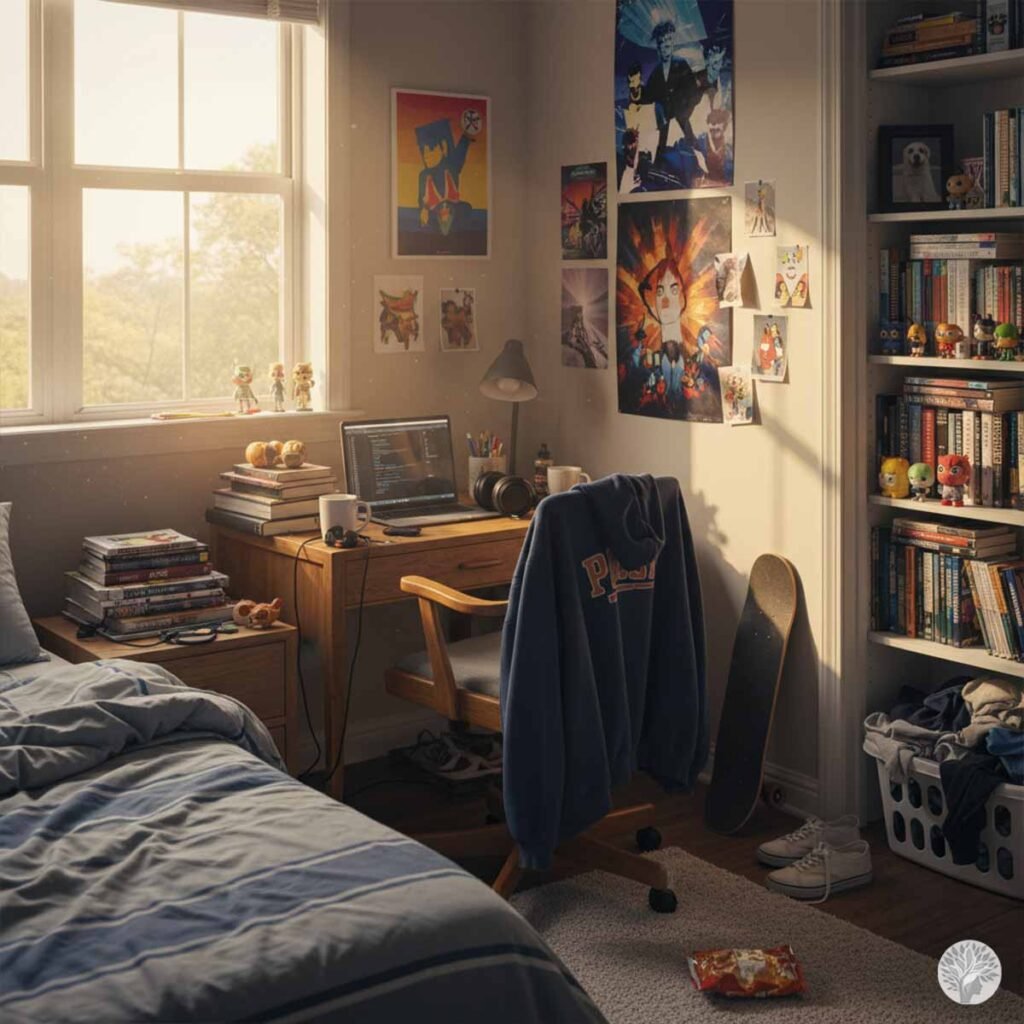
When your children are toddlers, the physical routine is what exhausts you. You are dealing with the wiping of spills, the picking up of toys, and the constant sensory flooding. But motherhood with a teenager becomes an entirely psychological transition. Suddenly, the mess isn’t just blocks on the floor; it’s the intense visual noise in the home created by a teenager’s bedroom that you have to unlearn the urge to micromanage. It is the shifting of my role from the day-to-day manager of his every single move to a steady, supportive buffer who knows when to step back and let him grow.
By actively choosing to step away from the habits that force me into a superhero trap, I am giving him the space to become his own person. More importantly, I am discovering how to protect my own peace by closing the constant mental tabs running in my brain.
Over the last two years since I hit 40, I have had to look closely at the internal pressures I was placing on myself as the woman behind the home. I wasn’t just collecting beautiful things; I was collecting house management mistakes that were draining my daily battery, leading me straight toward the heavy state of being an overwhelmed mother.
So, as a permanent gift to myself and to every mom reading this who is currently trapped in a cycle of exhausting household management, here are the 12 habits I am actively unlearning to step out of the chaos and finally protect my peace.
Pillar 1: Protecting Mental Space
For the longest time, I wore my ability to handle everything alone like an invisible badge of honor. I fell into the classic superhero trap. The subconscious belief that if I didn’t manage, coordinate, and execute every single detail of our household, the entire structure would collapse.
But true peace doesn’t come from proving how much weight your shoulders can carry. It comes from radically shifting the cognitive load of motherhood and intentionally distributing the emotional and physical weight of running a home.
1. Breaking the “Management Trap”
I used to live my life in a permanent state of high alert. Even when I was sitting down with a cup of tea, my eyes were constantly scanning the room, opening mental tabs that I didn’t have the immediate energy to close. The grocery list needs updating. The guest bathroom is out of hand towels.
Maybe you’ve felt this too. I lived in what I now call Management Mode. I have had to practice unlearning homemaking habits that cast me as the default project manager of our lives. I am shifting from managing everything to practicing true energy distribution. It means realizing that my family members are fully capable of sharing the load but only if I step out of the way and give them the space to do it without my shadow hovering over them.
2. The Teenager Transition & Unlearning Micromanagement
This has been a deeply humbling lesson for me. When your kids are little, you manage their spaces to keep them safe. But as my son has grown into a teenager, I’ve had to realize that my instinct to micromanage his schedule, his routine, and his bedroom was no longer about keeping him safe. It was about my own need for control.
Every time I walked past his room and felt my blood pressure rise over a dropped hoodie or a chaotic desk, I was adding to my own internal stress. Raising a teenager means realizing that stepping back and allowing him the dignity of managing his own space isn’t failing him as a mom; it’s a necessary psychological transition. It gives him room to step up, and more importantly, it lets me close the mental tabs that were burning through my own daily battery. A teenager’s room does not dictate the emotional peace of the rest of our home.
3. Creating an Internal Buffer for Household Mishaps
When you are carrying a heavy load, your brain experiences a kind of permanent sensory flooding. In that state, a small daily mishap of a spilled glass of water, a forgotten chore, a noisy afternoon feels like an absolute emergency. You don’t respond; you react.
I am unlearning the habit of letting the physical unpredictability of a busy household dictate my internal weather. By choosing not to absorb the minor chaos around me, I build a quiet emotional cushion between myself and the demands of the day. A Psychological Buffer that widens my internal window of tolerance. When something goes wrong or stays messy, I take a breath and remind myself: This is an inconvenience, not a crisis.
Pillar 2: Reducing Environmental Noise
Our homes speak to us constantly. Every unfinished project, every misplaced item, and every overcrowded surface is whispering a demand for our attention. For years, I didn’t realize that my physical surroundings were directly contributing to my cognitive fatigue. I thought I just needed to be a better organizer.
But the truth is, you cannot organize your way out of a sensory-overloaded life. To fix this, we must deliberately address the environmental clutter that drains our daily energy.
4. The Container Trap of Buying Baskets for Things We Don’t Need
Whenever my home felt chaotic, my instinct was to open an online shopping app or head to the store to buy beautiful, matching storage bins, clear organizers, and labels. I told myself I was investing in a peaceful environment.
But I will never forget standing in front of a cupboard filled with beautiful, perfectly matching baskets, realizing I was completely exhausted because I couldn’t actually find what I was looking for. I was spending more time managing the containers than the things inside them. Buying storage containers before you actually ruthlessly minimize your belongings is just creating organized visual static. It’s hiding the clutter in a prettier box, which means you are still carrying the environmental debt of managing things you don’t actually need. Now, my rule is simple: if it doesn’t serve a clear, intentional purpose in our daily life, it leaves the house.
5. Waiting for the House to Be “Done” Before Enjoying It
Think about your own day right now. How many times have you looked at a cluttered coffee table or a sink full of dishes and thought, “I’ll light my favorite candle and sit down once this is all clear”? I used to deny myself quiet moments as a punishment for an un-reset house.
I am completely unlearning the rule that my environment has to be flawless before I am allowed to experience joy. If I wait for the house to be completely done, I am postponing my happiness indefinitely. Now, I practice a quick surface reset. I clear one small anchor surface. Maybe just my bedside table, a single corner of the kitchen counter, or my desk and I declare that space a sanctuary. I light the candle, I drink something warm. For those few minutes, I stop managing the room and simply dwell inside it. The work can wait; my mental and emotional energy cannot.
6. Comparing My Home to Curated Internet Homes
We live in an era of hyper-curated internet grids. We swipe through social media and see houses with pristine white couches, zero items on the countertops, and matching minimalist aesthetics. Subconsciously, we start viewing our real, lived-in homes through a lens of lack.
I’ve had to unlearn the “perfect grid aesthetic” and trade it for intention-based living. My home is not a museum or a hotel; it is the landing pad for a busy family and a growing teenager. It is allowed to look like people live here. When I stopped trying to force my house to look like a Pinterest board, the crowded surroundings instantly softened.
Pillar 3: Caring for the Woman Behind the Home
Somewhere in the blur of managing a household, tracking schedules, and showing up for everyone else, it is incredibly easy to lose your own reflection in the mirror. You become so efficient at running the machine that you forget you are a human being, not the engine keeping it alive.
By our late 30s and 40s, many of us realize that the standard self-care advice barely scratches the surface. Reclaiming yourself requires a fundamental shift in how you treat your own boundaries.
7. Shifting from “Doing” to “Dwelling”
For years, my brain was locked in a permanent cycle of tracking the household logistics. Even when the house was quiet, my mind was busy. I was constantly scanning, planning, and anticipating the next problem to solve. I had entirely forgotten how to simply dwell in my own life.
I am actively unlearning the habit of treating my life like a never-ending logistical puzzle. I am learning how to shift into Dwelling Mode, the art of being fully present in a space without trying to fix it, clean it, or optimize it. It means sitting on the porch and watching the rain without thinking about the gutters. It means sitting with my teenage son and just listening to him talk about his day, completely letting go of the urge to comment on his backpack on the floor. It is moving from constant doing to simple, grounded being.
8. Choosing True Self-Preservation Over Surface Self-Care
The wellness industry loves to tell mothers that self-care is a quick sheet mask or a superficial routine tacked onto the end of a grueling day. But when you are carrying years of accumulated burnout, a candle or a lotion isn’t going to save you.
I am unlearning the idea that taking care of myself is an afterthought. I am embracing radical self-preservation. It means protecting my sleep like it is medicine because as mothers, sleep is often the only time our minds completely stop carrying the weight of the house. It means honoring my nutrition and setting firm boundaries around my time without a shred of guilt. True self-care isn’t about escaping your life for an hour; it’s about building a life you don’t desperately need to escape from.
9. Finding the Balcony View & Reclaiming the Woman Outside of Motherhood
When your children grow into teenagers, you are suddenly met with a quiet realization: they need you differently now. This shift can feel jarring if your entire identity has been wrapped up in the consuming tasks of early motherhood.
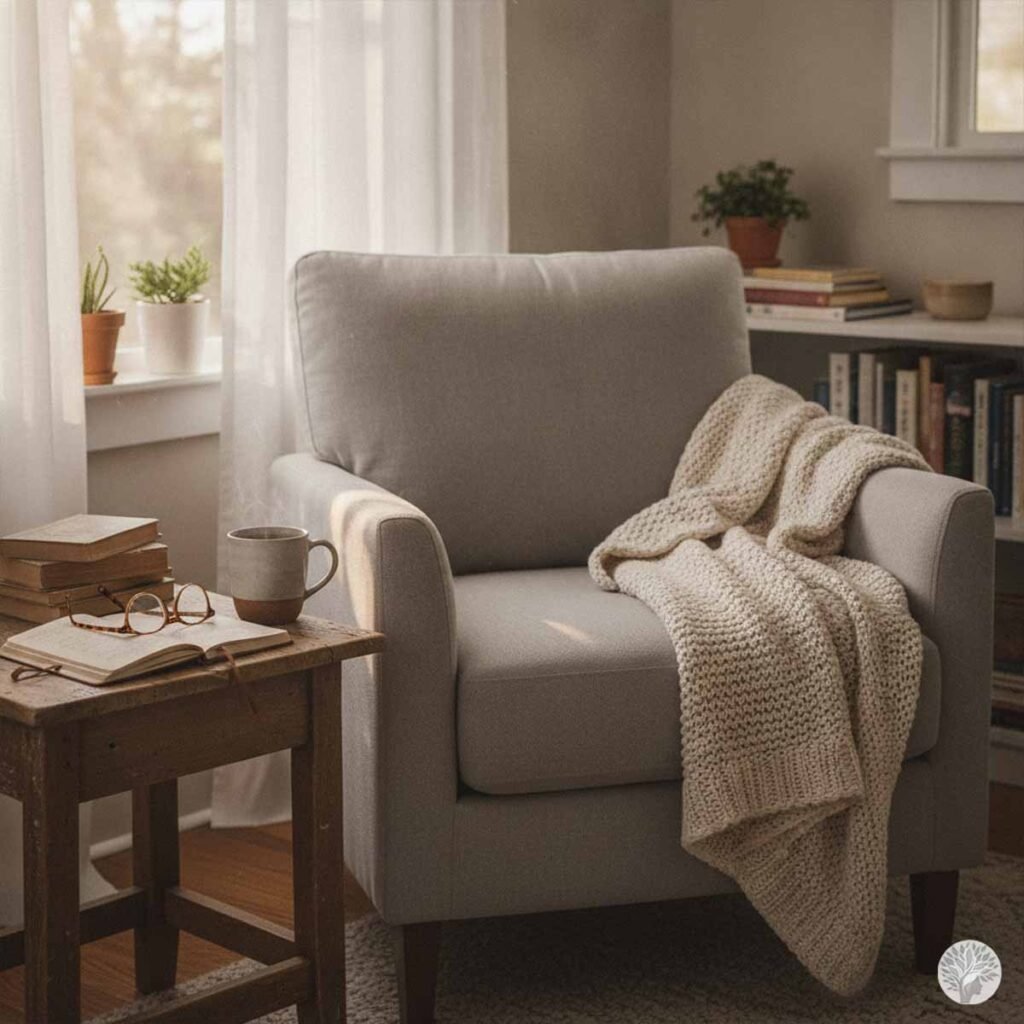
I am unlearning the belief that dedicating time to my personal passions, my creative writing, or my quiet morning rituals is selfish. Some days, my reclamation looks like a specific comfortable chair near a window. Some days, it is simply standing quietly on the balcony watching the evening light change. This is my Golden Hour Spot. Reclaiming my individual identity outside of motherhood isn’t a distraction from your family. It is a gift to them. It shows my son that a woman’s worth isn’t defined solely by how much she sacrifices for others, but by how beautifully she honors the life she has been given.

Pillar 4: Creating Sustainable Home Rhythms
The final piece of this unlearning puzzle happens in the heart of the home: our daily kitchen and social rhythms. For a long time, I treated the kitchen like an administrative office where chores had to be executed perfectly, and hospitality like an exam I needed to pass.
At 42, I am radically unlearning the need to perform.
10. Trading “Hotel-Level” Presentation for Warm Hospitality
I used to experience massive anxiety whenever people were coming over, exhausting myself trying to make the home look completely flawless. I was treating my home like a boutique hotel.
I am completely unlearning the habit of over-stressing for guests. When we stress over a perfect presentation, our guests can feel that nervous energy. I am choosing warmth over perfection. People don’t come to our homes to see a museum; they come to feel connected. Now, I leave the unwashed dishes hidden in the sink if it means I can sit down, serve a simple comfort meal, and actually be present with the people I love.
11. Finding Grounding in the Kitchen
When your mind is heavy with an unbalanced load, last-minute dinner decisions become an absolute chore that drains your remaining battery at 7:00 PM.
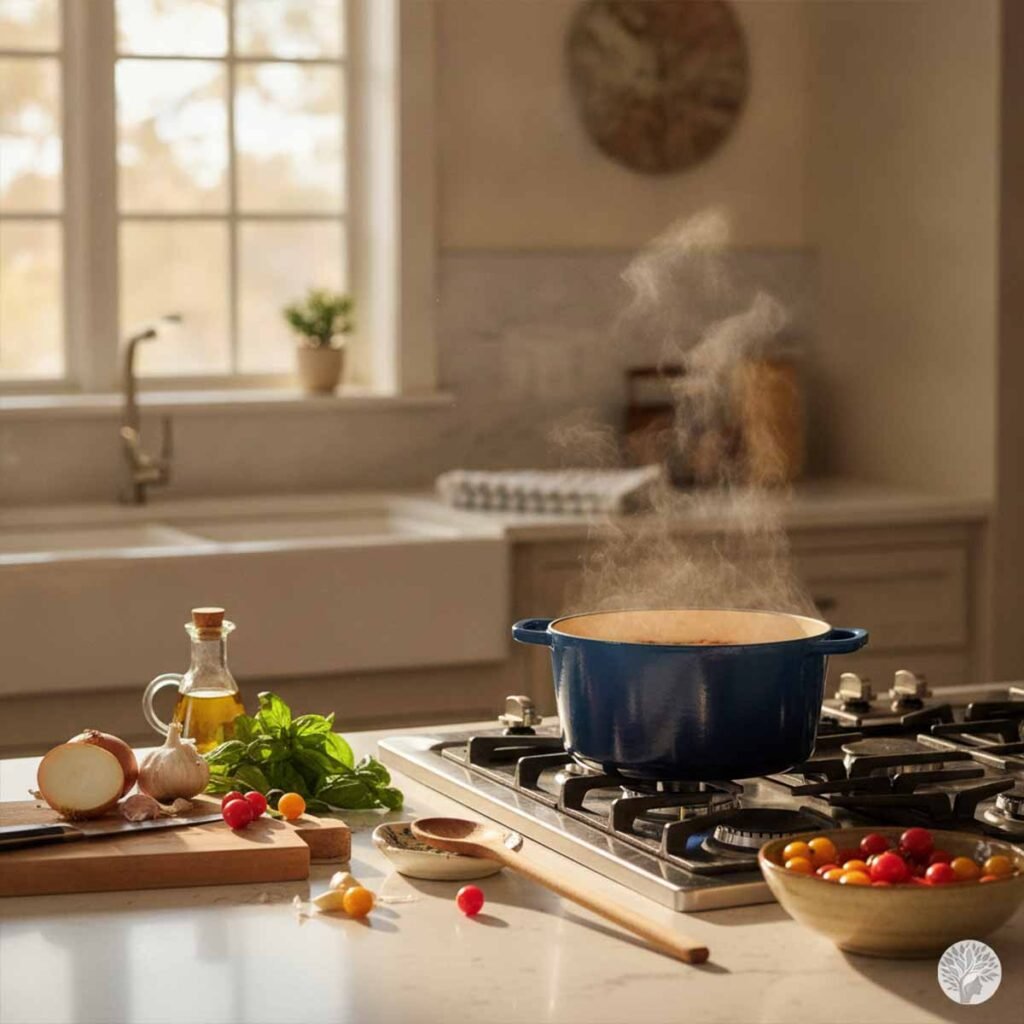
I am unlearning the frantic, rushed approach to feeding my family. Instead of treating dinner like a race against the clock, I am returning to the slow, intentional grounding of slow-cooked, ancestral food. Watching a single pot simmer on the stove forces my pace to slow down. The kitchen transforms from a place of checklist chores into a therapeutic space where I can nourish my family’s bodies and my own soul simultaneously.
12. Releasing the Illusion of the “Perfect Day” (Messy Mindfulness)
I used to think that a successful home rhythm meant a day where everything went exactly according to plan. If a routine broke down, I would slip into negative self-talk and feel like I had failed.
At 42, I am unlearning the toxic expectation of perfection. I am embracing what I love to call messy mindfulness. Consistency doesn’t mean perfection; it means having a gentle rhythm that you can always return to when life gets chaotic. I am choosing to forgive myself in the messy moments, knowing that a happy, peaceful home is built on sustainable, gentle habits and not rigid, unbreakable rules.
A Breathable Sanctuary
Shedding the invisible weight of household project management isn’t a transition that happens overnight. It requires catching ourselves in those tiny, daily moments when we instinctively try to slip back into superhero mode or start letting the visual noise in the home dictate our emotional landscape.
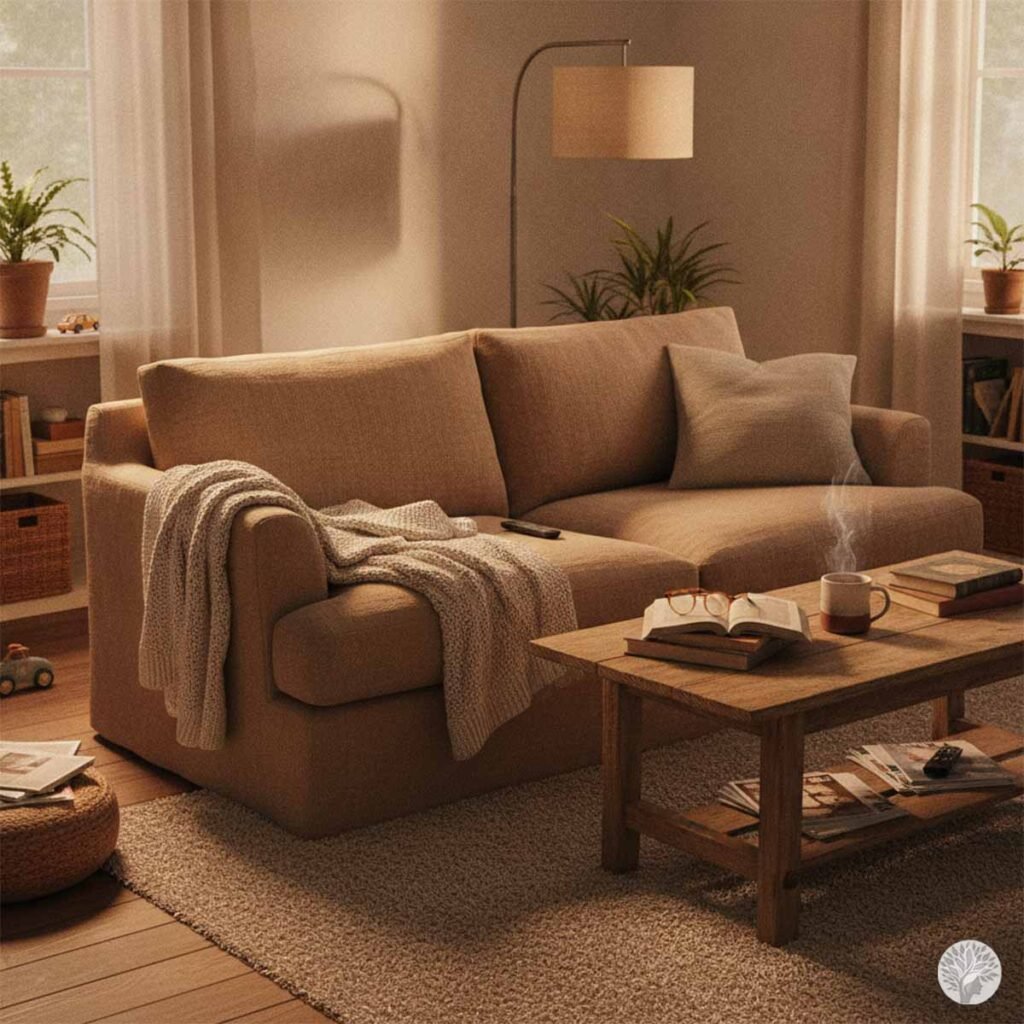
But the moment you decide that your internal harmony is worth more than absolute environmental control, the entire dynamic shifts. Your home stops being a running checklist of things you need to fix and finally transforms into what it was always meant to be: a breathable sanctuary where your soul can rest, where your teenager has room to grow, and where the woman behind the home is finally allowed to breathe.
Maybe peace was never hiding on the other side of a perfect home. Maybe it was waiting for us right in the middle of the unfinished one.
At 42, I am carrying forward the lessons, the healing, and the quiet joy of enough. I am no longer trying to build a perfect home. I am learning how to live peacefully inside an imperfect one. And I wish the same peace for your beautiful, beautifully imperfect homes.
True mindfulness isn't found in a flawless home, but in the peaceful choice to finally dwell inside an unfinished one.
Love ya, stay mindful!

© 2026 The Mindful Mom Life. All rights reserved. This methodology is part of the Hetal Method helping mothers find neurological rest through intentional home management. No part of this work may be shared or reproduced without credit to the original source.