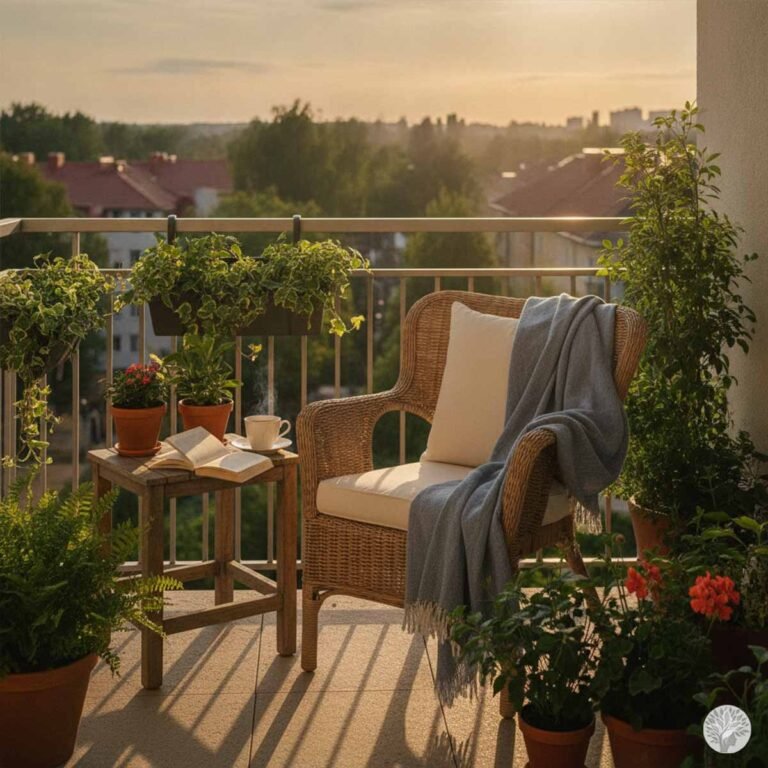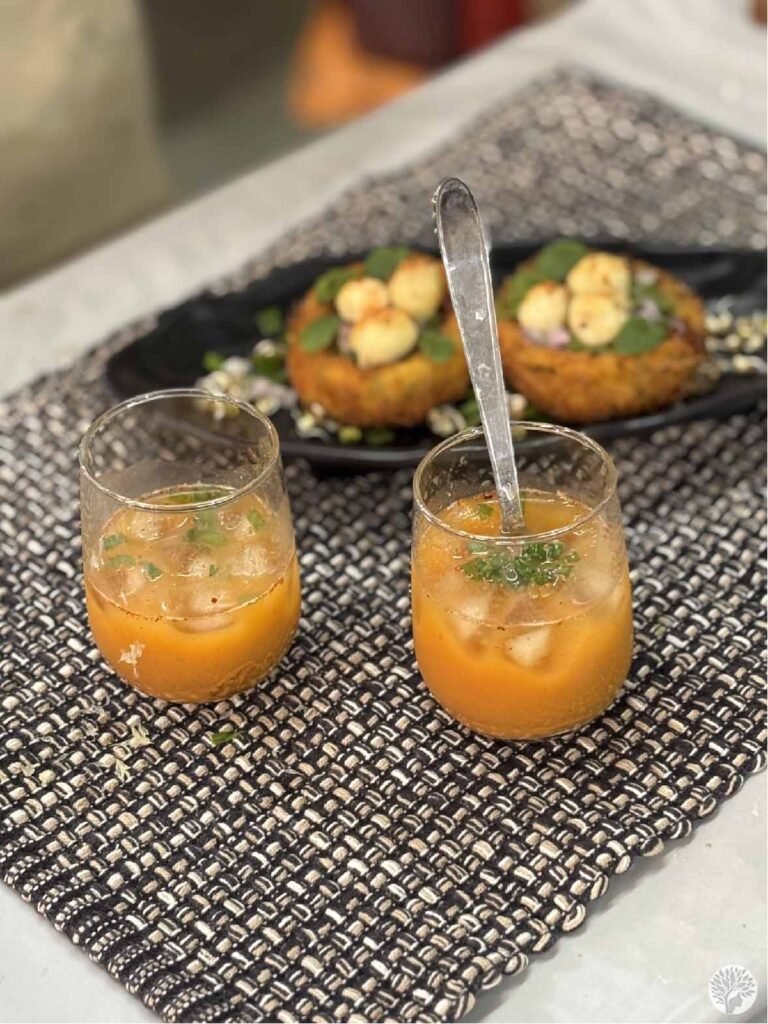

What does it mean when we say some beautiful things are meant to be shared, not judged? In a world obsessed with scorecards, external validation, and blue ribbons, true worth must exist before recognition ever arrives. This is the story of entering a local cooking competition on June 7, 2026, with an ancestral family recipe, losing the trophy, and discovering that the highest validation is found right around the dinner table.
Hey Beautiful!
The smell of ghee in my kitchen always has a way of resetting everything. Even when life feels loud or rushed, that warm, rich aroma anchors me, pulling my awareness back to the stove, the exact place where true comfort begins. It was early in the morning on June 7, 2026, that I began preparing my entry for a local culinary competition centered around a dish that has defined my entire life: khichadi.
For those who didn’t grow up with it, khichadi is the ultimate ancestral comfort food of the Indian subcontinent. A humble, deeply nourishing one-pot meal made from rice, lentils, and spices simmered together until they melt into a soothing, restorative texture. For American moms, the closest emotional equivalent is a hearty, savory chicken noodle soup, or texture-wise, a comforting, slow-simmered risotto. It is a dish often associated with comfort, recovery, and the quiet rhythm of home.
Cooking this comfort classic for a contest, however, is entirely different from cooking it for your family. Normally, I move with an intuitive rhythm. But on that morning, as I measured out the short-grain Parimal rice and the precise blend of dals exactly one tablespoon and one teaspoon each of tuvar, moong, and masoor. I felt a different kind of pressure. This wasn’t ordinary contest food; I was trying to distill a piece of heritage, a lifetime of family dinners, and a profound, quiet devotion into a single presentation handi [a traditional, deep, wide-mouthed clay or copper or mud or ceramic cooking and serving pot].
My mother, the woman who handed down the very essence of these Kathiyawadi traditions, accompanied me to the venue. Together, we would make the journey from my quiet kitchen to the busy presentation hall, carrying the physical and emotional weight of our lineage between us. But before we could pack the handi, there was one pivotal moment that changed the entire spirit of the day.
The Anatomy of a Masterpiece
People often ask me why my recipes are so specific, why I treat every grain and spice ratio with such care. The answer is simple: when we slow down to cook with intention, we are doing more than just feeding bodies; we are grounding our own spirits in the quiet of the present.
And this particular dish, a traditional Girnari Tuvar Ringan Khichadi, demanded my full attention. To understand the soul of this dish, it helps to understand its geography. It comes from Saurashtra, a rugged peninsular region in Western India known for its smoky, cast-iron style farmhouse cooking, and it is named after Girnar, an ancient mountain range rising out of that landscape. In the US, you can think of it much like the Appalachian region, a place deeply rooted in rustic, soulful traditions that rely entirely on what the local soil provides.
I began by open-boiling the fresh green tuvar beans and raw peanuts. Tuvar beans are fresh green pigeon peas. They look and taste incredibly similar to plump sweet green peas or edamame, but with a slightly earthier, nuttier undertone. Boiling them separately from the pressure-cooked grains ensures they retain a firm, beautiful bite, adding a necessary texture to the soft rice and dals. As they rolled in the water, I watched them carefully, mindful of the exact moment they reached perfect tenderness.
Next came the foundation of the dish – the gravy base. In a heavy-bottomed pan, I heated two tablespoons of oil and let the mustard seeds crackle completely. Immediately, I added fresh curry leaves, chopped onions, and a aromatic ginger-garlic-chili paste, sautéing the mixture patiently until the onions turned a deep, rich golden brown.
To build the masala roast, I added chopped tomatoes and ringans which are small varieties of eggplant similar to Italian or Japanese fairy-tale eggplants. I let the tomatoes break down entirely before introducing the spices: hing, a half-teaspoon of turmeric, a precise 5:2 chili powder mix, dhana-jeeru [a fragrant, ground spice blend of coriander and cumin seeds], and a half-teaspoon of garam masala [a warm, aromatic Indian spice blend typically containing ground cloves, cinnamon, and cardamom]. I let those dry spices roast for exactly one minute, adding just a splash of water so they wouldn’t burn, before seasoning it all with salt.
For the final integration, I tossed the par-boiled peanuts and the remaining fresh tuvar directly into the spiced eggplant gravy to coat them beautifully. Then, I gently folded the pressure-cooked rice and dal into the rich gravy, adding a touch of hot water to hit a perfect, flowing, semi-thick consistency. I left the entire mixture to simmer on a low flame for five to seven minutes, watching the steam rise as the flavors unified into something whole.
The heartbeat of this entire recipe, however, is the smoky dhungar technique. I heated a piece of natural wood charcoal over an open flame until it glowed red-hot, then placed it inside a small steel bowl directly in the center of the steaming khichadi.
The entire kitchen changed the second I poured a half-teaspoon of ghee over that glowing coal. As the rich, ancient wood-fire smoke billowed up, I slammed the lid shut, trapping that authentic, nostalgic depth directly into the grains.
Finally came the crown – the garlic-tuvar tadka. I sizzled thin garlic chips and whole dried red chillies in hot ghee until they puffed up and turned a perfect, golden brown. Swirling in a touch of Kashmiri chili powder, I poured that sizzling red liquid directly over the center of the smoked khichadi, deliberately placing the blistered whole red chili as the central crown.
This sat right alongside a velvety Kathiyawadi Kadhi. If you’ve never tasted it, kadhi is a savory, warm yogurt soup thickened with chickpea flour and tempered with aromatic spices. It is as smooth and comforting as a classic cream-of-tomato soup, but with a tangy, spiced depth that cuts through the richness of the main dish. I completed it with a single, intact, crisp sprig of three joined curry leaves resting perfectly in the center.
It was heritage on a plate.
The Perfect, Sticky-Fingered Disruption
While the khichadi was unifying and the kadhi was simmering to a rolling boil, I turned to the final component: the Crispy Spiced Potato Fry. Crispy potato fry always looks simple on the plate, but getting it right takes patience. I steam the potato cubes first, then dry them carefully before frying so they stay crisp outside and soft inside.
I had just completed the flavor toss by sprinkling the dry spice mix of red chilli powder, chaat masala [a tangy, savory, and slightly sulfurous street-food spice blend], amchur [a tart, sun-dried green mango powder used for a bright punch of acidity], and salt over the hot, glistening potato dices, when my teenage son walked into the kitchen.
Instinctively, instead of protecting the pristine presentation ingredients, I placed the bowl right in front of him. He reached in and took one large, spicy, tangy chunk.
The immediate look of satisfaction on his face was pure joy. And then, there was no stopping him.
Between swallowing his second and third handfuls, he practically yelled over the sound of the exhaust fan, his eyes wide. “Mom! You need to cook this more often! Seriously, this is insane!”
When I swatted at his hand and told him the potatoes were actually for the competition, he just threw his head back, let out a loud, chaotic laugh, and strategically swiped three more pieces anyway.
Later, when the kitchen finally calmed down and he dove into a massive bowl of the finished khichadi, he slammed his spoon down in pure, unrefined teenage approval. “Oh man, it is nothing like the regular one, Mom. This is absolutely incredible!”
My mother stood nearby, watching this entire, sticky-fingered exchange with a knowing smile.
Long before we would walk into the competitive hall, right there in the comfort of my own kitchen, I had already received the true award.
The Glare of the Competition Hall
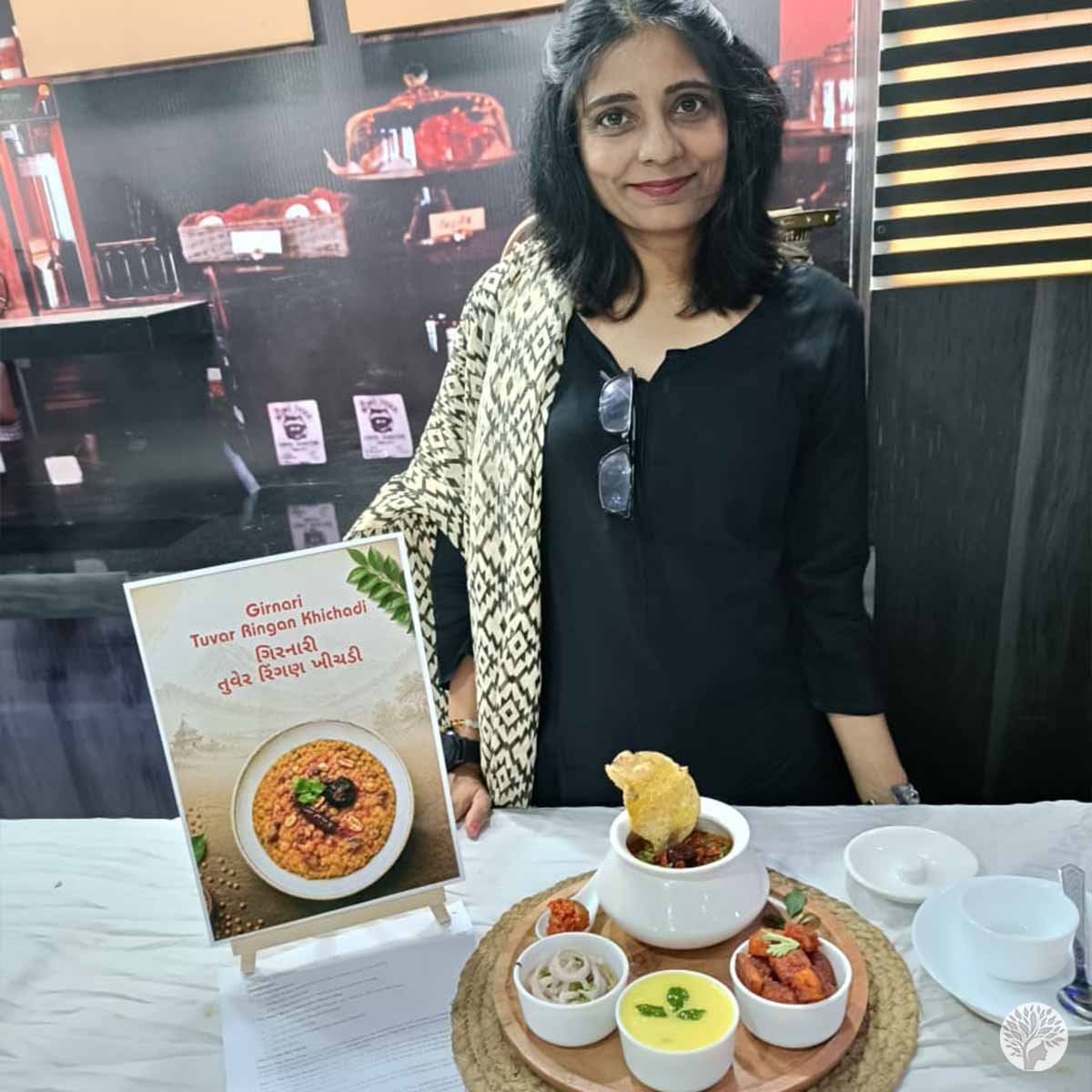
The transition from the familiar, slow rhythms of my kitchen to the high-energy environment of the competition center was jarring. The venue was a bustling wall of sound. The clashing of dozens of contradictory aromas, the nervous chatter of contestants, and the intense focus of home cooks presenting their best work. Dozens of presentation tables sat lined up under the relentless lights, each one a different interpretation of comfort.
Yet, I found my center by focusing on the presentation. With my mother by my side, I carefully unpacked our items. As I made the final arrangement, scattering that last, tight pinch of bone-dry coriander and vibrant, emerald tuvar garnish, I felt a deep sense of pride. I wasn’t thinking about a trophy anymore; I was simply proud to share what we had made.
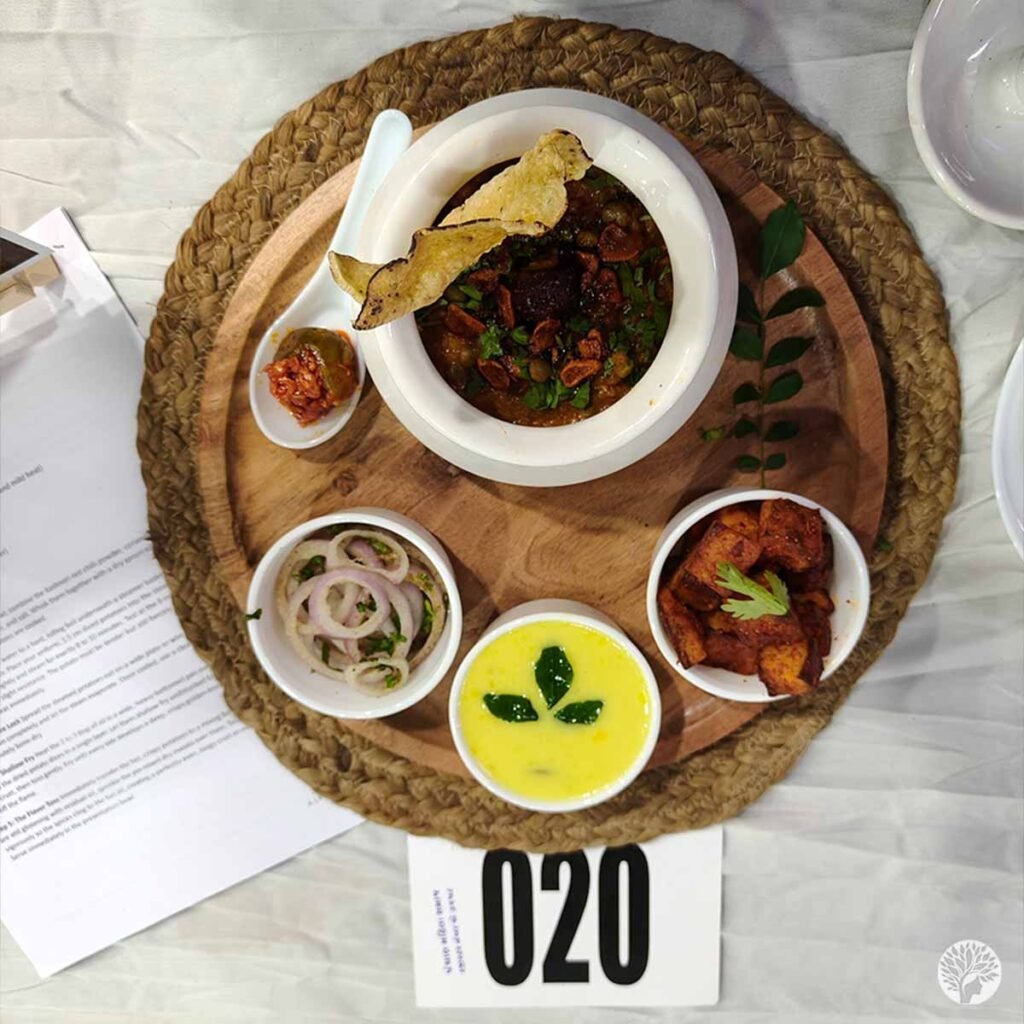
A competition forces your quiet, internal process into a rigid, external box. All the contestants and fellow community members were asked to wait by sitting back in the hall, separated from the presentation area while the evaluation took place.
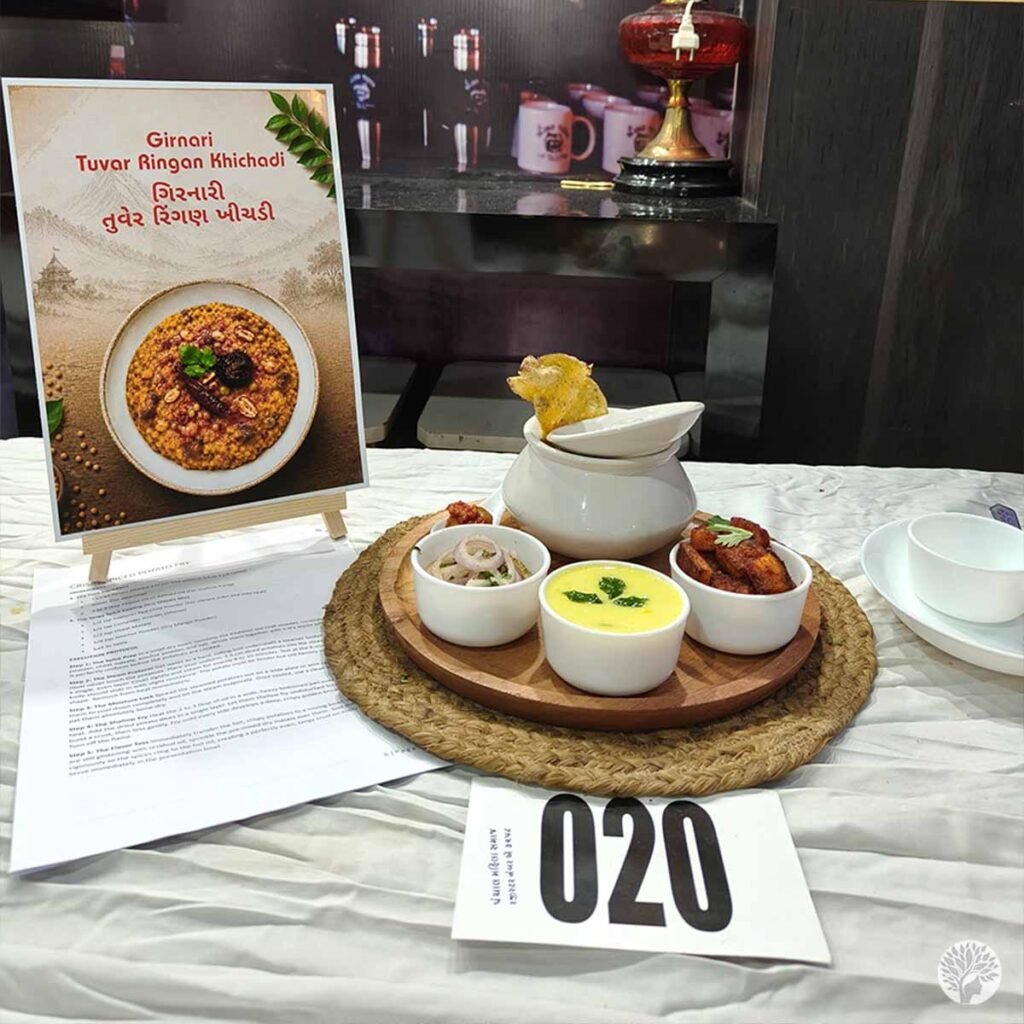
As the judges, clipboards in hand, finally approached my table, I sat there curiously straining to read the room, desperately trying to figure out what they liked and what they didn’t. But because of the way the seating was arranged, I couldn’t see their faces at all. I had to settle for watching their backs, trying to guess their thoughts from the mere tilt of a shoulder or the shift of a pen.
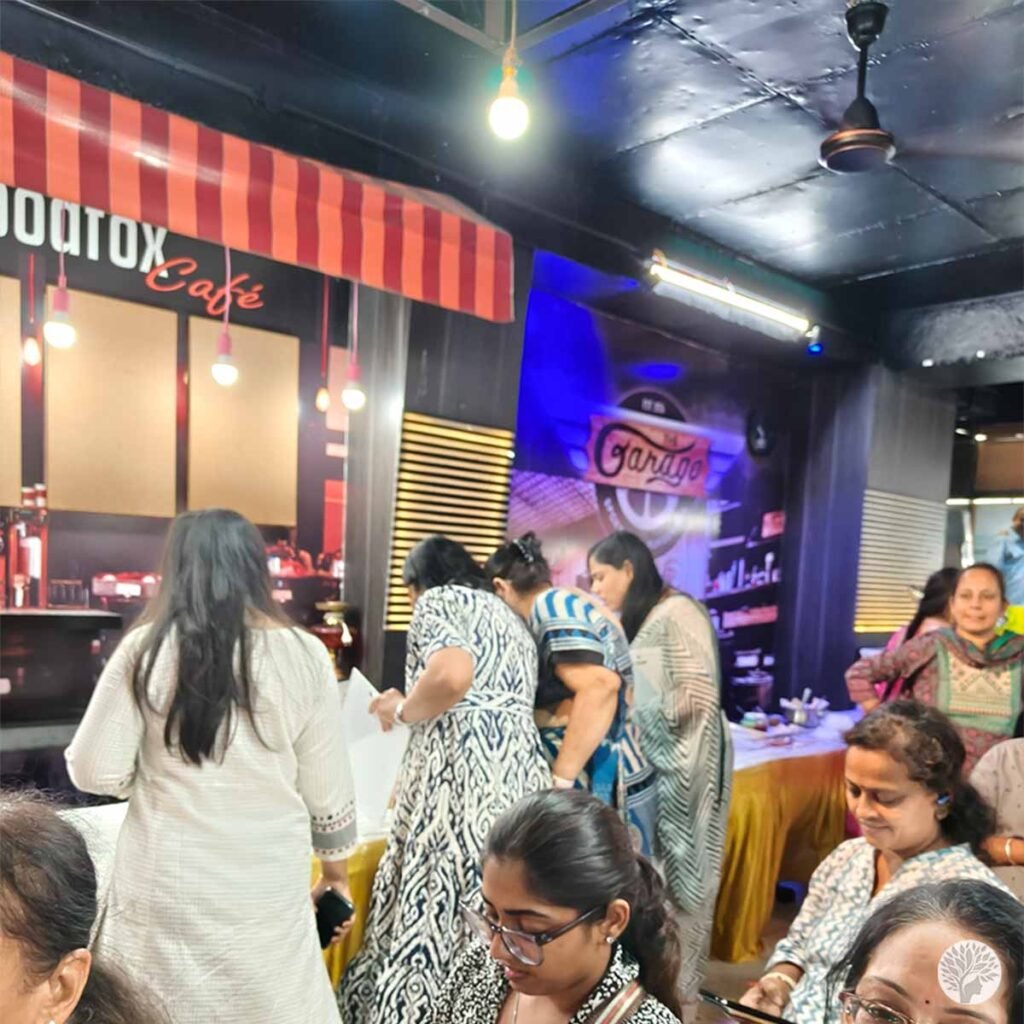
They were thoughtful and deliberate, but when the final results were announced, my name was not called.
Another dish resonated with the judges that day, and that is gracefully acceptable. Taste, after all, is a deeply personal thing, and not every beautiful, complex thing is meant to win a blue ribbon. But the real lesson wasn’t about competitive grace; it was about realizing where our true value comes from.
Worth Must Exist Before Recognition Arrives
When you pour that much love into something, disappointment is inevitable when recognition doesn’t arrive. It is so easy to slip into the trap of looking for an external scorecard to validate our energy. We live in a world that tells us everything must be measured, tracked, and approved.
But standing there in the crowded hall, looking at my mother next to me, a deeper truth came back to me.
Growing up, I watched my mother spend decades pouring unconditional love into our daily meals. She created a home where nourishment was never rushed and care was never measured. She worked tirelessly day after day, crafting quiet masterpieces from our family kitchen without ever expecting a stage, an audience, or a round of applause. I never gave my mother a scorecard for the love she gave us. I simply received it, felt it, and learned from it.
Seeing her standing beside me at the venue, I realized that I do not need to expect a scorecard from the world, either. Worth must exist before recognition arrives. A blue ribbon cannot add value to something that was already created with absolute devotion, and the absence of a trophy can never take it away. Not every beautiful thing is meant to win. Some beautiful things are simply meant to be shared.
When we packed up the presentation handi and drove home, leaving the frantic energy of the competition center behind, the disappointment quietly left the room.
Back in our own quiet kitchen, the kind of breathable sanctuary my mother had spent years creating, nobody asked where I placed on a scorecard. Nobody cared about ribbons or scores. We sat down together at the table, and the true validation of the kitchen unfolded naturally.
The kadhi disappeared first.
The potatoes vanished next.
My son reached for another heavy helping of khichadi.
I looked across the table at my mother. The woman who taught me how to nourish a home didn’t need a panel of strangers to tell her the meal was a masterpiece—and neither did I.
For decades, her validation had come from the quiet clearing of plates, the deeply satisfied sighs of a well-fed family, and the unspoken comfort that settled over our home at the end of a long day. Sitting there with her, watching my son reach for more, the entire concept of a scorecard melted away. The love and ancestral heritage poured into that handi had already fulfilled its highest purpose the moment it nourished the people who truly mattered.
The true trophy wasn’t waiting for me on a stage, wrapped in plastic and judged by strangers. It was sitting around my table all along, alive in the laughter of my son, the knowing smile of my mother, and the simple, sacred joy of enough.
A Note for What’s Coming Next!
While June 7th didn’t bring home a ribbon, it poured so much creative fire back into my soul. There is actually another local culinary contest right around the corner, and I am equally excited for it! It is another beautiful opportunity to step back into the arena, showcase the grounding traditions of our kitchen, and share our heritage with the community. Once I am back, I will absolutely share the recipes, the updates, and the stories right here with all of you. Stay tuned!
Worth must exist before recognition arrives. The people we love often recognize it long before the world does.
Love ya, stay mindful!

© 2026 The Mindful Mom Life. All rights reserved. This methodology is part of the Hetal Method helping mothers find neurological rest through intentional home management. No part of this work may be shared or reproduced without credit to the original source.