
Using indoor plants for mental health works by shifting the brain from high-cost directed attention to effortless, involuntary attention. This intentional focus on living things lowers sensory debt, interrupts cognitive fatigue, and provides restorative, screen-free moments that ground an overstimulated nervous system.
Disclaimer: This post contains affiliate links for tools I’ve carefully curated or used in my own sanctuary; I may earn a small commission at no extra cost to you. Read my full disclosure.
Hey Beautiful!
Some things in our homes constantly ask for our attention. Living things quietly wait for it.
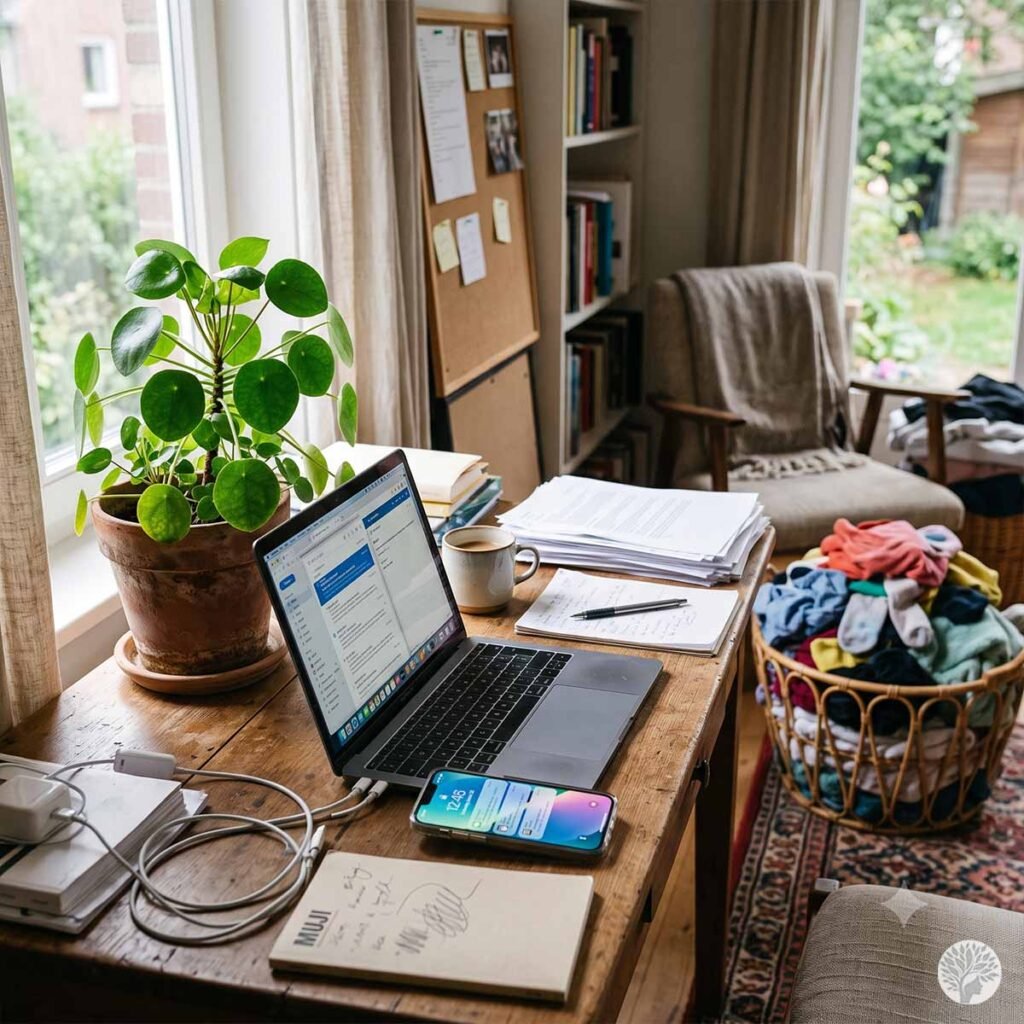
Modern homes are filled with things, quietly and not so quietly, asking for our attention. It is the ping of a new notification, the mounting pile of laundry in the corner, the gridlock of open browser tabs, and the half-finished to-do lists resting on the kitchen counter. We spend our days coordinating a relentless flow of logistical demands. Somewhere in the middle of all that daily noise, many of us stop noticing the slow, silent living things right in front of us.
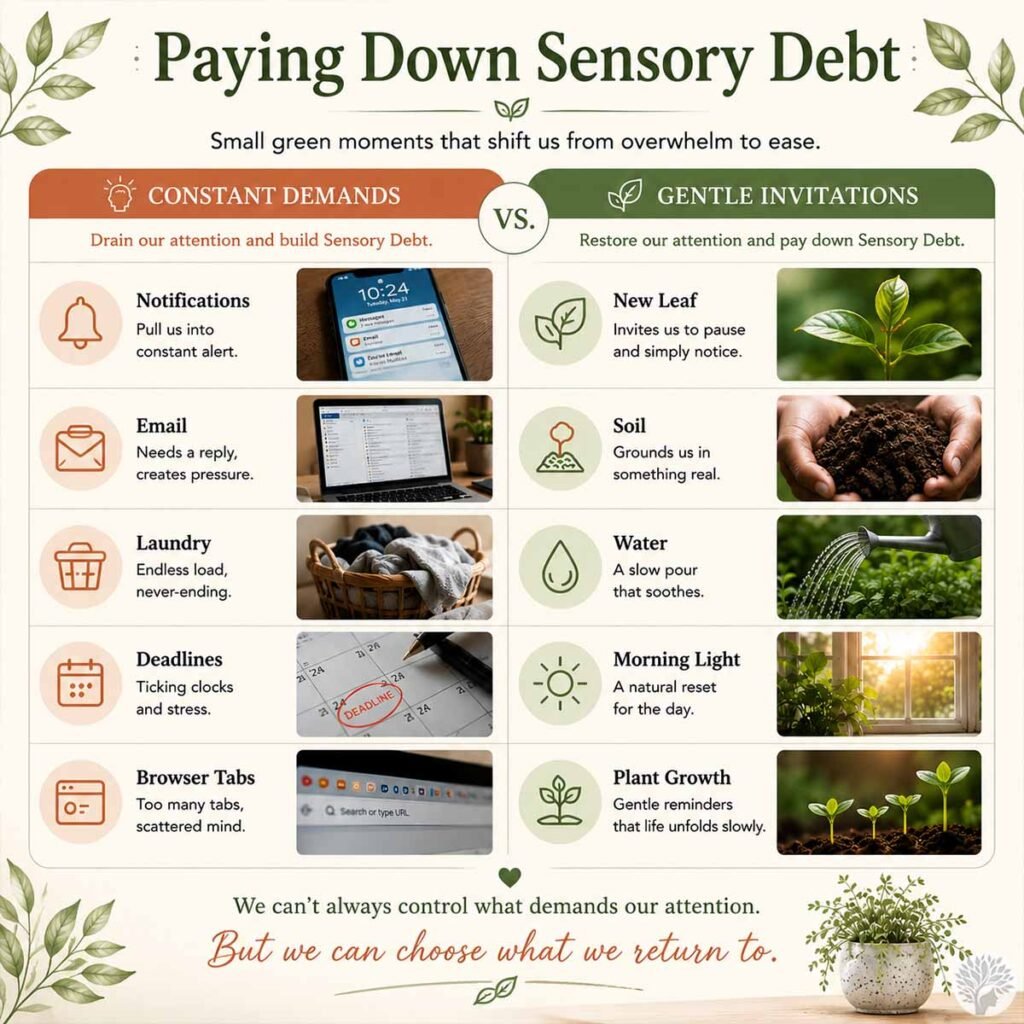
When our environments keep us chronically overstimulated like this, we don’t just get tired,we accumulate what I call Sensory Debt.
It is the quiet depletion that builds when everything around us competes for our attention, leaving our nervous systems entirely overdrawn. We try to budget our way out of it with strict schedules or forced self-care routines, yet we find ourselves stuck in the Management Trap trying to organize away our exhaustion instead of actually changing the quality of our input.
The growing interest in indoor plants for mental health isn’t really about owning more plants. It’s about rediscovering a slower way of paying attention. While many people search for indoor plants for mental health, I’ve come to believe the real benefit isn’t found in the plant itself. It’s found in the relationship we build with living things.
As someone who enjoys tending both balcony plants and a small home garden, I’ve noticed that the moments I spend caring for living things rarely feel like another chore. They often become the quietest part of my day. They gently interrupt the rush. One of my favorite ways to interrupt this sensory overload is a simple practice I call a Living Things Reset.
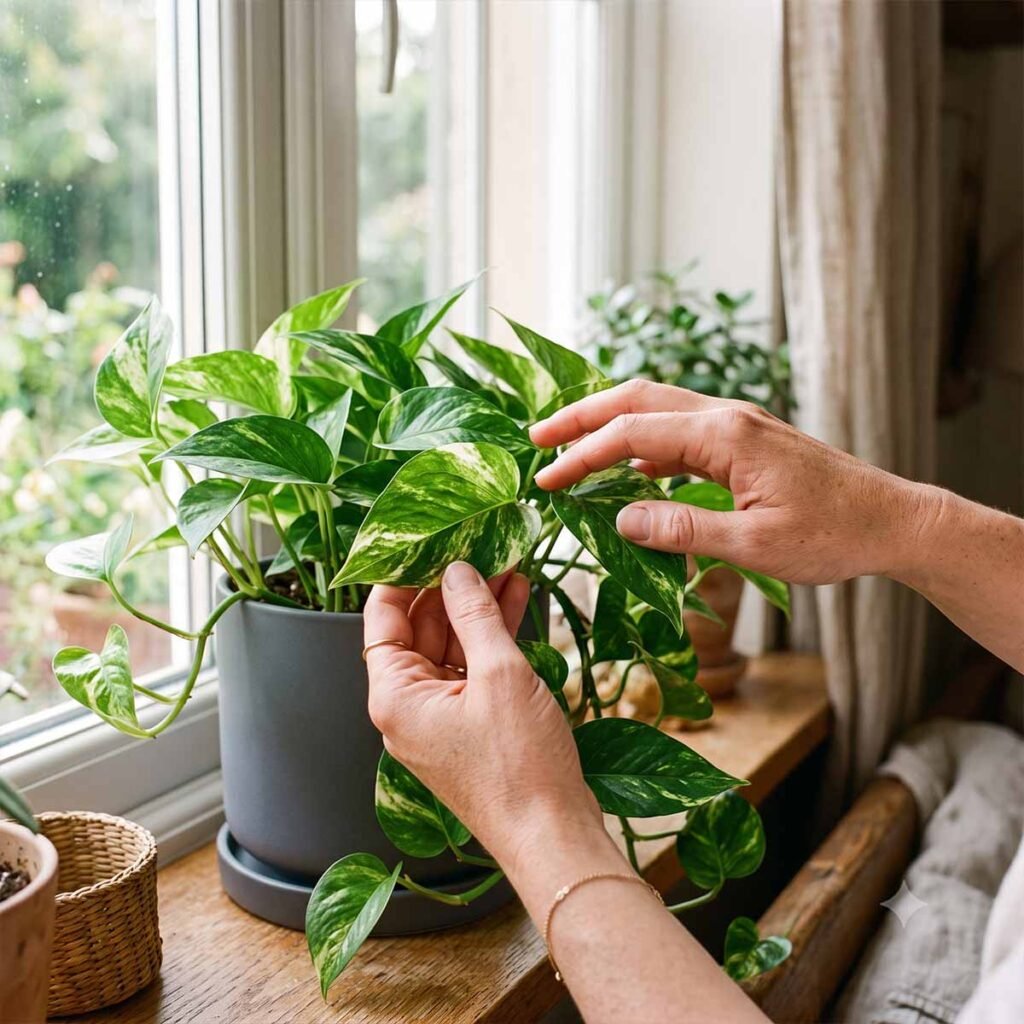
Unlike a screen, a schedule, or a household task, a plant never aggressively shouts for your energy or asks you to over-function. It simply stands as a soft, quiet invitation to step out of the mental noise and pay down your Sensory Debt, one small moment of noticing at a time. That small shift doesn’t change your schedule. It changes your relationship with the moment you’re already in.
The True Cost of Sensory Debt
To understand why a living thing can have such a profound impact on our internal architecture, we have to look closely at what modern life does to our attention. Psychologists often distinguish between two types of attentions, directed attention and involuntary attention.
- Directed Attention: This is the cognitive force we use to work, respond to messages, manage household logistics, and filter out distractions. It requires active, conscious effort. Because it is a finite resource, it drains quickly when we are constantly forced to multi-task or navigate highly stimulating digital environments. When this resource is empty, we experience directed attention fatigue. We become irritable, easily overwhelmed, and mentally clumsy.
- Involuntary Attention: This is the effortless attention captured by natural, complex, and non-threatening environments. When we look at the patterns of leaves, the movement of water, or the shifting shadows of branches, our brains are engaged without being strained. This state allows our directed attention reserves to rest, recharge, and heal.
+-----------------------------------------------------------------+
|                    THE COGNITIVE BALANCE                        |
+-----------------------------------------------------------------+
|  DIRECTED ATTENTION             |  INVOLVED ATTENTION           |
|  - High energy cost             |  - Restorative & effortless   |
|  - Driven by screens & tasks    |  - Driven by nature & texture |
|  - Leads to Sensory Debt        |  - Pays down Sensory Debt     |
+-----------------------------------------------------------------+
When a home is dominated by synthetic textures, bright plastic toys, and glowing rectangles, our brains never find a natural resting place. Every object represents a task to be completed or a piece of data to be sorted. A laundry basket is a reminder of labor; an open laptop is a pipeline to professional or administrative obligations. We walk through our rooms in a state of low-grade, perpetual alertness.
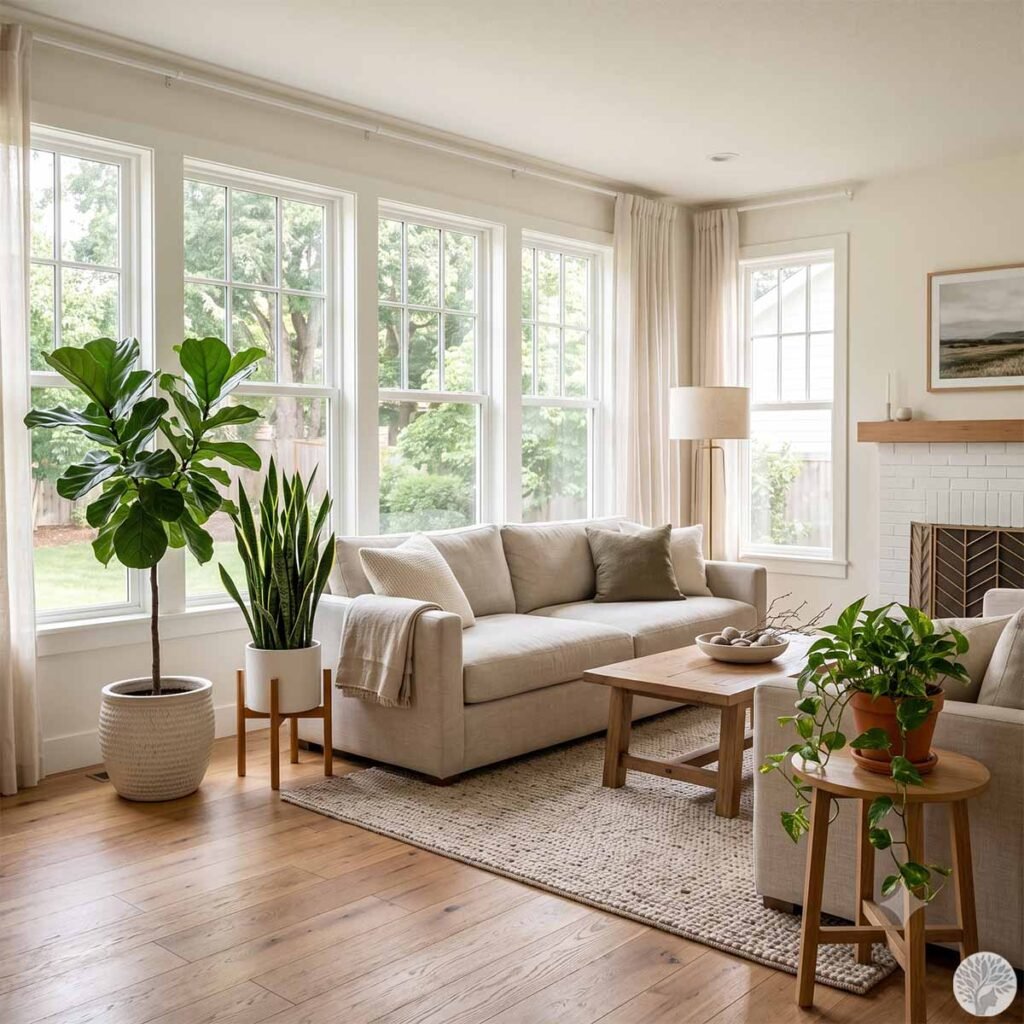
Introducing living greens into this environment breaks up the visual and psychological monoculture of the modern home. A plant does not represent an unfinished project or an incoming message. It operates completely outside the economy of human productivity. By intentionally bringing our focus to a living organism, we switch our brains from the high-cost track of directed attention to the restorative, soft-focus track of involuntary attention. We aren’t checking out or escaping reality. We are returning to an older, more organic way of processing our surroundings.
The Pace of Living Things
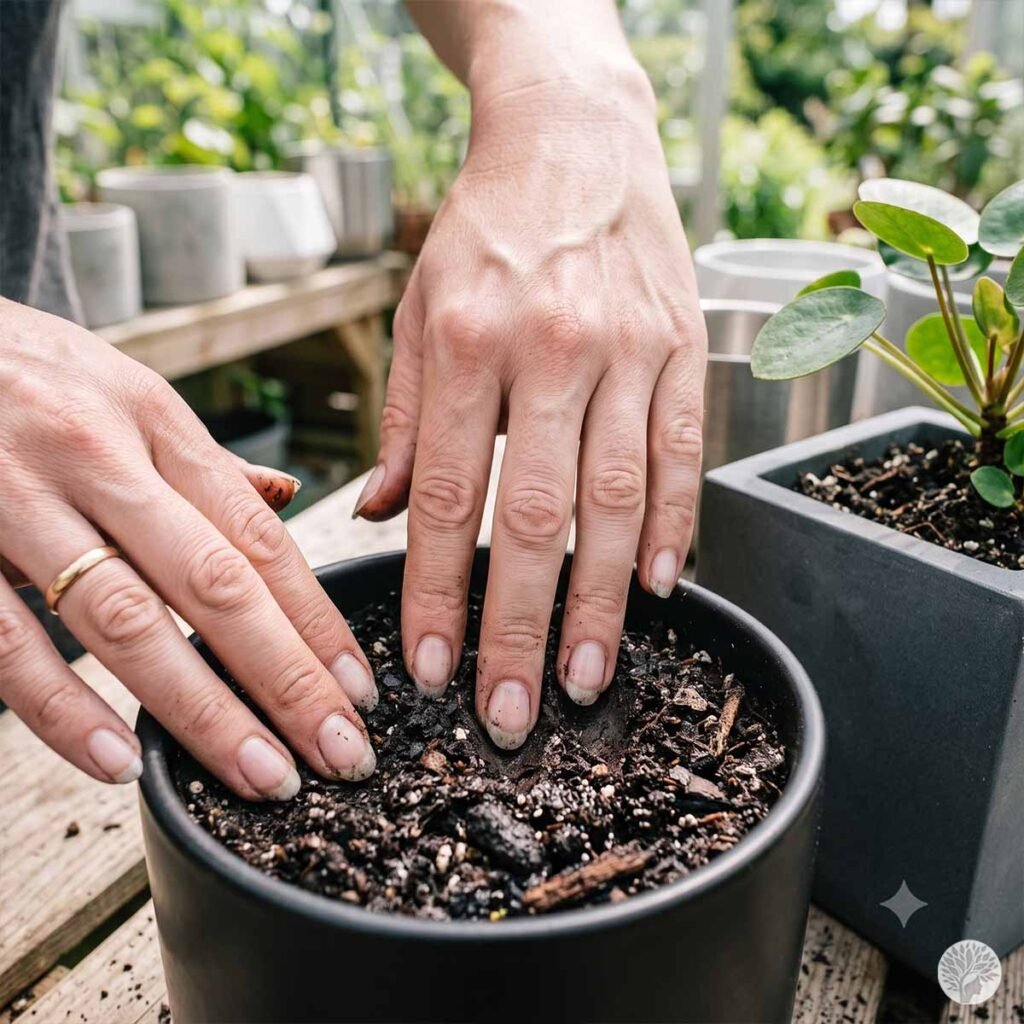
When we step away from our digital devices and turn our attention to plant care, something subtle shifts within our bodies. We are forced to step out of the artificial urgency of our schedules because living things simply cannot be rushed. You cannot hurry a seed or persuade a new leaf to unfurl before it is ready. To interact with them at all, you have to match their speed.
This interaction is profoundly grounding because it relies on real, physical feedback:
Tactile Engagement
Instead of sliding a finger across a frictionless glass screen, your hands engage with complex, varied textures. You feel the cool, granular weight of dark soil, the slight papery friction of a dry leaf, or the clean mist of water settling on a surface. This tactile variety acts as a somatic anchor, drawing your awareness out of the abstract spirals of anxiety and down into the physical nerve endings of your hands.
Visual Softness
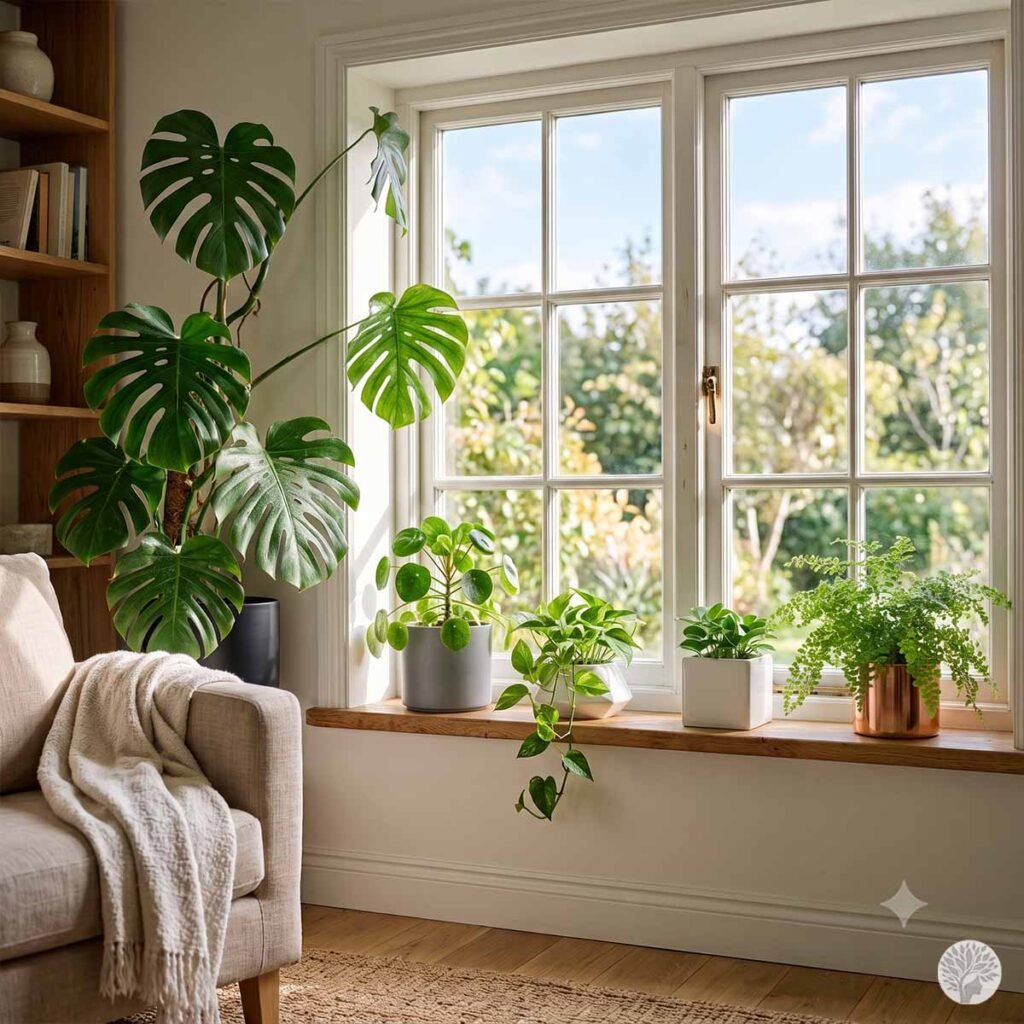
Our eyes spend hours navigating the harsh, sharp lines of digital interfaces, geometric rooms, and starkly lit appliances. The gentle shapes, fractal patterns, and deep colors of living plants offer a profound visual break from the straight lines, glowing screens, and constant reminders of work around us. I think of these small moments as visual softness, a gentle resting place for eyes tired of processing pixels.
Quiet Observation
When you look closely at a plant, your brain steps out of its frantic problem-solving loops. There is no data to process, no metric to hit, and no reply required. You are simply observing micro-changes over time. The slight leaning of a stem toward the morning sun, the unfolding of a tiny new shoot, or a tiny sliver of green breaking through the earth. This practice trains the mind to tolerate stillness, rebuilding our capacity for deep, unhurried focus.
By anchoring our awareness in these small, physical realities, we give our minds permission to rest. We stop managing for a moment, and we begin to notice.
Tiny Green Rituals
None of these rituals take more than a few minutes. Their value isn’t in how long they last, but in how often they gently interrupt the rush of everyday life. You don’t need a massive yard or a sprawling greenhouse to practice them; whether you have a large garden patch and want to learn how to start a small home garden, a sunny balcony, or a single pot on a kitchen windowsill, you can weave these green pauses into the natural rhythm of your day. It is a subtle shift that reminds me of a deeper truth in this life, I am the gardener, yes, but I am also the garden. By leaning into meditation plants, and simple ways to create calm at home, you can easily choose from the 10 best indoor plants for a calm home to start anchoring your days without adding another heavy chore to your plate.
Morning – The Awakening
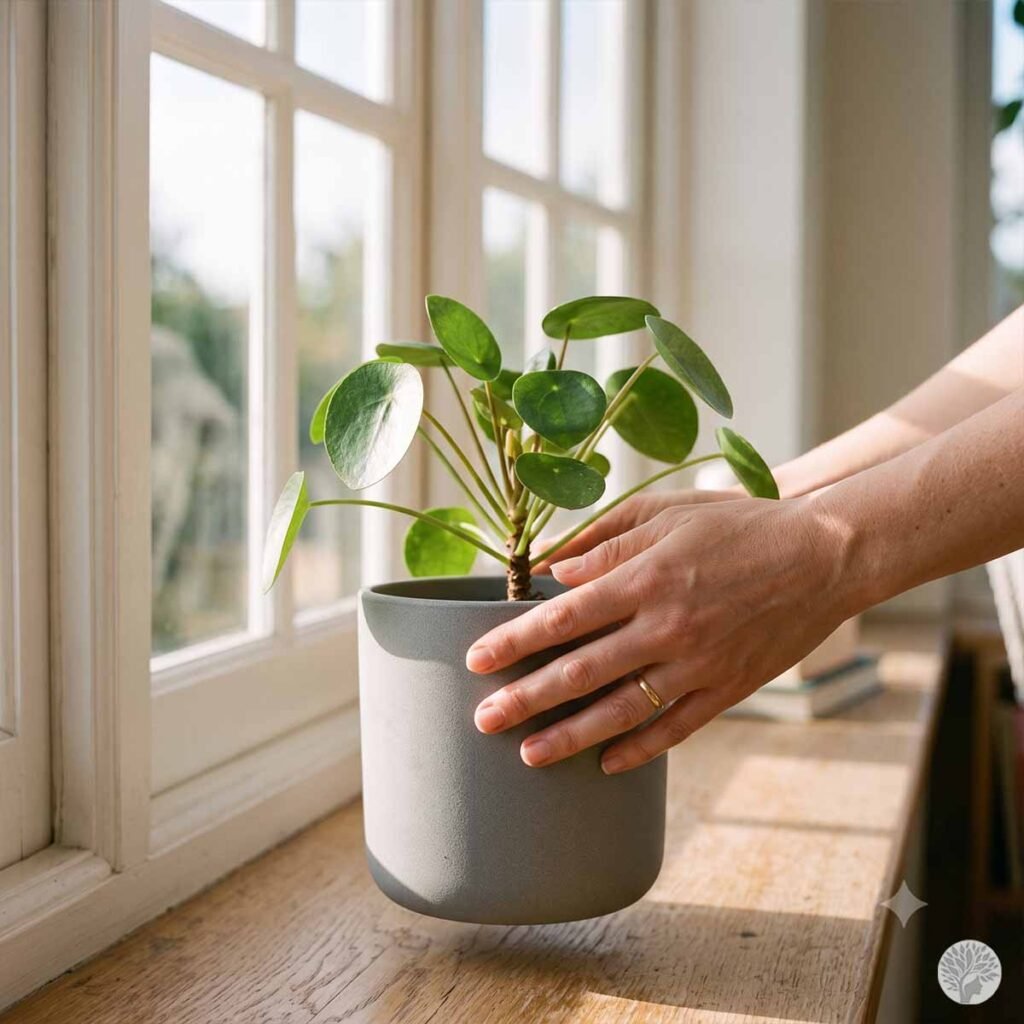
Before the rest of the household wakes up and the daily checklist takes over, use the first light of day to ground yourself. Pull back the curtains and step close to your green spaces. Spend two minutes checking your indoor pots. Gently press your finger an inch into the soil to check its moisture. If it feels dry, pour a slow, steady stream of water, watching it soak into the earth. If the plant has turned away from the window, slowly rotate the pot to let the leaves greet the morning light evenly. This acts as a screen-free anchor, establishing a quiet pocket of presence before the digital world demands your attention.
Afternoon – The Interruption
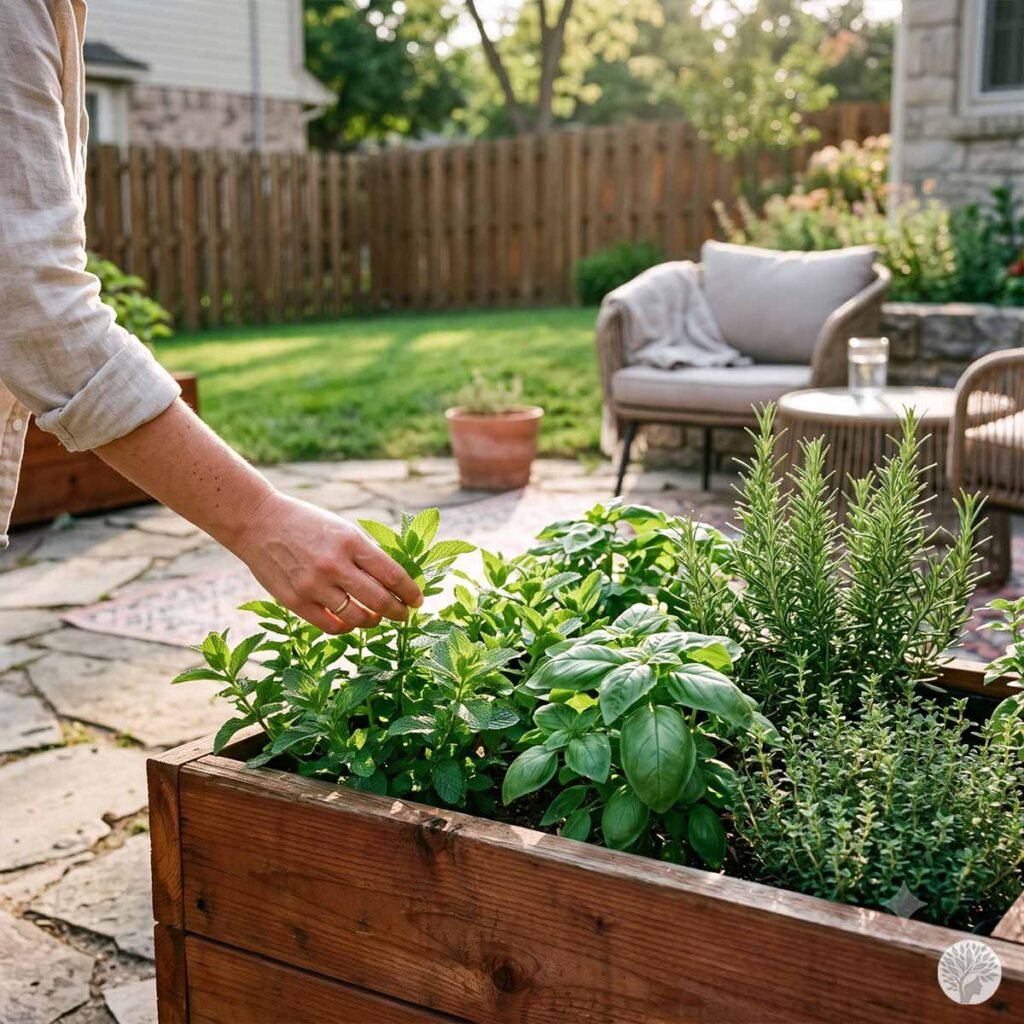
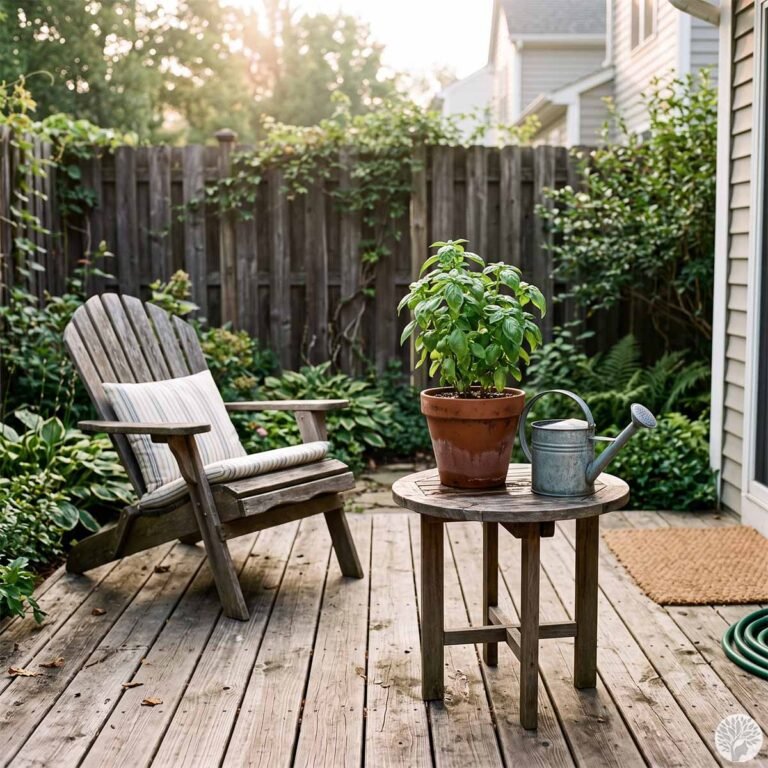
Midday is often the peak of our mental clutter. Between work, household chores, or the impending school rush, our minds are prone to running on overdrive. Step away from your desk or the kitchen counter and step outside onto a balcony, porch, or windowsill. Take a pair of shears or use your fingers to tend to aromatic plants like Tulsi, Mint, or Jasmine. Pause long enough to notice the fragrance released when you gently brush a leaf or flower. Spend a moment deadheading any fading blooms, or gently wiping the afternoon dust off broad leaves. This immediate sensory input breaks your mental momentum and resets your physical pacing.
Evening – The Slow Down
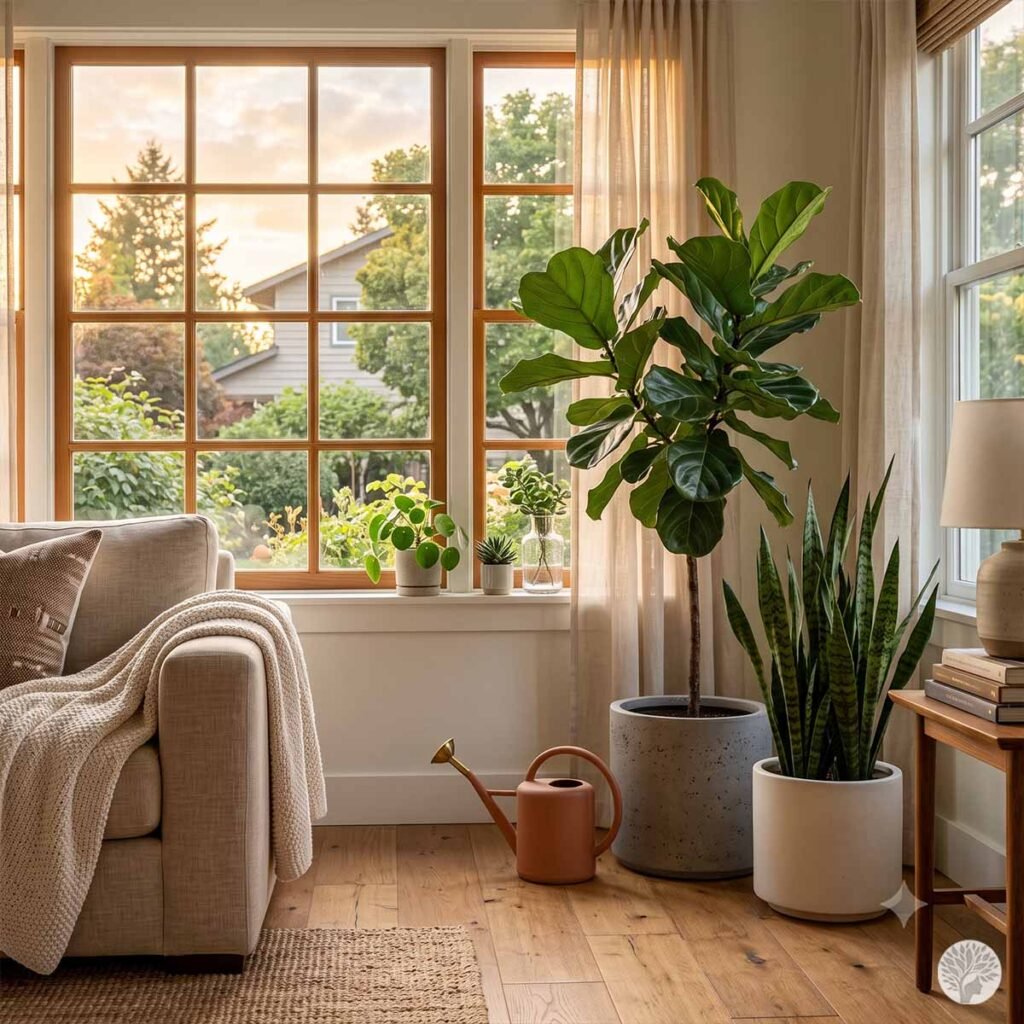
As the day winds down, your home’s energy should transition from a state of constant doing to a state of gentle being. Take a slow walk through your garden or your dedicated indoor green corner. Do not look for chores. Do not look for projects. Simply notice. Fill a small watering can for tomorrow morning, letting the water sit at room temperature. Take a close look at the plants you checked at dawn. Notice if a new leaf has opened a fraction of an inch further, or watch how the evening shadows soften the textures of the leaves. This signals a transition to your nervous system, allowing your mind to power down for the night.
Overcoming the “Black Thumb” Anxiety
One of the greatest barriers to establishing these restorative rituals is the fear of failure. Many mothers tell me, “I would love to have plants, but I kill everything I touch. Caring for another living thing just feels like another opportunity for me to fail.”
This anxiety comes directly from the Management Trap. We approach plant care with the same performance-driven mindset we apply to our schedules, our parenting, and our careers. We think we need to be perfect managers of our plants, and if a leaf turns yellow or a plant dies, we take it as proof of our inadequacy.
But plants do not demand perfection; they simply require relationship. In nature, plants drop leaves, experience dormancy, and sometimes die to make room for new growth. A yellow leaf isn’t a performance review; it is simply a piece of communication. It is a silent message saying, “A bit too much water here,” or “I could use a little more light over in that corner.”
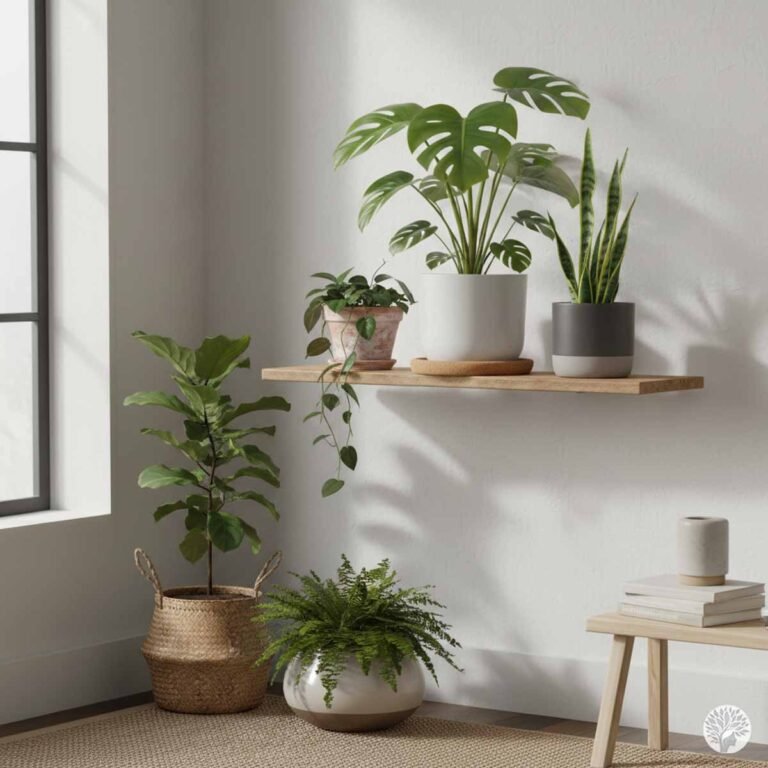
When we reframe plant care from a test of competence to an exercise in listening, the anxiety melts away. Choosing incredibly resilient varieties allows us to practice this listening with very low stakes. A Pothos will vine beautifully even if you forget it for a week; a Snake Plant thrives on neglect, standing tall and steady in the dimmest corners of a room. When these plants struggle, they don’t do so to punish us. They invite us to try again, offering a gentle space where mistakes are met not with institutional consequences, but with the quiet opportunity to learn, adjust, and grow.
Sharing the Quiet
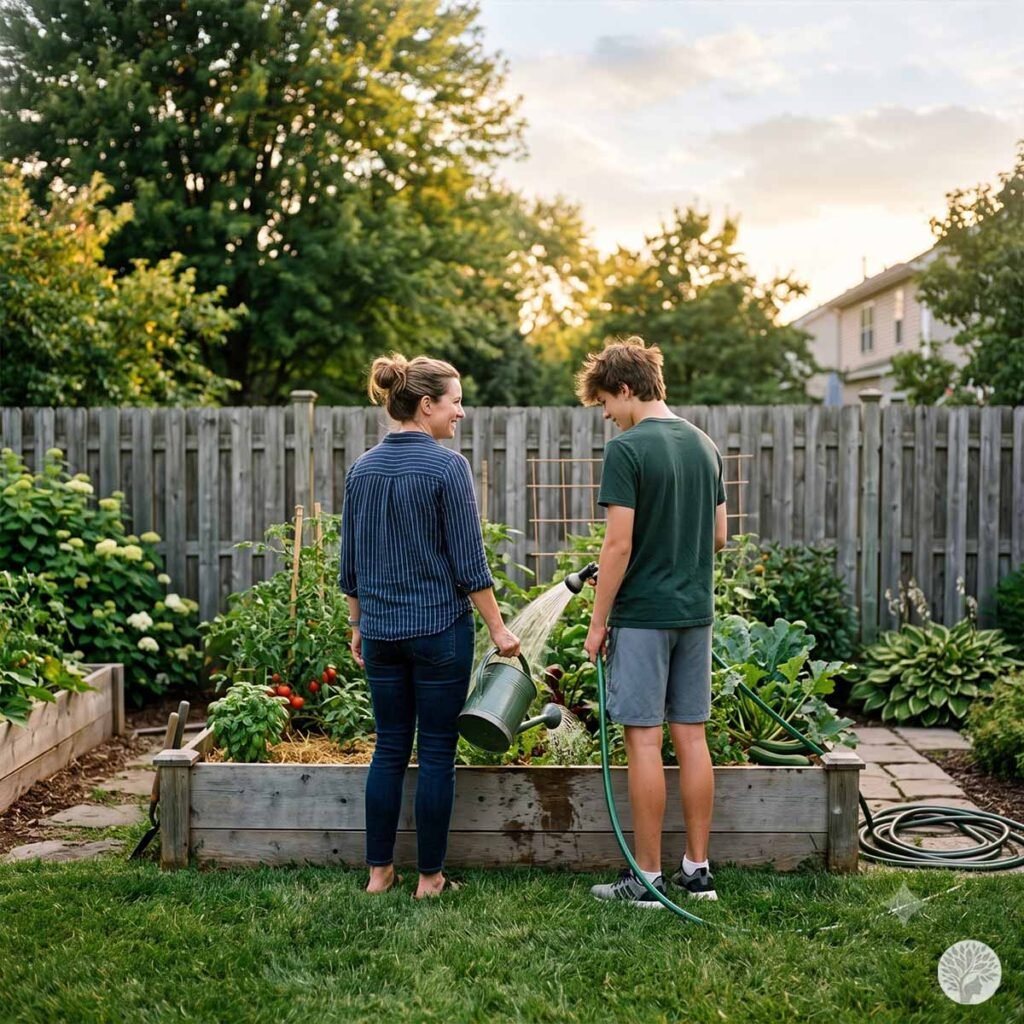
For mothers, the pressure to constantly guide, teach, and communicate can sometimes feel like another layer of the Management Trap. We try so hard to manufacture deep, meaningful connections with our children, often asking direct face-to-face questions that inadvertently make teenagers or toddlers close up.
I’ve noticed that some of our best conversations happen when we’re standing side by side instead of face to face.
On the days my son joins me to care for our plants, the shift in dynamic is immediate. The pressure drops out of the room. We aren’t looking at each other, trying to force an emotional breakthrough; instead, we are both looking at a living thing that requires our gentle care.
Whether it’s watering herbs with a toddler, picking tomatoes with a school-aged child, or quietly tending a balcony garden with a teenager, caring for something living often removes the pressure to talk while making space for conversation. Plants never hurry a conversation. They give children, teenagers, and adults something gentle to look at while difficult words slowly find their way out at their own unhurried pace.
And sometimes, we don’t talk at all. We simply water the plants together, moving from pot to pot in tandem. That shared quiet has its own kind of deep, restorative connection. One that requires no management, no lecturing, and no performance.
Growing Gently
A calmer home rarely begins with dramatic lifestyle overhauls or perfect, unblemished routines. More often, it grows from one living plant, one quiet pause, and one small moment of noticing. When we begin matching the slower pace of the living things around us, we slowly discover a calmer pace within ourselves. Sometimes, the smallest living things quietly remind us how to live more gently ourselves.
Frequently Asked Questions
Can indoor plants improve mental well-being?
Indoor plants don’t replace professional mental health care, but caring for living things can create calming daily rituals that help many people slow down, become more present, and reduce feelings of overwhelm.
How many indoor plants do I need?
One is enough. The goal isn’t to fill your home with plants. It’s to create one small space that gently invites you to pause.
What are the easiest plants for beginners?
Pothos, snake plants, peace lilies, spider plants, and kitchen herbs like mint or basil are all good places to start.
Further Reading
If you’d like to explore this topic further and deepen your mindful plant care journey, these three books treat the act of nurturing life as a beautiful path to personal restoration:
- Mindfulness in the Garden: Zen Tools for Digging in the Dirt by Zachiah Murray: A gentle, slow-paced collection of simple verses (gathas) designed to help you align your mind and body while tending to the earth.
- The Art of Mindful Gardening: Sowing the Seeds of Meditation by Ark Redwood: Written by a veteran horticulturalist, this book beautifully illustrates how routine plant care tasks across the seasons can be transformed into deep moments of mental grounding.
- Growing Your Mental Health: Harnessing the Power of Plants for Emotional Well-Being by Carissa Weber: A comforting look at the innate relationship between plant care and emotional health, outlining how slow, intentional routines with living greens serve as an authentic emotional reset.
We can't always control what demands our attention in a chaotic world. But we can make a mindful choice about what we return to.
Love ya, stay mindful!