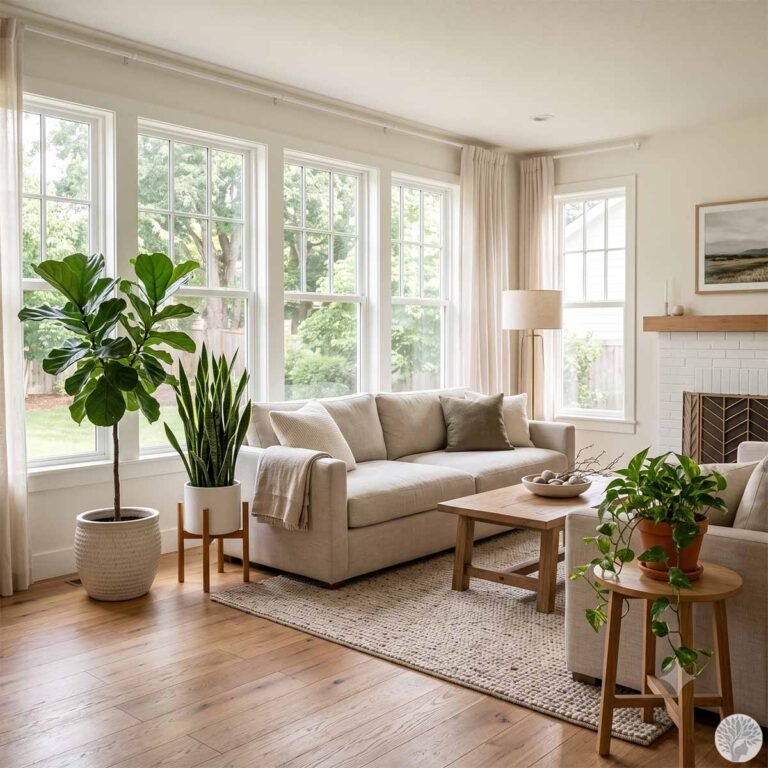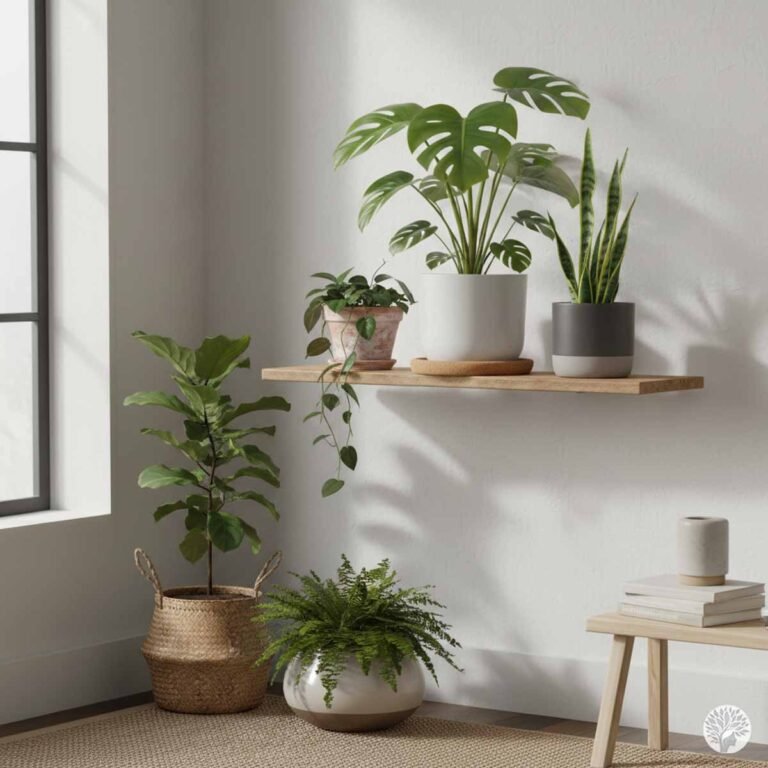

To start a small home garden, begin by selecting an accessible growing space that gets 4 to 6 hours of sunlight, choosing 3 to 5 low-maintenance plants (like mint, marigolds, or basil), and gathering minimal tools like a hand trowel and a gentle watering can. Focusing on a low-stakes, 5-minute daily care routine builds confidence and reduces stress rather than requiring a perfect, high-maintenance setup.
Disclaimer: This post contains affiliate links for tools I’ve carefully curated or used in my own sanctuary; I may earn a small commission at no extra cost to you. Read my full disclosure.
Hey Beautiful!
The hardest part of starting a home garden isn’t growing plants. It’s believing you have enough time, energy, or confidence to begin.
Over the years, I’ve found that the smallest gardens have often become the ones I visit most consistently. Yet for many of us, our homes have inadvertently become logistical hubs. Between managing a household, responding to endless digital alerts, and navigating a relentless flow of daily tasks, our minds are kept in a state of constant alertness. It is easy to accumulate a heavy sense of exhaustion simply from coordinating the day. When our days are driven by this pressure, our homes can turn into overstimulated environments where our brains rarely find a natural place to rest.
The growing interest in starting a green space isn’t about adding another chore to your plate. It is about creating a quiet counterbalance to that modern noise.
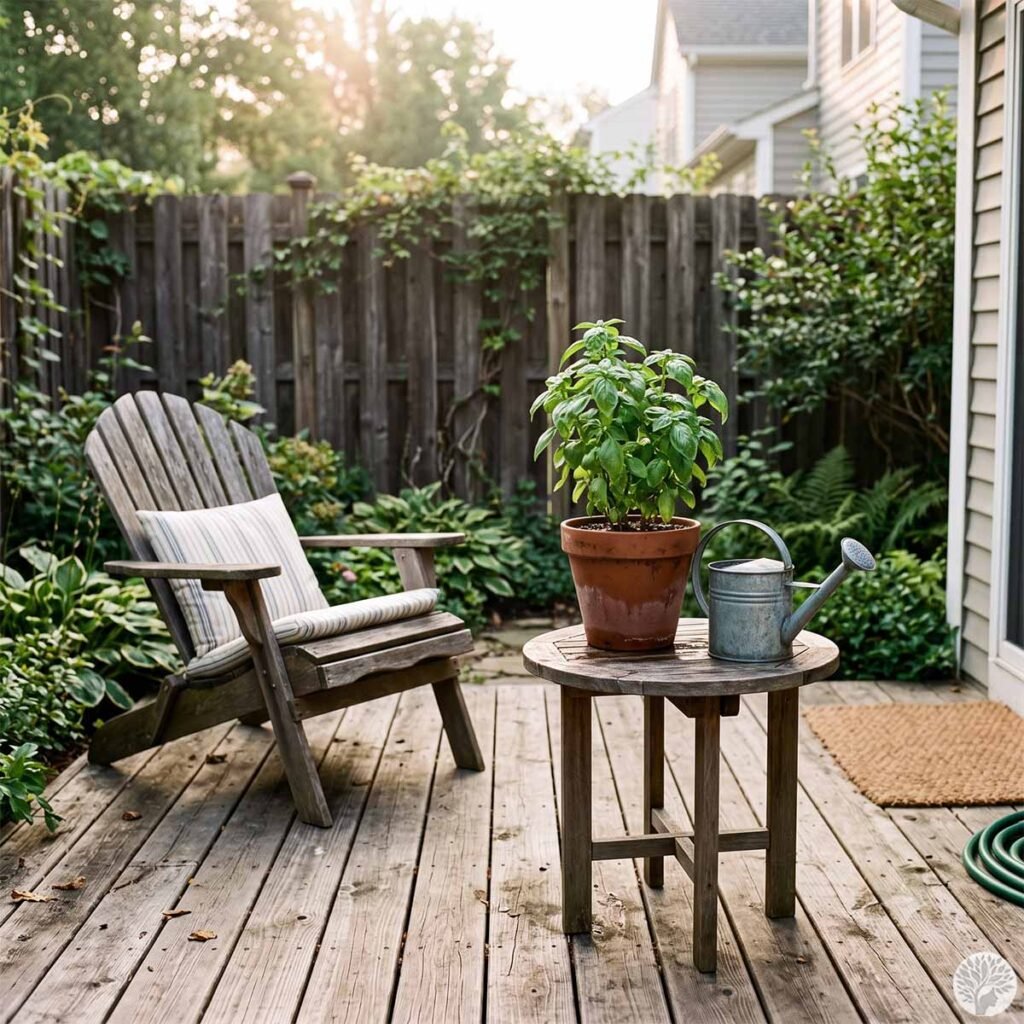
Imagine walking into your kitchen tomorrow morning and seeing the first tiny basil leaf you grew yourself. Imagine making tea while the morning light falls across one small terracotta pot, noticing a new, vibrant green leaf before you ever check your phone. That is where a home garden begins. Nothing complicated. Just one small vision.
Starting a small garden is an invitation to step away from glowing screens and constant notifications, and return to a slower rhythm where growth unfolds one day at a time. You are not trying to cultivate a flawless botanical display, you are simply creating a slow, living space where your soul has permission to breathe.
You are entirely capable of starting exactly where you are today.
What My First Garden Looked Like
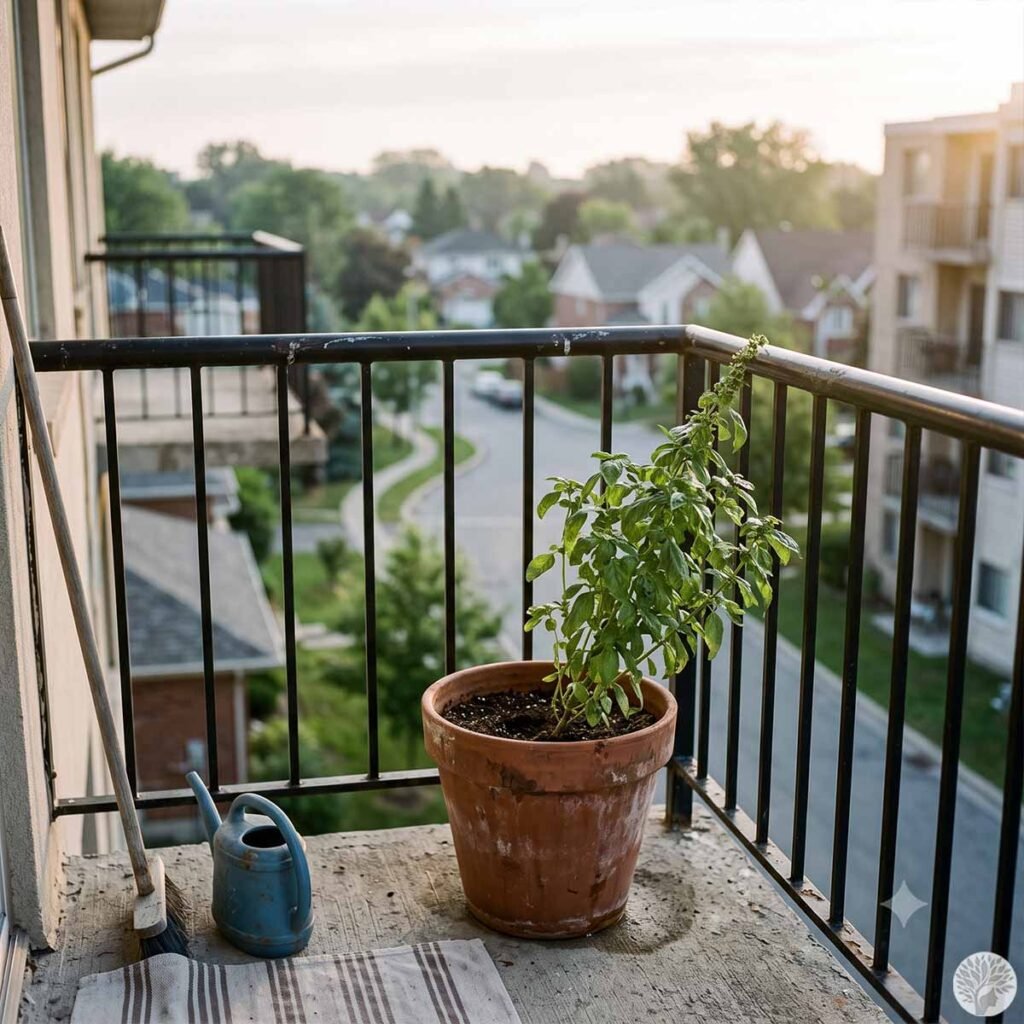
My first garden wasn’t beautiful. It didn’t look like a curated social media feed or a designer magazine spread. It was a single, slightly chipped terracotta pot sitting on a cramped balcony corner. The basil I planted leaned heavily to one side, desperately reaching for whatever sunlight managed to cut through the neighboring awning.
I forgot to water it twice in the first month. Then, out of pure panic, I overwatered it until the soil turned into an oversaturated marsh. I had absolutely no idea what I was doing, and I spent the first few weeks convinced I was going to kill it.
But every morning, before the rest of the house woke up and the daily logistics took over, I walked out to that balcony with my coffee mug. I stopped looking at my phone first thing. Instead, I looked for one new leaf. Somewhere along the way, that messy, imperfect little pot stopped being a project and became my sanctuary.
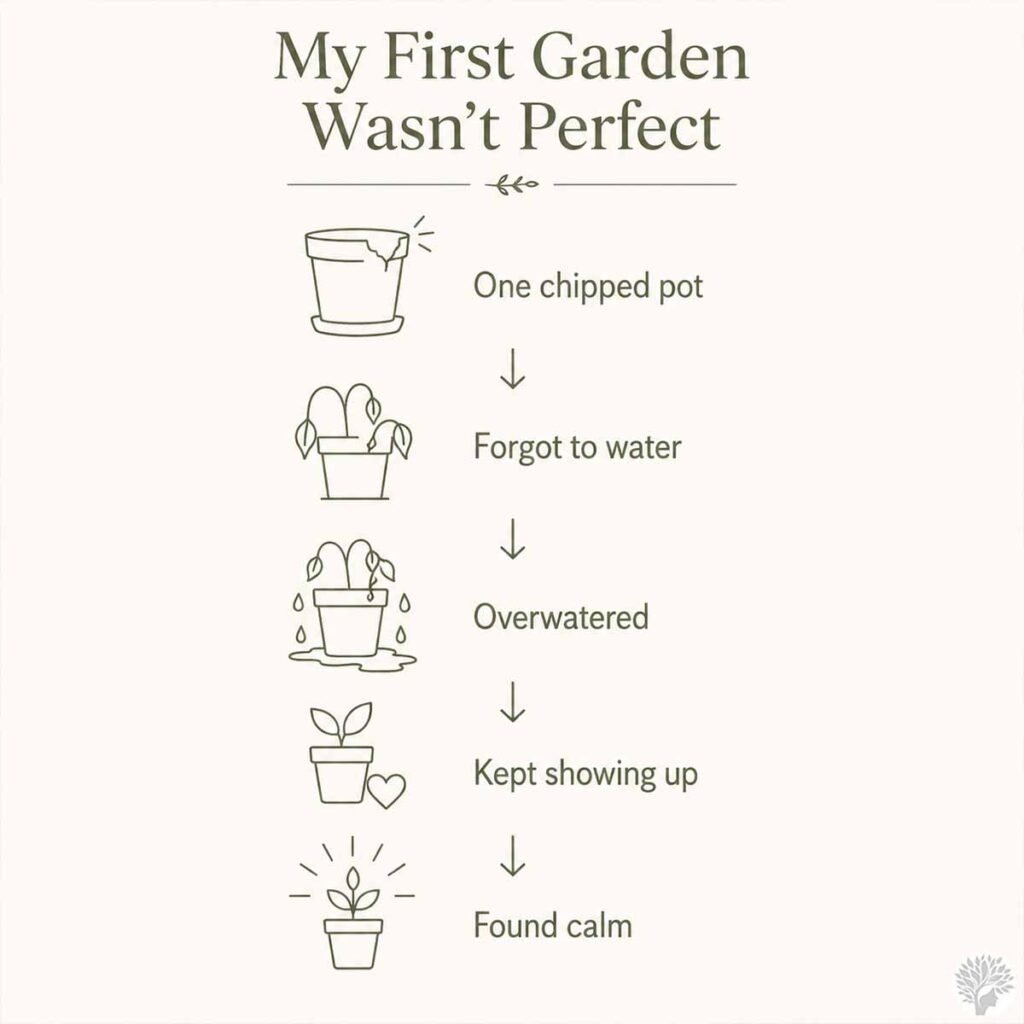
🌿 The smallest garden in your home may become the quietest place in your day.
Before You Buy Anything Do The Observation Walk
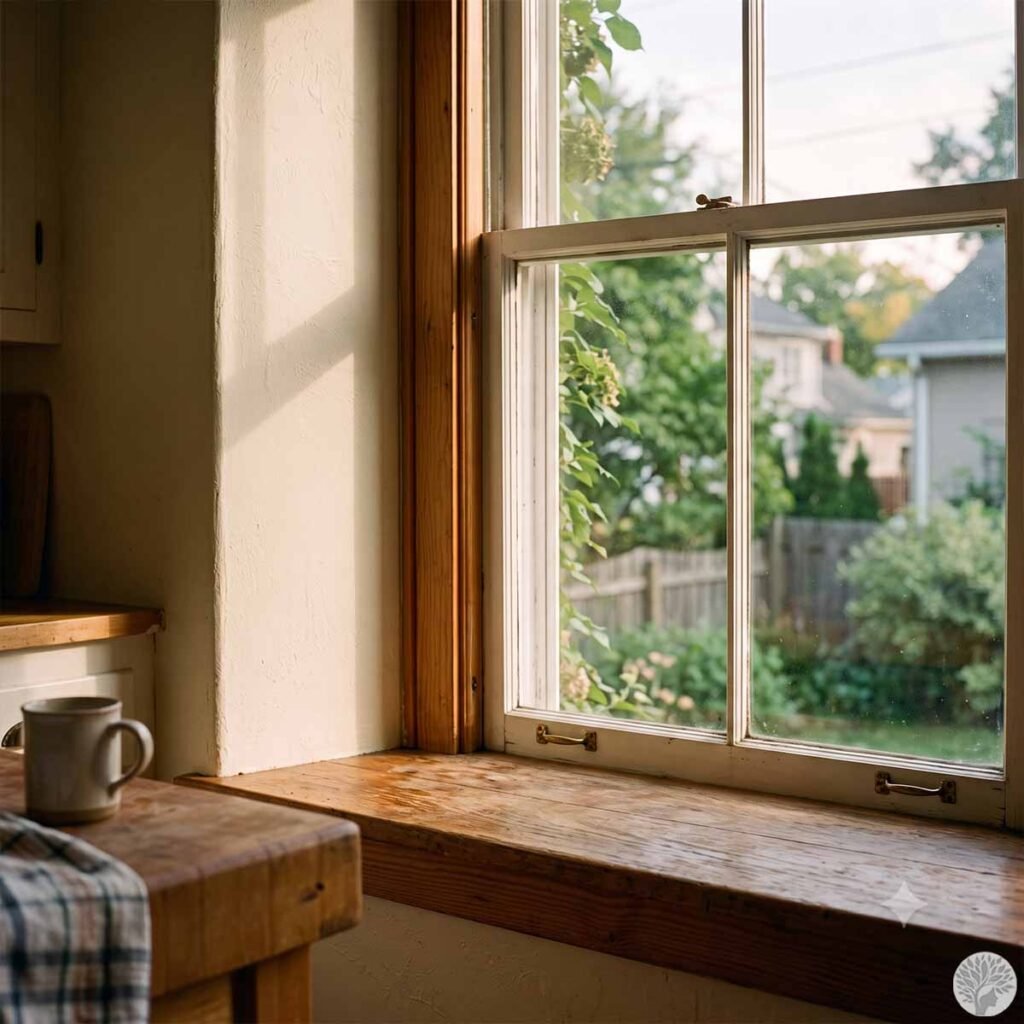
When the inspiration to garden strikes, our immediate instinct is usually to head straight to the nursery or load up an online cart with starter trays and random seed packets. This initial burst of purchasing energy feels like progress, but it often lands us squarely back into the Management Trap. Before we even have a single root in the soil, we have inadvertently created a new inventory of items to organize, store, and worry about.
To build a garden that serves your peace of mind rather than your stress levels, you must start with a simpler, cost-free step and that is the observation walk.
Sometime this week, leave your phone on the kitchen counter, empty your hands, and take a slow walk around your living spaces. Don’t take notes. You are simply scouting for where life naturally fits into your current daily flow. Pay attention to three specific elements:
- Notice where the sunlight naturally falls. Observe which windowsills, balcony ledges, or porch steps catch the bright morning light, and where the intense afternoon sun tends to. Catalog the light that already exists.
- Notice where you naturally pause. Where do you stand while your morning tea brews? Which window do you look out of while folding laundry? Where do you sit when you finally take a breath at the end of the afternoon?
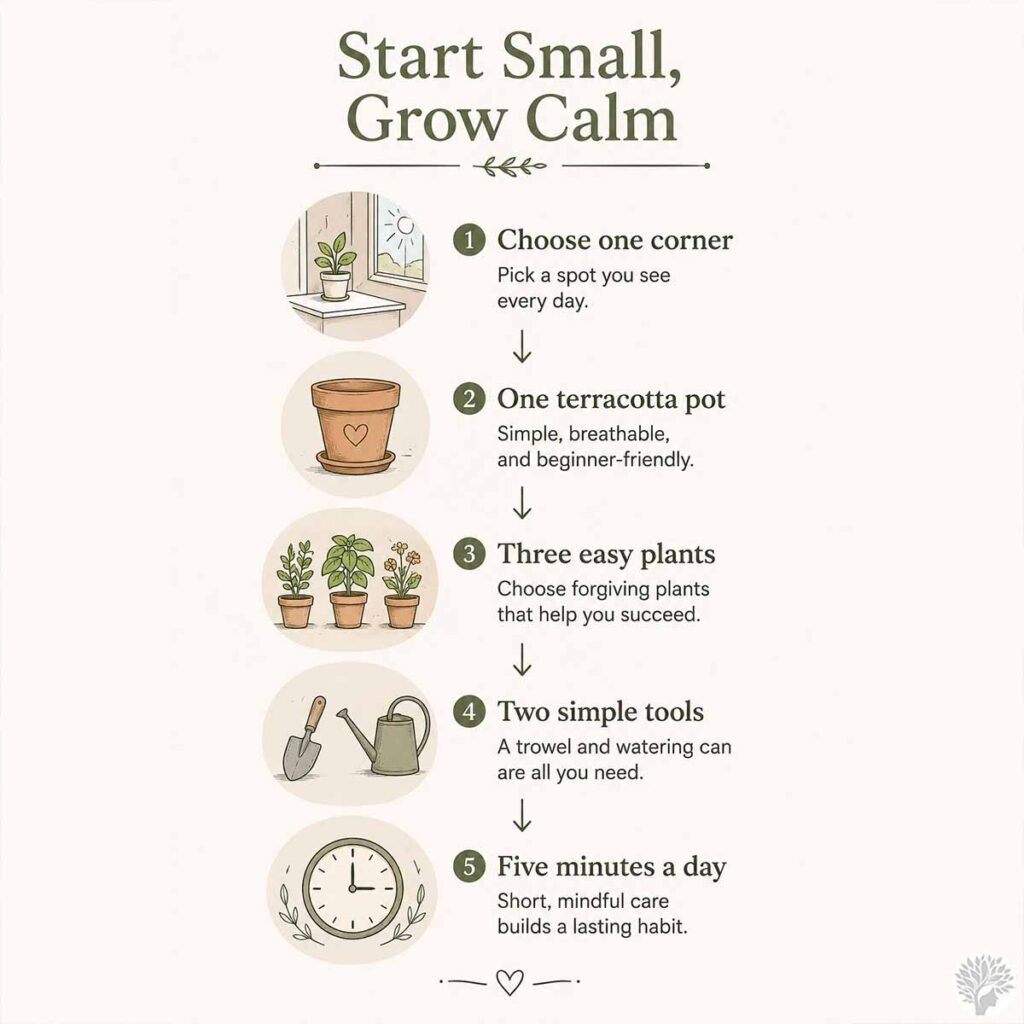
- Identify a single corner you look at every single day. Find a stark window ledge, an empty step, or a corner of the counter that could benefit from a dose of organic texture and living color.
TMML Principle of Proximity Breeds Presence
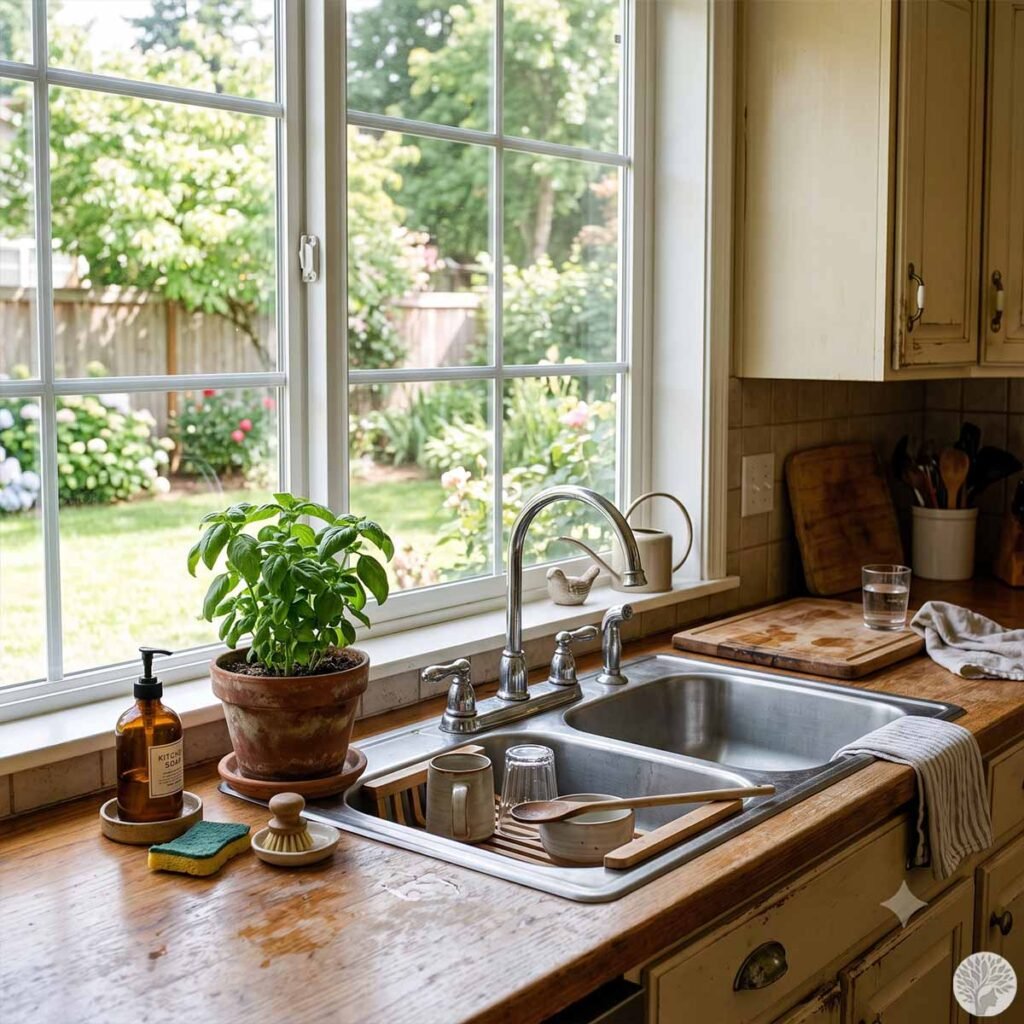
If you already walk past your plants every day, you are far more likely to care for them.
Choosing a space that naturally fits into your day removes the friction of a new routine and drastically lowers your daily Cognitive Load.
Start Small Enough That You Enjoy It
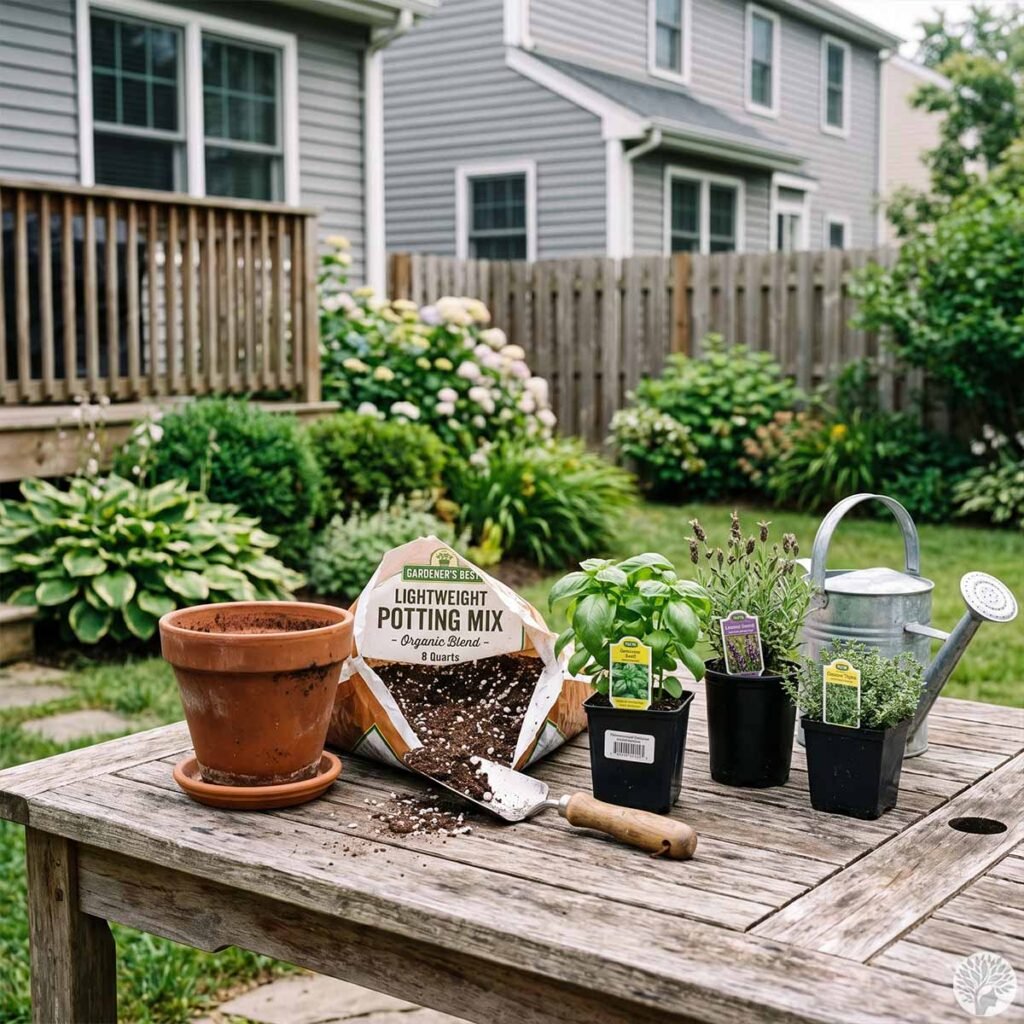
The most common reason beginner gardens struggle is scale. We mistake our enthusiasm for capacity and buy a dozens-deep tray of seedlings that require complex scheduling and endless weeding. Within weeks, the garden becomes a second job that we are failing at. To protect your energy, your first garden space needs to be small enough that it feels entirely manageable even on your hardest, most exhausting days.
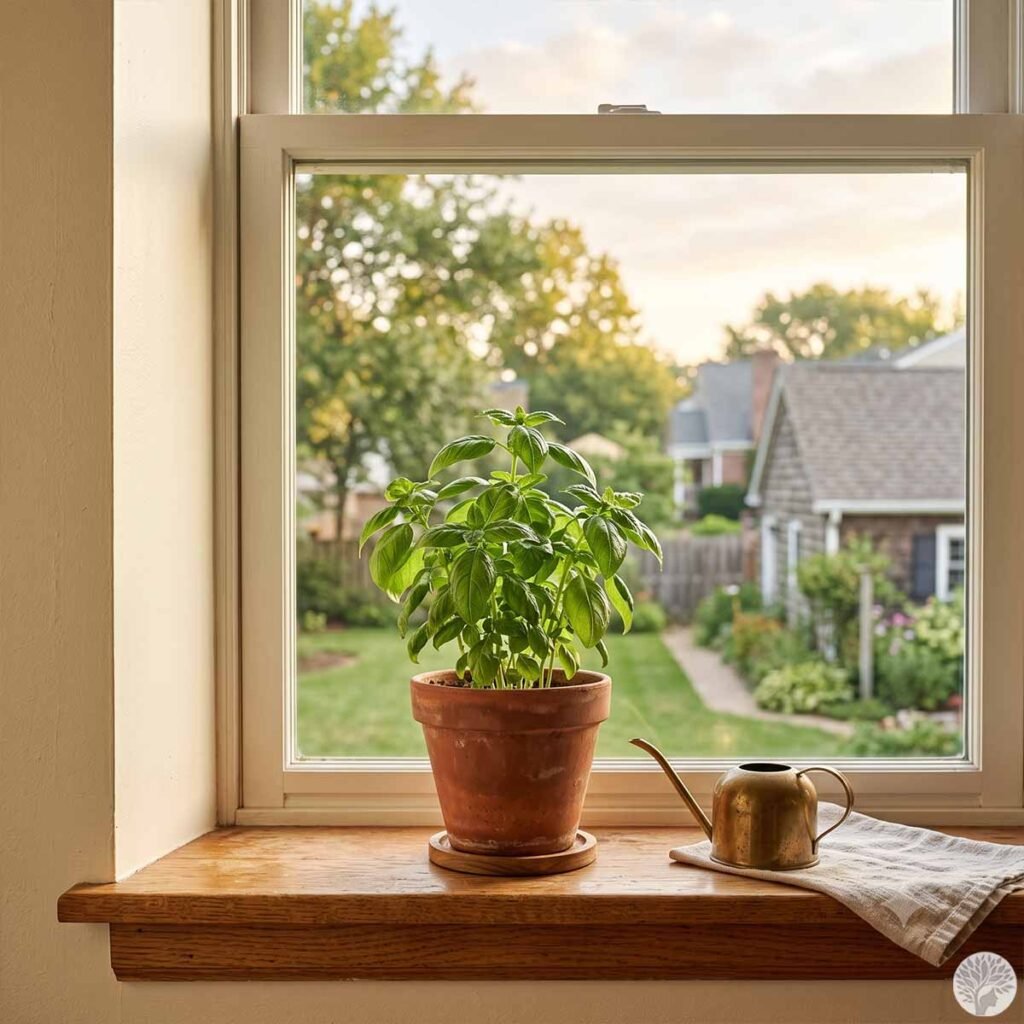
Whether your observation walk led you to a sunny kitchen windowsill, a single patio step, or a tiny balcony corner, embrace that space fully. A windowsill garden is a highly concentrated, easily accessible pocket of calm where you can check on your plants in your slippers.
When choosing containers, skip the complicated setups and look for classic terracotta pots or breathable fabric grow bags, which naturally help excess moisture escape and act as a safety net against accidental overwatering. Fill them with a single bag of high-quality, lightweight potting mix. Avoid heavy ground dirt from your backyard, which compacts tightly inside a container and suffocates delicate root systems. A lightweight mix ensures loose, aerated soil, giving your beginner plants a gentle, successful start.
The Confidence Setup
| The Logistics Trap | The Mindful Garden |
| • Overwhelming scale | • One accessible, small spot |
| • High-maintenance tools | • Minimalist, intuitive tools |
| • Heavy backyard ground dirt | • Lightweight container potting mix |
| • Performance-driven mindset | • Low-stakes, gentle progress |
Beginner Shopping Checklist
Keep this list minimal and intentional. You do not need an entire aisle from the home improvement store to begin growing calm:
- [ ] 1 classic terracotta pot or fabric grow bag (with drainage holes)
- [ ] 1 small bag of high-quality, lightweight potting mix
- [ ] 1 ergonomic hand trowel
- [ ] 1 long-spout watering can or gentle mister
- [ ] 3 beginner-friendly success plants
Choose Plants That Match Your Life
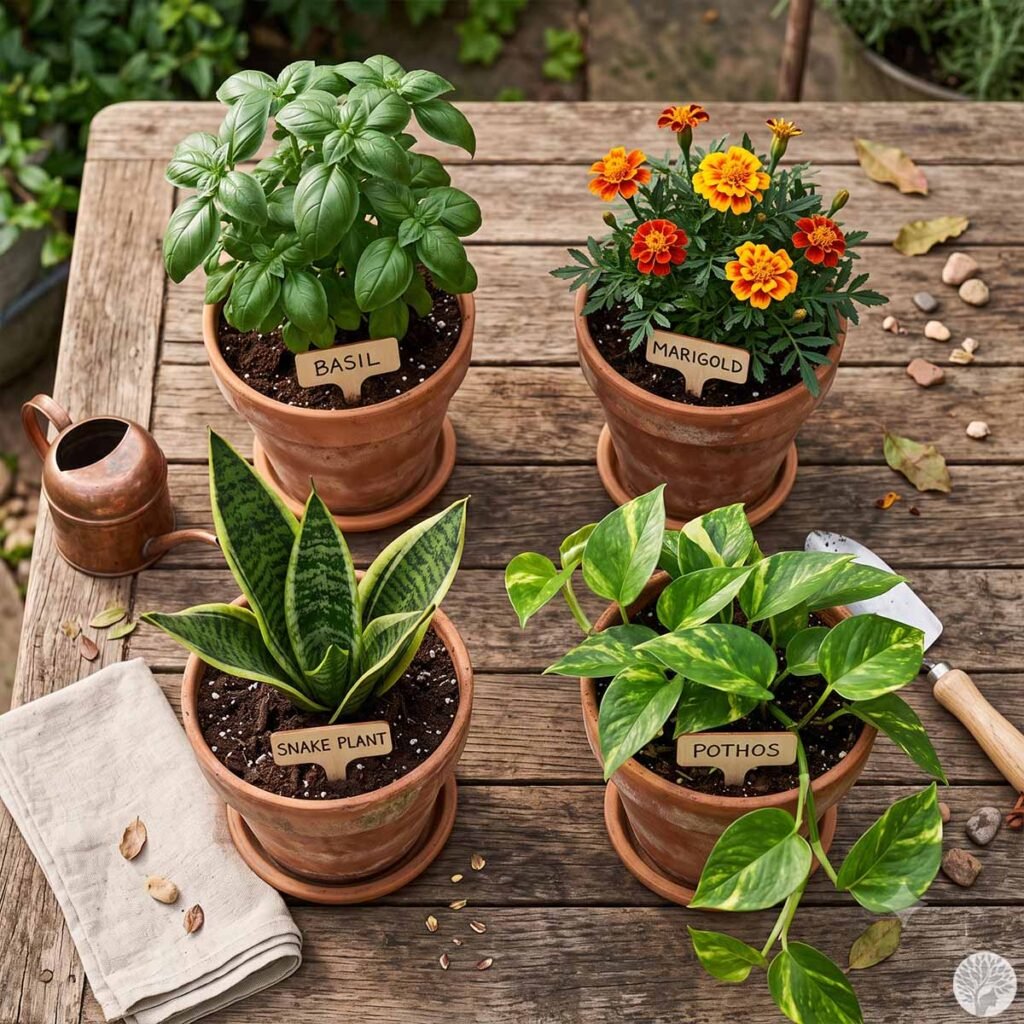
Organizing your plant choices by what your household and your nervous system actually need transforms plant selection from a guessing game into an exercise in personal alignment.
If you love slow, ancestral cooking
Focus on highly resilient, aromatic kitchen herbs like Mint and Basil. Mint is nearly impossible to kill, while Basil will vividly wilt the moment it is thirsty and bounce back completely within an hour of receiving a drink. Tending them creates a direct, beautiful connection between your quiet moments outside and the nourishing, simple meals you prepare for your family.
- Beginner Confidence: ★★★★★ (Ultra-Forgiving)
If you want a calmer view
Choose forgiving flowering plants like Marigolds, Pansies, or Nasturtiums. They require no expert pruning or precise feeding to show their color, just sunshine and a steady sip of water. Introducing these bright, organic textures breaks up the visual monotony of modern interiors and introduces an instant layer of Visual Silence.
- Beginner Confidence: ★★★★☆ (High Success)
If you travel often or feel entirely overwhelmed
You need plants that thrive on an absolute lack of hyper-management. Succulents, Pothos, or Snake Plants are your best friends. A Snake Plant will happily forgive you if you forget to water it for weeks, while a Pothos will trail beautifully down a shelf with minimal attention. These choices allow you to build immediate confidence with virtually zero stakes.
- Beginner Confidence: ★★★★★ (Thrives on Neglect)
If you have children or teenagers
Look for plants that offer dramatic tactile feedback or rapid cycles. Lamb’s Ear is magnificent for young children because its leaves feel like soft velvet felt. Cherry Tomatoes grown in a patio pot provide an exciting reward for school-aged kids and teenagers. Caring for these plants side-by-side removes the pressure to force meaningful conversations, allowing quiet connection to unfold naturally.
- Beginner Confidence: ★★★★☆ (Engaging & Resilient)
Tools Framed Around the Experience
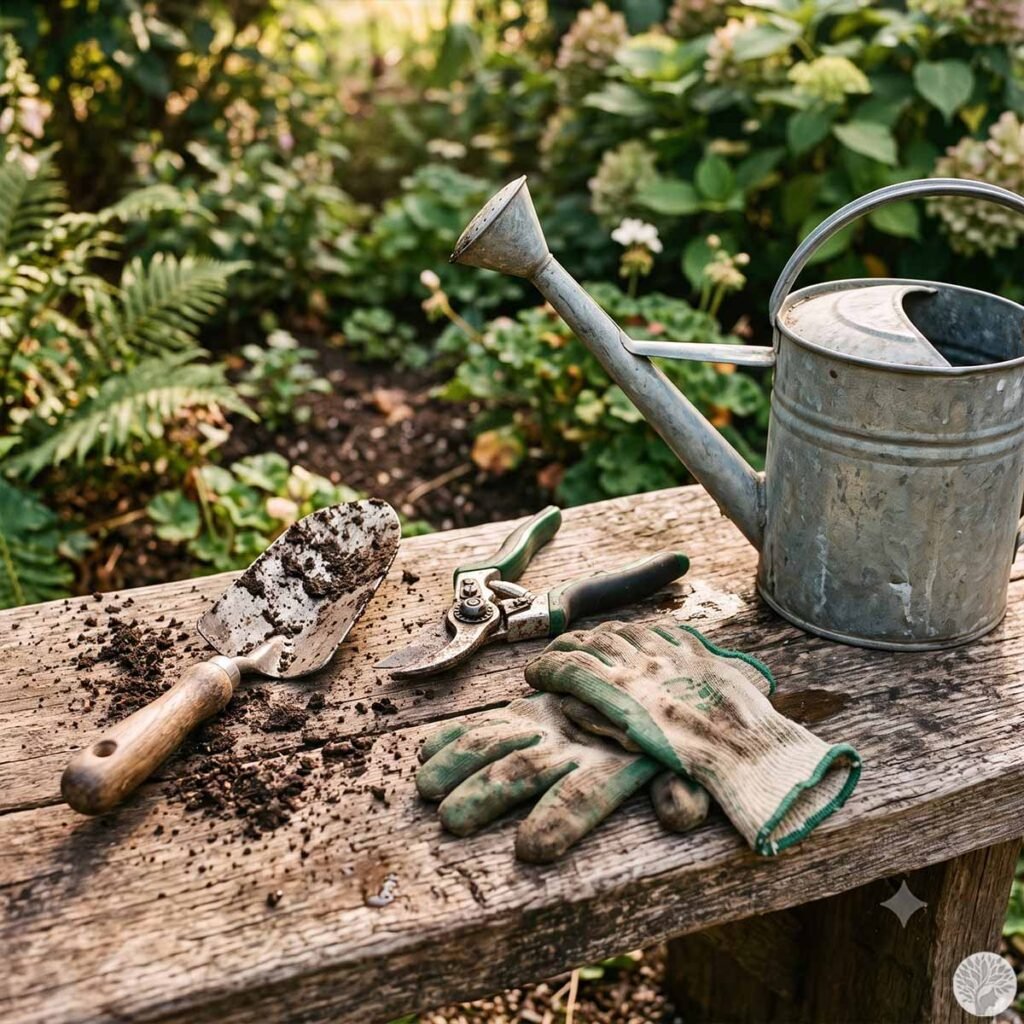
On our journey to a calmer home, we want to view our tools through a specific lens: how do they help us alter our physical pacing? Notice that none of these tools require electricity, batteries, or Wi-Fi. They act as conduits for grounding, somatic awareness:
- The Hand Trowel: The simple, heavy sensation of slicing a trowel through clean potting mix gives your hands a rich, granular feedback that anchors your awareness firmly in the physical world.
- The Watering Can: A long, elegant, narrow spout restricts the flow of water, forcing you to deliver a slow, deliberate pour right at the base of the plant. It requires you to steady your hand, balance your posture, and watch the water slowly sink into the dark earth.
- The Pruning Shears: A small, sharp pair of pocket pruners requires you to lean in close and locate a single dead leaf to snip away. This act of careful editing turns a basic care task into a satisfying Tiny Win that clears away visual clutter.
- Gardening Gloves: If you dislike the feeling of dirt under your fingernails, a pair of soft cotton or canvas gloves helps you feel comfortable and secure, allowing you to enjoy the experience entirely on your own terms.
The 5-Minute Mindful Garden Ritual
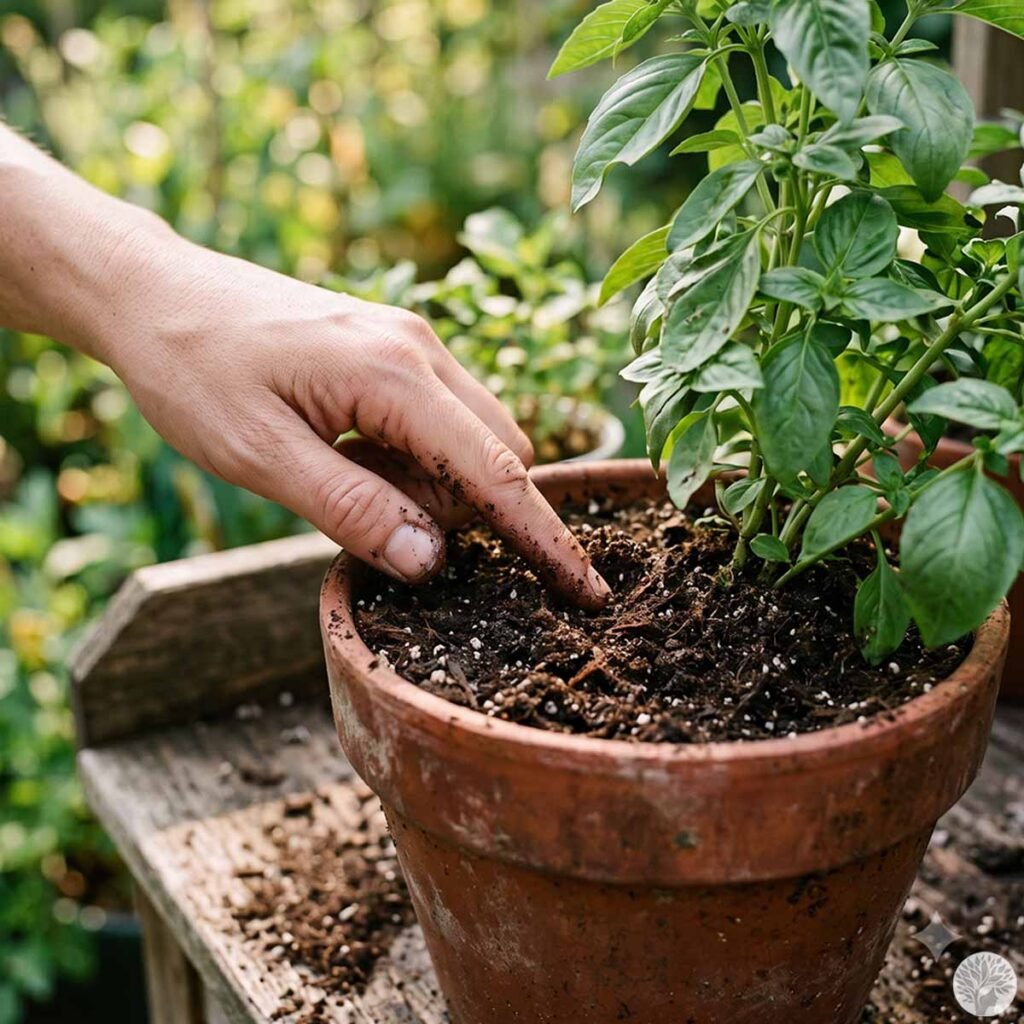
A garden becomes a mindful practice because of how you show up to care for it. You can transform your daily plant check into a highly effective, 5-minute screen-free anchor that creates a gentle pause in an otherwise busy day, slowly paying down your accumulated Sensory Debt.
Try walking through these five distinct steps each day:
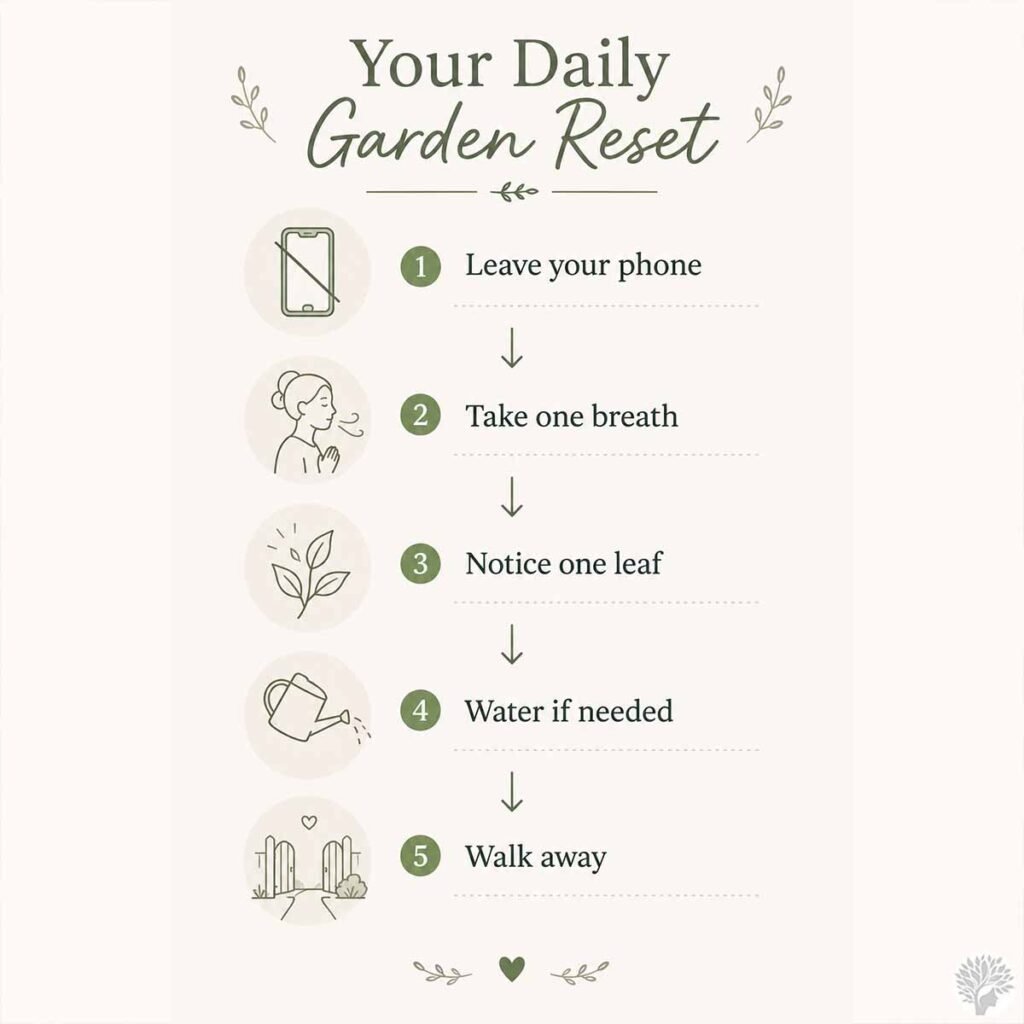
- Leave the Phone: Step across the threshold to your green corner completely empty-handed. Give yourself the rare gift of five minutes of absolute digital unavailability.
- Take a Breath: Close your eyes for a moment. Take a deep, slow breath in through your nose, noticing the scent of the damp earth. Let your shoulders drop as you exhale, permitting yourself to be entirely present.
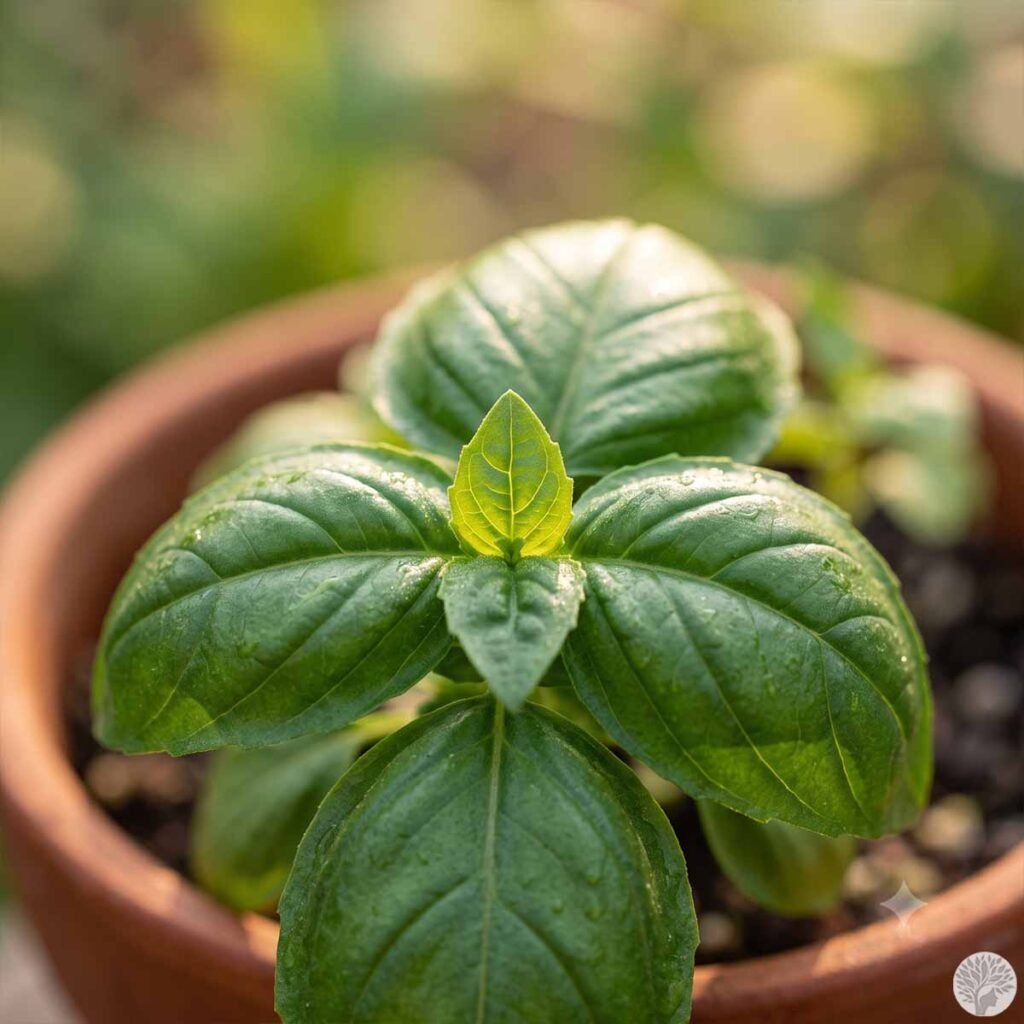
- Notice Something New: Open your eyes and look for a single micro-change, a Tiny Win. Can you spot a tiny sliver of bright green breaking through the soil, or a new leaf unfolding? Training your mind to spot these shifts recharges your ability to focus.
- Care with Intention: Press your bare finger an inch deep into the soil to check its moisture. If it is dry, pour a slow, steady stream of water. Embrace any spilled dirt or splashes as an exercise in Messy Mindfulness. It does not need to look immaculate to be deeply restorative.
- Walk Away Gently: Once checked, put your tools down and walk away. Resist the urge to turn this into an afternoon-long project. Walk away cleanly, knowing that five minutes of gentle attention is more than enough.
Your Garden Doesn’t Need Your Perfection
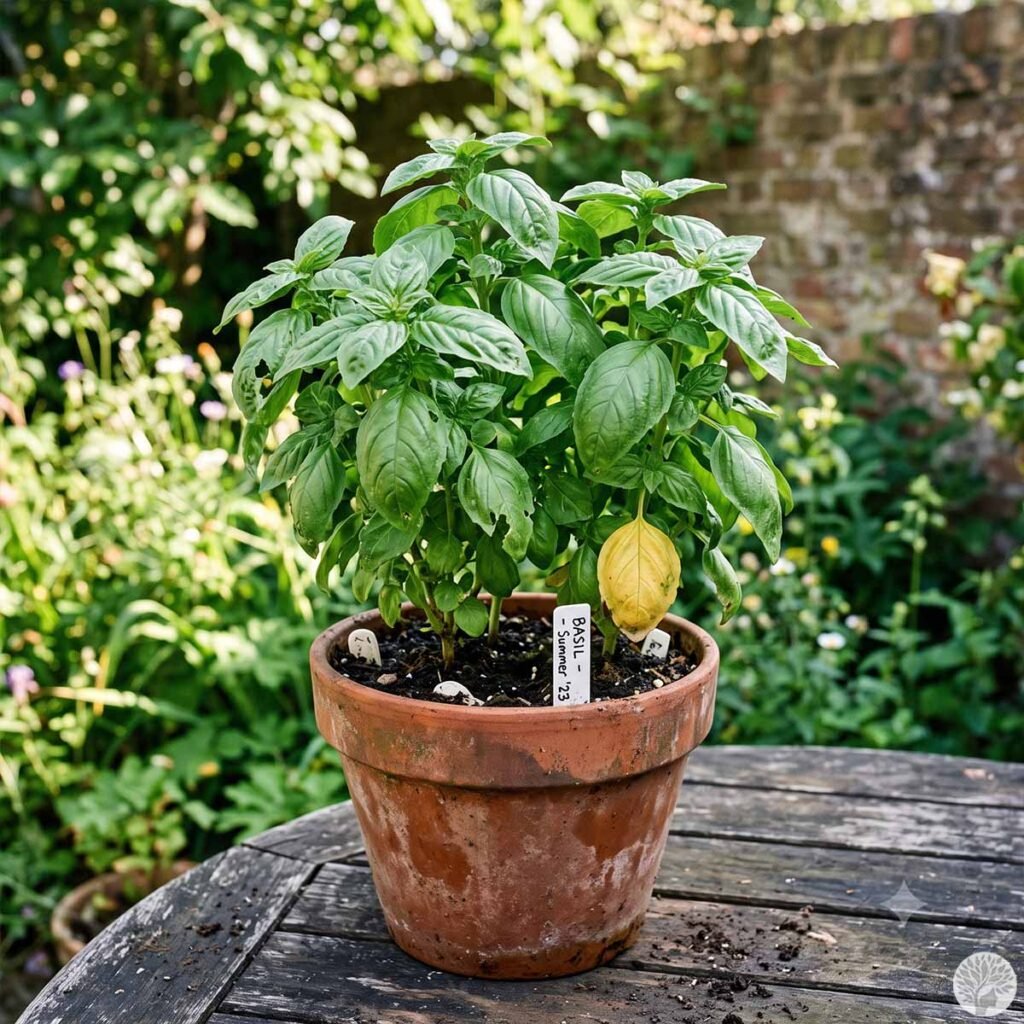
One of the greatest internal barriers to maintaining a small garden is the pressure we put on ourselves to be perfect caretakers. We approach our plants with the exact same performance-driven mindset that we use to navigate our work and household schedules. We quietly turn our pots into another place where we judge ourselves, internalizing a yellow leaf as proof of inadequacy.
But plants respond to consistency far more than perfection. In the natural world, growth is inherently resilient, messy, and non-linear.
Missing a single watering after an exhausting week will not ruin your entire journey. Remembering to check on a single pot after a chaotic day is a massive Tiny Win. A yellow leaf isn’t a sign of failure. It is simply a piece of quiet communication from the plant saying, “A bit too much water down here,” or “I could use a little more sunlight.”
When you reframe plant care from a test of personal competence to an ongoing exercise in listening, the anxiety drops completely out of the room. Your green space is a safe, low-stakes environment where mistakes don’t carry institutional consequences, giving you a gentle space to learn, adjust, and grow at your own pace.
A garden isn’t another thing that depends on you. It’s a place that quietly waits for you.
Common Mistakes & Stepping Out of the Comparison Trap
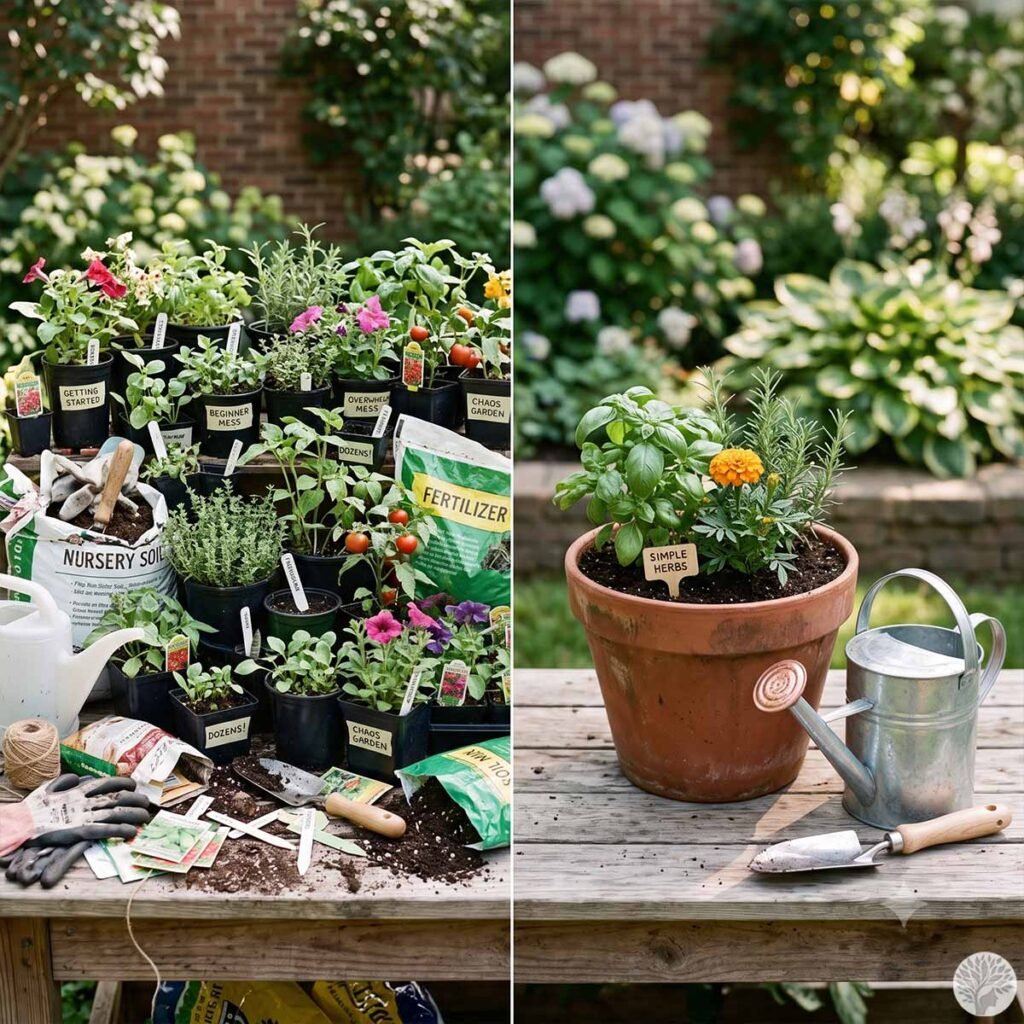
As you begin cultivating your green corner, be mindful of these three common pitfalls that can accidentally reintroduce stress back into your sanctuary:
- Buying too many plants at once: It is easy to bring home ten different varieties simultaneously, creating a complex, overwhelming schedule of varying water needs. Start with three simple pots, master their rhythm, and expand only when those three feel like second nature.
- Overwatering out of pure nervous energy: Many beginners accidentally kill their plants with over-attention, watering them every time they walk past. Remember that soil needs time to breathe between sips. Real care often looks like stepping back and letting a living thing sit in peace.
- Comparing Your Beginning to Someone Else’s Middle: Social media feeds are filled with curated images of pristine, mature gardens built over decades. Your first three simple pots on a kitchen windowsill are more than enough. Your garden doesn’t need to look like an Instagram aesthetic to successfully bring calm to your day.
When Life Gets Busy But Normalizing the Pause
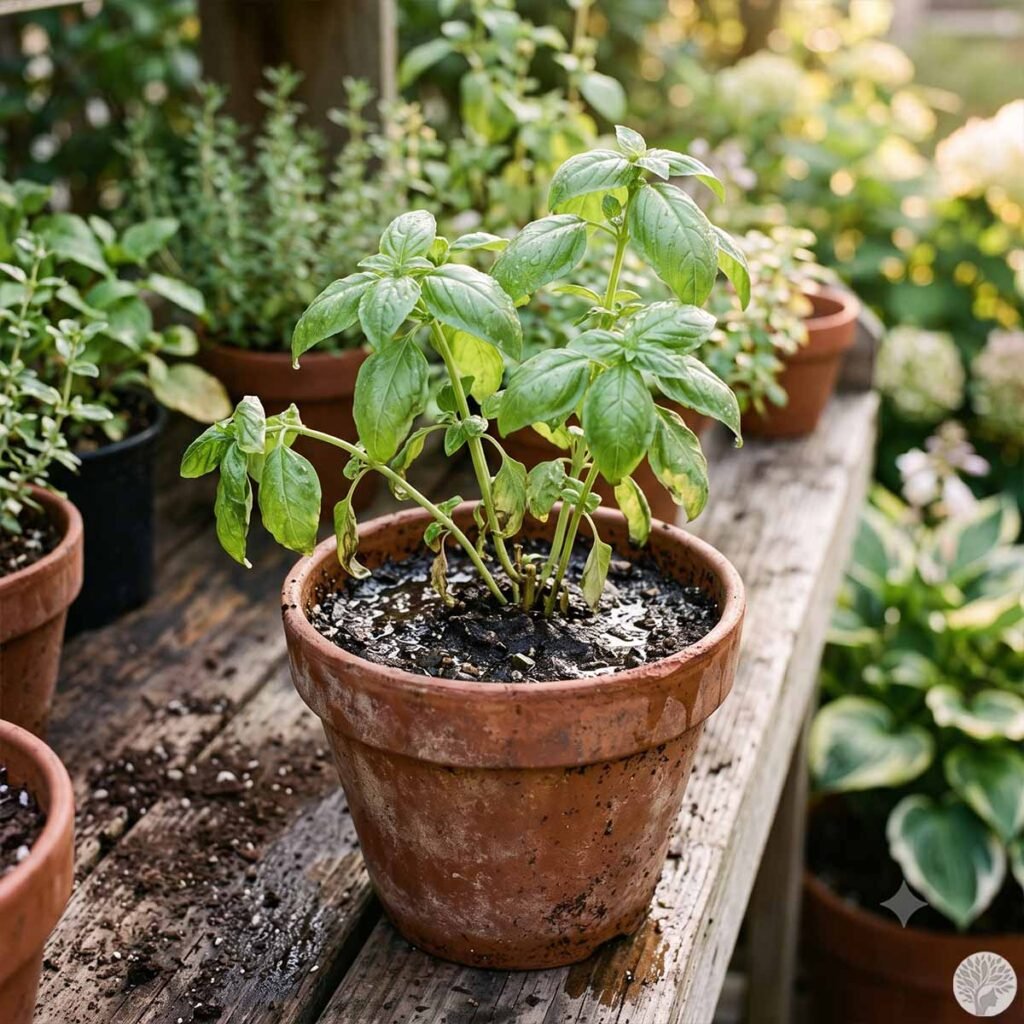
There will inevitably come a week when your household schedule overflows, a child gets sick, or your mental energy drops to zero. During these demanding seasons, your small garden will likely be neglected. The soil will dry out, or a resilient herb might entirely wither away.
When this happens, please hear me clearly: you do not have to start your entire journey over from scratch.
You haven’t failed, and you already carry an exhausting load of daily responsibility as a mother. You do not need to carry guilt over a dry pot. In nature, dormancy, loss, and rest are normal parts of a much larger, beautiful cycle. When your energy returns, you don’t need to apologize. You simply pick up your watering can and begin again with grace. Your next new sprout is a Tiny Win that will always be quietly waiting for you whenever you are ready to return.
Shifting Gently with the Seasons
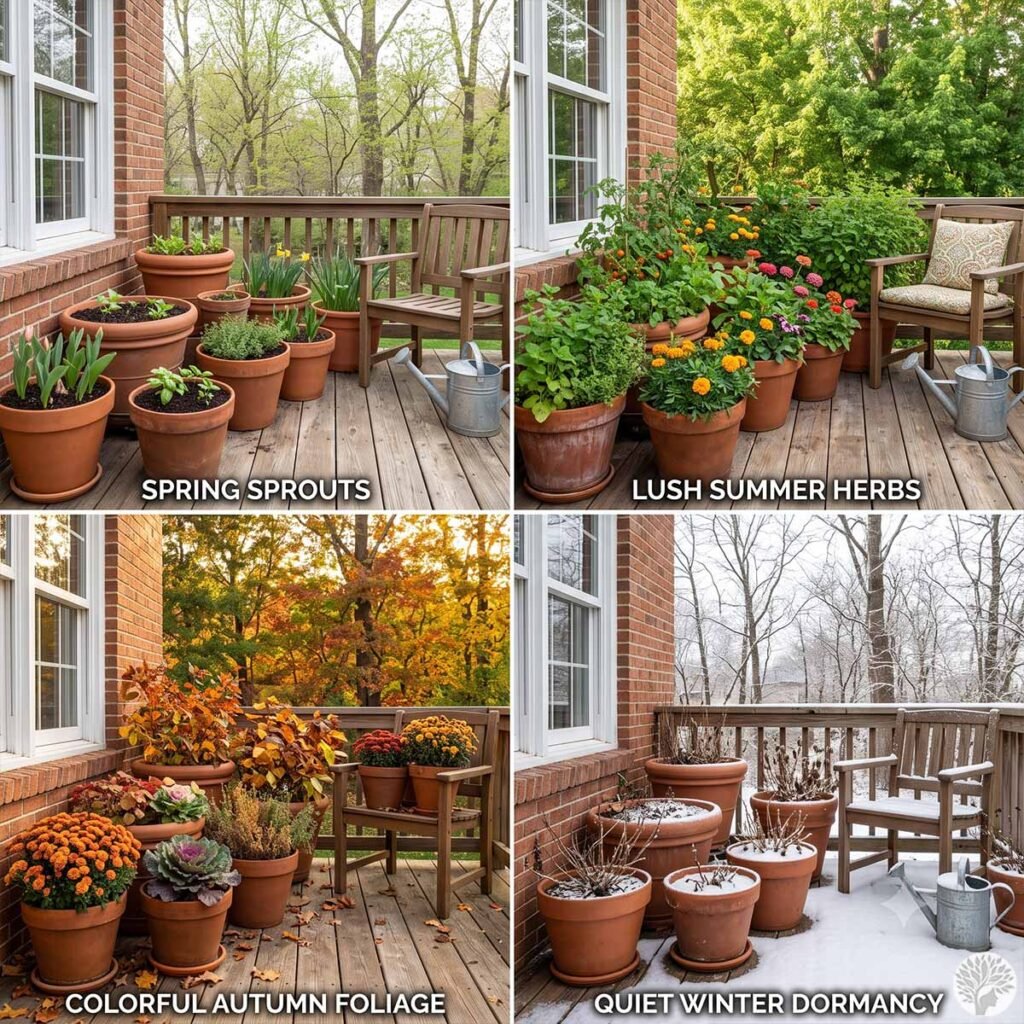
A beautiful aspect of environmental mindfulness is learning to let your own internal energy mirror the natural, shifting rhythms of the earth throughout the year.
- Spring (Begin): Begin before you feel ready. Clear away the old, open the potting mix, plant the seeds, and welcome the raw energy of new beginnings.
- Summer (Enjoy): Celebrate growth instead of chasing perfection. Sit back on the porch, watch the bees visit your marigolds, and fully soak in the vibrant, warm color without trying to force it to do more.
- Autumn (Let Go): Let go of what no longer thrives. Watch the leaves fade, harvest the last of the kitchen herbs, and practice the restorative art of releasing the need to control.
- Winter (Rest): Trust that quiet seasons are still part of growth. Embrace the slow, silent dormancy of your pots, and allow your own mind to power down for a season of necessary rest. Before long, spring quietly returns.
This week, don’t build a garden.
Choose one corner.
Add one pot.
Plant one living thing.
Come back tomorrow.
Calm often grows exactly this way.
Frequently Asked Questions
How can I start a small garden at home?
Focus on one single spot that you naturally pass by everyday, like a kitchen windowsill. Grab a terracotta pot, a small bag of lightweight container potting mix, and 1 to 3 starter plants from a local nursery to keep the setup immediate and low-stakes.
What is the easiest plant for beginners?
For indoor windowsills or shady balconies, a Pothos or a Snake Plant is nearly indestructible. If you have a sunny outdoor spot, Mint and Marigolds grow incredibly fast and handle beginner mistakes beautifully.
How much time does a beginner garden really take?
A mindful setup requires no more than 5 minutes a day. The goal isn’t to spend hours doing yard work; it’s to create a brief, consistent window to unplug and ground yourself.
What should I do if my first plant dies?
Treat it as an invitation to learn rather than a personal failure. Empty the pot, use the soil for a different variety, and try again with grace. Even the most experienced gardeners lose plants.
Further Reading
To expand your journey into mindful home frameworks and screen-free daily rituals, explore these resources:
- Mindfulness in the Garden: Zen Tools for Digging in the Dirt by Zachiah Murray: A gentle, slow-paced collection of simple verses (gathas) designed to help you align your mind and body while tending to the earth.
- The Art of Mindful Gardening: Sowing the Seeds of Meditation by Ark Redwood: Written by a veteran horticulturalist, this book beautifully illustrates how routine plant care tasks across the seasons can be transformed into deep moments of mental grounding.
- Growing Your Mental Health: Harnessing the Power of Plants for Emotional Well-Being by Carissa Weber: A comforting look at the innate relationship between plant care and emotional health, outlining how slow, intentional routines with living greens serve as an authentic emotional reset.
A mindful garden isn't another thing that depends on you. It's a place that quietly waits for you.
Love ya, stay mindful!

© 2026 The Mindful Mom Life. All rights reserved. This methodology is part of the Hetal Method helping mothers find neurological rest through intentional home management. No part of this work may be shared or reproduced without credit to the original source.