
Hey Beautiful!
Some evenings, motherhood becomes emotionally louder than the house itself.
If you were to open up a standard wellness magazine or scroll through a generic lifestyle feed, the advice for a stressed mother is almost always the same. “Just hide away in a quiet room. Close your eyes. Empty your mind for twenty minutes.” But let’s be entirely honest with each other. When your house is humming with life, your brain is holding fifty open mental tabs, and your body is carrying the heavy physical demands of a busy day, closing your eyes doesn’t bring peace. It just turns up the internal volume. Closing your eyes simply makes the mental chatter louder.
I remember an ordinary Thursday evening not too long ago when I felt myself quietly shutting down.
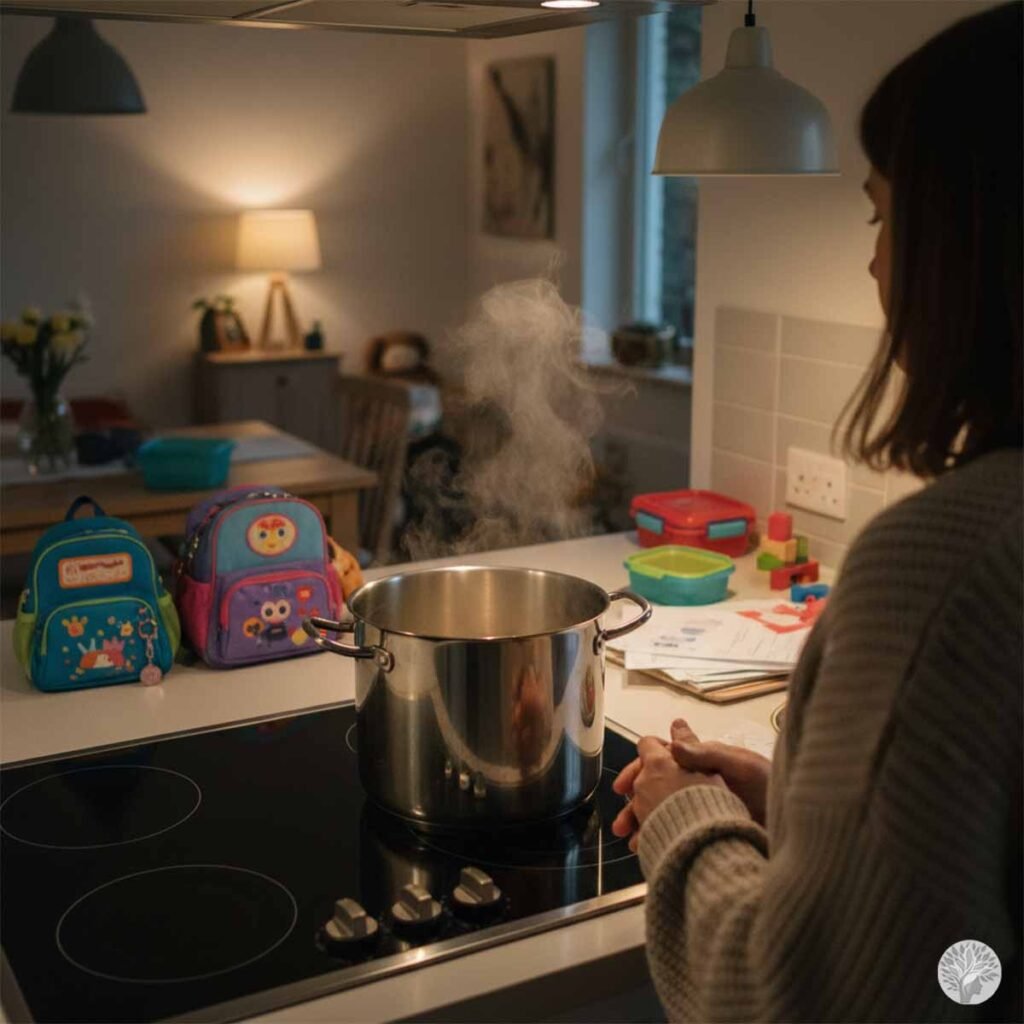
It was right during a heavy PMS week, a time when my body was already reminding me that navigating my 40s requires much gentler care and slower rhythms. I was standing in the kitchen watching a pot of milk, waiting for it to boil. In the background, there was the usual domestic symphony of the hum of the refrigerator, the distant clatter of footsteps. My son rushed in, asking me to find his football studs, and as I handed them over, my mind simply gave up on the idea of handling anything more.
My body was physically exhausted, but my thoughts were stacking faster than I could process them. Even as I stood perfectly still, my mind was racing with tomorrow’s logistics, Did I buy enough veggies for the next day? What am I going to pack for my boy’s tiffin box? What am I preparing for breakfast, let alone dinner tonight?
In that exact moment, I didn’t need an inspirational quote, and I certainly didn’t need a pristine, untouched meditation studio. I needed a physical circuit breaker. I needed an immediate interruption of overload so my nervous system could find a firmer feeling of support.
What This Is Not: Imperfect Mindfulness for Real Life
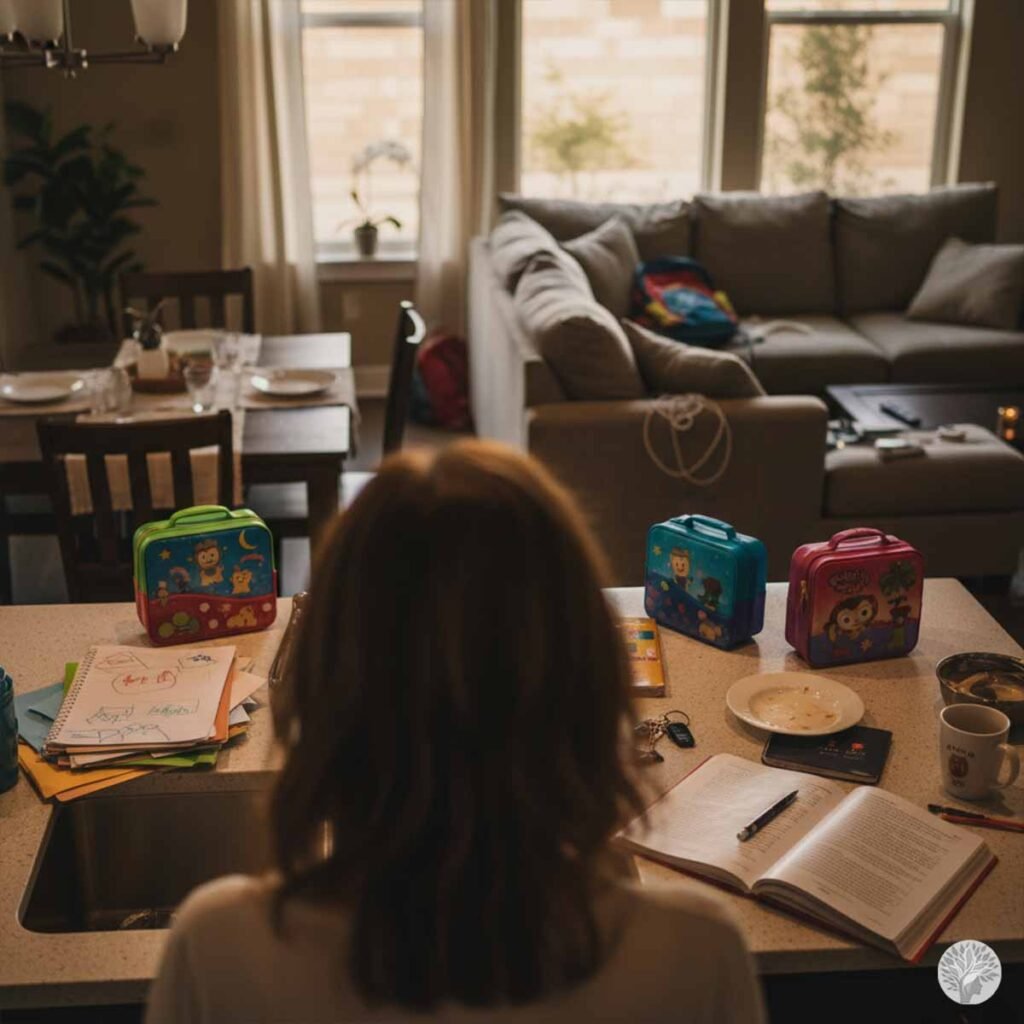
Before we explore the simple tools that helped me find my footing that night, we need to set a permanent, gentle boundary. This is not about escaping your family. So much of modern wellness culture feels privileged, performative, and profoundly unrealistic. It asks mothers to create sterile environments that are entirely incompatible with raising children. We do not live in pristine, soundproof wellness retreats. We live in real, beautiful, unpredictable homes where milk boils over, football studs get lost, toy bins get overturned in the blink of an eye, and open textbooks sit scattered across the study table with crumpled paper and half-finished sketches, and dinner has to be cooked.
When you are already carrying the heavy mental load of moms, trying to force yourself into a state of “perfect zen” only creates more pressure. This is not about leaving your life behind or changing your family. This is about discovering how to create a small perimeter of sensory softness right in the middle of the beautiful mess. It is about practical, sensory overload relief for moms who are living in the real world.
Signs Your Nervous System Is Carrying Too Much Sensory Noise
Often, we don’t realize how overstimulated we are until we are on the verge of an invisible shutdown. Overstimulation doesn’t always look like anger; more often, it looks like a quiet, heavy exhaustion.
You might be experiencing sensory overload in motherhood if you notice these subtle signals:
- You feel completely mentally exhausted before noon, even if you slept.
- Everyday clutter feels emotionally heavy and paralyzing to look at.
- Low background sounds like a humming appliance or a television in another room irritate you quickly.
- You struggle to “switch off” your mind at night, even when your body is tired.
- Even a completely quiet room feels mentally loud with your own racing thoughts.
Why Overwhelmed Mothers Need Sensory Anchors
When you are dealing with emotional overwhelm at home, your brain enters a state of constant, subconscious scanning. Every object out of place, every competing sound, and every unorganized counter space acts as a piece of environmental demand. To an overstimulated mother, a cluttered visual landscape or a loud room isn’t just a cleaning chore. It is a continuous sensory drain on a tired mind.
This is why traditional mindset shifting often fails in a busy household. You cannot always think your way out of a stressful moment when your environment is screaming for your attention. Instead, we have to reduce the amount of sensory information our brains keep processing.
By intentionally introducing specific visual, acoustic, and tactile anchors into your home, you ease your mind the moment your eyes or hands land on them. These tools don’t require you to sit still for an hour; instead, they act as immediate, grounding home rituals that allow the atmosphere to emotionally slow down with you.
1. Visual Noise Reduction Systems (Calming the Visual Field)
When your mind is racing faster than your body can keep up, your eyes need a clean place to rest instead of constantly scanning the room for unfinished tasks. The goal here is to replace erratic, scattered visual data with smooth, predictable patterns.
The Visual Landing Tray
When school papers, keys, loose change, medical receipts, and unread mail scatter across your kitchen island, they create a persistent background hum of home stress. You might think you are ignoring that pile as you walk past it, but your subconscious brain is registering each item as an open project. Every unorganized item represents an open mental tab.
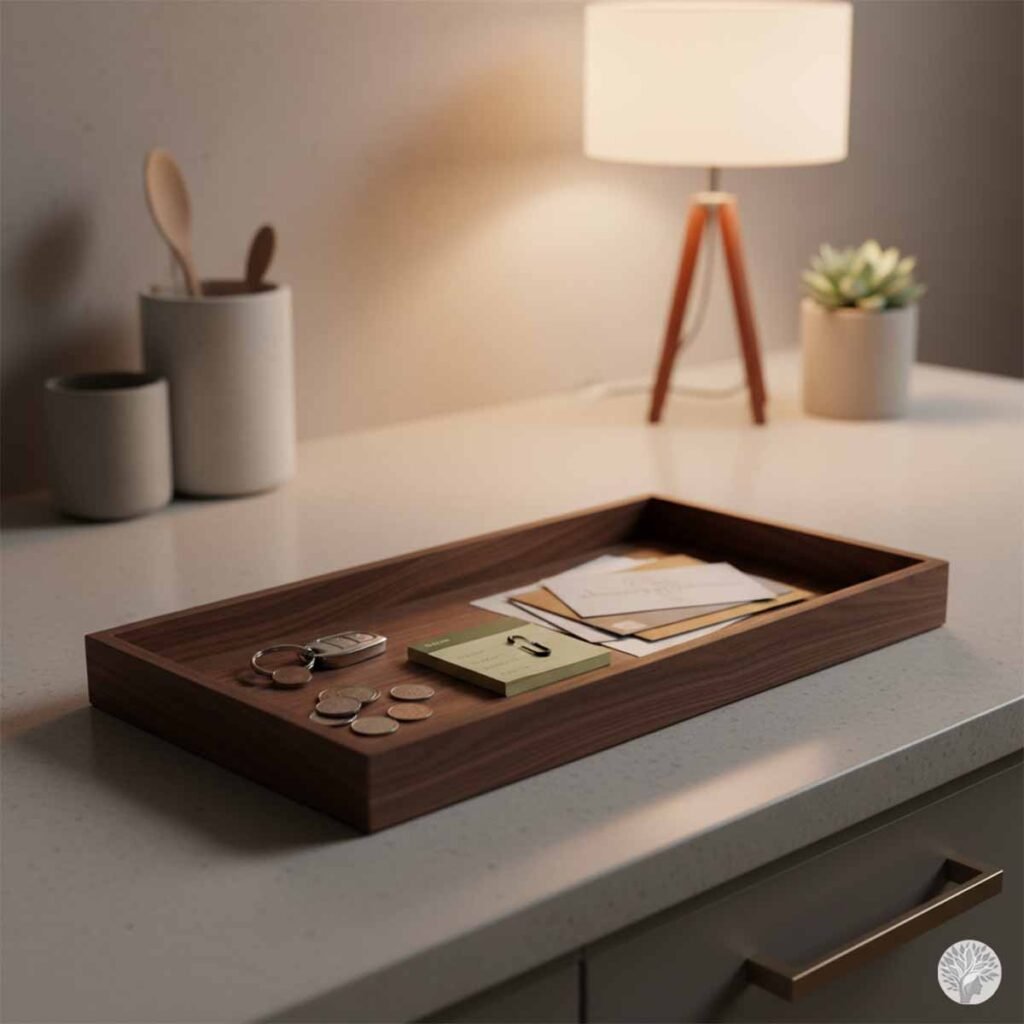
A dedicated, solid wood visual landing tray or an elegant closed-box system acts as an intentional boundary for small daily clutter. The psychological shift happens the moment you drop daily items into a designated, beautiful container rather than scattering them across an open counter. You are essentially containing the chaos. By keeping the mess inside a deliberate structure, you create instant visual calm. It allows your brain to glance across the room and experience an emotional breathing room, rather than an active, messy to-do list. When choosing a tray, look for deep, opaque sides made of warm natural wood or woven seagrass. Avoid wire mesh or clear plastic containers. If your brain can still see the messy shapes through the borders, the visual noise remains unaddressed.
In fact, if you want to see exactly how much hidden energy these micro-clutter spaces are draining from your daily peace, you can run your own rooms through our interactive Visual Noise Calculator to get an immediate, personalized sensory score for your home.
Warm Dimmable Transitions
Standard overhead lighting especially bright, blue-toned LED bulbs commonly found in modern kitchens signals the brain to stay in a state of high alert. Blue light suppresses melatonin and mimics the intense energy of midday solar glare. In the late afternoon, when household rhythms naturally get busier with dinner prep, homework questions, and transition stress, harsh overhead lighting compounds internal friction. It makes every movement feel frantic.
Swapping out overhead lights for warm, dimmable amber bulbs or a low-sitting sunset lamp completely alters the mood of a room. This simple lighting shift functions as a soft environmental cue. It tells both your own nervous system and your children’s minds that the productive, fast-paced segment of the day is over, inviting a softened atmosphere into the kitchen before dinner preparation begins. When you lower the light source from the ceiling down to eye level or table level using lamps, you instantly narrow your visual field. The room feels smaller, cozier, and safer. You can easily pair this lighting shift with your existing Daily Habits for a Calm Home to naturally anchor your afternoon pivot.

2. Acoustic Softening & Tactile Grounding (The Physical Buffers)
Moms are frequently over-heard and touched-out by the end of the day. When every sound feels like a demand and your body is exhausted from carrying physical weight, introducing soft, intentional textures into your living spaces changes how sound waves and gravitational pressure travel through your environment.
Acoustic Home Materials
A home with bare, hard surfaces like tile floors, uncovered glass windows, and minimalist drywall acts as a literal audio amplifier. Every dropped toy, sharp voice, whining tone, and whirring kitchen appliance bounces off these hard surfaces, echoing repeatedly and heightening sensory overload in motherhood. Your brain is forced to spend massive amounts of hidden energy trying to filter out these harsh reflections just to stay focused.
Introducing sound-softening home materials such as thick, natural-fiber linen rugs, heavy velvet curtains, or woven fabric wall hangings acts as a literal sound-softener for your ears. These dense, porous materials absorb the sharp acoustic edges of household noise rather than bouncing them back into the room. They act as a mute button for environmental static. By reducing the ambient vibration of the house, your mind isn’t constantly working to filter out background noise. The room sounds “softer,” allowing conversations to happen at a lower volume and lowering the collective nervous system baseline of the entire household.
Grounding Textures and Weighted Lap Pads
When your thoughts begin stacking faster than you can manage them, your body needs a firmer feeling of physical support to bring you back down to earth. In your 40s, hormonal shifts during cycles can make you hyper-reactive to temperature changes and rough fabrics, making the need for physical anchoring even more critical. Instead of trying to force a complex meditation routine when you simply don’t have the time, lean on the raw psychology of deep touch pressure.
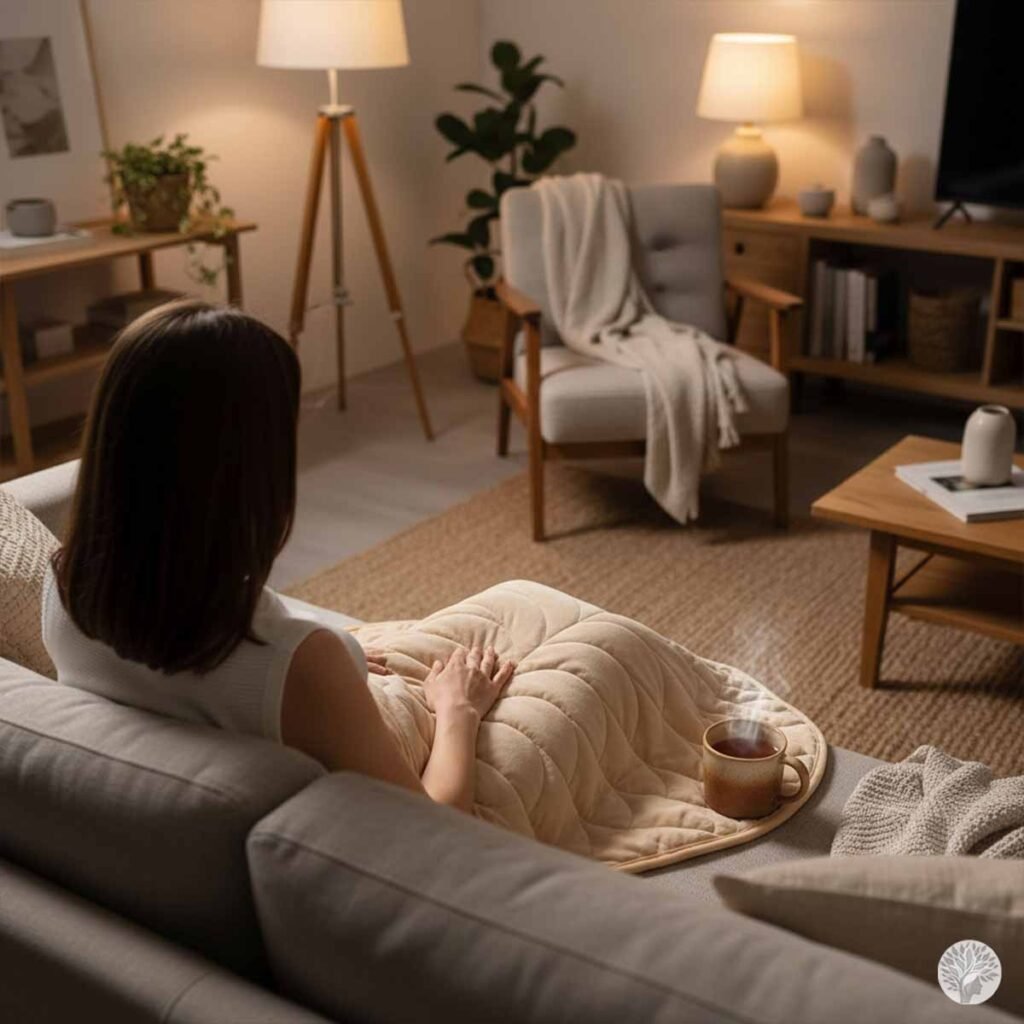
Keeping a small, beautifully weighted organic linen lap pad on your couch or a smooth, heavy tactile touch-stone on your nightstand provides an immediate physical anchor. Resting a weighted object over your thighs or holding a cool, solid natural texture against your palms for just two minutes activates deep pressure receptors that signal safety to the brain. It pulls your awareness out of the future logistics of tomorrow’s tiffin boxes and grounds you firmly in the sensory present. It is a subtle form of environmental gentleness that helps steady a crowded mind, providing a companion layer of comfort to the strategies outlined in our guide on Finding Calm in Motherhood.
3. Scent Transition Rituals (Shifting the Internal Weather)
Scent is the fastest, most direct highway to changing our emotional state because it bypasses the logical brain entirely and communicates directly with our emotional center. However, it doesn’t require a complicated, overwhelming setup or an expensive luxury spa routine. Instead, we can use simple, reliable scent shifts to mark the invisible thresholds between our daily roles.
The Morning Citrus Reset vs. The Evening Scent Shift
Using scent as an emotional boundary allows you to signal transitions to your brain without spending your precious morning decision budget. It automates your sensory environment.
- The Morning Citrus Reset: A simple mist of sweet orange, bergamot, or grapefruit near your morning coffee space provides a gentle nudge of mental clarity. Citrus oils contain natural compounds that gently awaken the senses, helping you shake off morning grogginess and approach the day with a sense of alert freshness.
- The Evening Scent Shift: Lighting a clean candle or starting a simple diffuser with grounding, earthy notes of cedarwood, frankincense, or lavender right as your work day ends or the school run concludes provides an immediate sensory boundary. It announces to your mind that the demanding, productive portion of the day is officially closed, and it is safe to enter a space of mental quietness. It acts as an olfactory wall between the outer world’s expectations and your home’s inner peace.
4. How to Communicate Your Sensory Boundaries to Your Family
One of the greatest challenges an overstimulated mother faces is managing the needs of her family while protecting her small pocket of calm. When your children see you sitting quietly or turning down the lights, they may not understand that you are practicing sensory care. They might simply see a mom who feels distant.
To prevent your tools from becoming a source of friction, you must teach your family how to read your sensory environment. This isn’t about isolating yourself; it’s about inviting them into a shared culture of quietness.
Setting Up Shared Cues
Instead of waiting until you are on the verge of a silent shutdown to ask for space, establish simple visual and auditory signals that your children and partner can easily recognize:
- The Lamp Signal: Teach your children that when the bright overhead kitchen lights go off and the warm amber lamp goes on at 5:00 PM, the house is entering its “soft volume” hours. It is a cue for everyone to lower their voices and move with more intention.
- The Touch-Stone Rule: If you are holding your grounding stone or resting under your weighted lap pad on the couch, explain to your family that Mom is taking a “two-minute breathing break.” Let them know that you are filling up your cup so you can fully listen to their stories the moment the break is finished.
- Modeling the Scent Shift: Involve your children in the evening scent shift. Let them help you turn on the lavender diffuser or watch you light the transition candle. By turning it into a shared family ritual, you are teaching them how to manage their own sensory nervous systems as they grow. You are not just building a calm home for yourself; you are giving your children a lifelong blueprint for emotional regulation.
Small Sensory Shifts That Help Immediately
Creating an emotionally spacious home doesn’t require an expensive budget or a complete household overhaul. You can begin reducing your environmental load tonight with these small, realistic changes:
| Target Area | The Tiny Shift | The Sensory Relief |
| Lighting | Turn off overhead lights at 5:00 PM; turn on one warm lamp. | Lowers visual alertness and eases evening transition stress. |
| Clutter | Place a deep, opaque wood basket on the counter for loose papers. | Reduces the mental load of moms by creating an instant visual calm field. |
| Sound | Add a thick, woven natural-fiber rug or fabric hanging to loud rooms. | Absorbs sharp acoustic echoes and softens background household noise. |
| Touch | Keep a smooth stone or weighted linen pad near your resting spot. | Offers a firmer physical feeling of support when thoughts are racing. |
| Scent | Introduce a specific evening wood scent when closing the kitchen space. | Signals to the emotional brain that the active day is officially over. |
The Final Step to Reclaiming Your Space
Your home is the immediate environment your body inhabits before you touch the rest of the world. It is the immediate space you live in before you interact with anyone else. By choosing to incorporate these simple, functional sensory calming tools, you are declaring that your mental quietness is worth protecting. You are acknowledging that you cannot always control the chaotic volume of the outside world, but you can build an internal home environment that cushions your fall when the world gets a little too loud.
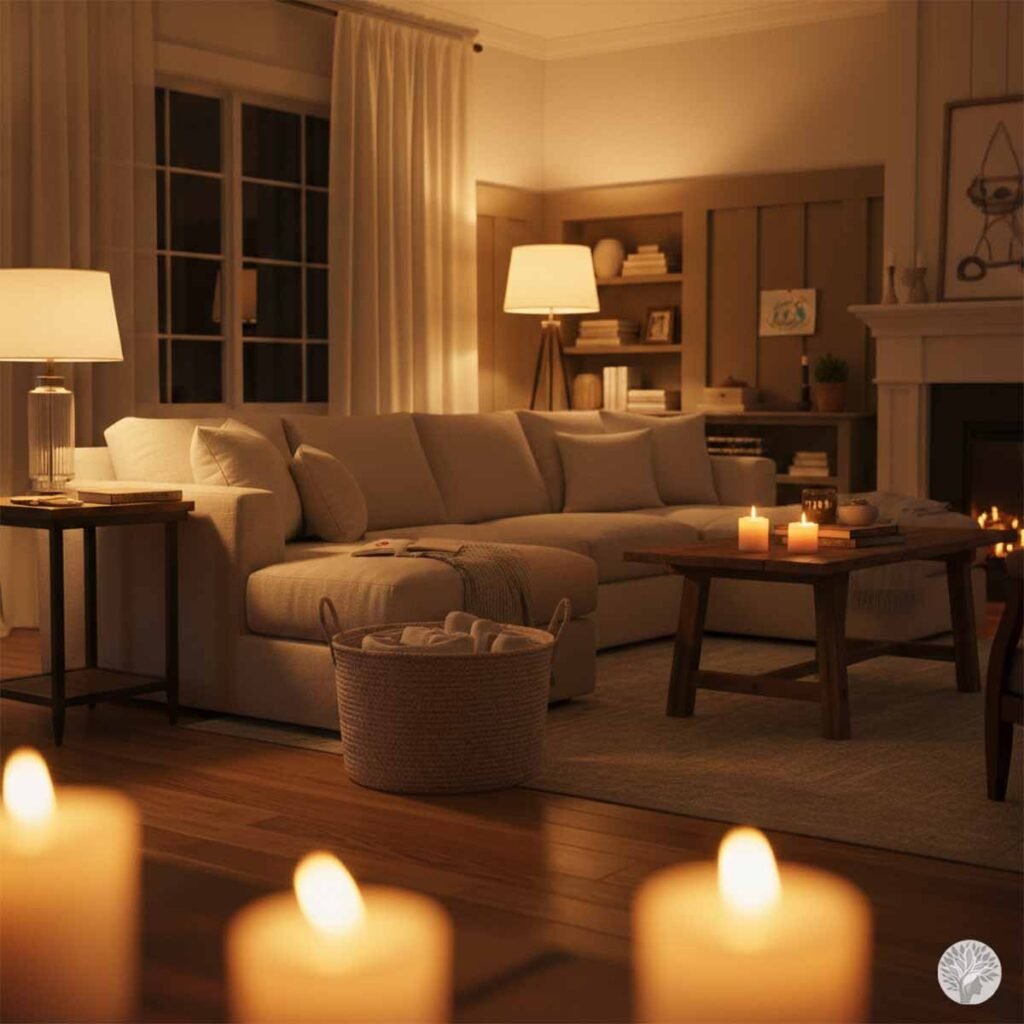
Tonight, as the kitchen slows down and the milk is safely put away, turn off the big, aggressive lights. Light a single, warm candle or turn on a low, glowing lamp. Let the visual static of the day fade away into the shadows, and give yourself permission to simply settle into your own skin.
How does your own home feel to your senses right now? Comment down below and let me know which area of your house carries the most visual or acoustic noise. Let’s discover how to bring environmental gentleness to that space together.
Mindfulness isn't about having a mind full of perfect stillness; it's just about choosing a home that allows your mind to gently empty
Love ya, stay mindful!

© 2026 The Mindful Mom Life. All rights reserved. This methodology is part of the Hetal Method helping mothers find neurological rest through intentional home management. No part of this work may be shared or reproduced without credit to the original source.
Find Your Next Pocket of Calm
- Simple Living Tips For Busy Moms
- Meditation Equipment for New Moms – Simple Tools That Make Mindfulness Easier
- Best Meditation Tools for Moms in 2026: Accessories That Calm an Overwhelmed Nervous System
- How To Slow Down As A Busy Mom and 5 Mindful Morning Habits
- Holistic Self-Care for Moms in 2026: Small Rituals That Restore an Overwhelmed Nervous System