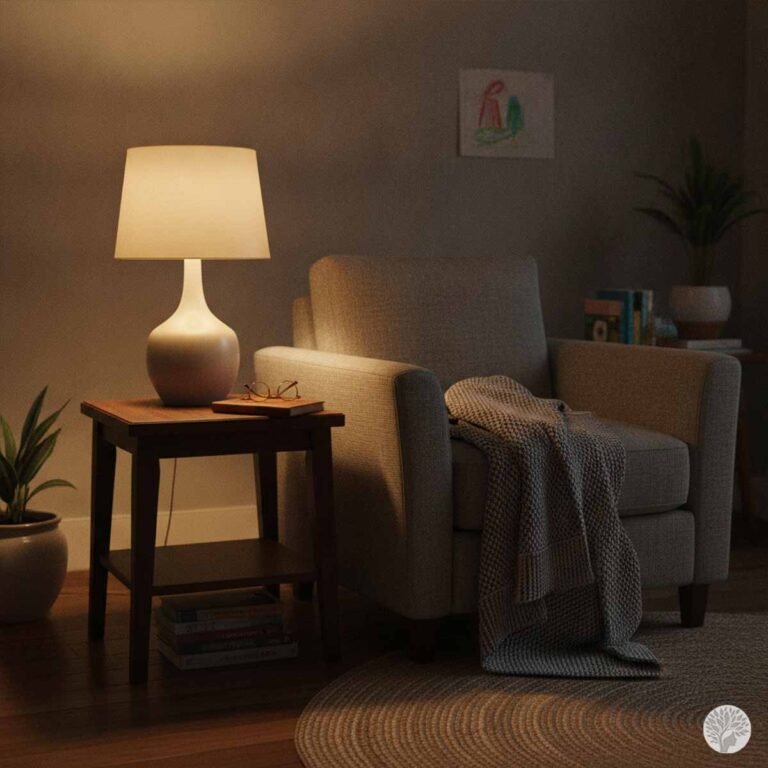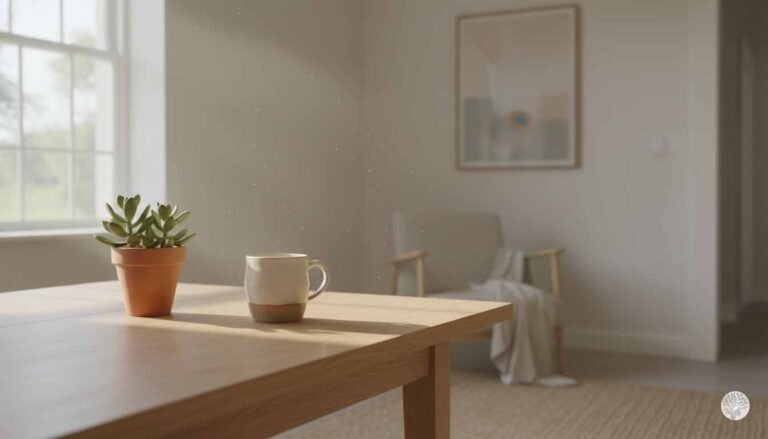

Ditch the pressure of hour-long wellness retreats and expensive meditation baskets. Discover how simple, everyday items you already own can transform early motherhood’s chaos into powerful, five-minute neurological rest.
Disclaimer: This post contains affiliate links for tools I’ve carefully curated or used in my own sanctuary; I may earn a small commission at no extra cost to you. Read my full disclosure.
Hey Beautiful!
The Myth of the Quiet Hour
If you open any mainstream wellness magazine or scroll through a curated social media feed, the imagery surrounding meditation looks remarkably uniform. It usually features a perfectly sparse, sunlit room, a pristine linen setup at home, total silence, and an individual sitting cross-legged for an hour of uninterrupted, blissful quiet.
For a new mom, that image doesn’t feel like a sanctuary. It feels like an impossibility.
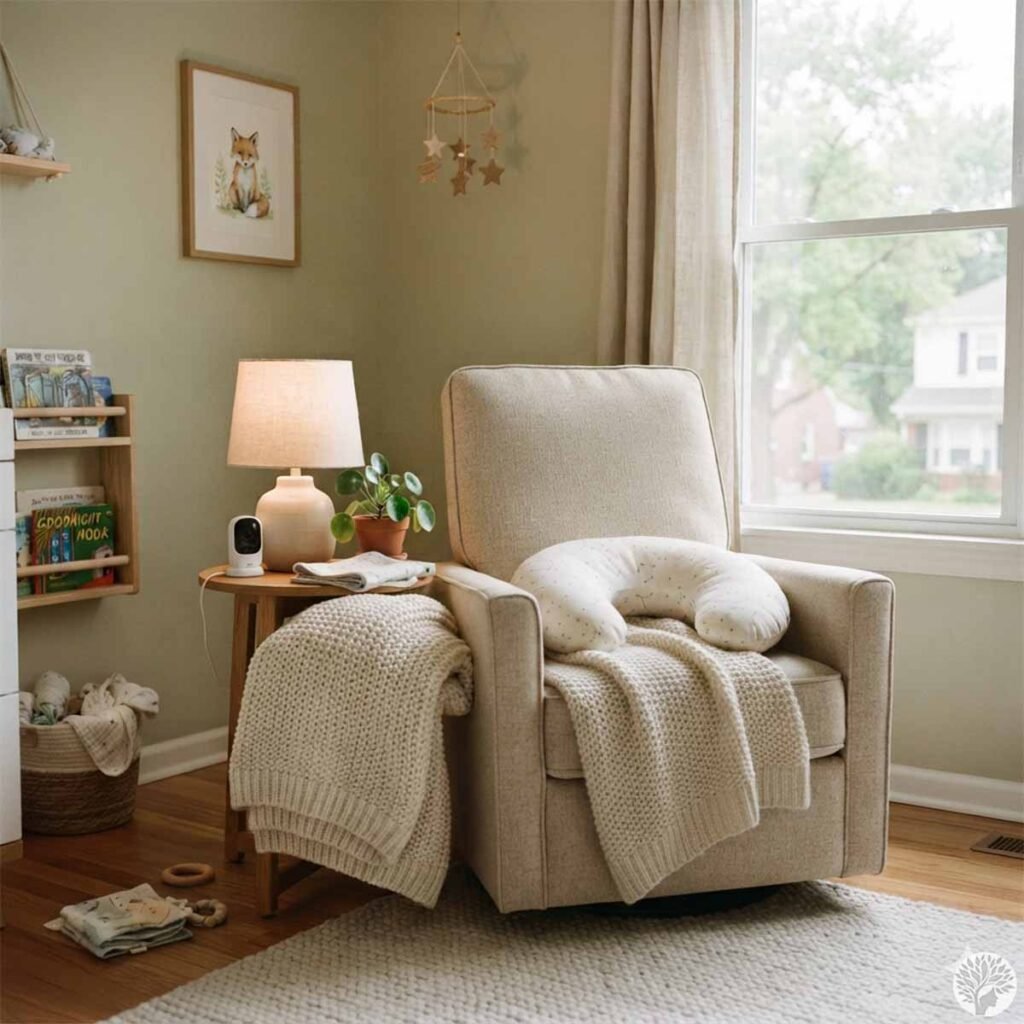
In the first weeks and months of motherhood, rest rarely feels complete. Your life is governed by a chaotic cycle of sleep deprivation, fluctuating energy, and endless household logistics. Even when your baby finally drifts off to sleep, part of your mind stays alert, quietly listening for the next cry, the baby monitor alert, or the sound of tiny movements from the nursery. You aren’t just tired, in fact you are navigating a state of constant, protective vigilance.
When you try to drop into a traditional meditation practice in this season, the silence can feel jarring, and the pressure to “clear your mind” becomes just another item on an already overwhelming to-do list.
But here is the truth. Mindfulness during early motherhood was never meant to look like a wellness retreat. Finding a moment of calm isn’t about having long stretches of empty time. It is about helping your body and mind believe it is safe to relax, even for just a few minutes.
Why Meditation Feels Hard Right Now
Before we discuss a single tool, accessory, or piece of equipment, let’s take a step back and look at why sitting quietly feels uniquely difficult right now. If you have tried to meditate recently and walked away feeling frustrated, restless, or guilty, it isn’t because you are failing. It is because your environment and your nervous system are managing an extraordinary load.
- Your body is actively recovering: Whether you are navigating physical postpartum recovery, adapting to the exhaustion of a new adoptive or foster placement, or managing the physical toll of holding, rocking, and nursing a baby for hours, your body carries deep physical tension.
- Your sleep is fragmented: Chronic sleep deprivation changes how the brain processes stress. When you are exhausted, your mind naturally speeds up, scanning for problems to keep you alert.
- You are constantly anticipating an interruption: You cannot simply turn off your maternal radar. The modern world tells you to “turn off your brain,” but your biology is telling you to keep one ear tuned to the nursery.
- Your routine shifts every single day: Just when you think you have mastered a nap schedule or a feeding rhythm, it changes. This lack of predictability makes it incredibly hard to build rigid habits.
None of this means you are failing at meditation. It simply means your mindfulness practice has to fit this specific season of life. It needs to accommodate your realities rather than demanding you change them.
Your First Meditation Doesn’t Need Equipment
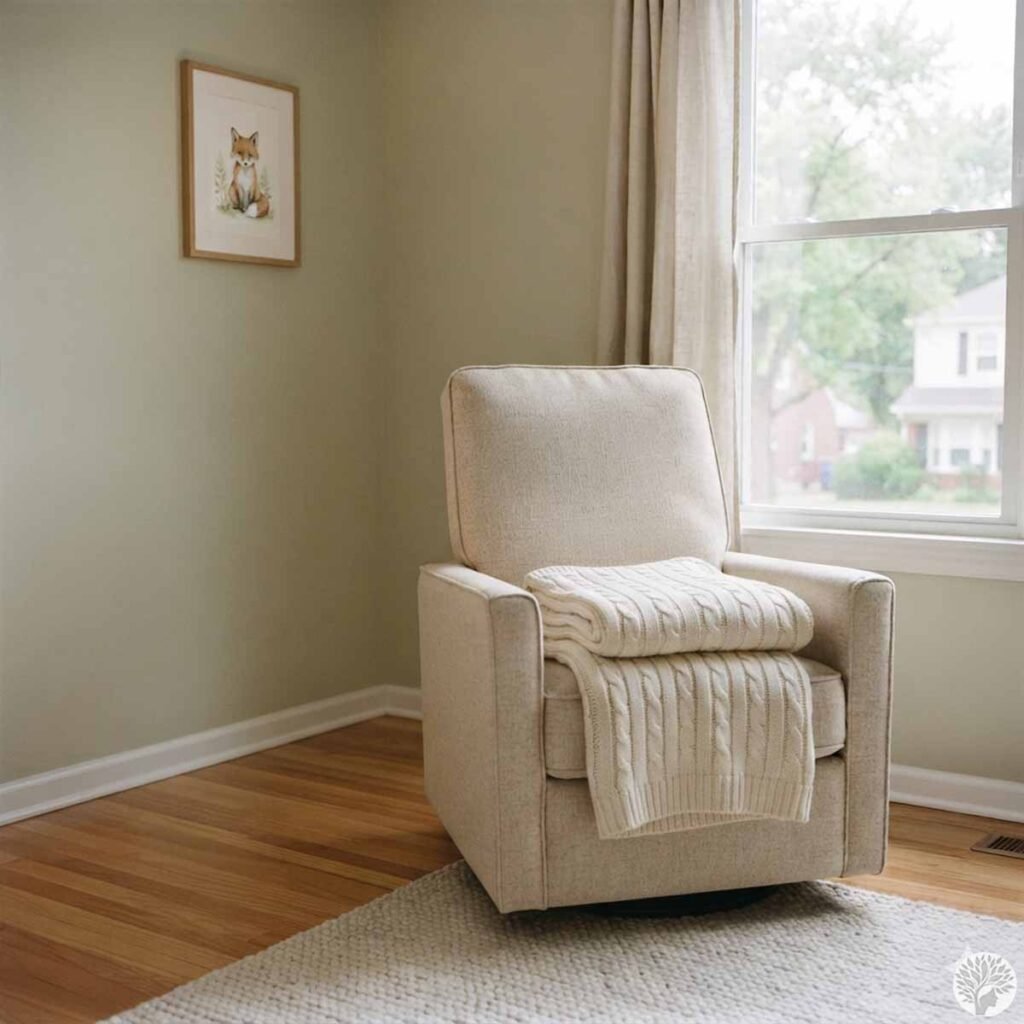
There is a thriving wellness industry dedicated to selling the aesthetic of calm. It tells you that to find peace, you need a specialized meditation basket filled with expensive crystal singing bowls, designer benches, and high-end essential oil diffusers.
Please hear me clearly. Many mothers never buy dedicated meditation equipment, and that’s completely okay.
These tools are not requirements for inner peace. They are not credentials that make your practice legitimate. Before you spend a single dollar on meditation tools for beginners, try this today:
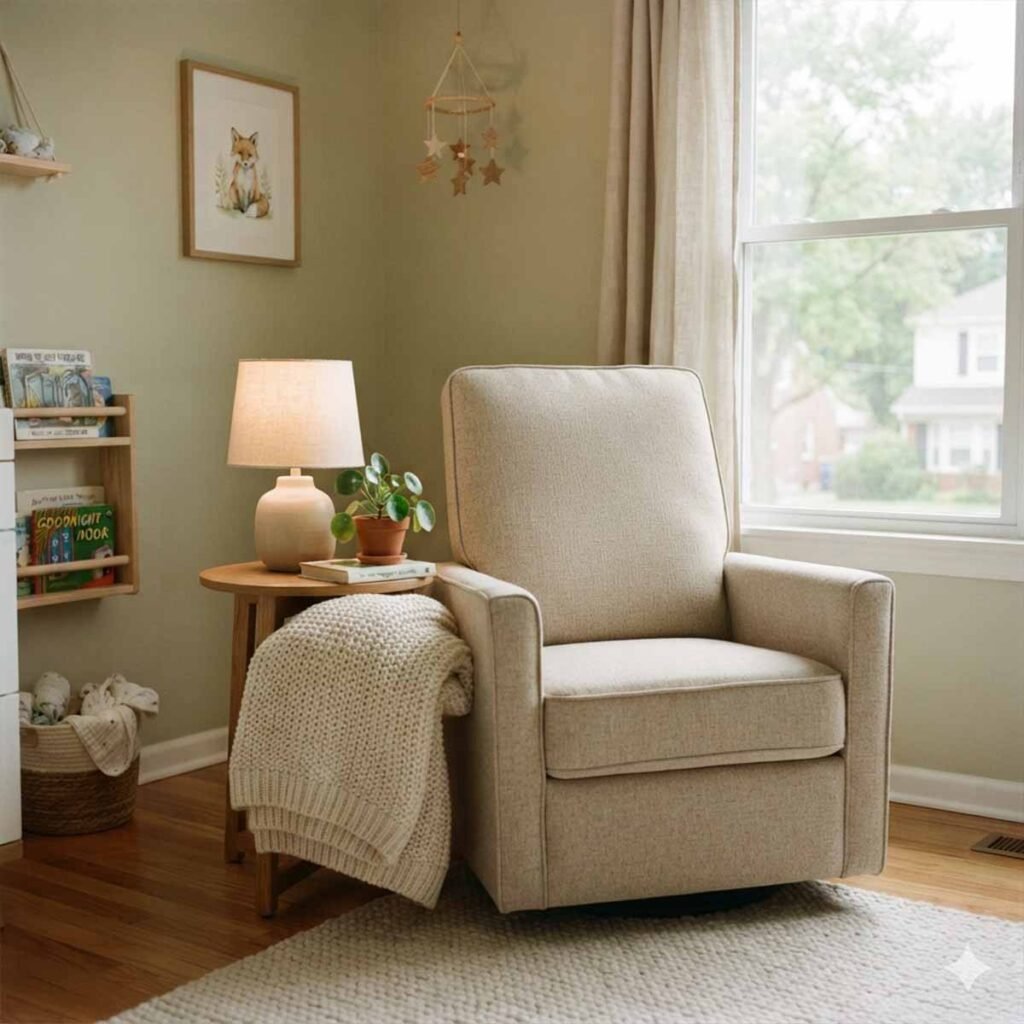
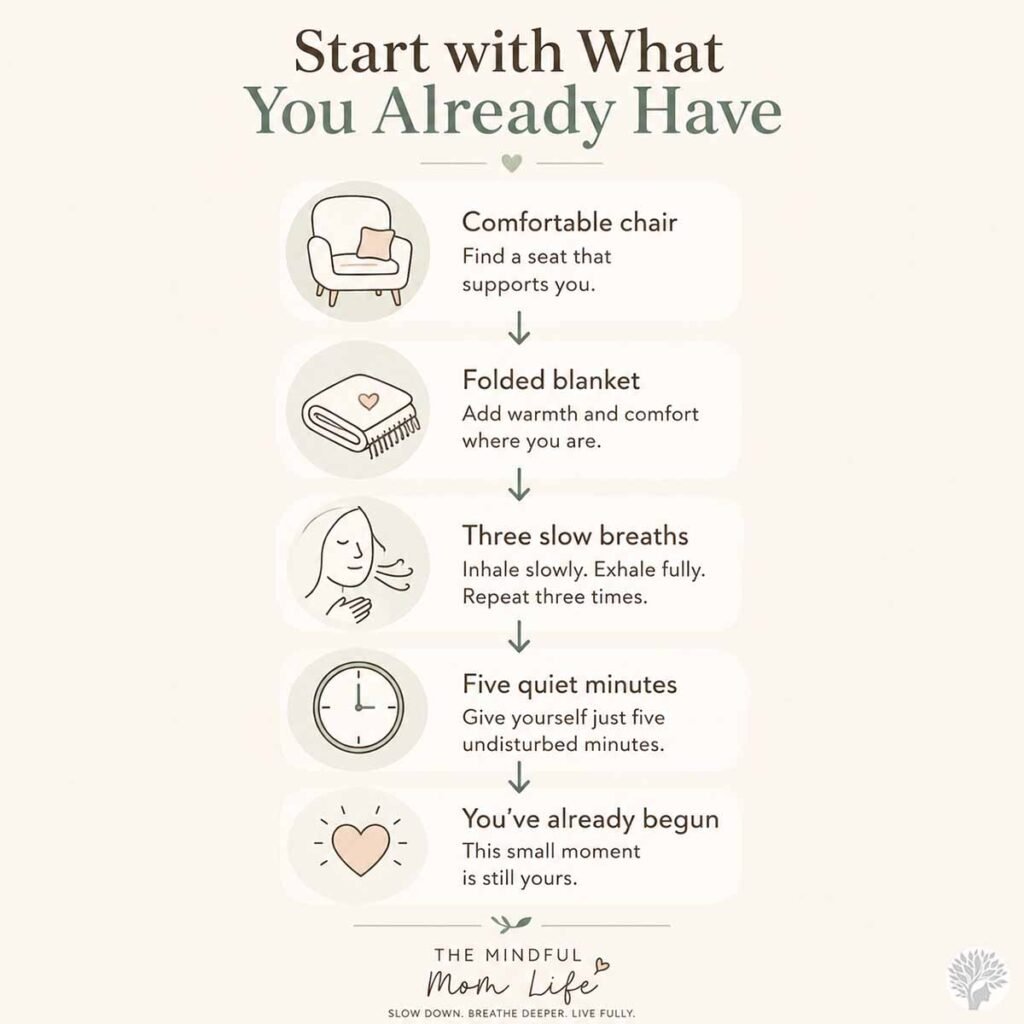
Find your favorite nursing chair or a comfortable spot on the sofa. Plant both of your feet firmly on the floor. Let your hands rest loosely in your lap. Close your eyes for just a moment. Take three slow, deep breaths in through your nose, and let your shoulders drop completely as you exhale.
If that short pause feels supportive, you have already begun. You have successfully meditated.
Dedicated mindfulness accessories only become genuinely useful when they serve as practical solutions to a specific physical or mental obstacle that is actively keeping you from showing up for yourself. We should view equipment through a protective lens. Buy equipment only if it solves a distinct barrier to your calm.
Simple Support Tools for the Real Barriers of Motherhood
When we look at building a meditation setup at home during early motherhood, we want to organize our choices around the real-world friction points we face every day. Here is how to choose optional supports based on the exact challenges you are experiencing.
1. If Sitting Still Feels Physically Uncomfortable
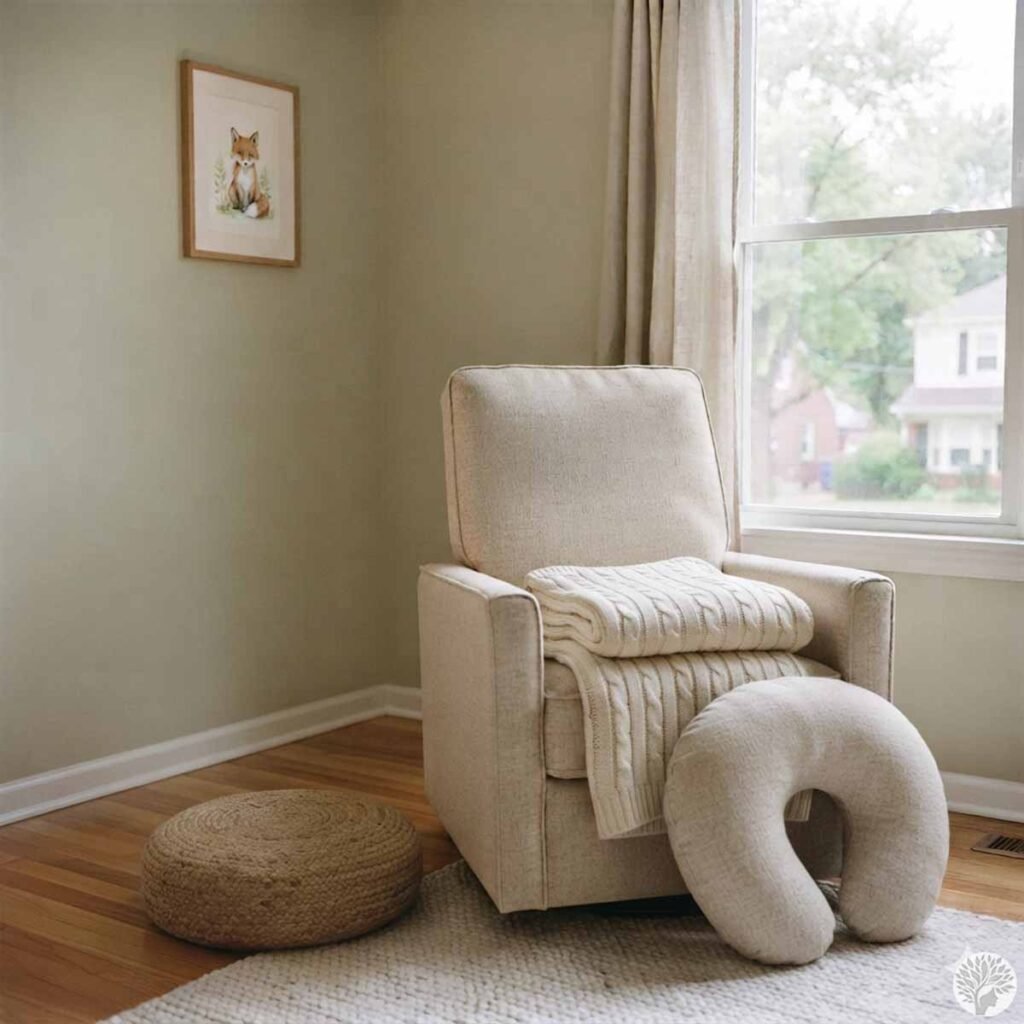
The physical toll of early motherhood is immense. Hours spent slouched over a nursing pillow, rocking a restless infant, or lifting a heavy car seat can leave your lower back, neck, and hips in a state of chronic ache. When you try to sit flat on the floor, that physical discomfort is magnified, pulling your mind away from calm.
- The Custom Support Tool: An ergonomic Zafu cushion. A Zafu is a traditional, round meditation cushion tightly packed with buck-wheat hulls or natural kapok fiber. It elevates your hips above your knees, allowing your spine to find its natural curve and taking the intense pressure off your lower back, ankles, and healing pelvic joints. Paired with a flat, padded mat called a Zabuton, it creates a dedicated, comfortable space on the floor.
- The Backrest Alternative: If cross-legged floor sitting isn’t accessible for your body right now, a supportive floor chair with adjustable lumbar backing can be placed directly against a wall or in a corner, giving your spine a stable, upright frame to rest against without muscle strain.
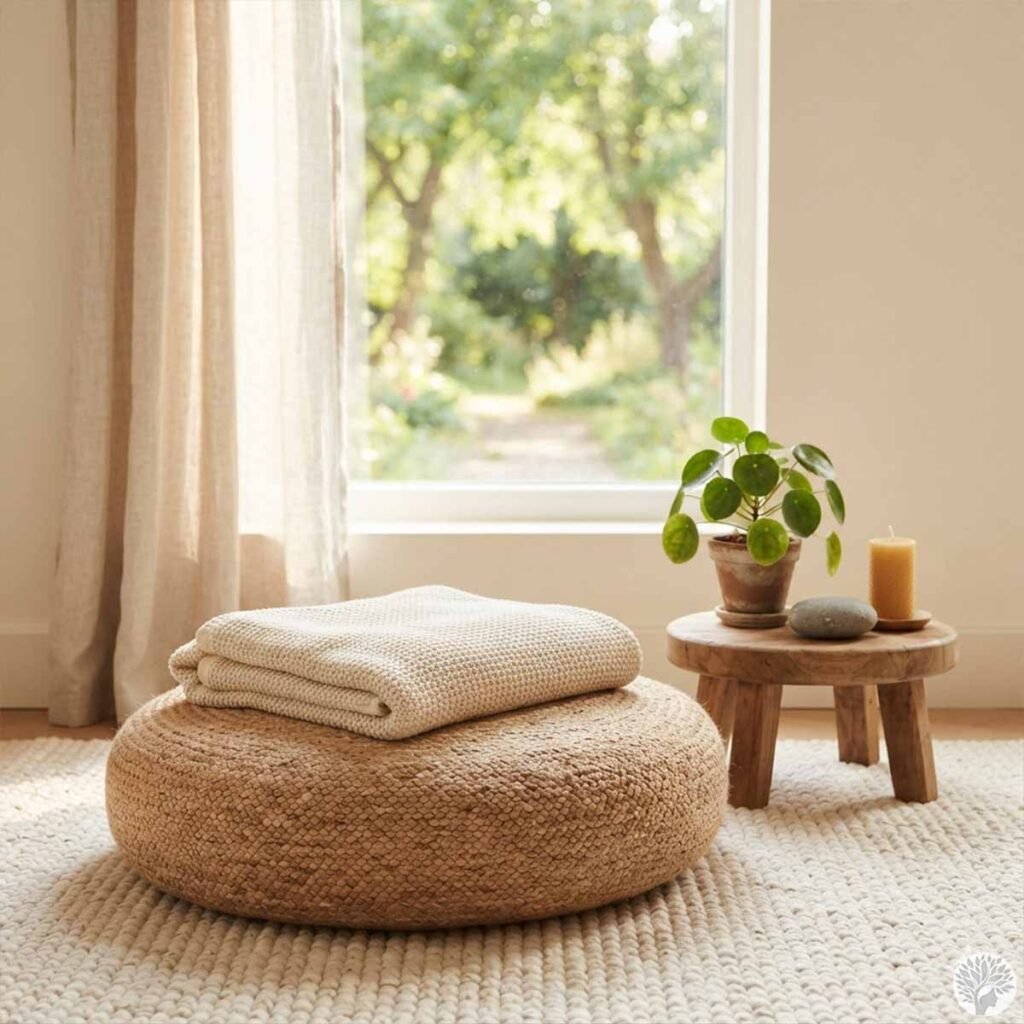
- The Low-Tech Budget Option: You don’t need a premium setup immediately. A firmly folded household blanket or a dense couch cushion placed under your sit bones works beautifully to tilt your pelvis forward and relieve lower back pressure.
2. If Every Little Sound Pulls You Away
Mothers live in a state of high sensory alertness. Every creak of the floorboards, passing car, or hum of the refrigerator can trigger your brain to check if the baby is waking up. This constant auditing of environmental noise makes it incredibly difficult for your nervous system to settle.
- The Custom Support Tool: A dedicated portable sound machine. By filling your immediate space with a continuous, low wall of pink noise or rain sounds, you can mask the sudden, sharp household noises that break your concentration.
- The Grounded Reality: You likely don’t need to buy a new device for this. If you already use a white-noise machine for your baby’s sleep, you might find using that exact same machine or a free white-noise app on an old, offline device that will be highly effective during your own short meditation. It provides a familiar, soothing background that signals to your brain that it is safe to downshift.
- The Low-Tech Budget Option: Turn on your bathroom exhaust fan or sit near a cracked window where the natural outdoor ambient sound creates a soft, continuous background blur.
3. If Your Mind Races with To-Do Lists (“I can’t stop thinking.”)
For many first-time moms, the biggest barrier isn’t environmental noise. It’s internal noise. The moment you close your eyes, your brain begins replaying a frantic reel of maternal logistics: Did the baby feed enough during the last window? Is she breathing properly in the bassinet? Did I remember to sterilize that bottle? Should I call the pediatrician about that rash?
Mindfulness isn’t about stopping these thoughts and that is an impossible standard. It is simply about giving your mind a gentle, physical anchor to return to when those thoughts inevitably drift in.
- The Custom Support Tool: A screen-free meditation timer or a short, maternal-focused guided meditation track. Using a dedicated physical timer with a soft chime prevents you from checking your phone, protecting you from looking at a screen and accidentally getting sucked into a cascade of digital notifications or unread emails.
- The Tactile Anchor: Simple mindfulness accessories like a linen wrap or tactile breathing cards give your fingers something physical to hold. When your mind spins into a checklist, you can gently redirect your focus to the physical sensation of the fabric or the texture of the card in your hand.
- The Low-Tech Budget Option: Keep a simple paper journal and a pen next to your sitting spot. Before you close your eyes, do a rapid “brain dump” of every single task, worry, or reminder spinning in your head. Write it all down to give your mind physical proof that the logistics are safely recorded and can wait for five minutes.

4. If You Never Have More Than Five Minutes
When you are managing a home, a baby, and a shifting calendar, the idea of setting up an elaborate meditation space every day creates too much logistical friction. If a routine takes ten minutes to prepare, you won’t do it when you only have a five-minute window.
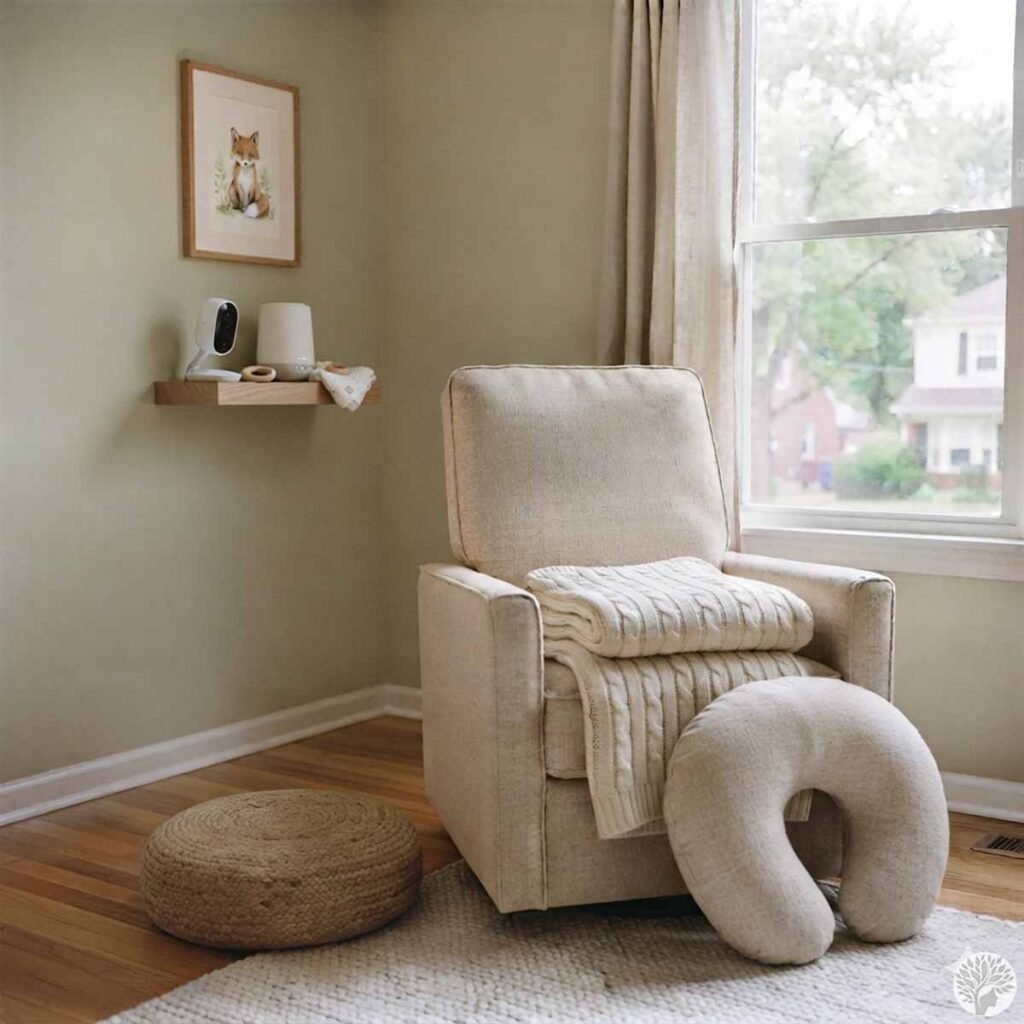
- The Custom Support Tool: A permanent, miniature meditation corner. This doesn’t mean transforming a whole room. It means choosing one small, accessible spot perhaps a quiet corner of your bedroom or a small space right beside the nursery rocking chair and leaving one comfortable cushion permanently resting there.
- The Organic Connection: Your meditation space can beautifully overlap with other comforting areas of your home. If you have been cultivating a small green corner on a windowsill with a few simple indoor plants, place your sitting cushion right beside them. Looking at a thriving plant or a single pot of growing herbs is a natural way to help your mind slow down before you close your eyes.
- The Low-Tech Budget Option: Leave a soft, folded towel permanently over the arm of your favorite chair. It acts as a visual prompt, a quiet reminder waiting for you, signaling that you can step into a small moment of consistency whenever a brief pocket of time opens up.
5. If You Feel Overstimulated by Light and Sights
By the middle of the day, your eyes can experience deep fatigue from staring at monitors, checking tracking apps, or managing bright nursery lighting. Sensory overstimulation makes closing your eyes feel restless because your brain is still trying to process the visual noise of the room.
- The Custom Support Tool: A weighted, lavender-scented eye pillow. The gentle, even pressure of a flaxseed-filled eye pillow over your eyelids triggers the vagus nerve, sending an immediate signal to your heart rate and nervous system to slow down. The natural, subtle scent of lavender acts as a sensory boundary, blocking out the visual chaos of the room completely.
- The Low-Tech Budget Option: A clean, soft washcloth or hand towel folded twice and draped gently over your eyes provides that same comforting darkness and physical barrier without costing anything.
The Quick-Reference Decision Guide
To keep your setup minimal, intentional, and entirely aligned with your actual needs, use this quick-reference table to find your starting point today.
| If your biggest challenge is… | …Start with this tool: | …Try this free budget option: |
| Back & hip discomfort from carrying and feeding | Ergonomic Zafu cushion or supportive floor chair | A firmly folded household blanket or couch cushion |
| Constant household noise triggering vigilance | Portable sound machine or ambient noise filter | Your bathroom exhaust fan or a free white-noise app |
| A racing mind filled with maternal to-do lists | Screen-free meditation timer or guided audio track | A rapid pen-and-paper “brain dump” list before sitting |
| Finding the time or energy to set things up | Permanent meditation corner with one ready cushion | Leaving a dedicated towel or wrap on your nursery chair |
| Sensory overstimulation and intense eye strain | Weighted, lavender-scented eye pillow | A soft, clean hand towel folded gently over your eyes |
Mindfulness Doesn’t Have to Look Like Meditation
We need to completely deconstruct the idea that mindfulness only counts if you are sitting perfectly still on a specialized cushion. In the beautiful, messy reality of early motherhood, some of your most deeply restorative moments will happen in the middle of your daily logistics.
These small vignettes are pure, authentic mindfulness. They are the Tiny Wins that protect your mental energy without adding pressure to your day.
After a Feeding
Your baby has finally settled back to sleep or is resting contentedly in your arms. Instead of immediately picking up your smartphone to scroll through news or check your email, stay exactly where you are for just one more minute. Let your hands rest loosely on the baby or the chair. Feel the solid weight of your feet planted on the floor. Take three slow, quiet breaths. You have just meditated.
Beside the Bassinet
You have just placed your baby down for a nap, and the room has gone quiet. Before you rush out of the room to tackle the mountain of laundry or the dishes in the sink, pause at the door. Rest your hand gently on the doorframe. Close your eyes, take one deep inhale, let your stomach expand, and exhale completely. Allow yourself to occupy that single pocket of transition before the next task begins.
At the Kitchen Sink
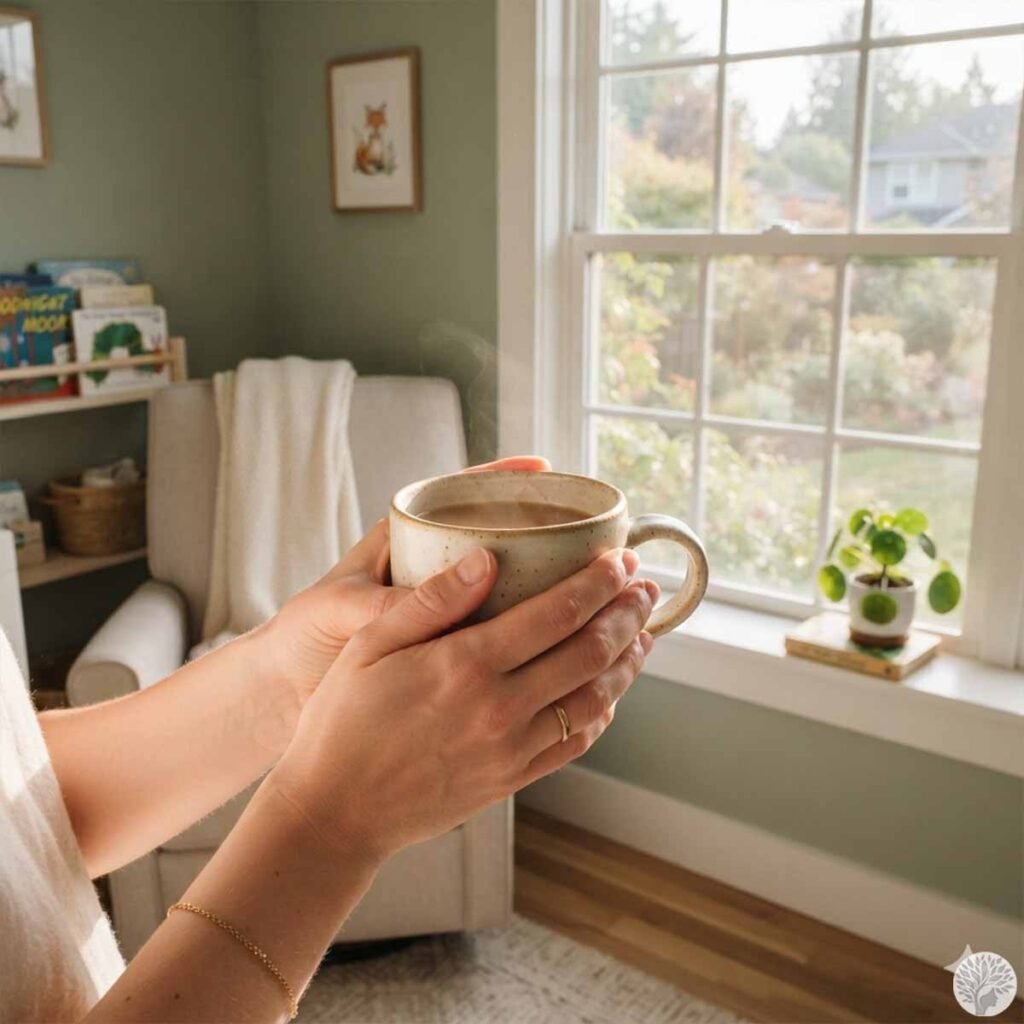
You are washing bottles or holding a warm, fresh cup of tea. Instead of letting your mind race ahead to the afternoon schedule, bring your entire attention to the present sensation. Feel the warmth of the water or the heat of the mug against your palms. Listen to the steady sound of the water running. Notice the scent of the soap or the tea. For sixty seconds, choose to be exactly where your hands are.
The Science of the Small Pause – Why 5 Minutes Helps
It is easy to think that a five-minute meditation isn’t worth the effort. We are conditioned to believe that if we can’t dedicate an hour to a habit, it doesn’t impact our health. But human biology tells a completely different story.
When you step into a deliberate, five-minute screen-free anchor, you are initiating a rapid, measurable shift in your internal chemistry:
- It safely shifts your autonomic nervous system: Motherhood keeps you locked in the sympathetic nervous system (the “fight or flight” response), constantly scanning for changes. A five-minute pause activates the parasympathetic nervous system (the “rest and digest” response), telling your body it is safe to lower its guard.
- It lowers immediate muscle tension: Holding a single posture for breaths relaxes the core muscle groups in your neck, shoulders, and lower back that tighten automatically under cognitive stress.
- It breaks the cycle of cognitive overload: Giving your brain a single focus like the breath, a tactile cushion, or a sound anchor allows your working memory to clear its temporary storage, reducing mental fatigue.
- It creates a necessary transition: It serves as a gentle buffer between the intense demands of active caregiving and your own personal self-care, helping you return to your day with a grounded perspective.
Visual Blueprints for Your Practice
To help you remember these simple approaches when your day gets hectic, here are two minimalist visual frameworks you can save, pin, or keep in mind.
Blueprint 1: Start with One
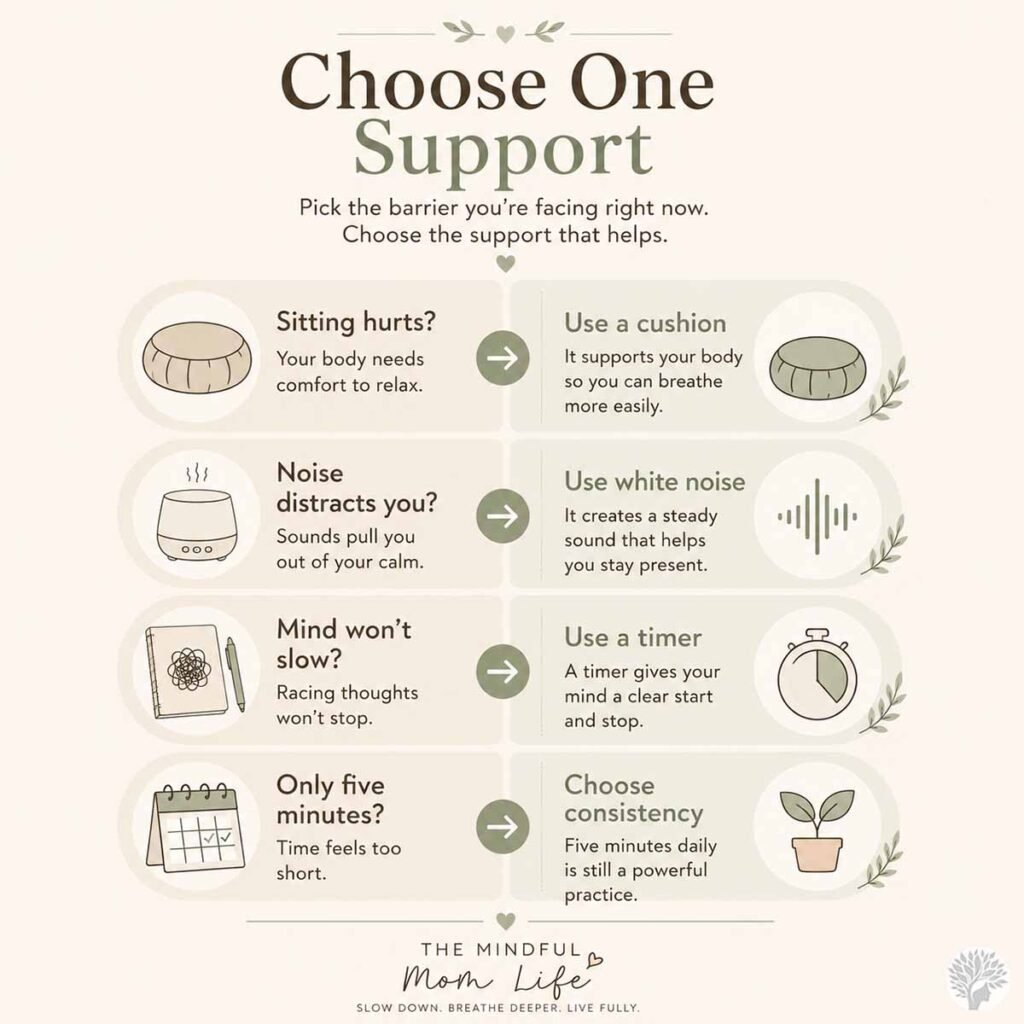
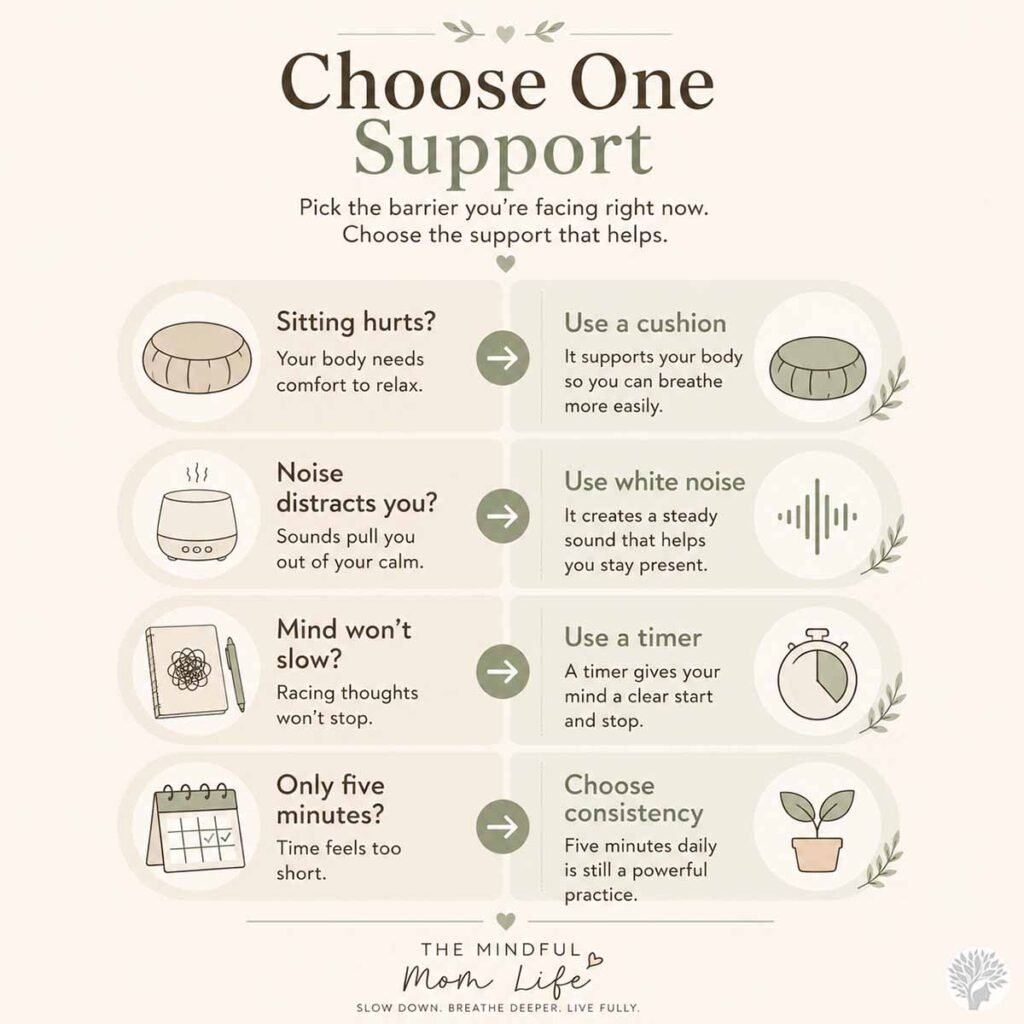
This simple flow helps you remember that you do not need to buy an entire catalog of wellness products to build a meaningful practice.
Sitting hurts your body?
       ↓
Choose a simple cushion or folded blanket

Noise overwhelms your space?
       ↓
Choose a sound machine or simple white noise

Your mind won't stop racing?
       ↓
Choose a screen-free timer or paper brain-dump

You only have five minutes?
       ↓
Choose simple consistency over perfection
Blueprint 2: Mindfulness Counts When…
Keep this reminder handy for those demanding days when sitting on a cushion feels entirely out of reach.
Three slow breaths after a feeding
       ↓
One quiet minute before checking your phone
       ↓
Eyes closed for a moment while rocking your baby
       ↓
Holding a warm cup of tea without digital screens
       ↓
You paused, breathed, and remembered to come back to yourself
A Place That Waits for You
As you navigate the beautiful, exhausting, and unpredictable journey of early motherhood, give yourself permission to lower the bar for what a successful mindfulness practice looks like.
You do not need a massive budget, a pristine lifestyle aesthetic, or an empty house to find calm. You certainly do not need a basket full of expensive products to prove you are taking care of your mental well-being. Look at your home, identify your single biggest barrier to physical or mental comfort, and start exactly there. Buy equipment only if it genuinely solves a problem and protects your peace of mind.
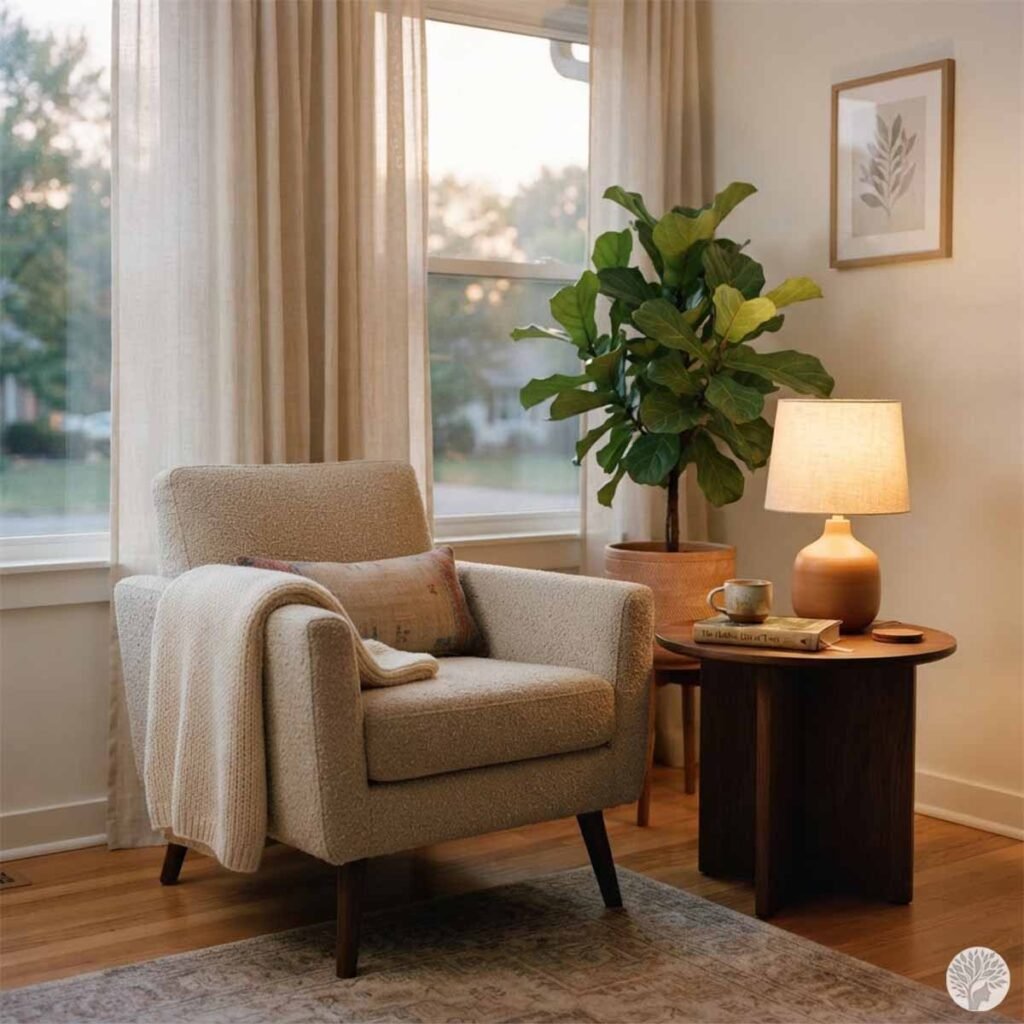
Your baby doesn’t need a perfect mother, and you don’t need a perfect meditation space. A folded household blanket placed quietly beside the nursery chair can become the beautiful beginning of a lifelong practice. The goal isn’t creating an Instagram-worthy corner for the world to see. It’s creating a small, low-stakes sanctuary where you remember how to come back to your own breath.
In early motherhood, peace rarely arrives all at once in long, predictable stretches. More often, it arrives in small, protected moments, one slow breath, one quiet corner, and one tiny win at a time.
In this season of early motherhood, your mindfulness practice doesn't belong on a cushion, it belongs in your chaos. It is the simple, quiet choice to be exactly where your hands are, even if only for a single breath.
Love ya, stay mindful!

© 2026 The Mindful Mom Life. All rights reserved. This methodology is part of the Hetal Method helping mothers find neurological rest through intentional home management. No part of this work may be shared or reproduced without credit to the original source.