

What are the best meditation tools and accessories for overwhelmed moms? The ideal mindfulness toolkit is entirely personal and depends on what helps your unique nervous system feel safe. For busy mothers experiencing sensory or mental overload, the most effective tools are often digital or screen-free acoustic anchors such as high-fidelity earplugs, white noise machines, and guided meditation apps used during natural daily pauses like school pickup. For mothers dealing with physical anxiety or bodily restlessness, tactile and somatic stress relief tools like buckwheat zafu cushions, weighted lap pads, and lavender eye pillows offer the deepest grounding and relaxation.
Disclaimer: This post contains affiliate links for tools I’ve carefully curated or used in my own sanctuary; I may earn a small commission at no extra cost to you. Read my full disclosure.
Hey Beautiful!
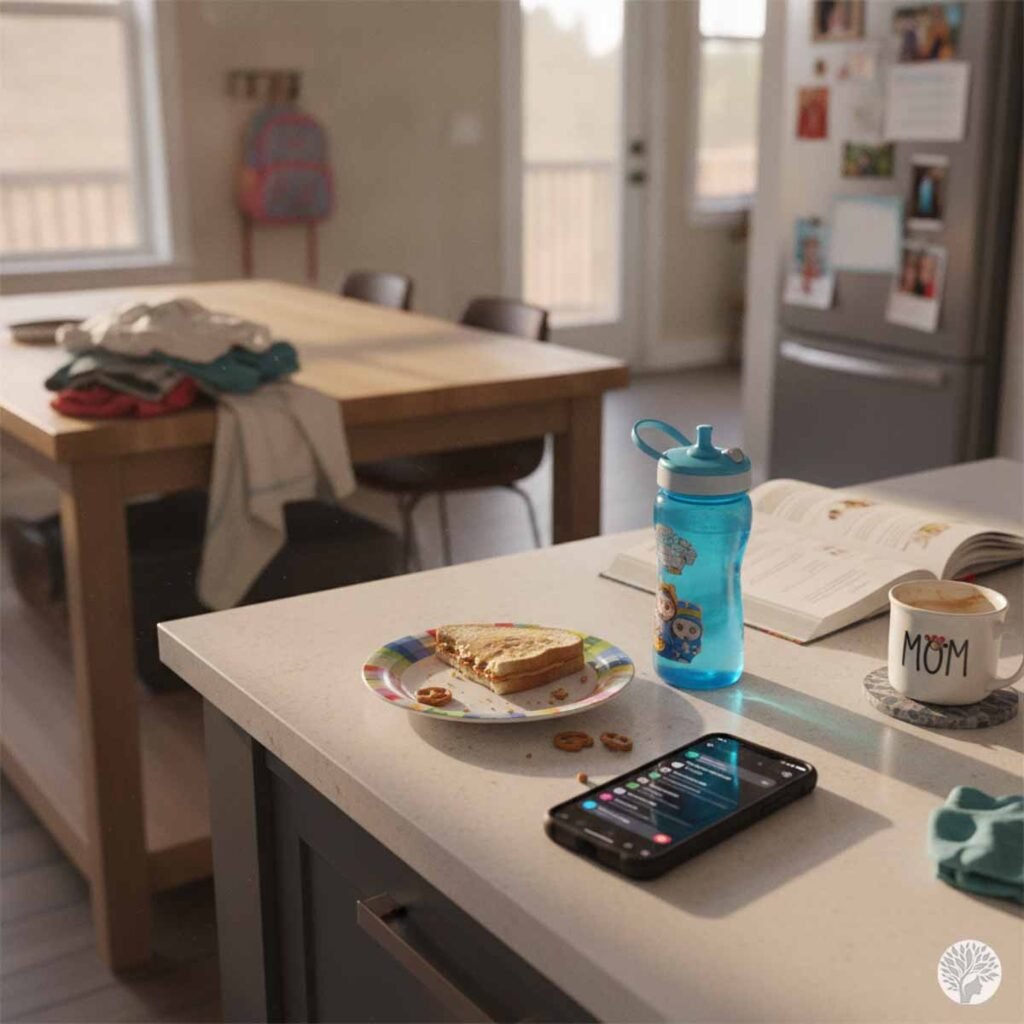
A few years ago, I had a moment that completely changed how I look at mindfulness. It was a chaotic Tuesday afternoon. The kitchen counter was a battlefield of unfinished snacks, the washing machine was loudly off-balance, my teenager was asking a rapid-fire sequence of questions, and my phone was buzzing with work notifications. I felt a familiar, tight heat rising up my neck. My chest felt constricted, my breathing was incredibly shallow, and my mind was spinning with an overwhelming sense of urgency.
In that exact moment, I remembered a beautiful article I had read about the peace of daily meditation. Desperate for a reset, I stepped away from the mess, sat down cross-legged on our hard living room rug, closed my eyes, and tried to “just breathe.”
It was an utter disaster.
Within ninety seconds, my lower back began to ache intensely. My feet went entirely numb. But worst of all, the silence didn’t quiet my mind, it just made the internal noise louder. Cut off from my external surroundings, my brain immediately started screaming through an endless mental to-do list: Did you turn off the stove? When is that school form due? Why can’t you just sit still like those perfectly serene mothers on Instagram?
I didn’t feel mindful. I felt like a failure.
That was the day I realized an essential truth about modern motherhood. We cannot force an overstimulated nervous system into instant serenity through sheer willpower.
When your body is carrying physical tension and your senses are drowning in daily noise, sitting in a stark, quiet room can actually feel jarring. For us as mothers, true mindfulness often requires a bridge. It requires tangible, physical tools that gently tell our bodies it is safe to slow down so our minds can finally follow.
Editorial Note & Safety Disclaimer
Here at The Mindful Mom, we naturally lean toward simple, low-clutter spaces. But meditation is deeply personal. Some mothers find stillness through a cushion and a candle, while others need noise-canceling headphones and guided apps to quiet a busy mind. There is no single “right” way to meditate. The best meditation tool is the one that helps you return to your breath and yourself.
As a mother navigating the realities of modern homemaking, I have learned that mindfulness often begins long before meditation. Sometimes it begins with reducing the noise around us.
A Mindful Note on Well-being
While meditation accessories and stress relief tools can beautifully support daily relaxation, mindfulness, and nervous system regulation, they are wellness products and not medical devices. They are not a substitute for professional medical or mental health care. Always choose practices, tools, and routines that feel physically and emotionally supportive for your unique body and lifestyle.
Section 1: Somatic Tools for Physical Comfort and Tension
When we talk about mindfulness, we often focus entirely on the mind, treating the body as an afterthought. But for an overwhelmed mother, stress doesn’t just live between the ears. It settles deep into the physical body. It manifests as a tight chest, shallow breathing, clenched jaws, and a persistent ache in the lower back or shoulders.
The reality of modern motherhood means your nervous system is constantly receiving input. When you try to sit in silence while your body is physically uncomfortable or holding onto pockets of tension, your brain interprets those physical signals as an active stress cue. It assumes you are unsafe, trapping you in a low-grade fight-or-flight loop. If sitting on the floor causes your hips to ache or your feet to go numb within two minutes, you aren’t meditating; you are simply enduring discomfort.
To break this loop, we need somatic anchors or tools that communicate safety directly to the physical body so the mind can finally follow.
Ergonomic Meditation Benches & Cushions
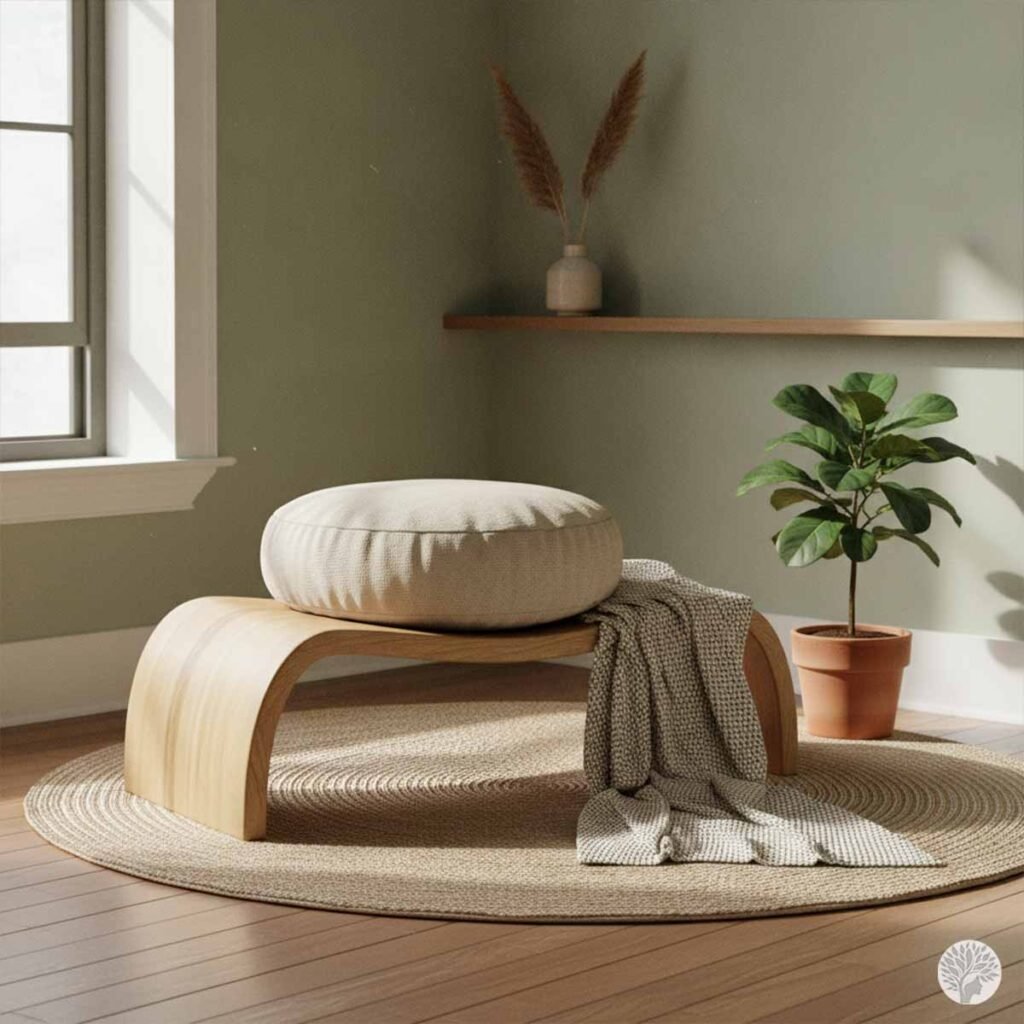
If traditional cross-legged sitting feels restrictive or painful, your pelvic alignment is likely throwing off your spine’s natural curvature. Ergonomic tools are designed to fix this specific mechanical barrier. A dedicated meditation bench, such as the Mindful & Modern Bamboo Meditation Bench, changes the geometry of your posture. By angling your seat slightly forward, it unloads your lower back, opens your hips, and takes the crushing pressure off your ankles and knees.
Similarly, a traditional buckwheat hull zafu (cushion) contours precisely to your individual anatomy. Unlike soft foam or cotton pillows that collapse under weight, buckwheat hulls shift just enough to provide a firm, elevated base that tilts your pelvis beautifully, making an extended period of stillness physically sustainable.
Acupressure Mats
For mothers whose physical tension feels like an impenetrable wall after a long day of lifting children or leaning over a desk, an acupressure mat and pillow set acts as an intensive physical reset. Laying down on thousands of tiny, non-invasive plastic points might sound counterintuitive to relaxation, but the immediate tactile sensation forces your awareness down out of your racing thoughts and directly into your skin. Within minutes, the initial sharpness gives way to a deep, spreading warmth. This simple practice helps release stubborn physical tension and promote deep relaxation across your back, neck, and shoulders, making it an excellent precursor to evening stillness.
Weighted Blankets & Lap Pads
When somatic anxiety leaves you feeling fluttery, ungrounded, or internally vibrating, deep pressure stimulation (DPS) can be incredibly comforting. You don’t necessarily need to wrap yourself in a massive, heavy blanket to find relief. A compact, weighted lap pad or a small weighted blanket placed directly across your thighs or chest while sitting down provides concentrated, grounding weight. This firm, steady pressure physically signals to your body that it is anchored to the earth, helping the body shift into a calmer state without requiring any conscious mental effort.
Weighted Eye Masks & Lavender Pillows
Our optic nerves are under constant assault from screens, bright household lighting, and the visual noise of an active home. When you close your eyes to rest, your brain often keeps scanning behind your eyelids. A weighted eye mask, such as the Nodpod Weighted Eye Mask, or a classic flaxseed-and-lavender-infused eye pillow introduces total darkness alongside gentle, evenly distributed pressure across the brow and eye area. This specific weight helps block out immediate visual clutter while providing gentle sensory input that many people find deeply calming, making it easier to drop the mental “manager mode” and find immediate internal quiet.
Section 2: Digital and Biometric Sanctuaries for Busy Schedules
There is a persistent, idealized myth in the wellness space that meditation requires a pristine, completely silent room, an empty calendar, and at least thirty uninterrupted minutes. For a busy mother, waiting for these perfect conditions means never starting at all. If your mindfulness practice depends on isolation, it will inevitably crumble under the realities of school schedules, household demands, and unexpected interruptions.
True mindfulness for mothers must be mobile, low-friction, and adaptable. It needs to live inside the fragmented, ordinary pockets of your day. The five minutes you spend waiting in the school pickup line, the quiet transition in your car before walking into a work environment, or the brief pocket of time immediately following a chaotic bedtime routine. Digital and biometric tools aren’t about adding more screen time; when used intentionally, they act as portable sanctuaries that shield your attention from external demands.

Biometric Meditation Trackers
When you are chronically overwhelmed, trying to “empty your mind” can actually feel intensely frustrating. You sit down, close your eyes, and are instantly met with a barrage of mental to-do lists, causing you to wonder if you are even doing it right. For minds that need tangible, interactive feedback, biometric tools like the Hyperice Core Premium Meditation Trainer change the game.
Held gently in your hands, this device uses subtle, rhythmic vibrations to guide your breathing patterns, giving your mind a physical anchor to focus on instead of your thoughts. Simultaneously, its built-in sensors track your heart rate and heart rate variability (HRV), transmitting your physiological data straight to an app. Seeing data-driven proof of your nervous system settling turns an abstract practice into a concrete, visible skill you can build day by day.
Motherhood-Focused Apps
Moving past idealized, uninterrupted routines by utilizing apps like MamaZen (tailored directly to maternal burnout, sensory overstimulation, and emotional regulation) or Insight Timer allows you to access quick, 3-to-10 minute emergency resets designed specifically for the maternal experience. You don’t need an hour-long session to shift your mental state.
A targeted audio track, used via simple headphones while sitting in your parked car or resting on the couch, offers an immediate auditory boundary. It provides a compassionate, guided voice that helps you untangle from the frantic energy of the day, allowing you to return to your family with a clear, grounded presence.
The Quick-Reference Comparison Table
Before diving into how we alter our immediate surroundings, use this quick guide to match your current state of overstimulation with the exact mindful category designed to support it:
| If Your Nervous System Feels… | Your Biggest Barrier Is… | The Best Category to Try First |
| Auditory Overload & Fatigue | Constant Background Chaos | High-fidelity earplugs (like Loop Engage) |
| Physically Panicked or Fluttery | Somatic Anxiety & High Heart Rate | Biometric meditation tools (like Hyperice Core) |
| Anxious & Visually Overwhelmed | Screen Fatigue & Messy Rooms | Weighted eye masks (like Nodpod) or light guides |
| Restless, Sore, or Achy | Body Discomfort & Back Pain | Ergonomic benches (like Mindful & Modern) or cushions |
| Rushed, Frenzied, & Time-Poor | Lack of Time & Constant Moving | Motherhood-focused apps (like MamaZen or Insight Timer) |
| Stressed by Tight Living Quarters | A Small or Shared Home | Minimalist meditation baskets & visual door signs |
Section 3: Sensory Anchors and Screen-Free Tools for Overload
If you are a mother living in a busy home, you are likely intimately familiar with auditory and visual fatigue. From the sudden, sharp clatter of dropped toys to the low, humming background buzz of a television, our minds rarely get to rest in a true sensory vacuum. When your mind is processing hundreds of small environmental inputs every hour, you aren’t just tired; you are carrying a profound sensory debt. Sitting down to meditate in a room that feels physically loud or chaotic is incredibly difficult because your brain is still trying to defend itself from overstimulation.
To pay down this debt, we can introduce physical anchors that alter how environmental inputs hit our senses, filtering out the chaotic static without isolating us from our families.
High-Fidelity Earplugs
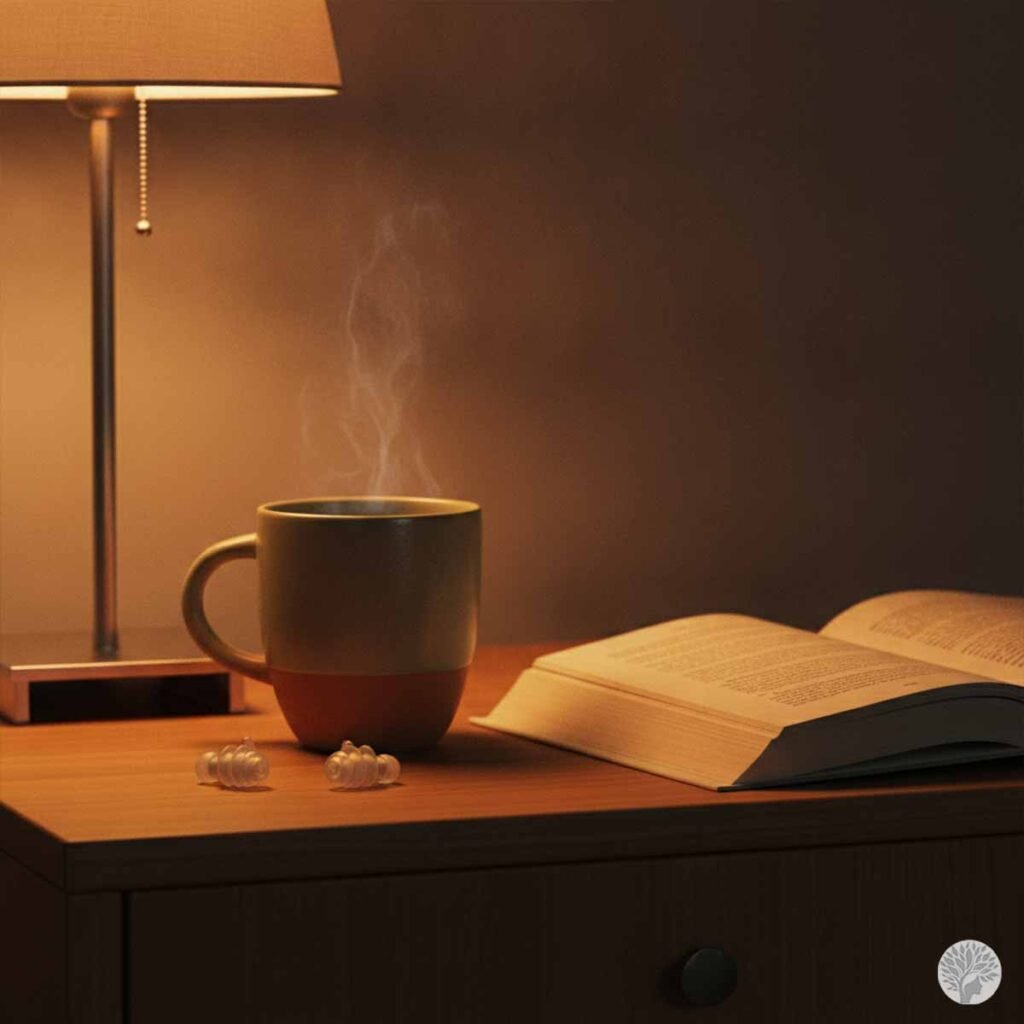
One of the most intense, unacknowledged triggers for maternal burnout is auditory fatigue. When you are trying to regulate your own emotions while handling repetitive electronic toys, bickering siblings, or kitchen appliances, your nervous system can perceive that collective noise as an oncoming threat.
Traditional foam earplugs block out the world entirely, which feels deeply unsafe when you need to keep your children supervised. High-fidelity earplugs, such as Loop Engage, act as an invisible, sanity-saving shield. Instead of muting your environment, they pull down the damaging, exhausting decibel peaks of household chaos. They take the painful edge off ambient noise while ensuring you can still clearly and safely hear your children’s voices, allowing you to breathe through a chaotic afternoon rather than reacting to it.
Screen-Free Light Guides
We often turn to our phones for mindfulness apps, but picking up a smartphone is a dangerous gamble when you are already experiencing mental overload. One minute you are opening a meditation track; the next, you are distracted by a text message, an email, or a news alert.
To bypass this digital friction, screen-free tabletop tools like the Mindsight Breathing Buddha offer a beautiful alternative. This minimalist object guides your breathing rhythm purely through soft, fading color cues. By expanding and dimming its light, it anchors your focus to a steady, rhythmic breathing pattern without forcing you to look at a glass screen or navigate a flood of digital notifications.
Zen Desktop Bells & Acoustic Bowls
Sometimes, the hardest part of a micro-meditation is mentally marking its beginning and end. When we use our phone timers, the sudden, digital alarm can feel jarring to a resting brain. Traditional acoustic tools, such as a small Zen Meditation Desktop Bell or a singing bowl, provide an organic, clear boundary. Striking a bell creates a single, pure, resonant sound wave that rings through the room. This clear tone signals to your brain that it is time to step out of “manager mode,” giving you a clean, sonic bookend for a brief five-minute break before you return to parenting duties.
Section 4: Boundary and Small-Space Solutions
When our living quarters are compact or shared with an active family, finding a dedicated square foot for quiet reflection can feel like an impossible luxury. If you look around your home and your eyes continually scan a pile of undone laundry, toys strewn across the rug, or a stack of mail on the desk, your mind stays locked in an active cycle of task management. Visual clutter acts as a constant background voice, reminding you of everything you haven’t done yet.
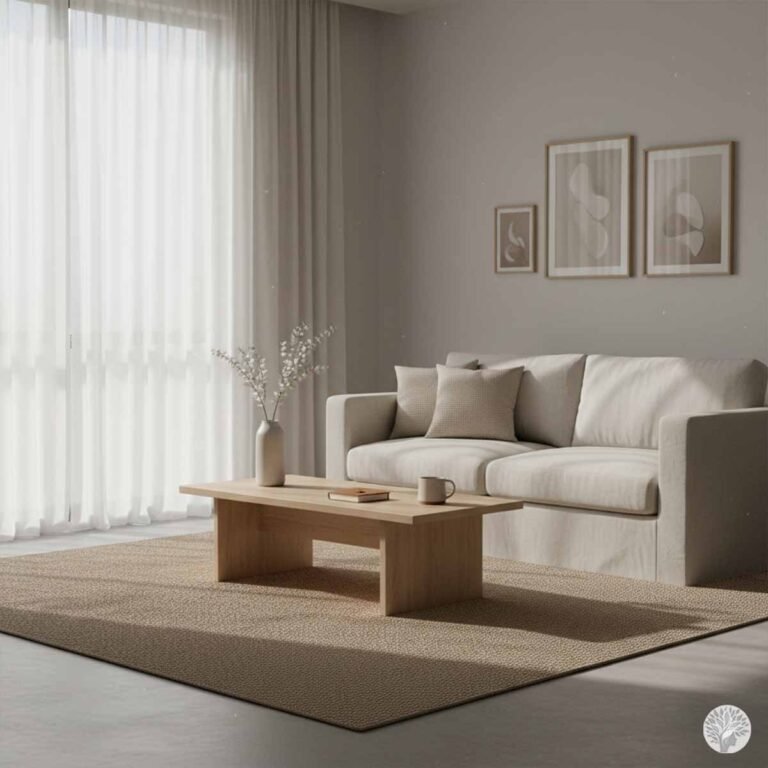
Creating a meditation practice as a busy mom isn’t about waiting until you have a sprawling, dedicated wellness room. It is about learning to draw immediate, temporary boundaries right where you are even if that means the corner of your bedroom or a small spot beside the couch.
Folding Privacy Screens
If visual chaos is the primary trigger that keeps your mind running in circles, you don’t need to clean the entire house before allowing yourself to sit down and rest. A simple, lightweight fabric or linen folding privacy screen allows you to physically alter your line of sight. By unfolding it in a corner, you instantly hide the view of laundry piles, messy workspaces, or toys. It acts as a temporary wall that encloses your space, reducing your immediate visual inputs so your optic nerve can finally relax.
The “Meditation Basket” Concept
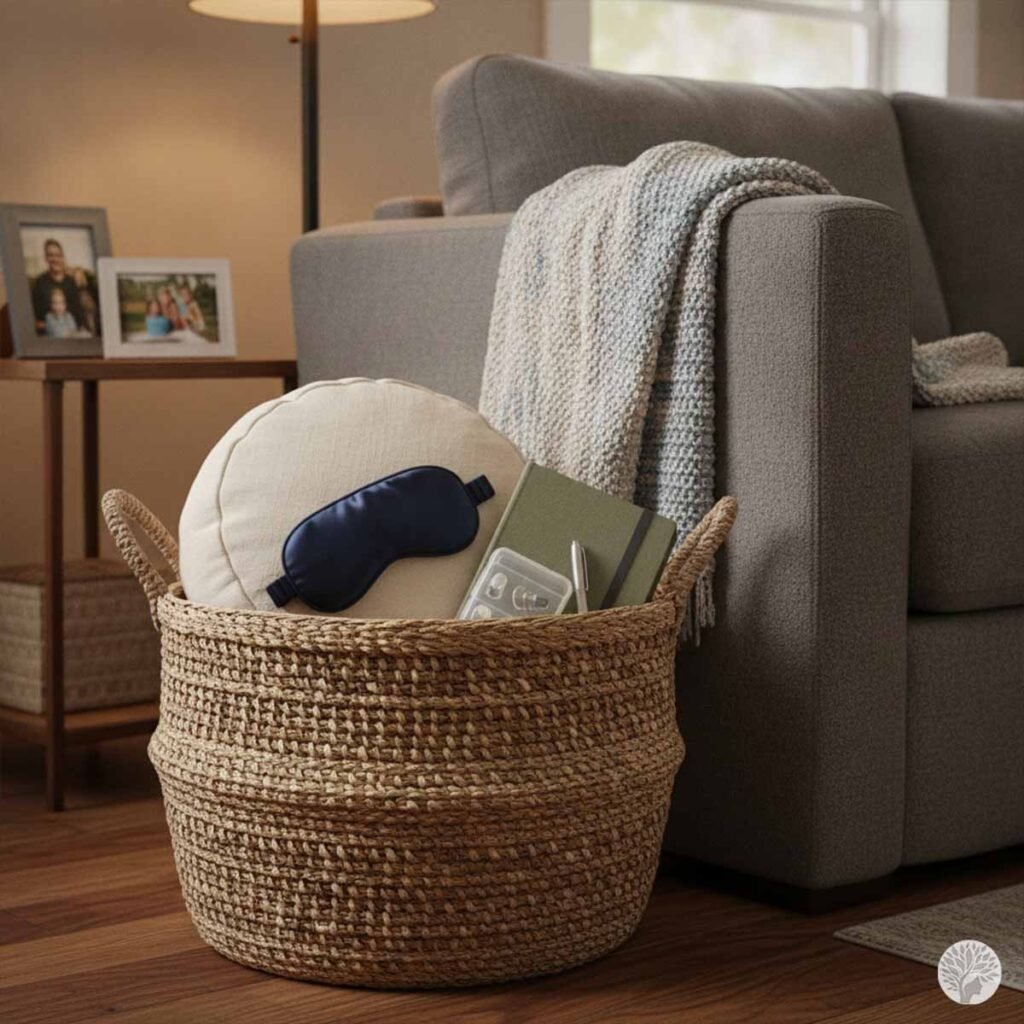
To keep your practice minimal and intentional, your tools should never become part of the household mess that causes you anxiety in the first place. Storing your zafu cushion, weighted eye mask, journal, and earplugs in a single, dedicated, beautiful woven basket keeps your space organized. When your tools have a designated home, you don’t waste precious mental energy tracking them down when you finally find five minutes to sit. The basket becomes a portable sanctuary which you can slide it under a bed or keep it in a closet, bringing it out only when you need a moment to anchor yourself.
Visual Boundary Signage
Mindfulness is a collective family practice, and drawing a boundary is a gift to both yourself and your children. An elegant, wooden “Do Not Disturb” door hanger or a simple visual sign on your chair teaches your family to respect your moments of stillness. By explaining to your children that a closed door or a hung sign means mom is taking five minutes to fill her cup so she can be a fully present parent, you aren’t just protecting your quiet time and you are actively modeling healthy boundaries and emotional self-care for them to witness.
You Don’t Need to Buy Anything to Begin
Before we explore how to choose the right tools for your specific needs, I want to share a vital truth that often gets lost in the modern wellness industry: Some of the most powerful meditation tools cost absolutely nothing.
If you are financially stretched, or if the thought of researching and buying one more thing feels like an exhausting chore to add to your mental load, please take a deep breath and let that pressure go. Meditation is fundamentally an act of attention, not accumulation.
If you want to practice mindfulness right now without spending a single penny, you can anchor your awareness into these completely free daily rituals:
- A single, intentional deep breath: Inhale slowly through your nose, let your belly expand, and exhale completely through your mouth. One conscious breath can interrupt a stress spiral.
- Two minutes of morning sunlight: Step onto your porch, balcony, or open a window first thing in the morning. Stand there for two minutes and simply feel the warmth of the natural light on your face.
- The mindful beverage sip: For the first two minutes of your morning coffee or hot tea, do absolutely nothing else. Put your phone in another room, close your planner, and focus entirely on the heat of the mug in your hands and the aroma rising from the cup.
- One minute of mindful dishwashing: Turn a daily chore into a sensory sanctuary. Pay close attention to the warmth of the water over your hands, the scent of the soap, and the rhythmic movement of your hands across the plates.
- A grounding mailbox walk: Walk down your driveway or sidewalk to grab the mail, but do it with total presence. Notice the texture of the ground beneath your shoes and the crispness of the air against your skin.
- A gentle floor stretch: Roll out onto the living room rug right before getting into bed. Spend three minutes gently reaching for your toes or resting in a child’s pose, letting the floor support your weight.
Frequently Asked Questions
To help you navigate the practical realities of building a daily practice, let’s answer some of the most common questions busy mothers ask when trying to quiet a frantic mind:
How do you meditate when completely overwhelmed?
Start smaller than you think is necessary. If you try to jump into a 20-minute silent meditation when your mind is running in circles, you will likely feel incredibly frustrated. Begin with just one conscious breath. A nervous system does not heal through force; it settles through safety.
Try an accessible technique like the One-Breath Reset: inhale deeply for a count of 4, hold for a moment, and exhale slowly for a count of 6. Extending your exhale naturally signals your body to downshift out of fight-or-flight mode. If that is all you can manage today, you have successfully meditated.
What should you get for a stressed-out mom?
If you are looking for a gift for a mother in your life who is dealing with burnout, avoid anything that feels like a heavy obligation or requires a major time commitment. Giving an overwhelmed mom a complex wellness journal that requires 30 minutes of daily writing can accidentally create more pressure.
Instead, focus on low-friction, immediate sensory relief. A high-quality weighted eye mask, a bottle of grounding wood-essential oils (like cedarwood or sandalwood), or a pair of high-fidelity earplugs are perfect gifts because they offer instant comfort without demanding a single minute of her tight schedule.
How do you calm down a stressed mom?
When a mother is experiencing acute sensory or mental overstimulation, the fastest path to calm is rapid sensory reduction. The goal is to lower the volume of the immediate environment. Turn off harsh overhead fluorescent lights and switch on a warm amber lamp, step into a room away from loud background noise, or put on a pair of noise-buffering headphones. Dropping out of the frantic thoughts in your head and grounding your awareness back into your physical body is the quickest way to find your footing.
The TMML Philosophy: Less is More
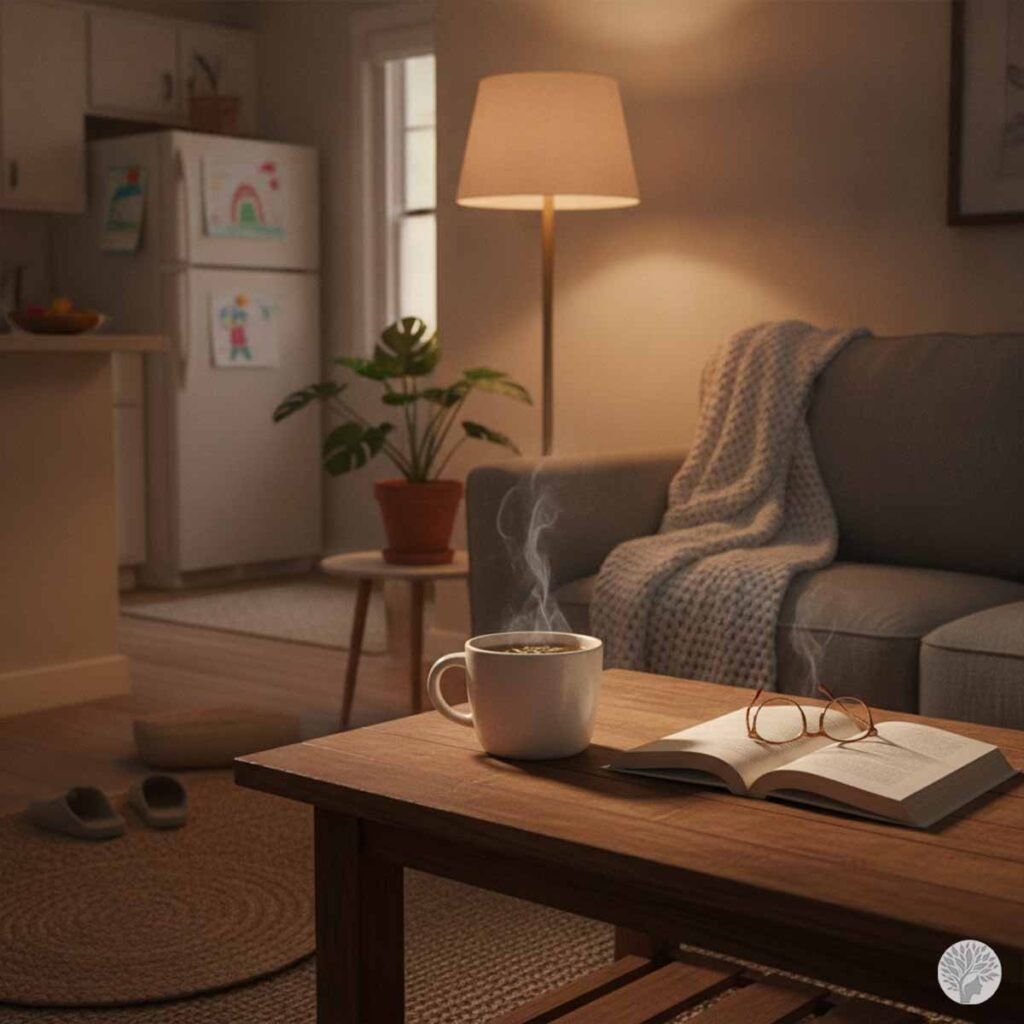
As we bring this guide to a close, I want to leave you with a core philosophy that sits at the center of everything we do here at The Mindful Mom: You do not need twenty separate wellness accessories to feel calm.
It is incredibly easy to fall into the consumerism trap, believing that if we just buy the right cushion, the right app subscription, or the perfect singing bowl, serenity will automatically follow. But an entire shelf of unused wellness products will only end up contributing to the very sensory debt and visual clutter that is causing you anxiety.
Instead of trying to implement an elaborate, picture-perfect routine, pick just one anchor that addresses your biggest daily barrier to quiet today. If your house is incredibly loud, start with high-fidelity earplugs. If your lower back aches when you try to sit, start with an ergonomic bench. Let your practice be small, simple, and protective of your energy.
The goal of meditation is not to become a calmer, more perfect mother who never gets triggered. It is to create just enough internal space to meet yourself with compassion in the exact middle of your real, messy, beautiful life.
Your meditation practice does not have to be perfect, silent, or Instagram-worthy. It only needs to offer you a small moment of return in the middle of an ordinary day.
Sometimes, coming home to yourself begins with a single breath.
Being a mindful mother doesn’t mean creating a perfect, quiet world; it means finding a quiet center right in the middle of your real, beautiful world.
Love ya, stay mindful!

© 2026 The Mindful Mom Life. All rights reserved. This methodology is part of the Hetal Method helping mothers find neurological rest through intentional home management. No part of this work may be shared or reproduced without credit to the original source.
Find Your Next Pocket of Calm
- 10 Best Morning Anchor Rituals For Busy Moms To Start Calm
- 4 Sensory Calming Tools for Moms to Ease Overload at Home
- Simple Living Tips For Busy Moms
- How to Stop Being a “Reactive” Parent – 5 Simple Mindfulness Practices for the Midday Overwhelm
- How To Slow Down As A Busy Mom and 5 Mindful Morning Habits


I saw one of these in Bhutan and I bought one.